A 7-year-old boy is brought to the emergency department by his mother 1 hour after falling off his bike and landing head-first on the pavement. His mother says that he did not lose consciousness but has been agitated and complaining about a headache since the event. He has no history of serious illness and takes no medications. His temperature is 37.1°C (98.7°F), pulse is 115/min, respirations are 20/min, and blood pressure is 100/65 mm Hg. There is a large bruise on the anterior scalp. Examination, including neurologic examination, shows no other abnormalities. A noncontrast CT scan of the head shows a non-depressed linear skull fracture with a 2-mm separation. Which of the following is the most appropriate next step in management?
Q122
A 6-year-old boy is brought to the physician because of increasing swelling around his eyes for the past 3 days. During this period, he has had frothy light yellow urine. He had a sore throat 12 days ago. He appears tired. His temperature is 37°C (98.6°F), pulse is 90/min, and blood pressure is 105/65 mm Hg. Examination shows periorbital edema and pitting edema of the lower extremities. Cardiopulmonary examination shows no abnormalities. Which of the following findings on urinalysis is most likely associated with this patient's condition?
Q123
A 4-year-old girl is brought to the physician by her parents because she is severely underweight. She is easily fatigued and has difficulty keeping up with other children at her daycare. She has a good appetite and eats 3 full meals a day. She has 4 to 5 bowel movements daily with bulky, foul-smelling stools that float. She has had recurrent episodes of sinusitis since infancy. Her parents report that she recently started to snore during her sleep. She is at the 15th percentile for height and 3rd percentile for weight. Her vital signs are within normal limits. Examination shows pale conjunctivae. A few scattered expiratory crackles are heard in the thorax. There is abdominal distention. Which of the following is the most likely underlying cause of this patient's failure to thrive?
Q124
A 12-year-old girl presents to her primary care physician with left knee pain for the past 6 weeks. She recently joined the field hockey team at her school. The pain is the most severe when she is running up and down the stairs at the school stadium. The pain decreases when she goes home and rests after practice. She additionally admits to tripping and landing on her left knee 5 days ago. Physical exam shows a knee with a healing abrasion over the left patella. The tibial tuberosity is tender to palpation. A radiograph of the knee is presented in figure A. Which of the following is the most likely diagnosis?
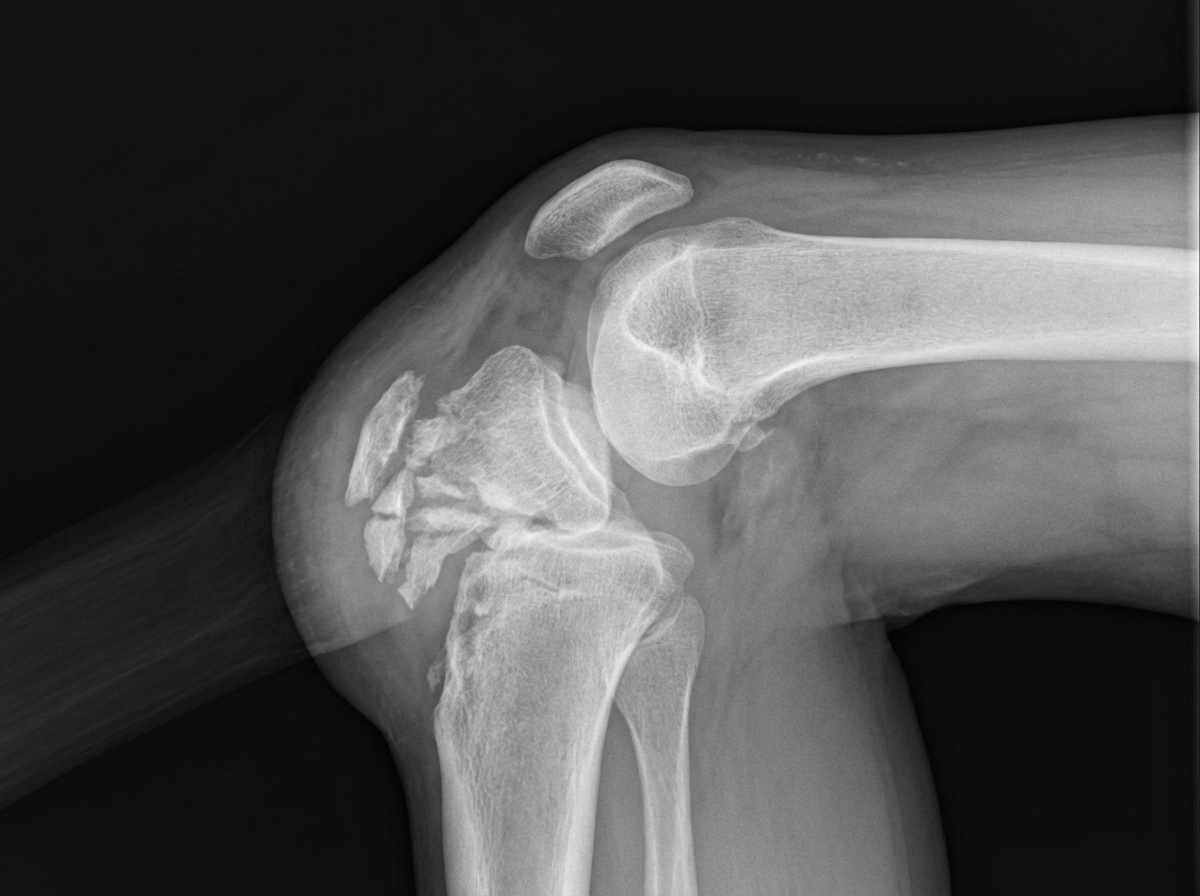
Q125
A 15-month-old girl is brought to the pediatrician by her mother with a history of 3 episodes of breath-holding spells. The patient’s mother says that this is a new behavior and she is concerned. The patient was born at full term by spontaneous vaginal delivery with an uneventful perinatal period. She is also up to date on her vaccines. However, after the age of 6 months, the patient’s mother noticed that she was not as playful as other children of similar age. She is also not interested in interacting with others and her eye contact is poor. Her growth charts suggest that her weight, length, and head circumference were normal at birth, but there have been noticeable decelerations in weight and head circumference. On physical examination, her vital signs are normal. A neurologic examination reveals the presence of generalized mild hypotonia. She also makes repetitive hand wringing motions. Which of the following clinical features is most likely to develop in this patient during the next few years?
Q126
A 5-year-old boy presents to the pediatrician for a well child visit. He is meeting his developmental milestones and is in the 15th percentile for height and 70th percentile for weight. His parents report that he complains of fatiguing easily and having trouble participating in sports. They are concerned he is not getting enough sleep and state that sometimes they hear him snore. The patient has a past medical history of a supracondylar fracture of the humerus, which was appropriately treated. He is doing well in school but is sometimes bullied for being small. The patient eats a balanced diet of milk, fruit, and some vegetables. His parents have been trying to get him to drink more milk so he can grow taller. His temperature is 99.5°F (37.5°C), blood pressure is 90/48 mmHg, pulse is 100/min, respirations are 19/min, and oxygen saturation is 98% on room air. On physical exam, the patient appears well. HEENT exam is notable for conjunctival pallor and a unilateral clear middle ear effusion. Cardiac exam reveals a benign flow murmur. Pulmonary exam is clear to auscultation bilaterally. The patient's gait is stable and he is able to jump up and down. A full set of labs are ordered as requested by the parents including a serum vitamin D level, B12 level, and IGF level. A selection of these lab values are seen below.
Serum:
Na+: 139 mEq/L
Cl-: 100 mEq/L
K+: 4.3 mEq/L
HCO3-: 25 mEq/L
BUN: 20 mg/dL
Glucose: 99 mg/dL
Creatinine: 1.1 mg/dL
Ca2+: 9.9 mg/dL
AST: 12 U/L
ALT: 10 U/L
Which of the following would you expect to find in this patient?
Q127
An 8-year-old boy presents with a limp favoring his left leg. The patient's mother noticed he had been limping without complaint for the past 6 months. Past medical history is significant for the flu last year. No current medications. All immunizations are up to date. The vital signs include: temperature 37.0°C (98.6°F), blood pressure 100/60 mm Hg, pulse 74/min, respiratory rate 19/min, and oxygen saturation 99% on room air. The body mass index (BMI) is 17.2 kg/m2. On physical examination, the patient is alert and cooperative. A limp favoring the left leg is noted when the patient is walking. There is mild tenderness on deep palpation of the left lumbar region but no erythema, edema, or warmth. There is a decreased range of motion of the left hip. Which of the following is the most likely diagnosis in this patient?
Q128
A 7-year-old girl is brought to the physician for a well-child examination. She is at 95th percentile for height and 70th percentile for weight. Examination shows elevated breast buds that extend beyond the areola. Coarse pubic and axillary hair is present. The external genitalia appear normal. An x-ray of the left wrist shows a bone age of 10 years. Serum luteinizing hormone levels do not increase following GnRH agonist stimulation. Which of the following is the most likely cause of these findings?
Q129
A 6-year-old girl is brought to the pediatrician by her father for an annual physical examination. The father reports that the patient is a happy and healthy child, but he sometimes worries about her weight. He says that she is a “picky” eater and only wants chicken nuggets and French fries. He also notes some mild acne on her cheeks and forehead but thinks it’s because she “doesn’t like baths.” The father says she has met all her pediatric milestones. She has recently started kindergarten, can tell time, and is beginning to read. Her teacher says she gets along with her classmates well. The patient was born at 38 weeks gestation. She has no chronic medical conditions and takes only a multivitamin. Height and weight are above the 95th percentile. Physical examination reveals scattered comedones on the patient’s forehead and bilateral cheeks. There is palpable breast tissue bilaterally with raised and enlarged areolae. Scant axillary hair and coarse pubic hair are also noted. A radiograph of the left hand shows a bone age of 9 years. Serum follicular stimulating hormone (FSH) level is 9.6 mU/mL (normal range 0.7-5.3 mU/mL) and luteinizing hormone (LH) level is 6.4 mU/mL (normal range < 0.26 mU/mL). Which of the following is the most appropriate diagnostic test?
Q130
A 6-month-old male infant is brought to a pediatrician by his guardian for scheduled immunizations. The boy was born at 39 weeks gestation via spontaneous vaginal delivery. He is up to date on all vaccines and is meeting all developmental milestones. The infant is generally healthy; however, the guardian is concerned about multiple patches of bluish discolorations on the skin overlying the lower back and sacrum. A review of medical records indicates that these patches have been present since birth. On further review the child was placed into protective services due to neglect and abuse by his biological family. On physical examination, his vital signs are normal. The pediatrician notes the presence of multiple blue-brown patches over the lumbosacral region, buttocks, and back. These patches are soft and nontender on palpation. Which of the following is the best next step in management of the infant?
Growth/Development US Medical PG Practice Questions and MCQs
Question 121: A 7-year-old boy is brought to the emergency department by his mother 1 hour after falling off his bike and landing head-first on the pavement. His mother says that he did not lose consciousness but has been agitated and complaining about a headache since the event. He has no history of serious illness and takes no medications. His temperature is 37.1°C (98.7°F), pulse is 115/min, respirations are 20/min, and blood pressure is 100/65 mm Hg. There is a large bruise on the anterior scalp. Examination, including neurologic examination, shows no other abnormalities. A noncontrast CT scan of the head shows a non-depressed linear skull fracture with a 2-mm separation. Which of the following is the most appropriate next step in management?
A. Inpatient observation (Correct Answer)
B. Contact child protective services
C. CT angiography
D. Discharge home
E. MRI of the brain
Explanation: ***Inpatient observation***
- A **nondepressed linear skull fracture** with mild separation and persistent symptoms (headache, agitation) after head trauma warrants **inpatient observation**.
- This allows for close neurological monitoring for potential complications like **intracranial hemorrhage** or worsening of symptoms.
*Contact child protective services*
- The history of falling off a bike, a visible bruise, and a fracture consistent with trauma does not suggest **child abuse**.
- There are no other suspicious signs or inconsistencies in the mother's account to raise immediate concerns about neglect or abuse.
*CT angiography*
- **CT angiography** is used to evaluate the cerebral vasculature and is not indicated in this case, as there is no evidence of vascular injury or dissection.
- The primary concern here is the potential for **intracranial bleeding** or evolving neurological compromise, which is best monitored with serial neurological exams and potentially repeat noncontrast CT scans.
*Discharge home*
- The presence of a **skull fracture**, even if linear and nondepressed, combined with persistent symptoms like headache and agitation makes immediate discharge home unsafe.
- There is an increased risk of **epidural hematoma** or other delayed complications that require professional medical monitoring.
*MRI of the brain*
- **MRI** is more sensitive for detecting subtle brain parenchymal injuries but is not the initial or primary imaging modality for acute head trauma, especially in a child who may require sedation.
- An **MRI** would be considered if there were persistent or evolving neurological deficits despite a normal or stable CT scan, or if there is concern for specific soft tissue or white matter injuries that CT cannot adequately assess.
Question 122: A 6-year-old boy is brought to the physician because of increasing swelling around his eyes for the past 3 days. During this period, he has had frothy light yellow urine. He had a sore throat 12 days ago. He appears tired. His temperature is 37°C (98.6°F), pulse is 90/min, and blood pressure is 105/65 mm Hg. Examination shows periorbital edema and pitting edema of the lower extremities. Cardiopulmonary examination shows no abnormalities. Which of the following findings on urinalysis is most likely associated with this patient's condition?
A. WBC casts
B. Fatty casts (Correct Answer)
C. Hyaline casts
D. RBC casts
E. Muddy brown casts
Explanation: ***Fatty casts***
- The patient's symptoms of **periorbital edema**, **pitting edema of lower extremities**, and **frothy urine** are classic for **nephrotic syndrome**, characterized by massive **proteinuria** (>3.5 g/day), **hypoalbuminemia**, **hyperlipidemia**, and **edema**.
- **Fatty casts** (also called **oval fat bodies** when in tubular cells) are **pathognomonic for nephrotic syndrome** and result from hyperlipidemia and lipiduria associated with severe proteinuria.
- In a **6-year-old child**, the most common cause of nephrotic syndrome is **minimal change disease**.
*WBC casts*
- **WBC casts** indicate **renal parenchymal inflammation** or **infection**, such as **pyelonephritis**, **acute interstitial nephritis**, or **tubulointerstitial disease**.
- These are not characteristic findings in **nephrotic syndrome**, which primarily affects the **glomerular filtration barrier** leading to protein loss rather than inflammatory cell infiltration.
*Hyaline casts*
- **Hyaline casts** are composed of **Tamm-Horsfall protein** and can be found in **normal urine**, especially with **dehydration**, **exercise**, or **concentrated urine**.
- They are **non-specific** and do not indicate significant kidney pathology or nephrotic syndrome.
*RBC casts*
- **RBC casts** are characteristic of **glomerulonephritis** and **nephritic syndrome** (such as **post-streptococcal glomerulonephritis**), where patients present with **hematuria**, **hypertension**, **mild edema**, and **oliguria**.
- While this patient had a **sore throat 12 days ago** (typical timing for post-streptococcal disease), his clinical presentation is clearly **nephrotic** (massive edema, frothy urine, normal blood pressure) rather than **nephritic**, making RBC casts unlikely.
- The **frothy urine** indicates significant **proteinuria**, not hematuria.
*Muddy brown casts*
- **Muddy brown casts** (granular casts with epithelial cell debris) are highly suggestive of **acute tubular necrosis (ATN)**, typically resulting from **ischemic** or **nephrotoxic injury**.
- This patient's presentation with **gradual onset edema** and **frothy urine** points to a **glomerular disorder** (nephrotic syndrome), not **acute tubular injury**.
Question 123: A 4-year-old girl is brought to the physician by her parents because she is severely underweight. She is easily fatigued and has difficulty keeping up with other children at her daycare. She has a good appetite and eats 3 full meals a day. She has 4 to 5 bowel movements daily with bulky, foul-smelling stools that float. She has had recurrent episodes of sinusitis since infancy. Her parents report that she recently started to snore during her sleep. She is at the 15th percentile for height and 3rd percentile for weight. Her vital signs are within normal limits. Examination shows pale conjunctivae. A few scattered expiratory crackles are heard in the thorax. There is abdominal distention. Which of the following is the most likely underlying cause of this patient's failure to thrive?
A. T. whippelii infiltration of intestinal villi
B. Impaired intestinal amino acid transport
C. Exocrine pancreatic insufficiency (Correct Answer)
D. Small intestine bacterial overgrowth
E. Intestinal inflammatory reaction to gluten
Explanation: ***Exocrine pancreatic insufficiency***
- The constellation of **failure to thrive**, **bulky, foul-smelling, floating stools** (suggesting **steatorrhea**), recurrent **sinusitis**, and **recurrent respiratory symptoms** (snoring, expiratory crackles) is highly indicative of **cystic fibrosis**, whose primary cause of malabsorption is **exocrine pancreatic insufficiency**.
- **Cystic fibrosis** leads to thick, viscous secretions that obstruct pancreatic ducts, preventing digestive enzymes from reaching the small intestine and causing **malabsorption of fats and fat-soluble vitamins**.
*T. whippelii infiltration of intestinal villi*
- This describes **Whipple's disease**, which typically affects **middle-aged men** and presents with malabsorption, arthralgia, and neurological symptoms.
- It is rare in children and usually presents with symptoms like diarrhea and weight loss, but not commonly with the **recurrent respiratory infections** and **pancreatic insufficiency** seen here.
*Impaired intestinal amino acid transport*
- This typically refers to conditions like **Hartnup disease**, which involves defective transport of neutral amino acids and can lead to **pellagra-like symptoms** (dermatitis, diarrhea, dementia) due to niacin deficiency.
- This condition does not explain the **steatorrhea**, **recurrent sinusitis**, or **respiratory symptoms** found in the patient.
*Small intestine bacterial overgrowth*
- While **SIBO** can cause malabsorption, **abdominal distention**, and loose stools, it does not typically cause **recurrent sinusitis** or the classic **bulky, foul-smelling, floating stools associated with pancreatic insufficiency**.
- SIBO is also not a primary cause of **failure to thrive** in a global sense, but rather a secondary complication.
*Intestinal inflammatory reaction to gluten*
- This describes **celiac disease**, which presents with **malabsorption**, **abdominal distention**, **failure to thrive**, and **anemia** (pale conjunctivae).
- However, celiac disease does not typically cause **recurrent sinusitis** or the **respiratory symptoms** (snoring, crackles) that are prominent in this patient's presentation.
Question 124: A 12-year-old girl presents to her primary care physician with left knee pain for the past 6 weeks. She recently joined the field hockey team at her school. The pain is the most severe when she is running up and down the stairs at the school stadium. The pain decreases when she goes home and rests after practice. She additionally admits to tripping and landing on her left knee 5 days ago. Physical exam shows a knee with a healing abrasion over the left patella. The tibial tuberosity is tender to palpation. A radiograph of the knee is presented in figure A. Which of the following is the most likely diagnosis?
A. Patellar tendonitis
B. Tibial plateau fracture
C. Patellofemoral pain syndrome
D. Pes anserine bursitis
E. Osgood-Schlatter disease (Correct Answer)
Explanation: ***Osgood-Schlatter disease***
- Characterized by **tenderness at the tibial tuberosity** and occurs in active adolescents, emphasizing the connection with sports.
- Often accompanied by **knee pain during activities** like running and climbing stairs, which aligns with the patient's symptoms.
*Patellar tendonitis*
- Usually presents with **anterior knee pain** that worsens with jumping or running, but lacks tenderness at the **tibial tuberosity**.
- More common in older adolescents or adults, particularly those engaged in sports that involve **jumping**.
*Tibial plateau fracture*
- Would typically present with **swelling, significant pain**, and possible instability, particularly after trauma, unlike this patient's ongoing symptoms.
- Not typically associated with **tenderness at the tibial tuberosity**, which is a classic finding in Osgood-Schlatter disease.
*Patellofemoral pain syndrome*
- Main symptom includes pain around the **kneecap** during activities, but rarely highlights **tenderness at the tibial tuberosity**.
- Often associated with **malalignment** or muscle weakness rather than a specific bony tenderness.
*Pes anserine bursitis*
- Symptoms include pain on the **medial aspect of the knee**, often with tenderness over the site of the bursa rather than the **tibial tuberosity**.
- Typically more common in middle-aged adults than in active adolescents.
Question 125: A 15-month-old girl is brought to the pediatrician by her mother with a history of 3 episodes of breath-holding spells. The patient’s mother says that this is a new behavior and she is concerned. The patient was born at full term by spontaneous vaginal delivery with an uneventful perinatal period. She is also up to date on her vaccines. However, after the age of 6 months, the patient’s mother noticed that she was not as playful as other children of similar age. She is also not interested in interacting with others and her eye contact is poor. Her growth charts suggest that her weight, length, and head circumference were normal at birth, but there have been noticeable decelerations in weight and head circumference. On physical examination, her vital signs are normal. A neurologic examination reveals the presence of generalized mild hypotonia. She also makes repetitive hand wringing motions. Which of the following clinical features is most likely to develop in this patient during the next few years?
A. Hemiparesis
B. Intention tremor
C. Absence seizures
D. Sensorineural deafness
E. Loss of purposeful use of her hands (Correct Answer)
Explanation: ***Loss of purposeful use of her hands***
- The constellation of symptoms—**normal development up to 6 months**, followed by **developmental regression** (loss of playfulness, poor social interaction, poor eye contact), **deceleration in head circumference**, **hypotonia**, and **repetitive hand-wringing motions**—is highly suggestive of **Rett syndrome**.
- A hallmark feature of Rett syndrome is the **loss of purposeful hand skills**, which typically occurs between 1 to 4 years of age, replaced by characteristic hand stereotypies like wringing or clapping.
*Hemiparesis*
- **Hemiparesis** is characterized by weakness on one side of the body and is not a typical feature of Rett syndrome.
- While some neurological issues occur, unilateral weakness is more indicative of focal neurological injury rather than this diffuse neurodevelopmental disorder.
*Intention tremor*
- **Intention tremor** is a type of dyskinesia that worsens during voluntary movement and is often associated with cerebellar dysfunction.
- While motor difficulties are prominent in Rett syndrome, **ataxia** and **apraxia** are more characteristic than a predominant intention tremor.
*Absence seizures*
- **Absence seizures** involve brief, sudden lapses of consciousness and are a type of generalized epilepsy.
- Although seizures are common in Rett syndrome, **generalized tonic-clonic seizures** or **focal seizures** are more frequently observed than isolated absence seizures.
*Sensorineural deafness*
- **Sensorineural deafness** implies damage to the inner ear or auditory nerve, resulting in permanent hearing loss.
- While communication difficulties are significant in Rett syndrome, they are due to speech apraxia and cognitive impairment, not primary hearing loss.
Question 126: A 5-year-old boy presents to the pediatrician for a well child visit. He is meeting his developmental milestones and is in the 15th percentile for height and 70th percentile for weight. His parents report that he complains of fatiguing easily and having trouble participating in sports. They are concerned he is not getting enough sleep and state that sometimes they hear him snore. The patient has a past medical history of a supracondylar fracture of the humerus, which was appropriately treated. He is doing well in school but is sometimes bullied for being small. The patient eats a balanced diet of milk, fruit, and some vegetables. His parents have been trying to get him to drink more milk so he can grow taller. His temperature is 99.5°F (37.5°C), blood pressure is 90/48 mmHg, pulse is 100/min, respirations are 19/min, and oxygen saturation is 98% on room air. On physical exam, the patient appears well. HEENT exam is notable for conjunctival pallor and a unilateral clear middle ear effusion. Cardiac exam reveals a benign flow murmur. Pulmonary exam is clear to auscultation bilaterally. The patient's gait is stable and he is able to jump up and down. A full set of labs are ordered as requested by the parents including a serum vitamin D level, B12 level, and IGF level. A selection of these lab values are seen below.
Serum:
Na+: 139 mEq/L
Cl-: 100 mEq/L
K+: 4.3 mEq/L
HCO3-: 25 mEq/L
BUN: 20 mg/dL
Glucose: 99 mg/dL
Creatinine: 1.1 mg/dL
Ca2+: 9.9 mg/dL
AST: 12 U/L
ALT: 10 U/L
Which of the following would you expect to find in this patient?
A. Decreased IGF levels
B. Increased RDW and TIBC (Correct Answer)
C. Decreased oxygen saturation when the patient sleeps
D. Increased MCV
E. Decreased vitamin D level
Explanation: ***Increased RDW and TIBC***
- The patient presents with **conjunctival pallor**, fatigue, and snoring, falling in the 15th percentile for height and 70th for weight, suggesting **iron deficiency anemia**. Anemia would cause an **increased red cell distribution width (RDW)** as red blood cells vary in size, and **increased total iron-binding capacity (TIBC)** as the body tries to maximize iron absorption.
- While other signs of mild anemia like glossitis or pica are not explicitly mentioned, the combination of symptoms and the common prevalence of **iron-deficiency anemia** in children due to inadequate dietary intake or rapid growth phases supports this finding. Prolonged milk intake can inhibit iron absorption.
*Decreased IGF levels*
- **Insulin-like growth factor (IGF) levels** are primarily associated with growth hormone deficiency or severe malnutrition, which is not strongly indicated here. The patient's height is at the 15th percentile, which is *small*, but within the normal range, and his weight is at the 70th percentile, indicating he is not severely malnourished.
- While fatigue and small stature can be associated with growth disorders, the overall presentation with pallor points more distinctly towards an alternative diagnosis like **anemia** rather than growth hormone axis dysfunction.
*Decreased oxygen saturation when the patient sleeps*
- The patient's snoring could suggest **sleep-disordered breathing** or **sleep apnea**, leading to decreased oxygen saturation during sleep.
- However, based on the *conjunctival pallor*, fatigue, and growth concerns, **iron deficiency anemia** is a more prominent diagnosis, and while sleep apnea is possible, direct evidence of desaturation is not provided.
*Increased MCV*
- An **increased MCV (macrocytic anemia)** is characteristic of deficiencies in **vitamin B12** or **folate**.
- The patient's symptoms, particularly conjunctival pallor and fatigue, are more consistent with a **microcytic anemia** (decreased MCV), often caused by **iron deficiency**, rather than a macrocytic one.
*Decreased vitamin D level*
- While **fatigue** can be a symptom of **vitamin D deficiency**, the more prominent findings of **conjunctival pallor** and height/weight percentiles are less directly indicative of this specific deficiency as the primary diagnosis.
- The patient's diet
includes milk and fruit, which are typically fortified or contain vitamin D, making a severe deficiency less likely to be the primary cause of his symptoms, though a mild deficiency cannot be ruled out without specific lab results.
Question 127: An 8-year-old boy presents with a limp favoring his left leg. The patient's mother noticed he had been limping without complaint for the past 6 months. Past medical history is significant for the flu last year. No current medications. All immunizations are up to date. The vital signs include: temperature 37.0°C (98.6°F), blood pressure 100/60 mm Hg, pulse 74/min, respiratory rate 19/min, and oxygen saturation 99% on room air. The body mass index (BMI) is 17.2 kg/m2. On physical examination, the patient is alert and cooperative. A limp favoring the left leg is noted when the patient is walking. There is mild tenderness on deep palpation of the left lumbar region but no erythema, edema, or warmth. There is a decreased range of motion of the left hip. Which of the following is the most likely diagnosis in this patient?
A. Developmental dysplasia of the hip
B. Legg-Calve-Perthes disease (Correct Answer)
C. Pelvic fracture
D. Viral-induced synovitis
E. Slipped capital femoral epiphysis
Explanation: ***Legg-Calve-Perthes disease***
- The presentation of an 8-year-old boy with a **painless limp** that has been present for 6 months, along with **decreased range of motion of the left hip**, is highly suggestive of Legg-Calve-Perthes disease.
- This condition involves **avascular necrosis of the femoral head** and typically affects children between ages 4 and 10, often presenting with a chronic limp and hip pain (or referred knee pain) without acute trauma.
*Developmental dysplasia of the hip*
- This condition is usually diagnosed in **infancy or early childhood** due to hip instability or asymmetry.
- It is unlikely to present as an insidious limp at age 8 without prior diagnosis.
*Pelvic fracture*
- A pelvic fracture would typically present with **acute pain** and a clear history of **trauma**, which is not described in this patient.
- The absence of significant tenderness, erythema, edema, or warmth also argues against an acute injury.
*Viral-induced synovitis*
- Viral-induced (or transient) synovitis is usually an **acute condition** characterized by pain, limp, and often a recent viral illness, but symptoms generally resolve within a few weeks.
- A 6-month history of limping is too prolonged for transient synovitis.
*Slipped capital femoral epiphysis*
- Slipped capital femoral epiphysis (SCFE) typically occurs in **adolescent children** (often overweight) during growth spurts, usually between ages 10 and 16.
- While it can cause a limp and hip pain, the patient's age (8 years old) and healthy BMI make SCFE less likely.
Question 128: A 7-year-old girl is brought to the physician for a well-child examination. She is at 95th percentile for height and 70th percentile for weight. Examination shows elevated breast buds that extend beyond the areola. Coarse pubic and axillary hair is present. The external genitalia appear normal. An x-ray of the left wrist shows a bone age of 10 years. Serum luteinizing hormone levels do not increase following GnRH agonist stimulation. Which of the following is the most likely cause of these findings?
A. Ovarian fibroma
B. Congenital adrenal hyperplasia
C. Hypothalamic glioma
D. Granulosa cell tumor
E. McCune-Albright syndrome (Correct Answer)
Explanation: ***McCune-Albright syndrome***
- This syndrome is characterized by the classic triad of **peripheral precocious puberty**, **café-au-lait spots**, and **polyostotic fibrous dysplasia**.
- The key diagnostic finding is **lack of LH response to GnRH agonist stimulation**, indicating **peripheral (GnRH-independent) precocious puberty** caused by activating mutations in the GNAS1 gene, leading to autonomous ovarian estrogen production.
- The presentation of **isolated peripheral precocious puberty** with breast development, pubic/axillary hair, and advanced bone age (10 years in a 7-year-old) in the absence of a palpable ovarian mass is most consistent with McCune-Albright syndrome.
- While café-au-lait spots and fibrous dysplasia are not mentioned in the stem, **not all features of the triad need to be present simultaneously**, and precocious puberty may be the presenting feature.
*Ovarian fibroma*
- Ovarian fibromas are **non-functional benign tumors** that do not produce hormones and therefore do not cause precocious puberty or estrogenic effects.
- They typically occur in older women and present with pelvic symptoms or as incidental findings, not with endocrine abnormalities.
*Congenital adrenal hyperplasia*
- CAH causes excessive **androgen production**, leading to **virilization** (clitoromegaly, hirsutism, acne) rather than estrogenic effects.
- While CAH can cause pubic/axillary hair and advanced bone age, it would **not cause breast development** and would typically present with **ambiguous genitalia or clitoromegaly**, which are absent in this patient.
*Hypothalamic glioma*
- Hypothalamic lesions cause **central (GnRH-dependent) precocious puberty** by premature activation of the hypothalamic-pituitary-gonadal axis.
- In central precocious puberty, there would be a **robust increase in LH levels** following GnRH agonist administration, which is **not seen in this patient**.
- The lack of LH response rules out any central cause of precocious puberty.
*Granulosa cell tumor*
- Granulosa cell tumors are **estrogen-secreting ovarian tumors** that can cause peripheral precocious puberty with breast development and advanced bone age.
- However, these tumors typically present as a **palpable pelvic or abdominal mass** on examination, which is not described in this case.
- They are also extremely rare in prepubertal girls and would more commonly be detected on imaging or physical exam before causing advanced pubertal changes.
Question 129: A 6-year-old girl is brought to the pediatrician by her father for an annual physical examination. The father reports that the patient is a happy and healthy child, but he sometimes worries about her weight. He says that she is a “picky” eater and only wants chicken nuggets and French fries. He also notes some mild acne on her cheeks and forehead but thinks it’s because she “doesn’t like baths.” The father says she has met all her pediatric milestones. She has recently started kindergarten, can tell time, and is beginning to read. Her teacher says she gets along with her classmates well. The patient was born at 38 weeks gestation. She has no chronic medical conditions and takes only a multivitamin. Height and weight are above the 95th percentile. Physical examination reveals scattered comedones on the patient’s forehead and bilateral cheeks. There is palpable breast tissue bilaterally with raised and enlarged areolae. Scant axillary hair and coarse pubic hair are also noted. A radiograph of the left hand shows a bone age of 9 years. Serum follicular stimulating hormone (FSH) level is 9.6 mU/mL (normal range 0.7-5.3 mU/mL) and luteinizing hormone (LH) level is 6.4 mU/mL (normal range < 0.26 mU/mL). Which of the following is the most appropriate diagnostic test?
A. Pelvic ultrasound
B. Estrogen levels
C. 17-hydroxyprogesterone levels
D. Dehydroepiandrosterone sulfate levels
E. Brain magnetic resonance imaging (MRI) (Correct Answer)
Explanation: ***Brain magnetic resonance imaging (MRI)***
- The constellation of **precocious puberty** (breast development, pubic and axillary hair, advanced bone age) and **elevated FSH and LH levels** in a 6-year-old girl indicates central precocious puberty, which is often caused by a CNS lesion.
- **Brain MRI is the gold standard imaging** to rule out **hypothalamic hamartomas**, **gliomas**, **craniopharyngiomas**, or other structural abnormalities of the **hypothalamic-pituitary axis**.
- MRI provides superior soft tissue resolution without radiation exposure, making it the preferred modality in children.
*Pelvic ultrasound*
- A pelvic ultrasound is primarily used to evaluate **gonadal tumors** or cysts in cases of **peripheral precocious puberty**, where FSH and LH levels would be suppressed.
- Given the elevated FSH and LH, the puberty is central (gonadotropin-dependent), making CNS imaging more appropriate than ovarian imaging.
*Estrogen levels*
- While estrogen levels would certainly be elevated in this patient, measuring them would confirm sexual precocity but would not differentiate between **central** and **peripheral precocious puberty**.
- The **elevated FSH and LH levels** already indicate active gonadal stimulation, making direct estrogen measurement less informative for pinpointing the etiology.
*17-hydroxyprogesterone levels*
- Elevated 17-hydroxyprogesterone levels are indicative of **congenital adrenal hyperplasia (CAH)**, particularly the 21-hydroxylase deficiency.
- CAH typically causes signs of **virilization** (e.g., clitoromegaly) but not breast development, and would not cause elevated FSH and LH levels.
*Dehydroepiandrosterone sulfate levels*
- Elevated DHEAS levels suggest an **adrenal source of androgens**, which could contribute to **pubic and axillary hair growth** (adrenarche).
- However, DHEAS elevation alone would not explain the **breast development** and **elevated gonadotropins**, which point towards central precocious puberty.
Question 130: A 6-month-old male infant is brought to a pediatrician by his guardian for scheduled immunizations. The boy was born at 39 weeks gestation via spontaneous vaginal delivery. He is up to date on all vaccines and is meeting all developmental milestones. The infant is generally healthy; however, the guardian is concerned about multiple patches of bluish discolorations on the skin overlying the lower back and sacrum. A review of medical records indicates that these patches have been present since birth. On further review the child was placed into protective services due to neglect and abuse by his biological family. On physical examination, his vital signs are normal. The pediatrician notes the presence of multiple blue-brown patches over the lumbosacral region, buttocks, and back. These patches are soft and nontender on palpation. Which of the following is the best next step in management of the infant?
A. Radiographic skeletal survey
B. Skin biopsy
C. Reassurance (Correct Answer)
D. Inform child protective services
E. Topical hydrocortisone cream
Explanation: ***Reassurance***
- The blue-brown patches are most consistent with **Mongolian spots (congenital dermal melanocytosis)**, which are benign, flat, and typically resolve spontaneously. The presence since birth, characteristic location (lumbosacral region, buttocks), and non-tender nature are classic findings.
- Given the features, the infant's health, and appropriate development, **reassurance** to the guardian is the best next step, as no medical intervention or further diagnostic work-up is usually needed for these benign lesions.
*Radiographic skeletal survey*
- A **radiographic skeletal survey** is indicated when there are concerns for **child abuse** (e.g., fractures, periosteal reactions) or certain genetic conditions, especially when cutaneous findings are atypical or suggest a syndrome.
- In this case, the skin lesions are characteristic of benign Mongolian spots, and there are no other signs of abuse (e.g., pain, swelling, ecchymoses) or developmental delays that would warrant a skeletal survey.
*Skin biopsy*
- A **skin biopsy** is typically performed to definitively diagnose skin conditions when the clinical presentation is atypical, when there's concern for malignancy, or when inflammatory conditions need differentiation.
- Mongolian spots have a characteristic appearance that usually does not require a biopsy for diagnosis; it would be an **unnecessary invasive procedure** for a benign condition.
*Inform child protective services*
- **Child protective services (CPS)** should be informed if there is a **reasonable suspicion of child abuse or neglect**. While the child is currently in protective services due to a prior history, the current skin findings are benign Mongolian spots and do not themselves indicate new abuse.
- Informing CPS again based solely on these benign birthmarks would be inappropriate and potentially burdensome without additional signs of harm.
*Topical hydrocortisone cream*
- **Topical hydrocortisone cream** is a low-potency corticosteroid used to treat inflammatory skin conditions like eczema or dermatitis, reducing redness, itching, and swelling.
- Mongolian spots are **pigmentary lesions**, not inflammatory. Therefore, corticosteroids would be ineffective and unnecessary for their treatment.