
Genetic testing approaches — MCQs

A 39-year-old pregnant woman at 16 weeks gestation recently underwent a quad-screen which revealed elevated beta-hCG, elevated inhibin A, decreased alpha-fetoprotein, and decreased estradiol. An ultrasound was performed which found increased nuchal translucency. Which of the following is recommended for diagnosis?
A 16-year-old presents to the primary care physician because he has noticed an increase in the size of his breast tissue over the past 3 years. He states that he is significantly taller than his entire class at school although he feels increasingly weak and uncoordinated. He performs at the bottom of his grade level academically. On physical exam the patient has marked gynecomastia with small firm testes. The physician decides to perform a karyotype on the patient. What is the most likely outcome of this test?
A 16-year-old girl presents with primary amenorrhea. On exam, you note that she is short and has a shield chest. You order abdominal imaging, which suggests the presence of streak gonads. Of the choices listed below, which of the following karyotypes is possible in this patient? I: 45,XO II: 45,XO/46,XX mosaicism III: 46,X,del(Xp) or other structural X abnormalities
A 34-year-old gravida 2 para 1 woman at 16 weeks gestation presents for prenatal care. Her prenatal course has been uncomplicated. She takes no medications besides her prenatal vitamin which she takes every day, and she has been compliant with routine prenatal care. She has a 7-year-old daughter who is healthy. The results of her recent quadruple screen are listed below: AFP: Low hCG: Low Estriol: Low Inhibin-A: Normal Which of the following is the most appropriate next step to confirm the diagnosis?
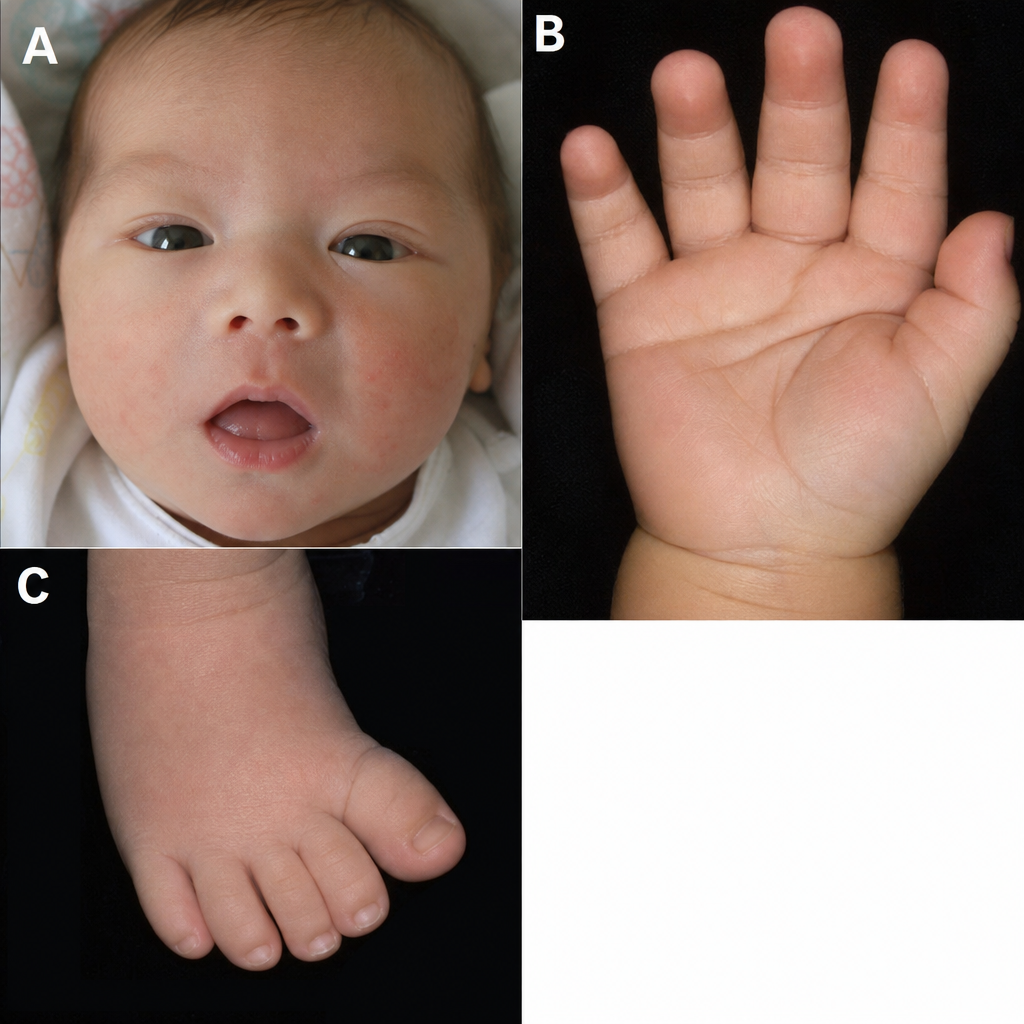
You are called to evaluate a newborn. The patient was born yesterday to a 39-year-old mother. You observe the findings illustrated in Figures A-C. What is the most likely mechanism responsible for these findings?
A 5-year-old patient presents to the pediatrician's office with fatigue and swollen lymph nodes. Extensive work-up reveals a diagnosis of acute lymphoblastic leukemia. In an effort to better tailor the patient's treatments, thousands of genes are arranged on a chip and a probe is made from the patient's mRNA (converted to cDNA). This probe is then hybridized to the chip in order to measure the gene expression of thousands of genes. The technology used to investigate this patient's gene expression profile is best for detecting which of the following types of genetic abnormalities?
An investigator studying viral mutation isolates a virus strain from the gastric contents of an infant with gastroenteritis. This virus has a nonenveloped RNA genome with 11 segments and an icosahedral symmetrical capsid. The investigator finds that if 2 strains of this virus coinfect a single host cell, some of the resulting viral progeny have genome segments derived from both parental viruses. The observed phenomenon is most likely also seen in which of the following viral families?
A 12-year-old girl with a recently diagnosed seizure disorder is brought to the physician by her mother for genetic counseling. She has difficulties in school due to a learning disability. Medications include carbamazepine. She is at the 95th percentile for height. Genetic analysis shows a 47, XXX karyotype. An error in which of the following stages of cell division is most likely responsible for this genetic abnormality?
A homeless 45-year-old man presents to the emergency room in December complaining of malaise, body aches, chills, and fever. He reports that his symptoms started 4 days ago. His myalgias and chills have begun to resolve, but now he is starting to develop a dry cough, dyspnea, and a sore throat. He does not have a primary care provider and has not had any vaccinations in over 2 decades. He receives medical care from the emergency room whenever he is feeling ill. His temperature is 103°F (39.4°C), blood pressure is 130/70 mmHg, pulse is 115/min, and respirations are 22/min. On exam, he appears fatigued with mildly increased work of breathing. A chest radiograph is negative. A nasopharyngeal viral culture is positive for an orthomyxovirus. Upon further review of the patient’s medical record, he was diagnosed with the same condition 1 year ago in November. Which of the following mechanisms is responsible for pandemics of this patient’s disease?
An investigator is studying the function of the endoplasmic reticulum in genetically modified lymphocytes. A gene is removed that facilitates the binding of ribosomes to the endoplasmic reticulum. Which of the following processes is most likely to be impaired as a result of this genetic modification?
Want unlimited practice?
Get full access to all questions, explanations, and performance tracking.
Scan to download app