
Neural tube defects — MCQs

A 65-year-old woman presents with progressive gait difficulty, neck pain, and bladder incontinence. She also complains of urinary urgency. Past medical history is significant for uncontrolled diabetes mellitus with a previous hemoglobin A1c of 10.8%. Physical examination reveals slightly increased muscle tone in all limbs with brisk tendon reflexes. Sensory examination reveals a decrease of all sensations in a stocking and glove distribution. Her gait is significantly impaired. She walks slowly with small steps and has difficulty turning while walking. She scores 23 out of 30 on a mini-mental state examination (MMSE). A brain MRI reveals dilated ventricles with a callosal angle of 60 degrees and mild cortical atrophy. What is the most appropriate next step in the management of this patient?
A 25-year-old female comes to her obstetrician’s office for a prenatal visit. She has a transvaginal ultrasound that correlates with her last menstrual period and dates her pregnancy at 4 weeks. She has no complaints except some nausea during the morning that is improving. She comments that she has had some strange food cravings, but has no issues with eating a balanced diet. Her BMI is 23 kg/m^2 and she has gained 1 pound since the start of her pregnancy. She is curious about her pregnancy and asks the physician what her child is now able to do. Which of the following developments is expected of the fetus during this embryological phase?
A 74-year-old woman is brought to the physician by her daughter for worsening memory for the past 1 month. She can no longer manage her bills and frequently forgets the names of her children. Her daughter is also concerned that her mother has a urinary tract infection because she has had increased urinary urgency and several episodes of urinary incontinence. Vital signs are within normal limits. Physical examination shows poor short-term memory recall and a slow gait with wide, short steps. Which of the following is most likely to improve this patient's condition?
A 24-year-old woman comes to the physician for preconceptional advice. She has been married for 2 years and would like to conceive within the next year. Menses occur at regular 30-day intervals and last 4 days with normal flow. She does not smoke or drink alcohol and follows a balanced diet. She takes no medications. She is 160 cm (5 ft 3 in) tall and weighs 55 kg (121 lb); BMI is 21.5 kg/m2. Physical examination, including pelvic examination, shows no abnormalities. She has adequate knowledge of the fertile days of her menstrual cycle. Which of the following is most appropriate recommendation for this patient at this time?
A 12-year-old boy follows up with his primary care physician for ongoing management of a urinary tract infection. He recently started middle school and has been having a difficult time navigating the school since he ambulates with leg braces and crutches. Consequently, he has not had sufficient time to use his urinary catheter appropriately. Otherwise, he has been unchanged from the previous visit with both sensory and motor defects in his lower extremities. He has had these defects since birth and has undergone surgeries to repair a bony defect in his spine with protrusion of a membrane through the defect. During what days of embryonic development did the defect responsible for this patient's symptoms most likely occur?
A 34-year-old gravida 2 para 1 woman at 16 weeks gestation presents for prenatal care. Her prenatal course has been uncomplicated. She takes no medications besides her prenatal vitamin which she takes every day, and she has been compliant with routine prenatal care. She has a 7-year-old daughter who is healthy. The results of her recent quadruple screen are listed below: AFP: Low hCG: Low Estriol: Low Inhibin-A: Normal Which of the following is the most appropriate next step to confirm the diagnosis?
During development, a fetus is found to have incomplete fusion of the neural tube. Which of the following structures would most likely be affected by this developmental defect?
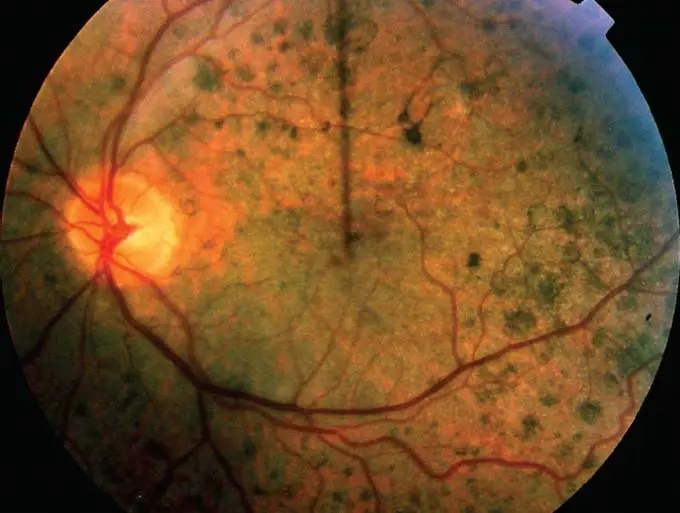
A male neonate is being examined by a pediatrician. His mother informs the doctor that she had a mild fever with rash, muscle pain, and swollen and tender lymph nodes during the second month of gestation. The boy was born at 39 weeks gestation via spontaneous vaginal delivery with no prenatal care. On physical examination, the neonate has normal vital signs. Retinal examination reveals the findings shown in the image. Which of the following congenital heart defects is most likely to be present in this neonate?
A 25-year-old pregnant woman, at 18 weeks of gestation, undergoes a routine ultrasound scan. The ultrasound images provided show below. Based on the imaging findings, what is the most likely diagnosis?
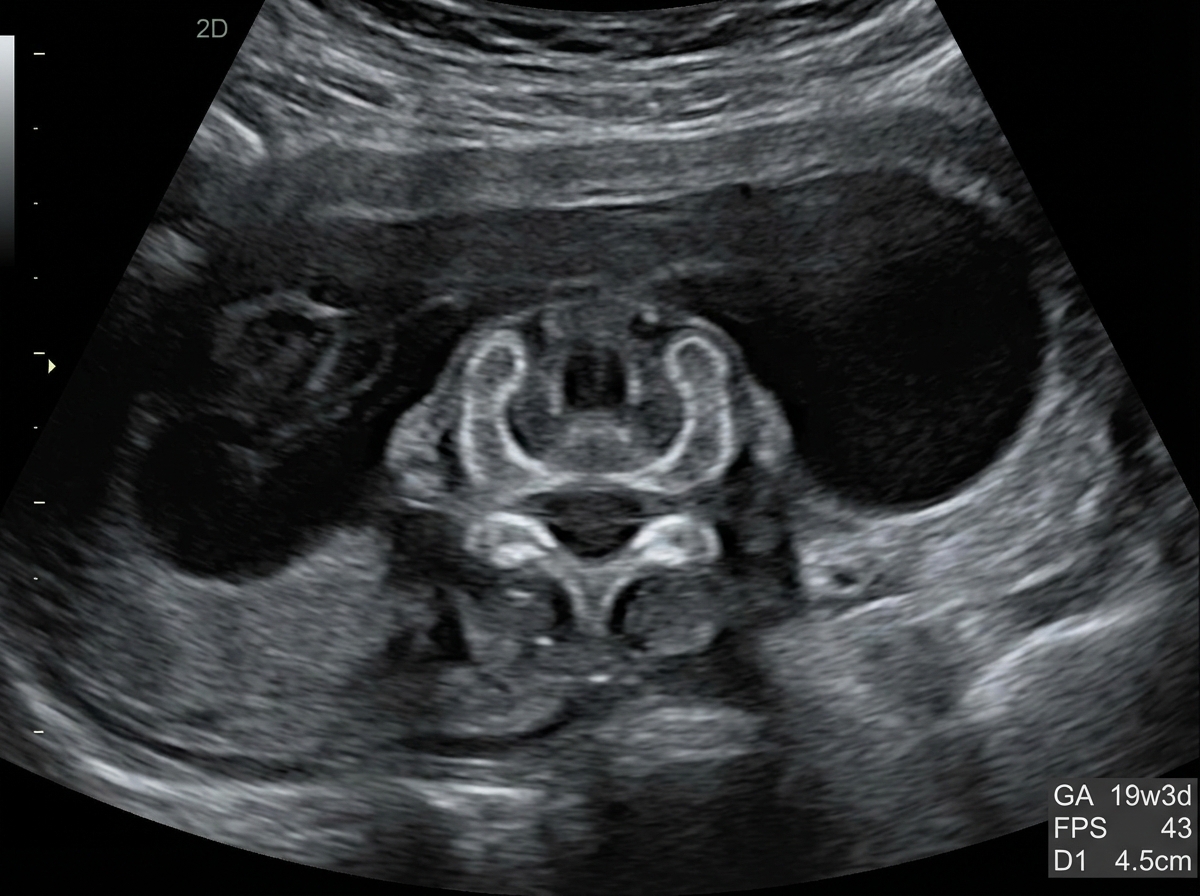
What condition is associated with the sign seen in the given USG?
Want unlimited practice?
Get full access to all questions, explanations, and performance tracking.
Scan to download app