
Multiple malformation syndromes — MCQs

A 32-year-old woman, gravida 2, para 1, at 14-weeks' gestation comes to the physician for a prenatal visit. Routine first trimester screening shows increased nuchal translucency, decreased β-hCG concentration, and decreased levels of pregnancy-associated plasma protein A. Amniocentesis shows trisomy of chromosome 13. This fetus is at increased risk for which of the following?
A 1-year-old boy presents to pediatrics clinic for a well-child visit. He has no complaints. He has a cleft palate and an abnormal facial appearance. He has been riddled with recurrent infections and is followed by cardiology for a ventricular septal defect (VSD). Vital signs are stable, and the patient's physical exam is benign. If this patient's medical history is part of a larger syndrome, what might one also discover that is consistent with the manifestations of this syndrome?
A 14-year-old boy presents as a new patient to your practice. While conducting your physical exam, you observe the findings depicted in Figures A and B. Which of the following additional findings would most likely be found in this patient?
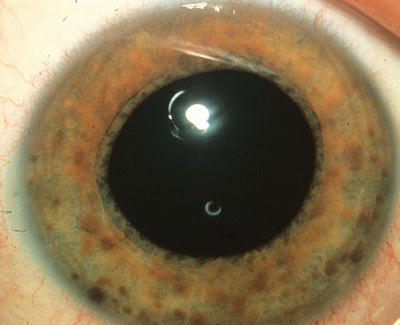
A 5-year-old boy is brought to the physician because of behavioral problems. His mother says that he has frequent angry outbursts and gets into fights with his classmates. He constantly complains of feeling hungry, even after eating a full meal. He has no siblings, and both of his parents are healthy. He is at the 25th percentile for height and is above the 95th percentile for weight. Physical examination shows central obesity, undescended testes, almond-shaped eyes, and a thin upper lip. Which of the following genetic changes is most likely associated with this patient's condition?
An infant boy of unknown age and medical history is dropped off in the emergency department. The infant appears lethargic and has a large protruding tongue. Although the infant exhibits signs of neglect, he is in no apparent distress. The heart rate is 70/min, the respiratory rate is 30/min, and the temperature is 35.7°C (96.2°F). Which of the following is the most likely cause of the patient’s physical exam findings?
A 5-year-old boy presents for a regularly scheduled check-up. The child is wheelchair bound due to lower extremity paralysis and suffers from urinary incontinence. At birth, it was noted that the child had lower limbs of disproportionately small size in relation to the rest of his body. Radiograph imaging at birth also revealed several abnormalities in the spine, pelvis, and lower limbs. Complete history and physical performed on the child's birth mother during her pregnancy would likely have revealed which of the following?
A 7-year-old boy is brought to the physician by his parents because of a 4.5-kg (10-lb) weight loss during the last 3 months. During this period, he has complained of abdominal pain and fullness, and his parents feel that he has been eating less. His parents also report that his urine has appeared pink for several weeks. He has been performing poorly in school lately, with reports from teachers that he has not been paying attention in class and has been distracting to other students. He was born at term and has been healthy except for a history of several infantile seizures. His vital signs are within normal limits. He is at the 60th percentile for height and 20th percentile for weight. Physical examination shows a palpable abdominal mass, abdominal tenderness in the left upper quadrant, and left costovertebral angle tenderness. There are several ellipsoid, hypopigmented macules on the back and legs and a 4-cm raised plaque of rough, dimpled skin on the right lower back that is the same color as the surrounding skin. Which of the following is the most likely diagnosis?
An 8-year-old child with “elfin” facial features is very friendly with strangers. He has a history of mild mental retardation, and a hemizygous deletion on chromosome 7q11.23, that includes a portion of the elastin gene. Which of the following is most likely true in this patient?
A newborn girl is rushed to the neonatal ICU after an emergency cesarean section due to unstable vital signs after delivery. The pregnancy was complicated due to oligohydramnios and pulmonary hypoplasia. Gestation was at 38 weeks. APGAR scores were 6 and 8 at 1 and 5 minutes respectively. The newborn’s temperature is 37.0°C (98.6°F), the blood pressure is 60/40 mm Hg, the respiratory rate is 45/min, and the pulse is 140/min. Physical examination reveals irregularly contoured bilateral abdominal masses. Abdominal ultrasound reveals markedly enlarged echogenic kidneys (5 cm in the vertical dimension) with multiple cysts in the cortex and medulla. This patient is at highest risk of which of the following complications?
A 1-week-old baby is brought to the pediatrician’s office for a routine checkup. On examination, she is observed to have microcephaly with a prominent occiput. She also has clenched fists and rocker-bottom feet with prominent calcanei. A cardiac murmur is evident on auscultation. Based on the clinical findings, a diagnosis of nondisjunction of chromosome 18 is suspected. The pediatrician orders a karyotype for confirmation. He goes on to explain to the mother that her child will face severe growth difficulties. Even if her daughter progresses beyond a few months, she will not be able to reach developmental milestones at the appropriate age. In addition to the above, which of the following is most likely a consequence of this genetic disturbance?
Want unlimited practice?
Get full access to all questions, explanations, and performance tracking.
Scan to download app