
Retinoblastoma — MCQs

Researchers are investigating oncogenes, specifically the KRAS gene that is associated with colon, lung, and pancreatic cancer. They have established that the gain-of-function mutation in this gene increases the chance of cancer development. They are also working to advance the research further to study tumor suppressor genes. Which of the genes below is considered a tumor suppressor gene?
A 21-year-old female presents to the family physician with 3 weeks of headaches, sweating, and palpitations. Her BP was 160/125 mmHg, and a 24-hour urine test revealed elevated vanillylmandelic acid (VMA) and normetanephrine. Past medical history is notable for bilateral retinal hemangioblastomas, and family history is significant for three generations (patient, mother, and maternal grandfather) with similar symptoms. Genetic analysis revealed a mutation of a gene on chromosome 3p. Which of the following is the patient at risk of developing?
A 1-year-old boy is brought to the physician for a well-child examination. He has no history of serious illness. His older sister had an eye disease that required removal of one eye at the age of 3 years. Examination shows inward deviation of the right eye. Indirect ophthalmoscopy shows a white reflex in the right eye and a red reflex in the left eye. The patient is at increased risk for which of the following conditions?
An 8-year-old boy presents with recurrent infections including multiple episodes of pneumonia and diarrhea. He reports difficulty seeing in the dark. Physical examination reveals white patches on the sclera and conjunctival dryness. What is the most likely cause of these findings?
A 66-year-old man is brought to the emergency department 1 hour after the abrupt onset of painless loss of vision in his left eye. Over the last several years, he has noticed increased blurring of vision; he says the blurring has made it difficult to read, but he can read better if he holds the book below or above eye level. He has smoked 1 pack of cigarettes daily for 40 years. Fundoscopic examination shows subretinal fluid and small hemorrhage with grayish-green discoloration in the macular area in the left eye, and multiple drusen in the right eye with retinal pigment epithelial changes. Which of the following is the most appropriate pharmacotherapy for this patient's eye condition?
A 2-year-old boy from a rural community is brought to the pediatrician after his parents noticed a white reflection in both of his eyes in recent pictures. Physical examination reveals bilateral leukocoria, nystagmus, and inflammation. When asked about family history of malignancy, the father of the child reports losing a brother to an eye tumor when they were children. With this in mind, which of the following processes are affected in this patient?
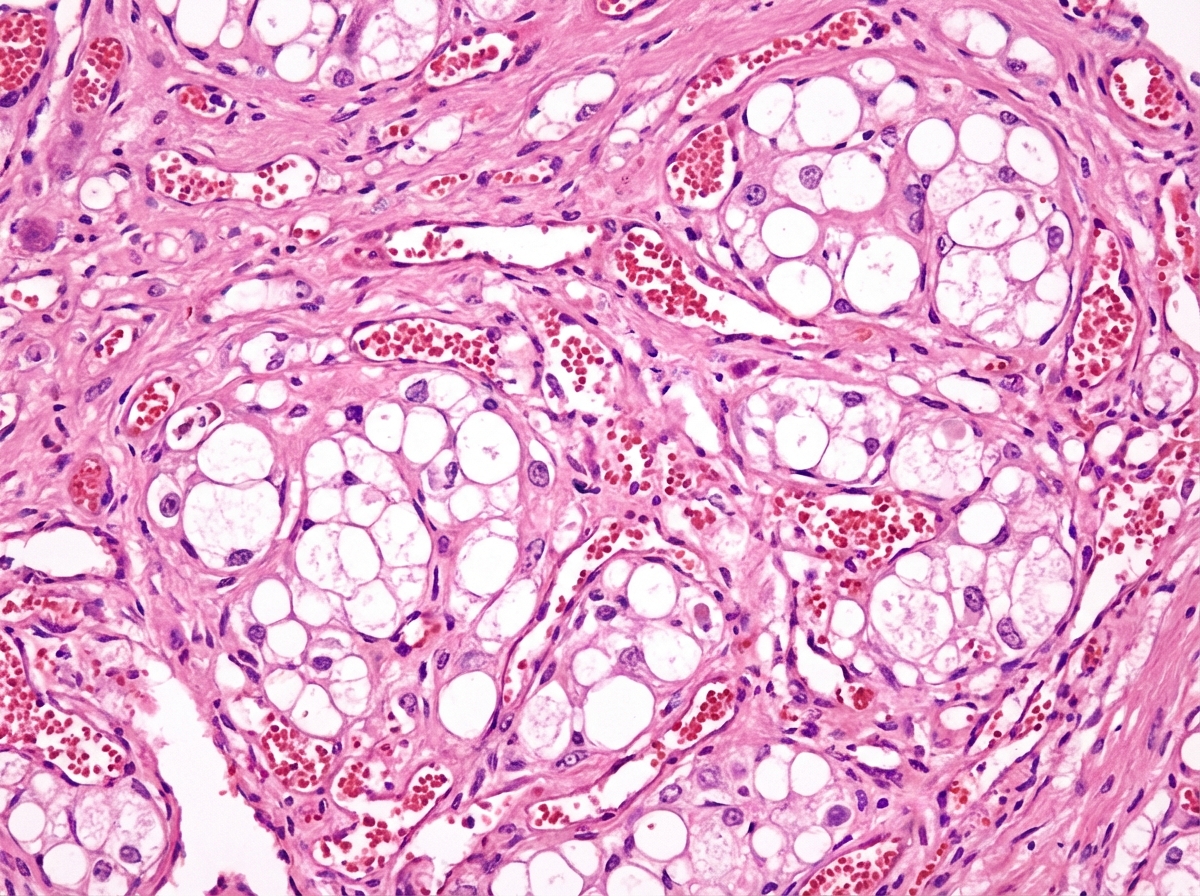
A 22-year-old man comes to the physician because of headaches and blurry vision for the past 6 months. He also reports frequent episodes of vomiting over the last month. His father has died of renal cell carcinoma at the age of 37 years. Examination shows 20/40 vision bilaterally. Fundoscopic examination shows bilateral optic disc swelling and growth of capillary vessels in the temporal peripheral retina. An MRI of the brain shows an infratentorial mass. The patient undergoes surgical resection of the mass. A photomicrograph of the resected specimen is shown. Which of the following is the most likely diagnosis?
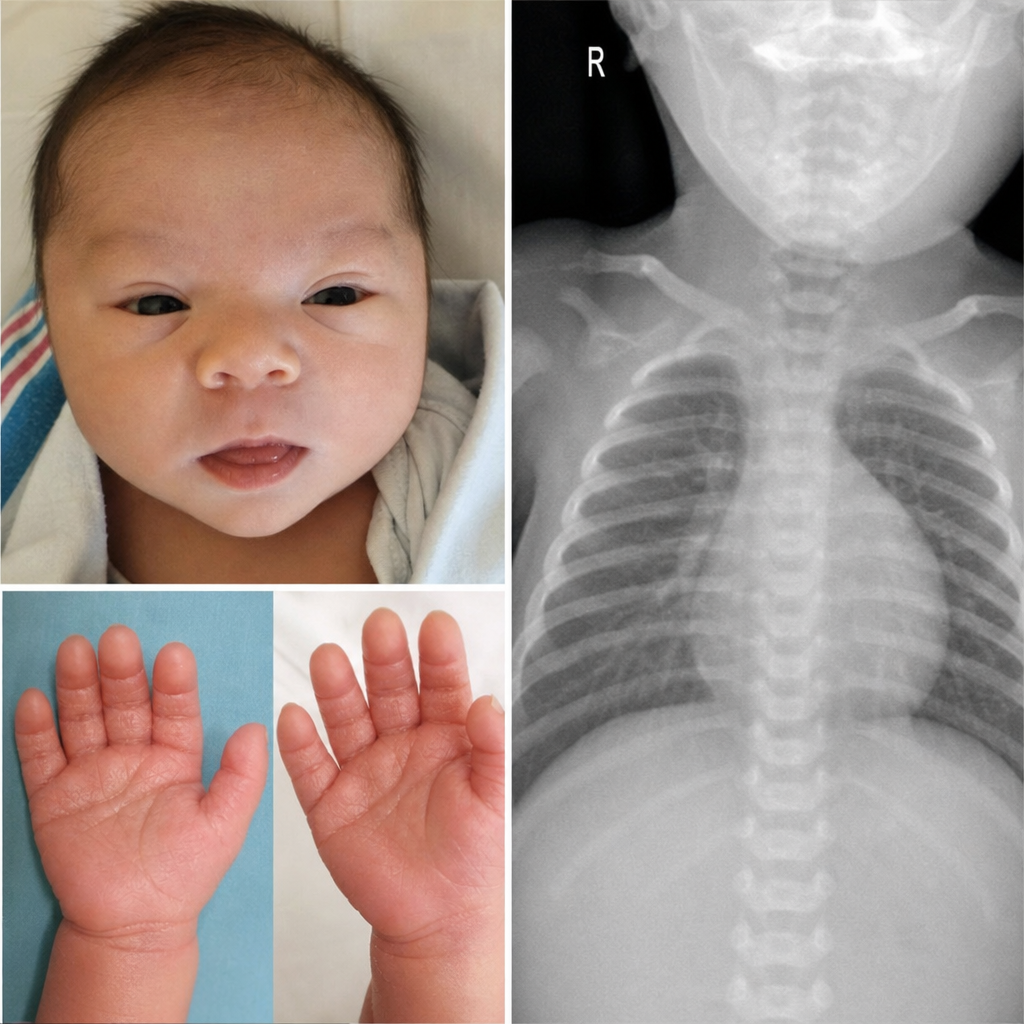
A newborn is delivered at 38 weeks gestation to a 28-year-old mother via spontaneous vaginal delivery. On examination in the delivery room, the infant has upslanting palpebral fissures, a flat nasal bridge, a single palmar crease bilaterally, and marked hypotonia. A harsh holosystolic murmur is heard at the left lower sternal border. The pediatric cardiology team is notified. Which of the following chromosomal findings is most consistent with this clinical presentation?
A 4-year-old boy with Down syndrome presents with fatigue and recurrent infections. CBC shows WBC 150,000/μL with 90% myeloblasts, hemoglobin 6.5 g/dL, platelets 15,000/μL. Flow cytometry confirms acute myeloid leukemia with megakaryoblastic features (AMKL). The parents are concerned about treatment intensity given their child's baseline developmental delays and increased treatment-related toxicity risk in Down syndrome. Evaluate the treatment approach considering the unique biology and competing risks.
A 15-year-old boy presents with right distal femur pain and a palpable mass. X-ray shows a mixed lytic-sclerotic lesion with periosteal elevation creating a Codman triangle and sunburst pattern. Biopsy confirms osteosarcoma. Staging shows pulmonary micrometastases. Alkaline phosphatase is markedly elevated. The family requests consideration of alternative therapies and limb salvage options. Synthesize the treatment plan addressing oncologic outcomes and functional preservation.
Want unlimited practice?
Get full access to all questions, explanations, and performance tracking.
Scan to download app