
Neuroblastoma — MCQs

A 3-year-old boy presents to the clinic for evaluation of leg pain. This has been persistent for the past 3 days and accompanied by difficulty walking. He has also had some erythema and ecchymoses in the periorbital region over the same time period. The vital signs are unremarkable. The physical exam notes the above findings, as well as some swelling of the upper part of the abdomen. The laboratory results are as follows: Erythrocyte count 3.3 million/mm3 Leukocyte count 3,000/mm3 Neutrophils 54% Eosinophils 1% Basophils 1% Lymphocytes 43% Monocytes 3% Platelet count 80,000/mm3 A magnetic resonance image (MRI) scan of the abdomen shows a mass of adrenal origin. Which of the following is the most likely cause of this patient's symptoms?
A 1-year-old boy is brought to the physician for a well-child examination. He has no history of serious illness. His older sister had an eye disease that required removal of one eye at the age of 3 years. Examination shows inward deviation of the right eye. Indirect ophthalmoscopy shows a white reflex in the right eye and a red reflex in the left eye. The patient is at increased risk for which of the following conditions?
A 3-year-old girl is brought to the physician by her parents due to observations of rapid, random, horizontal and vertical eye movements along with occasional jerking movements of her limbs and head. CT scan reveals an abdominal mass that crosses the midline. Further work-up reveals elevated 24-hour urinary homovanillic acid and vanillylmandelic acid. Neuroblastoma is suspected. Which of the following diseases pathologically originates from the same type of cells as Neuroblastoma?
A 5-year-old boy is brought to the physician because of early morning headaches for the past 6 months. During this period, he has had severe nausea and occasional episodes of vomiting. For the past month, he has had difficulty walking and intermittent double vision. He was born at term and has been healthy apart from an episode of sinusitis 8 months ago that resolved spontaneously. He is at the 60th percentile for height and 50th percentile for weight. His temperature is 37.1°C (98.8°F), pulse is 80/min, and blood pressure is 105/64 mm Hg. Examination shows normal muscle strength and 2+ deep tendon reflexes bilaterally. He has a broad-based gait and impaired tandem gait. Fundoscopy shows bilateral swelling of the optic disc. There is esotropia of the left eye. Which of the following is the most likely diagnosis?
A 43-year-old woman presents to your clinic for the evaluation of an abnormal skin lesion on her forearm. The patient is worried because her mother passed away from melanoma. You believe that the lesion warrants biopsy for further evaluation for possible melanoma. Your patient is concerned about her risk for malignant disease. What is the most important prognostic factor of melanoma?
A 2-year-old boy is brought to the physician because of progressive difficulty breathing and a productive cough for the past 2 days. During the past 6 months, he has had recurrent episodes of pneumonia treated with antibiotics. He has not gained weight in this time period. His temperature is 38.5°C (101.3°F), pulse is 130/min, respirations are 18/min, and blood pressure is 100/60 mm Hg. Auscultation of the lungs shows decreased breath sounds over the right lung fields. Ocular examination shows periorbital subcutaneous bleeding and bulging of both eyes. His leukocyte count is 16,000/mm3. An x-ray of the chest shows a right-sided opacity and a collapsed right lung. An MRI of the chest shows a heterogeneous mass in the posterior mediastinum that compresses the heart and the great vessels to the left side. Further evaluation is most likely to show which of the following?
An 18-month-old boy is brought to the doctor’s office for evaluation of abdominal pain. The boy looks emaciated and he is now significantly below his growth chart predicted weight. The family history is non-contributory. The vital signs are unremarkable. On physical examination, a non-tender mass is felt in the upper part of the abdomen. A magnetic resonance image (MRI) scan of his abdomen demonstrates a mass in his right adrenal gland. Biopsy of the mass demonstrates an abundance of small round blue cells. With this biopsy result, which 1 of the following findings would confirm the diagnosis?
A 7-year-old girl is brought to the physician by her mother because of a 2-week history of generalized fatigue, intermittent fever, and progressively worsening shortness of breath. Physical examination shows pallor, jugular venous distention, and nontender cervical and axillary lymphadenopathy. Inspiratory stridor is heard on auscultation of the chest. The liver is palpated 3 cm below the right costal margin. Her hemoglobin concentration is 9.5 g/dL, leukocyte count is 66,000/mm³, and platelet count is 102,000/mm³. An x-ray of the chest shows a mediastinal mass. A bone marrow aspirate predominantly shows leukocytes and presence of 35% lymphoblasts. Which of the following additional findings is most likely in this patient?
A newborn is delivered at 38 weeks gestation to a 28-year-old mother via spontaneous vaginal delivery. On examination in the delivery room, the infant has upslanting palpebral fissures, a flat nasal bridge, a single palmar crease bilaterally, and marked hypotonia. A harsh holosystolic murmur is heard at the left lower sternal border. The pediatric cardiology team is notified. Which of the following chromosomal findings is most consistent with this clinical presentation?
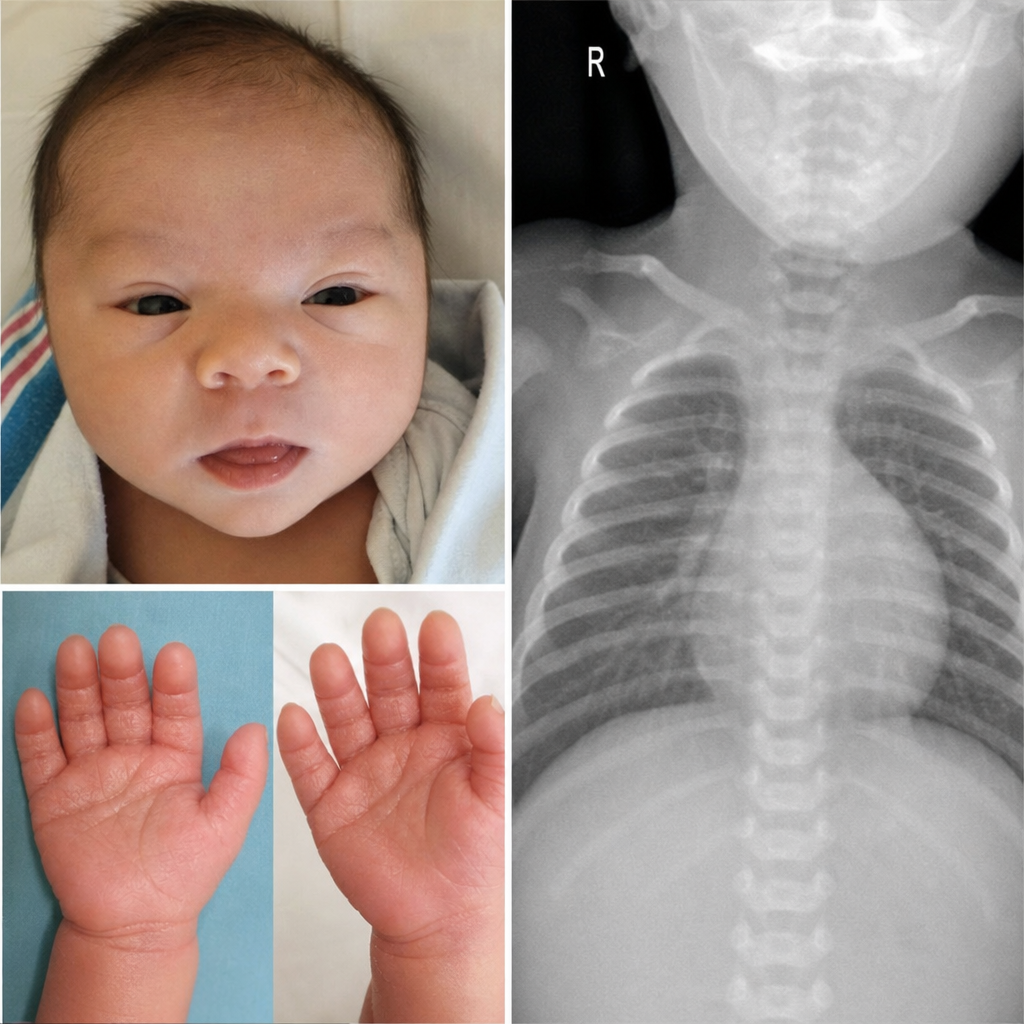
A 4-year-old boy with Down syndrome presents with fatigue and recurrent infections. CBC shows WBC 150,000/μL with 90% myeloblasts, hemoglobin 6.5 g/dL, platelets 15,000/μL. Flow cytometry confirms acute myeloid leukemia with megakaryoblastic features (AMKL). The parents are concerned about treatment intensity given their child's baseline developmental delays and increased treatment-related toxicity risk in Down syndrome. Evaluate the treatment approach considering the unique biology and competing risks.
Want unlimited practice?
Get full access to all questions, explanations, and performance tracking.
Scan to download app