A 62-year-old woman is seen in the hospital for neutropenic fever. She was admitted 1 week ago for newly diagnosed acute myeloid leukemia. Due to her chemotherapy, she became pancytopenic. Last night, during a packed red blood cell transfusion, she became febrile to 102.6°F (39.3°C), her blood pressure was 92/55, pulse was 112/min, respirations were 16/min, and oxygen saturation was 94% on room air. The transfusion was stopped, intravenous fluids were started, and blood cultures were drawn. The patient also complained of chest pain and shortness of breath. A chest radiograph was obtained and was normal. This morning, she reports "dark urine" but denies dysuria or abnormal vaginal discharge. Her prophylactic antimicrobials started at the time of her chemotherapy include acyclovir, levofloxacin, and fluconazole. The patient's temperature this morning is 98.7°F (37.1°C), blood pressure is 110/72 mmHg, pulse is 88/min, and respirations are 17/min with an oxygen saturation of 95% on room air. On physical examination, she has 1+ pitting peripheral edema of bilateral lower extremities to the mid-shin. Her jugular venous pressure is 6 cm. Her labs show neutropenia, normocytic anemia, thrombocytopenia, elevated lactate dehydrogenase, elevated total bilirubin, and decreased haptoglobin. Coagulation studies show an increase in bleeding time with normal D-dimer levels. Which of the following is the most likely cause of the patient's symptoms?
Q272
A 51-year-old man presents to his primary care physician with 3 months of increasing fatigue. He says that he has been feeling short of breath while walking to his office from the parking lot and is no longer able to participate in recreational activities that he enjoys such as hiking. His wife also comments that he has been looking very pale even though they spend a lot of time outdoors. His past medical history is significant for acute kidney injury after losing blood during a car accident as well as alcoholic hepatitis. Physical exam reveals conjunctival pallor, and a peripheral blood smear is obtained with the finding demonstrate in figure A. Which of the following is associated with the most likely cause of this patient's symptoms?
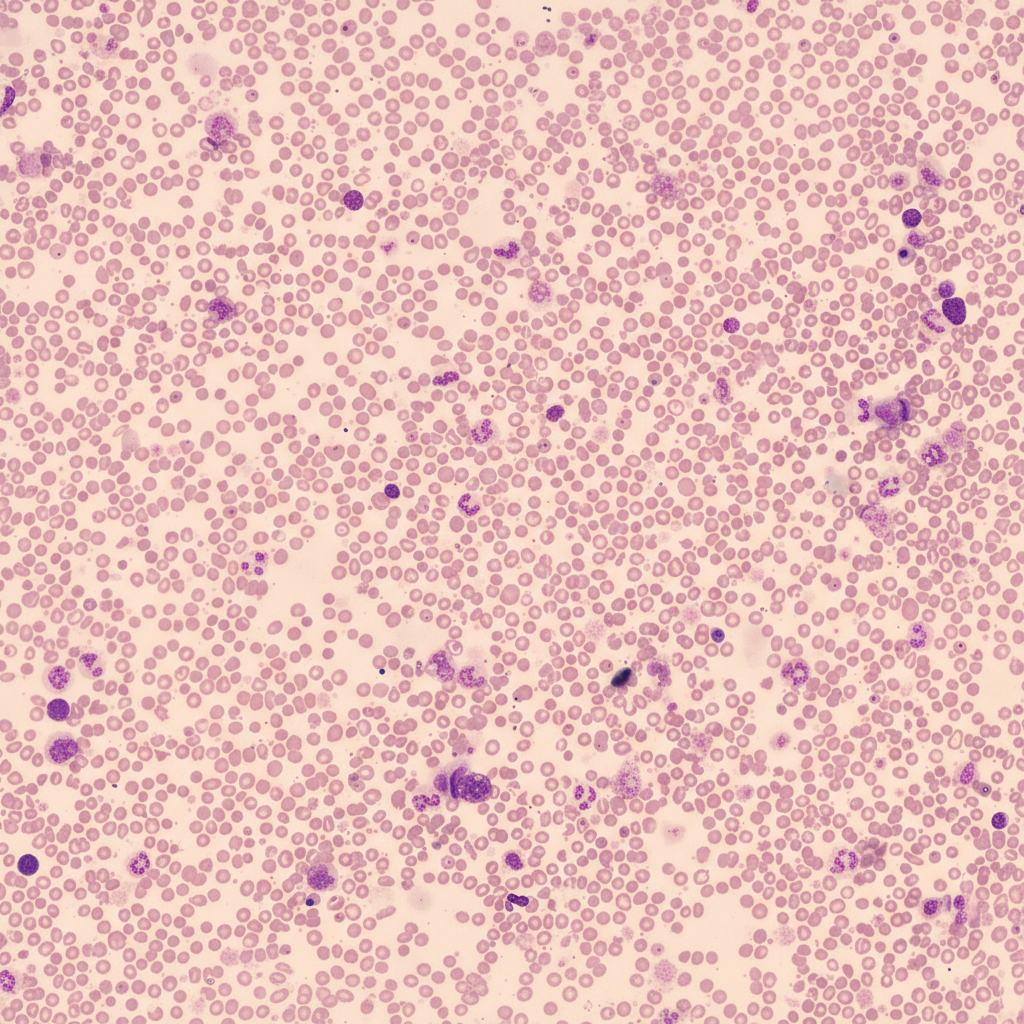
Q273
A 70-year-old woman comes to the physician because of a 4-month history of fatigue, worsening swelling of her ankles, and a 5-kg (11-lb) weight gain. Neurologic examination shows diminished two-point discrimination in her fingers. Laboratory studies show a hemoglobin A1c concentration of 9.2% and a creatinine concentration of 1.3 mg/dL. Urine dipstick shows heavy proteinuria. A biopsy specimen of this patient's kidney is most likely to show which of the following?
Q274
A 21-year-old woman comes to the physician because of a 1-week history of shortness of breath and dry cough. Eight weeks ago, she received a lung transplant from an unrelated donor. Current medications include prednisone, cyclosporine, and azathioprine. Her temperature is 37.8°C (100.1°F). Physical examination is unremarkable other than a well-healed surgical scar. Pulmonary function tests show a decline in FEV1 and FVC compared to values from several weeks ago. Histological examination of a lung biopsy specimen shows perivascular and interstitial lymphocytic infiltrates with bronchiolar inflammation. This patient's condition is most likely caused by T cell sensitization against which of the following?
Q275
A 68-year-old man with alcohol use disorder is brought to the physician by his sister for frequent falls and an unsteady gait over the past 2 months. He has not seen a physician in 10 years. He appears emaciated and inattentive. He is oriented to person only. Physical examination shows a wide-based gait with slow, short steps. Eye examination shows lateral gaze paralysis and horizontal nystagmus. One month later, he dies. Which of the following is the most likely finding on autopsy?
Q276
A 57-year-old male with diabetes mellitus type II presents for a routine check-up. His blood glucose levels have been inconsistently controlled with medications and diet since his diagnosis 3 years ago. At this current visit, urinalysis demonstrates albumin levels of 250 mg/day. All prior urinalyses have shown albumin levels below 20 mg/day. At this point in the progression of the patient’s disease, which of the following is the most likely finding seen on kidney biopsy?
Q277
A 44-year-old man presents to his primary care physician for muscle pain and weakness. He says that his muscle pain mainly affects his legs. He also experiences difficulty with chewing gum and has poor finger dexterity. Medical history is significant for infertility and cataracts. On physical exam, the patient's face is long and narrow with a high arched palate and mild frontal balding. There is bilateral ptosis and temporalis muscle and sternocleidomastoid muscle wasting. Creatine kinase level is mildly elevated. Which of the following is most likely to be found on genetic testing?
Q278
A 31-year-old woman presents to the emergency department with a 2-week history of dry cough and shortness of breath on exertion. She says that she has also been feeling joint pain that has been increasing over time and is worst in the mornings. Finally, she has noticed painful swellings that have been appearing on her body over the last month. Her past medical history is significant for childhood asthma that does not require any current medications. She drinks socially and has smoked 2 packs per day since she was 16 years old. Physical exam reveals erythematous nodular lesions on her trunk and upper extremities. Serum protein electrophoresis shows polyclonal gammopathy. Which of the following would most likely also be seen in this patient?
Q279
A 33-year-old woman comes to the physician for the evaluation of bleeding from her gums for 2 weeks. These episodes occur spontaneously and are self-limiting. She has also had purplish skin lesions over her legs for 2 months. Last week, she had one episode of hematuria and watery diarrhea, both of which resolved without treatment. She has mild asthma. Her brother has hemophilia. Her only medication is a fenoterol inhaler. She appears healthy. Her temperature is 37.1°C (99.3°F), pulse is 88/min, respirations are 14/min, and blood pressure is 122/74 mm Hg. Cardiopulmonary examination shows no abnormalities. The abdomen is soft and nontender; there is no organomegaly. Oropharyngeal examination shows gingival bleeding. There are petechiae over the neck and the right upper extremity and purpuric spots over both lower extremities. Laboratory studies show:
Hemoglobin 13.3 mg/dL
Mean corpuscular volume 94 μm3
Leukocyte count 8,800/mm3
Platelet count 18,000/mm3
Bleeding time 9 minutes
Prothrombin time 14 seconds (INR=0.9)
Partial thromboplastin time 35 seconds
Serum
Glucose 88 mg/dL
Creatinine 0.9 mg/dL
Which of the following is the most likely underlying mechanism of this patient's symptoms?
Q280
A 48-year-old African American male presents to his primary care provider complaining of facial swelling. He reports a three-day history of worsening swelling primarily around his eyes. The patient’s medical history is notable for sickle cell disease and poorly controlled hypertension. The patient currently takes enalapril, hydrochlorothiazide, and amlodipine but has a history of medication non-adherence. He has a 15 pack-year smoking history. His temperature is 99.1°F (37.3°C), blood pressure is 155/100 mmHg, pulse is 90/min, and respirations are 20/min. Physical examination is notable for periorbital swelling and 1+ bilateral lower extremity edema. Multiple serum and urine labs are ordered. A kidney biopsy in this patient would most likely yield which of the following sets of findings on light and electron microscopy?
Systemic Pathology US Medical PG Practice Questions and MCQs
Question 271: A 62-year-old woman is seen in the hospital for neutropenic fever. She was admitted 1 week ago for newly diagnosed acute myeloid leukemia. Due to her chemotherapy, she became pancytopenic. Last night, during a packed red blood cell transfusion, she became febrile to 102.6°F (39.3°C), her blood pressure was 92/55, pulse was 112/min, respirations were 16/min, and oxygen saturation was 94% on room air. The transfusion was stopped, intravenous fluids were started, and blood cultures were drawn. The patient also complained of chest pain and shortness of breath. A chest radiograph was obtained and was normal. This morning, she reports "dark urine" but denies dysuria or abnormal vaginal discharge. Her prophylactic antimicrobials started at the time of her chemotherapy include acyclovir, levofloxacin, and fluconazole. The patient's temperature this morning is 98.7°F (37.1°C), blood pressure is 110/72 mmHg, pulse is 88/min, and respirations are 17/min with an oxygen saturation of 95% on room air. On physical examination, she has 1+ pitting peripheral edema of bilateral lower extremities to the mid-shin. Her jugular venous pressure is 6 cm. Her labs show neutropenia, normocytic anemia, thrombocytopenia, elevated lactate dehydrogenase, elevated total bilirubin, and decreased haptoglobin. Coagulation studies show an increase in bleeding time with normal D-dimer levels. Which of the following is the most likely cause of the patient's symptoms?
A. ABO incompatibility (Correct Answer)
B. Disseminated intravascular coagulation
C. Transfusion related acute lung injury
D. Severe urosepsis
E. Transfusion associated circulatory overload
Explanation: **ABO incompatibility**
- The patient's symptoms, including **fever**, **hypotension**, **chest pain**, **shortness of breath**, and subsequent **dark urine** with elevations in **lactate dehydrogenase** and **bilirubin** and decreased haptoglobin, are classic signs of an **acute hemolytic transfusion reaction** due to ABO incompatibility.
- This type of reaction involves immediate destruction of transfused red blood cells, leading to **hemoglobinuria** ("dark urine") and systemic inflammation.
*Disseminated intravascular coagulation*
- Although DIC can cause **thrombocytopenia** and **hemolysis**, it typically presents with significantly **elevated D-dimer levels** and prolonged prothrombin time/activated partial thromboplastin time, which are not seen here.
- The primary event in this case points to red blood cell destruction rather than a widespread procoagulant activation.
*Transfusion related acute lung injury*
- TRALI is characterized by **acute respiratory distress** and **hypoxemia** occurring during or within 6 hours of transfusion, often with bilateral pulmonary infiltrates on chest X-ray.
- The patient's **normal chest radiograph** makes TRALI less likely.
*Severe urosepsis*
- While severe sepsis can cause **fever** and **hypotension**, the rapid onset of symptoms immediately following a transfusion, combined with **hemolytic markers** like dark urine and elevated LDH, points away from sepsis as the primary cause of these acute symptoms.
- Her prophylactic antibiotics make urosepsis less likely, although not impossible.
*Transfusion associated circulatory overload*
- TACO is characterized by signs of **volume overload**, such as **dyspnea**, **hypertension**, **jugular venous distension**, and **pulmonary edema**.
- While the patient has **peripheral edema** and slightly elevated JVP, her **hypotension** and the presence of significant **hemolytic markers** are not typical for TACO.
Question 272: A 51-year-old man presents to his primary care physician with 3 months of increasing fatigue. He says that he has been feeling short of breath while walking to his office from the parking lot and is no longer able to participate in recreational activities that he enjoys such as hiking. His wife also comments that he has been looking very pale even though they spend a lot of time outdoors. His past medical history is significant for acute kidney injury after losing blood during a car accident as well as alcoholic hepatitis. Physical exam reveals conjunctival pallor, and a peripheral blood smear is obtained with the finding demonstrate in figure A. Which of the following is associated with the most likely cause of this patient's symptoms?
A. Increased production of platelet derived growth factor (Correct Answer)
B. Inhibition of metalloproteinase activity
C. Mutation in glycolysis pathway protein
D. Abnormal triglyceride handling
E. Mutation in cytoskeletal proteins
Explanation: ***Increased production of platelet-derived growth factor***
- The clinical presentation (fatigue, dyspnea, pallor) with the peripheral blood smear findings (likely showing teardrop cells/dacrocytes and leukoerythroblastic picture) is consistent with **primary myelofibrosis**, a chronic myeloproliferative neoplasm
- The pathophysiology involves **abnormal megakaryocyte proliferation** that releases excessive **platelet-derived growth factor (PDGF)** and **transforming growth factor-beta (TGF-β)**
- These cytokines stimulate **reactive fibroblast proliferation** leading to **progressive bone marrow fibrosis**, causing marrow failure and extramedullary hematopoiesis
- This explains the anemia (marrow replacement), splenomegaly (extramedullary hematopoiesis), and characteristic teardrop cells on blood smear
*Inhibition of metalloproteinase activity*
- Metalloproteinases are involved in extracellular matrix degradation and tissue remodeling
- While fibrosis involves matrix deposition, the primary mechanism in myelofibrosis is **cytokine-driven fibroblast activation** (PDGF/TGF-β), not metalloproteinase inhibition
- This is not the established pathogenic mechanism
*Mutation in glycolysis pathway protein*
- Mutations in glycolytic enzymes (e.g., **pyruvate kinase deficiency**, **glucose-6-phosphate dehydrogenase deficiency**) cause hereditary hemolytic anemias
- These present with hemolysis, jaundice, and characteristic blood smear findings (bite cells, spherocytes), not the leukoerythroblastic picture of myelofibrosis
- Would not cause bone marrow fibrosis
*Abnormal triglyceride handling*
- This relates to **lipid storage diseases** (e.g., Gaucher disease) or metabolic disorders
- While Gaucher disease can cause marrow infiltration and "pseudo-Gaucher cells," this presents differently with hepatosplenomegaly and bone crises
- Not the mechanism in primary myelofibrosis
*Mutation in cytoskeletal proteins*
- Mutations in red blood cell membrane proteins (**spectrin, ankyrin, band 3**) cause **hereditary spherocytosis** or **hereditary elliptocytosis**
- These cause hemolytic anemia with characteristic spherocytes or elliptocytes on smear, not teardrop cells
- Do not cause bone marrow fibrosis or the myeloproliferative features seen in this patient
Question 273: A 70-year-old woman comes to the physician because of a 4-month history of fatigue, worsening swelling of her ankles, and a 5-kg (11-lb) weight gain. Neurologic examination shows diminished two-point discrimination in her fingers. Laboratory studies show a hemoglobin A1c concentration of 9.2% and a creatinine concentration of 1.3 mg/dL. Urine dipstick shows heavy proteinuria. A biopsy specimen of this patient's kidney is most likely to show which of the following?
A. Nodular glomerulosclerosis (Correct Answer)
B. Interstitial inflammation
C. Immune complex deposition
D. Split glomerular basement membrane
E. Wire looping of capillaries
Explanation: ***Nodular glomerulosclerosis***
- The patient's history of **fatigue**, **edema**, **weight gain**, **elevated HbA1c (9.2%)**, and **neuropathic symptoms** (diminished two-point discrimination) strongly point towards **long-standing diabetes mellitus with associated end-organ damage**.
- **Nodular glomerulosclerosis**, specifically **Kimmelstiel-Wilson lesions**, is the **pathognomonic histological finding in diabetic nephropathy**, characterized by **mesangial expansion and nodule formation**.
*Interstitial inflammation*
- This finding is more characteristic of **acute interstitial nephritis**, often drug-induced, or **chronic pyelonephritis**, which doesn't align with the patient's presentation of **heavy proteinuria** and **diabetic complications**.
- While some inflammation can occur in diabetic kidney disease, it's not the primary or most characteristic finding compared to glomerular changes.
*Immune complex deposition*
- This is typical of various **glomerulonephritides** such as **post-streptococcal glomerulonephritis** or **lupus nephritis**, where **immune complexes** lead to glomerular injury.
- The clinical picture provided, particularly the **high HbA1c** and **neuropathy**, is not suggestive of an **immune complex-mediated glomerulonephritis**.
*Split glomerular basement membrane*
- **Splitting of the glomerular basement membrane (GBM)** is a characteristic feature of **Alport syndrome** or **membranoproliferative glomerulonephritis (MPGN)**.
- The patient's history and laboratory findings do not suggest either of these conditions.
*Wire looping of capillaries*
- **Wire looping of glomerular capillaries** is a classic finding in **diffuse proliferative glomerulonephritis**, often associated with **lupus nephritis**.
- This finding is not associated with **diabetic nephropathy**, which is the most likely diagnosis given the patient's presentation.
Question 274: A 21-year-old woman comes to the physician because of a 1-week history of shortness of breath and dry cough. Eight weeks ago, she received a lung transplant from an unrelated donor. Current medications include prednisone, cyclosporine, and azathioprine. Her temperature is 37.8°C (100.1°F). Physical examination is unremarkable other than a well-healed surgical scar. Pulmonary function tests show a decline in FEV1 and FVC compared to values from several weeks ago. Histological examination of a lung biopsy specimen shows perivascular and interstitial lymphocytic infiltrates with bronchiolar inflammation. This patient's condition is most likely caused by T cell sensitization against which of the following?
A. Donor MHC class II antigen (Correct Answer)
B. Recipient MHC class I antigen
C. Streptococcal C polysaccharide antigen
D. CMV glycoprotein B antigen
E. Donor ABO antigen
Explanation: ***Donor MHC class II antigen***
- The patient's symptoms (shortness of breath, dry cough, decline in FEV1/FVC) and a lung biopsy showing **perivascular and interstitial lymphocytic infiltrates with bronchiolar inflammation** 8 weeks after transplantation are consistent with **acute cellular rejection**.
- **Acute cellular rejection** in a lung transplant is primarily mediated by **recipient T cells** recognizing **donor MHC class II antigens** presented by donor antigen-presenting cells (direct allorecognition) or recipient APCs (indirect allorecognition).
*Recipient MHC class I antigen*
- **Recipient MHC class I antigens** would be expressed on the recipient's own cells, which are not the target of rejection in this donor organ.
- T cell sensitization against recipient MHC class I would indicate an **autoimmune process**, which is not typical for transplant rejection.
*Streptococcal C polysaccharide antigen*
- This antigen is associated with **Streptococcus pyogenes** infections and diseases like **rheumatic fever** or **post-streptococcal glomerulonephritis**.
- It is unrelated to acute lung transplant rejection.
*CMV glycoprotein B antigen*
- **Cytomegalovirus (CMV) infection** is a common complication after transplant, but the biopsy findings of perivascular and interstitial lymphocytic infiltrates with bronchiolar inflammation are more typical of **cellular rejection**.
- CMV infection often presents with viral cytopathic effects on histology and serological evidence (e.g., rising PCR viral load), which are not mentioned.
*Donor ABO antigen*
- Mismatching in **ABO antigens** would typically lead to **hyperacute rejection**, which occurs within minutes to hours after transplantation.
- The presentation 8 weeks post-transplant rules out hyperacute rejection, and ABO incompatibility would have been identified and avoided during donor-recipient matching.
Question 275: A 68-year-old man with alcohol use disorder is brought to the physician by his sister for frequent falls and an unsteady gait over the past 2 months. He has not seen a physician in 10 years. He appears emaciated and inattentive. He is oriented to person only. Physical examination shows a wide-based gait with slow, short steps. Eye examination shows lateral gaze paralysis and horizontal nystagmus. One month later, he dies. Which of the following is the most likely finding on autopsy?
A. Degeneration of the frontotemporal lobe
B. Atrophy of the caudate and putamen
C. Depigmentation of the substantia nigra
D. Small vessel hemorrhage in mammillary bodies (Correct Answer)
E. Widespread atrophy of cerebral cortex
Explanation: ***Small vessel hemorrhage in mammillary bodies***
- This patient presents with symptoms consistent with **Wernicke encephalopathy** (ataxia, confusion, ophthalmoplegia due to **thiamine deficiency** in alcohol use disorder).
- Autopsy findings in Wernicke encephalopathy commonly include **petechial hemorrhages** and necrosis, particularly in the **mammillary bodies** and periventricular gray matter around the third and fourth ventricles.
*Degeneration of the frontotemporal lobe*
- This is characteristic of **frontotemporal dementia**, which presents with behavioral changes, personality alterations, and language difficulties.
- While dementia may be present in chronic alcohol use, the specific neurological signs like **nystagmus** and **gait ataxia** point away from primary frontotemporal degeneration.
*Atrophy of the caudate and putamen*
- This finding is characteristic of **Huntington disease**, a neurodegenerative genetic disorder.
- Huntington disease typically presents with **chorea**, psychiatric symptoms, and dementia, which are not the primary features reported here.
*Depigmentation of the substantia nigra*
- This is the hallmark pathological finding in **Parkinson disease**, resulting from the loss of dopaminergic neurons.
- Parkinson disease typically presents with **bradykinesia**, rigidity, tremor, and postural instability, rather than the acute confusion and ophthalmoplegia seen in this patient.
*Widespread atrophy of cerebral cortex*
- While chronic alcohol use can lead to **generalized cerebral atrophy**, this finding is non-specific and doesn't explain the acute and localized neurological signs (ataxia, ophthalmoplegia, confusion) that specifically indicate **Wernicke encephalopathy**.
- More specific lesions in areas like the **mammillary bodies** better correlate with the distinct clinical presentation.
Question 276: A 57-year-old male with diabetes mellitus type II presents for a routine check-up. His blood glucose levels have been inconsistently controlled with medications and diet since his diagnosis 3 years ago. At this current visit, urinalysis demonstrates albumin levels of 250 mg/day. All prior urinalyses have shown albumin levels below 20 mg/day. At this point in the progression of the patient’s disease, which of the following is the most likely finding seen on kidney biopsy?
A. Glomerular hypertrophy with slight glomerular basement membrane thickening
B. Normal kidney biopsy, no pathological finding is evident at this time
C. Significant global glomerulosclerosis
D. Kimmelstiel-Wilson nodules and tubulointerstitial fibrosis
E. Glomerular basement membrane thickening and mesangial expansion (Correct Answer)
Explanation: ***Glomerular basement membrane thickening and mesangial expansion***
- This patient's **diabetes mellitus type II** and new-onset **microalbuminuria** (albumin levels 30-300 mg/day) are classic features of early to moderate **diabetic nephropathy**.
- **Glomerular basement membrane (GBM) thickening** and **mesangial expansion** are the earliest and most common histological changes seen in diabetic nephropathy, preceding the formation of Kimmelstiel-Wilson nodules.
*Glomerular hypertrophy with slight glomerular basement membrane thickening*
- **Glomerular hypertrophy** is an early compensatory change in response to hyperfiltration, but **microalbuminuria** indicates more significant underlying structural damage beyond simple hypertrophy.
- While slight **GBM thickening** can occur, the additional finding of **mesangial expansion** is more characteristic at this stage of albuminuria.
*Normal kidney biopsy, no pathological finding is evident at this time*
- The presence of **albuminuria (250 mg/day)** confirms there is a pathological process occurring in the kidneys, making a normal biopsy highly unlikely.
- Albumin excretion is a direct indicator of **glomerular damage** or altered permeability.
*Significant global glomerulosclerosis*
- **Significant global glomerulosclerosis** represents a more advanced stage of kidney disease, typically associated with overt proteinuria or macroalbuminuria (>300 mg/day) and declining kidney function.
- While it will develop later, it is unlikely to be the primary finding with only **microalbuminuria**.
*Kimmelstiel-Wilson nodules and tubulointerstitial fibrosis*
- **Kimmelstiel-Wilson nodules** are pathognomonic but typically occur in later stages of diabetic nephropathy, usually with significant **proteinuria** or established kidney failure.
- **Tubulointerstitial fibrosis** is also a hallmark of more advanced chronic kidney disease, often accompanying significant glomerular damage, which is beyond this early stage of microalbuminuria.
Question 277: A 44-year-old man presents to his primary care physician for muscle pain and weakness. He says that his muscle pain mainly affects his legs. He also experiences difficulty with chewing gum and has poor finger dexterity. Medical history is significant for infertility and cataracts. On physical exam, the patient's face is long and narrow with a high arched palate and mild frontal balding. There is bilateral ptosis and temporalis muscle and sternocleidomastoid muscle wasting. Creatine kinase level is mildly elevated. Which of the following is most likely to be found on genetic testing?
A. Dystrophin gene non-frameshift mutation
B. Dystrophin gene nonsense mutation
C. DMPK gene CTG expansion (Correct Answer)
D. DYSF gene missense mutation
E. No genetic abnormality
Explanation: ***DMPK gene CTG expansion***
- This patient's presentation with **myotonia** (difficulty chewing, poor finger dexterity, muscle weakness), **facial weakness** (long, narrow face, frontal balding, ptosis, muscle wasting), **cataracts**, and **infertility** is highly characteristic of **myotonic dystrophy type 1** (DM1).
- DM1 is caused by an abnormally expanded trinucleotide repeat (CTG) in the **dystrophia myotonica protein kinase (DMPK)** gene.
*Dystrophin gene non-frameshift mutation*
- Non-frameshift mutations in the **dystrophin gene** are associated with **Becker muscular dystrophy**, which typically presents with **proximal muscle weakness** and does not usually involve the diverse systemic features seen here (cataracts, infertility, myotonia).
- While there is muscle pain and weakness, the unique constellation of symptoms points away from Becker muscular dystrophy.
*Dystrophin gene nonsense mutation*
- **Nonsense mutations** in the dystrophin gene lead to a complete absence of functional dystrophin, causing **Duchenne muscular dystrophy**, a severe, rapidly progressive muscle wasting disease.
- Duchenne muscular dystrophy typically presents in early childhood with **significant proximal muscle weakness**, Gowers' sign, and does not commonly manifest with myotonia, cataracts, or infertility as the primary features.
*DYSF gene missense mutation*
- Missense mutations in the **DYSF gene** are associated with **Dysferlinopathy**, which presents as limb-girdle muscular dystrophy type 2B or Miyoshi myopathy (distal dominant weakness).
- While it causes muscle weakness, it does not explain the prominent **myotonia**, **cataracts**, **facial dysmorphism**, or **infertility** observed in this patient.
*No genetic abnormality*
- Given the classic presentation of **myotonia**, distinctive **facial features**, **cataracts**, **infertility**, and muscle weakness, it is highly improbable that there is no underlying genetic abnormality.
- This symptom complex is a well-recognized genetic disorder, making a genetic cause very likely.
Question 278: A 31-year-old woman presents to the emergency department with a 2-week history of dry cough and shortness of breath on exertion. She says that she has also been feeling joint pain that has been increasing over time and is worst in the mornings. Finally, she has noticed painful swellings that have been appearing on her body over the last month. Her past medical history is significant for childhood asthma that does not require any current medications. She drinks socially and has smoked 2 packs per day since she was 16 years old. Physical exam reveals erythematous nodular lesions on her trunk and upper extremities. Serum protein electrophoresis shows polyclonal gammopathy. Which of the following would most likely also be seen in this patient?
A. Noncaseating granulomas (Correct Answer)
B. Macrophages with black phagocytosed particles
C. Golden-brown fusiform rods
D. Antibodies to small nuclear ribonucleoproteins
E. Acid-fast rods
Explanation: ***Noncaseating granulomas***
- The patient's symptoms of **dry cough**, **shortness of breath**, **joint pain**, and **erythematous nodular lesions** (suggestive of **erythema nodosum**) are classic manifestations of **sarcoidosis**.
- **Sarcoidosis** is pathologically characterized by the presence of **noncaseating granulomas** in affected organs, most commonly the lungs.
- **Polyclonal gammopathy** is commonly seen in sarcoidosis due to chronic immune activation.
*Macrophages with black phagocytosed particles*
- This finding, often referred to as **"dust cells"** or **carbon-laden macrophages**, is characteristic of conditions like **anthracosis** or **coal worker's pneumoconiosis**.
- While the patient is a smoker, the constellation of symptoms including **erythema nodosum**, **arthralgias**, and **polyclonal gammopathy** points toward sarcoidosis rather than isolated pneumoconiosis.
*Golden-brown fusiform rods*
- These are **asbestos bodies**, which are found in the lungs of patients with **asbestosis**, a form of pneumoconiosis caused by asbestos exposure.
- The patient's presentation does not suggest asbestos exposure or asbestosis.
*Antibodies to small nuclear ribonucleoproteins*
- **Anti-Sm antibodies** and **anti-RNP antibodies** are highly specific for **Systemic Lupus Erythematosus (SLE)**, a systemic autoimmune disease.
- While SLE can cause arthralgias and pulmonary symptoms, **erythema nodosum** is not a typical feature of SLE (which more commonly presents with malar rash, discoid lesions, or photosensitivity). The clinical picture is more consistent with sarcoidosis.
*Acid-fast rods*
- **Acid-fast rods** are characteristic of mycobacterial infections, such as **tuberculosis**.
- While tuberculosis can cause pulmonary symptoms and granulomas, these are typically **caseating granulomas** (not noncaseating), and the overall clinical picture with **erythema nodosum** and **polyclonal gammopathy** is more consistent with sarcoidosis than tuberculosis.
Question 279: A 33-year-old woman comes to the physician for the evaluation of bleeding from her gums for 2 weeks. These episodes occur spontaneously and are self-limiting. She has also had purplish skin lesions over her legs for 2 months. Last week, she had one episode of hematuria and watery diarrhea, both of which resolved without treatment. She has mild asthma. Her brother has hemophilia. Her only medication is a fenoterol inhaler. She appears healthy. Her temperature is 37.1°C (99.3°F), pulse is 88/min, respirations are 14/min, and blood pressure is 122/74 mm Hg. Cardiopulmonary examination shows no abnormalities. The abdomen is soft and nontender; there is no organomegaly. Oropharyngeal examination shows gingival bleeding. There are petechiae over the neck and the right upper extremity and purpuric spots over both lower extremities. Laboratory studies show:
Hemoglobin 13.3 mg/dL
Mean corpuscular volume 94 μm3
Leukocyte count 8,800/mm3
Platelet count 18,000/mm3
Bleeding time 9 minutes
Prothrombin time 14 seconds (INR=0.9)
Partial thromboplastin time 35 seconds
Serum
Glucose 88 mg/dL
Creatinine 0.9 mg/dL
Which of the following is the most likely underlying mechanism of this patient's symptoms?
A. Consumptive coagulopathy
B. IgG antibodies against platelets (Correct Answer)
C. Shiga-like toxin
D. Decrease in ADAMTS13 activity
E. Deficient Von Willebrand factor
Explanation: ***IgG antibodies against platelets***
- The patient's symptoms, including **gingival bleeding**, **purpuric skin lesions**, **hematuria**, and a significantly **low platelet count (18,000/mm3)** with a prolonged **bleeding time (9 minutes)**, are highly indicative of **immune thrombocytopenia (ITP)**.
- ITP is characterized by the production of **IgG autoantibodies against platelet surface glycoproteins**, leading to accelerated platelet destruction by the reticuloendothelial system, primarily in the spleen.
*Consumptive coagulopathy*
- **Disseminated intravascular coagulation (DIC)** is a consumptive coagulopathy that would present with low platelets, but also with prolonged **PT** and **aPTT**, and evidence of microangiopathic hemolytic anemia due to widespread thrombosis and subsequent consumption of clotting factors and platelets.
- The patient's **normal PT and aPTT** rule out DIC.
*Shiga-like toxin*
- **Shiga-like toxin** is associated with **hemolytic uremic syndrome (HUS)**, which typically involves a triad of **microangiopathic hemolytic anemia**, **thrombocytopenia**, and **acute kidney injury** following a diarrheal illness.
- While the patient had watery diarrhea and hematuria, her kidney function is normal (creatinine 0.9 mg/dL), and there is no mention of schistocytes or features of hemolytic anemia, making HUS less likely.
*Decrease in ADAMTS13 activity*
- A decrease in **ADAMTS13 activity** causes **thrombotic thrombocytopenic purpura (TTP)**, which is characterized by a pentad of **fever, neurologic symptoms, renal dysfunction, microangiopathic hemolytic anemia**, and **thrombocytopenia**.
- While thrombocytopenia is present, the absence of fever, neurologic symptoms, significant renal dysfunction, and hemolytic anemia makes TTP unlikely.
*Deficient Von Willebrand factor*
- **Deficient von Willebrand factor (vWF)** causes **Von Willebrand disease**, which presents with mucocutaneous bleeding and a **prolonged bleeding time**.
- However, the **platelet count is typically normal** in von Willebrand disease, which contradicts this patient's severely low platelet count.
Question 280: A 48-year-old African American male presents to his primary care provider complaining of facial swelling. He reports a three-day history of worsening swelling primarily around his eyes. The patient’s medical history is notable for sickle cell disease and poorly controlled hypertension. The patient currently takes enalapril, hydrochlorothiazide, and amlodipine but has a history of medication non-adherence. He has a 15 pack-year smoking history. His temperature is 99.1°F (37.3°C), blood pressure is 155/100 mmHg, pulse is 90/min, and respirations are 20/min. Physical examination is notable for periorbital swelling and 1+ bilateral lower extremity edema. Multiple serum and urine labs are ordered. A kidney biopsy in this patient would most likely yield which of the following sets of findings on light and electron microscopy?
A. Wire looping capillaries and subendothelial immune complex deposition
B. Increased mesangial cellularity and mesangial immune complex deposition
C. Hypercellular glomeruli with neutrophils and subepithelial immune complex deposition
D. Segmental sclerosis and negative immunofluorescence and foot process effacement (Correct Answer)
E. Diffusely thickened capillaries and subepithelial immune complex deposition
Explanation: ***Segmental sclerosis and negative immunofluorescence and foot process effacement***
- The patient's presentation with **facial swelling (periorbital edema)**, **lower extremity edema**, and **poorly controlled hypertension** suggests a nephrotic syndrome. Given his **African American ethnicity** and history of poorly controlled hypertension, **focal segmental glomerulosclerosis (FSGS)** is a strong possibility.
- **FSGS** typically presents with **segmental sclerosis** on light microscopy, **foot process effacement** on electron microscopy, and **negative immunofluorescence** for immune deposits.
*Wire looping capillaries and subendothelial immune complex deposition*
- This description is characteristic of **diffuse proliferative glomerulonephritis (DPGN)**, often associated with **lupus nephritis (Class III or IV)**.
- While lupus can cause nephrotic syndrome, the patient's history doesn't mention systemic lupus erythematosus, and the specific findings don't align with this diagnosis.
*Increased mesangial cellularity and mesangial immune complex deposition*
- This is typical of **IgA nephropathy** or early stages of lupus nephritis (Class II).
- IgA nephropathy is less common in African Americans as the primary cause of nephrotic syndrome and does not typically present with the same level of edema and hypertension without other systemic symptoms.
*Hypercellular glomeruli with neutrophils and subepithelial immune complex deposition*
- This description, especially the presence of neutrophils and **subepithelial immune complex deposition**, is characteristic of **post-streptococcal glomerulonephritis (PSGN)**.
- PSGN typically follows a streptococcal infection and presents with hematuria and acute renal failure, which are not the primary complaints here.
*Diffusely thickened capillaries and subepithelial immune complex deposition*
- This is the hallmark of **membranous nephropathy**, another common cause of nephrotic syndrome.
- While membranous nephropathy can cause nephrotic syndrome, it typically presents with dense **subepithelial immune deposits** and is less frequently seen with negative immunofluorescence unless it is secondary to another condition not mentioned.