A 36-year-old man presents with massive hematemesis. Past medical history is significant for a gastric ulcer. He has a pulse of 115/min, respiratory rate of 20/min, temperature of 36°C (96.8°F), and blood pressure of 90/59 mm Hg. The patient receives a transfusion of 2 units of packed red blood cells. Around 5–10 minutes after the transfusion, he starts having chills, pain in the lumbar region, and oliguria. His vital signs change to pulse of 118/min, respiratory rate of 19/min, temperature of 38°C (100.4°F), and blood pressure of 60/40 mm Hg. Which of the following is the most likely cause of this patient’s condition?
Q222
A 59-year-old patient presented to his family physician 8 years ago with initial complaints of increasing generalized stiffness with trouble initiating movement and worsening micrographia. He was started on levodopa after further evaluation led to a suspected diagnosis of Parkinson's disease; however, this therapy ultimately failed to improve the patient's symptoms. Additionally, over the ensuing 8 years since his initial presentation, the patient also developed symptoms including worsening balance, orthostatic hypotension, urinary incontinence, and impotence. The patient's overall condition deteriorated ever since this initial diagnosis with increasing disability from his motor symptoms, and he recently passed away at the age of 67, 8 years after his first presentation to his physician. The family requests an autopsy. Which of the following would be expected on autopsy evaluation of this patient's brain tissue?
Q223
A 10-year-old boy presents to your office with puffy eyes. The patient's mother states that his eyes seem abnormally puffy and thinks he may have an eye infection. Additionally, he had a sore throat a week ago which resolved with over the counter medications. The mother also thought that his urine was darker than usual and is concerned that blood may be present. His temperature is 99.5°F (37.5°C), blood pressure is 107/62 mmHg, pulse is 100/min, respirations are 17/min, and oxygen saturation is 98% on room air. Physical exam is notable for bilateral periorbital edema. Cranial nerves are grossly intact bilaterally. Which of the following is the most likely finding on renal biopsy for this patient?
Q224
A 37-year-old man, otherwise healthy, has a routine CBC done prior to donating blood for the first time. The results are as follows:
Hemoglobin 10.8 g/dL
Mean corpuscular volume (MCV) 82 μm3
Mean corpuscular hemoglobin concentration (MCHC) 42%
Reticulocyte count 3.2%
White blood cell count 8,700/mm3
Platelet count 325,000/mm3
The patient is afebrile and his vital signs are within normal limits. On physical examination, his spleen is just palpable. A peripheral blood smear is shown in the exhibit (see image). A direct antiglobulin test (DAT) is negative. Which of the following best describes the etiology of this patient’s most likely diagnosis?
Q225
A 5-year-old boy is brought to the physician because of a painful, burning rash on his left arm for 3 days. Three years ago, he was diagnosed with heart failure due to congenital heart disease and received an allogeneic heart transplantation. He takes cyclosporine to prevent chronic transplant rejection. He has not received any routine childhood vaccinations. A photograph of the rash is shown. Microscopic examination of a skin biopsy specimen is most likely to show which of the following findings?
Q226
A 21-year-old man comes to the physician because of a 3-day history of yellowing of his eyes. He has also noticed a decrease in his exercise capacity and gets quickly exhausted after minor physical activity. Examination shows scleral icterus and pale mucous membranes. He has splenomegaly. His hemoglobin concentration is 7.9 g/dL, leukocyte is count 8500/mm3, and platelet count is 187,000/mm3. Direct antiglobulin and heterophile antibody tests are positive. Which of the following additional laboratory findings are most likely present in this patient?
Q227
A pathologist performed an autopsy on an 18-month-old infant boy who died of pneumonia. Clinical notes revealed the infant had repeated respiratory infections that started after he was weaned off of breast-milk. Laboratory investigation revealed hypogammaglobulinemia and an absence of B-cells. T-cell levels were normal. Histological evaluation of an axillary lymph node revealed an absence of germinal centers. Which of the following is the mode of inheritance of the disorder that afflicted this infant?
Q228
A 12-year-old boy comes to the physician for the evaluation of intermittent blood-tinged urine for several months. Four months ago, he had an episode of fever and sore throat that resolved without treatment after 5 days. During the past 2 years, he has also had recurrent episodes of swelling of his face and feet. 5 years ago, he was diagnosed with mild bilateral sensorineural hearing loss. His brother died of a progressive kidney disease at the age of 23. The patient appears pale. His temperature is 37°C (98.6°F), pulse is 70/min, and blood pressure is 145/85 mm Hg. Slit lamp examination shows a conical protrusion of both lenses. Laboratory studies show a hemoglobin concentration of 11 g/dL, urea nitrogen concentration of 40 mg/dL, and creatinine concentration of 2.4 mg/dL. Urinalysis shows:
Blood 2+
Protein 1+
RBC 5–7/hpf
RBC casts rare
Which of the following is the most likely underlying cause of this patient's symptoms?
Q229
A 3-month-old is referred to a pediatric immunologist by his pediatrician for further workup of recurrent sinopulmonary infections which have not abated despite adequate treatment. During the workup flow cytometry demonstrates a decrease in normal CD40L cells. Based on these findings, the immunologist decides to pursue a further workup and obtains immunoglobulin levels. Which of the following immunoglobulin profiles is most likely to be observed in this patient?
Q230
A 31-year-old man presents to the office with complaints of multiple episodes of blood in his urine as well as coughing of blood for the past 3 days. He also reports a decrease in urinary frequency, and denies pain with urination. No previous similar symptoms or significant past medical history is noted. There is no history of bleeding disorders in his family. His vitals include a blood pressure of 142/88 mm Hg, a pulse of 87/min, a temperature of 36.8°C (98.2°F), and a respiratory rate of 11/min. On physical examination, chest auscultation reveals normal vesicular breath sounds. Abdominal exam is normal. The laboratory results are as follows:
Complete blood count
Hemoglobin 12 g/dL
RBC 4.9 x 10⁶ cells/µL
Hematocrit 48%
Total leukocyte count 6,800 cells/µL
Neutrophils 70%
Lymphocyte 25%
Monocytes 4%
Eosinophil 1%
Basophils 0%
Platelets 200,000 cells/µL
Urine examination
pH 6.2
Color dark brown
RBC 18–20/HPF
WBC 3–4/HPF
Protein 1+
Cast RBC casts
Glucose absent
Crystal none
Ketone absent
Nitrite absent
24 hours urine protein excretion 1.3 g
A renal biopsy under light microscopy shows a crescent formation composed of fibrin and macrophages. Which of the following best describes the indirect immunofluorescence finding in this condition?
Systemic Pathology US Medical PG Practice Questions and MCQs
Question 221: A 36-year-old man presents with massive hematemesis. Past medical history is significant for a gastric ulcer. He has a pulse of 115/min, respiratory rate of 20/min, temperature of 36°C (96.8°F), and blood pressure of 90/59 mm Hg. The patient receives a transfusion of 2 units of packed red blood cells. Around 5–10 minutes after the transfusion, he starts having chills, pain in the lumbar region, and oliguria. His vital signs change to pulse of 118/min, respiratory rate of 19/min, temperature of 38°C (100.4°F), and blood pressure of 60/40 mm Hg. Which of the following is the most likely cause of this patient’s condition?
A. Febrile non-hemolytic transfusion reaction
B. Acute hemolytic transfusion reaction (Correct Answer)
C. Transfusion-associated sepsis
D. Transfusion-related acute lung injury
E. Anaphylactic transfusion reaction
Explanation: ***Acute hemolytic transfusion reaction***
- The rapid onset of **fever**, **chills**, **lumbar pain**, **oliguria**, and **hypotension** immediately after a blood transfusion is highly indicative of an acute hemolytic transfusion reaction (AHTR).
- This reaction results from **intravascular hemolysis** due to recipient antibodies (usually ABO incompatibility) reacting with donor red blood cells.
*Febrile non-hemolytic transfusion reaction*
- This reaction typically presents with **fever and chills**, but it lacks the severe symptoms of **renal failure (oliguria)** and profound **hypotension** seen in this patient.
- It is usually caused by cytokines released from donor leukocytes or recipient antibodies to white blood cell antigens.
*Transfusion-associated sepsis*
- While sepsis can present with fever and hypotension, it typically involves a **delay in onset** after transfusion as bacterial growth takes time, and the patient's initial symptoms are too immediate (5-10 minutes).
- This condition is usually due to **bacterial contamination** in the transfused blood product.
*Transfusion-related acute lung injury*
- TRALI primarily manifests as **acute respiratory distress**, including hypoxemia and bilateral pulmonary infiltrates, which are not described in this patient's symptoms.
- While fever and hypotension can occur, the prominent **lumbar pain** and **oliguria** point away from TRALI.
*Anaphylactic transfusion reaction*
- Anaphylaxis would also present with rapid onset but would typically include widespread **urticaria**, **angioedema**, **bronchospasm**, or severe respiratory distress, which are absent in this presentation.
- It usually occurs in patients with **IgA deficiency** who develop anti-IgA antibodies.
Question 222: A 59-year-old patient presented to his family physician 8 years ago with initial complaints of increasing generalized stiffness with trouble initiating movement and worsening micrographia. He was started on levodopa after further evaluation led to a suspected diagnosis of Parkinson's disease; however, this therapy ultimately failed to improve the patient's symptoms. Additionally, over the ensuing 8 years since his initial presentation, the patient also developed symptoms including worsening balance, orthostatic hypotension, urinary incontinence, and impotence. The patient's overall condition deteriorated ever since this initial diagnosis with increasing disability from his motor symptoms, and he recently passed away at the age of 67, 8 years after his first presentation to his physician. The family requests an autopsy. Which of the following would be expected on autopsy evaluation of this patient's brain tissue?
A. Round intracellular tau protein aggregates
B. Periventricular white matter plaques
C. Beta-amyloid plaques
D. Glial cytoplasmic inclusions (Correct Answer)
E. Astrocytosis and caudate atrophy
Explanation: ***Glial cytoplasmic inclusions***
- The patient's presentation with **atypical Parkinsonian features** (poor response to levodopa, early autonomic dysfunction like orthostatic hypotension and urinary incontinence, and rapid progression) suggests **multiple system atrophy (MSA)**.
- MSA is pathologically characterized by the presence of **alpha-synuclein-containing glial cytoplasmic inclusions (Papp-Lantos bodies)**, primarily in oligodendrocytes.
*Round intracellular tau protein aggregates*
- **Round intracellular tau protein aggregates** are characteristic of conditions like **argyrophilic grain disease** or **corticobasal degeneration**.
- While they are tauopathies, they do not align with the broad clinical picture of autonomic dysfunction and parkinsonism seen in this patient.
*Beta-amyloid plaques*
- **Beta-amyloid plaques** are the hallmark pathological features of **Alzheimer's disease**.
- Alzheimer's primarily presents with cognitive decline, which is not the predominant feature in this case, and the motor and autonomic symptoms are not typical.
*Periventricular white matter plaques*
- **Periventricular white matter plaques** are characteristic lesions found in **multiple sclerosis**.
- Multiple sclerosis typically presents with relapsing-remitting neurological deficits, often sensory or motor, and does not align with the progressive parkinsonism and autonomic failure described.
*Astrocytosis and caudate atrophy*
- **Astrocytosis and caudate atrophy** are typical findings in **Huntington's disease**.
- Huntington's disease is characterized by chorea, psychiatric symptoms, and cognitive decline, which are distinct from the patient's presentation of parkinsonism and autonomic dysfunction.
Question 223: A 10-year-old boy presents to your office with puffy eyes. The patient's mother states that his eyes seem abnormally puffy and thinks he may have an eye infection. Additionally, he had a sore throat a week ago which resolved with over the counter medications. The mother also thought that his urine was darker than usual and is concerned that blood may be present. His temperature is 99.5°F (37.5°C), blood pressure is 107/62 mmHg, pulse is 100/min, respirations are 17/min, and oxygen saturation is 98% on room air. Physical exam is notable for bilateral periorbital edema. Cranial nerves are grossly intact bilaterally. Which of the following is the most likely finding on renal biopsy for this patient?
A. Sub-epithelial electron dense deposits on electron microscopy (Correct Answer)
B. Linear Ig deposits along the basement membrane
C. Podocyte fusion on electron microscopy
D. Alternating thickening and thinning of basement membrane with splitting of the lamina densa
E. No abnormalities
Explanation: ***Sub-epithelial electron dense deposits on electron microscopy***
- The patient's presentation with periorbital edema, dark urine (suggesting hematuria), and a recent history of pharyngitis strongly points towards **post-streptococcal glomerulonephritis (PSGN)**.
- Renal biopsy in PSGN characteristically shows **sub-epithelial humps** (electron-dense deposits) primarily composed of IgG and C3, which are best visualized on electron microscopy.
*Linear Ig deposits along the basement membrane*
- **Linear immunoglobulin G (IgG) deposits** along the glomerular basement membrane (GBM) are characteristic of **Goodpasture syndrome (anti-GBM disease)**.
- This condition presents with rapidly progressive glomerulonephritis and often pulmonary hemorrhage, which is not suggested by this patient's symptoms.
*Podocyte fusion on electron microscopy*
- **Podocyte effacement** (fusion of foot processes) is the hallmark finding in **minimal change disease**.
- Minimal change disease typically presents with **nephrotic syndrome** (heavy proteinuria, hypoalbuminemia, severe edema) without significant hematuria or a history of recent infection.
*Alternating thickening and thinning of basement membrane with splitting of the lamina densa*
- This description is characteristic of **Alport syndrome**, an inherited disorder affecting collagen IV.
- Alport syndrome presents with progressive hematuria, sensorineural hearing loss, and ocular abnormalities, which are not mentioned in this acute presentation.
*No abnormalities*
- Given the patient's clear symptoms of **nephritic syndrome** (edema, hematuria following infection), it is highly unlikely that a renal biopsy would show no abnormalities.
- A significant pathological process is indicated by the clinical picture.
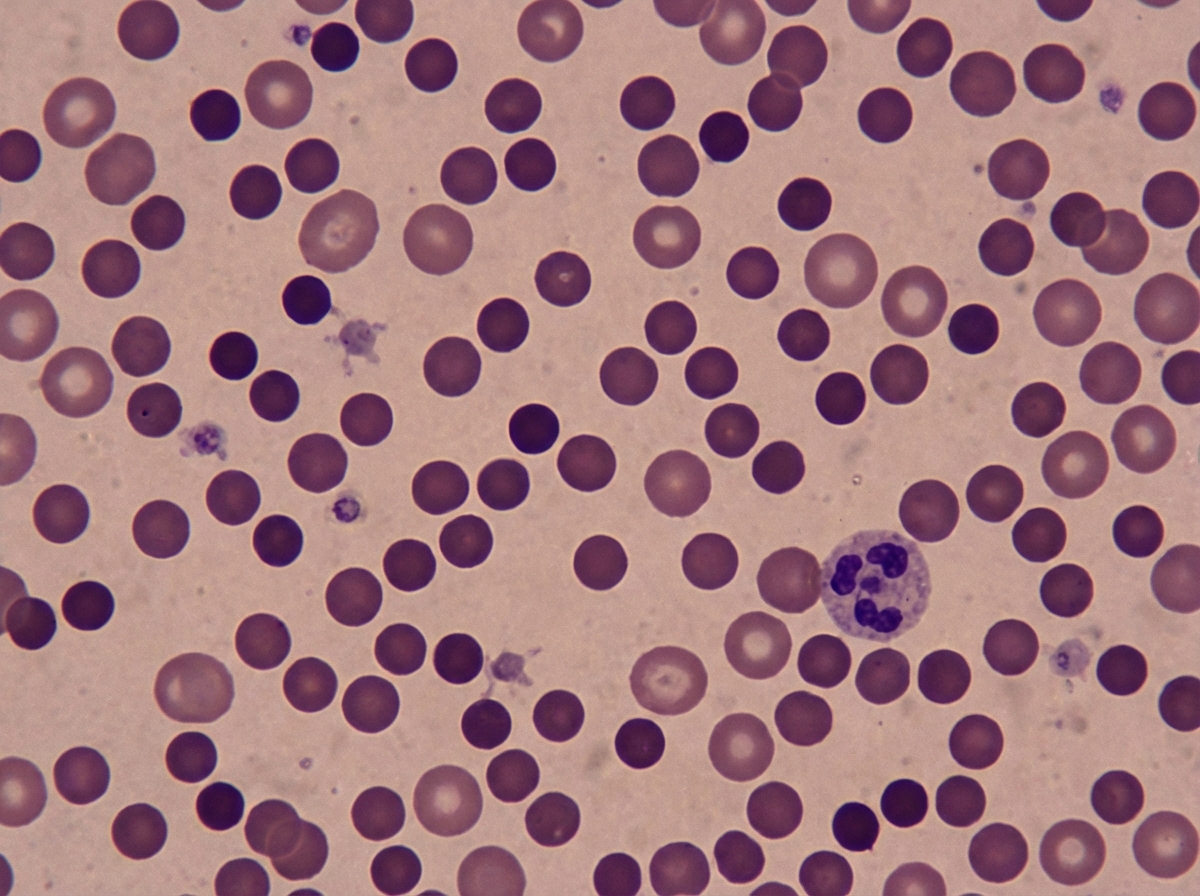
Question 224: A 37-year-old man, otherwise healthy, has a routine CBC done prior to donating blood for the first time. The results are as follows:
Hemoglobin 10.8 g/dL
Mean corpuscular volume (MCV) 82 μm3
Mean corpuscular hemoglobin concentration (MCHC) 42%
Reticulocyte count 3.2%
White blood cell count 8,700/mm3
Platelet count 325,000/mm3
The patient is afebrile and his vital signs are within normal limits. On physical examination, his spleen is just palpable. A peripheral blood smear is shown in the exhibit (see image). A direct antiglobulin test (DAT) is negative. Which of the following best describes the etiology of this patient’s most likely diagnosis?
A. Immune-mediated hemolysis
B. Inherited membrane abnormality of red cells (Correct Answer)
C. Bone marrow hypocellularity
D. Microangiopathic process
E. Oxidant hemolysis
Explanation: ***Inherited membrane abnormality of red cells***
- The findings of **anemia** (Hb 10.8 g/dL), **elevated MCHC** (42%), **reticulocytosis** (3.2%), and palpable **splenomegaly** with a **negative DAT** strongly suggest **hereditary spherocytosis**.
- This condition is caused by defects in red cell membrane proteins (e.g., **spectrin, ankyrin, band 3**) leading to **spherocytes** and increased red cell destruction, primarily in the spleen.
*Immune-mediated hemolysis*
- This would typically be indicated by a **positive direct antiglobulin test (DAT)** which detects antibodies or complement components on the surface of red blood cells, but the DAT is negative in this case.
- While spherocytes can be seen in immune hemolytic anemia, the negative DAT rules out this etiology as the primary cause.
*Bone marrow hypocellularity*
- **Bone marrow hypocellularity** (e.g., in aplastic anemia) would result in **pancytopenia** (low red cells, white cells, and platelets) and a **low reticulocyte count**, indicating impaired bone marrow production, which is not seen here as the reticulocyte count is elevated.
- The presence of **splenomegaly** and **spherocytes** on the peripheral smear points away from bone marrow failure.
*Microangiopathic process*
- A **microangiopathic process** (e.g., TTP, HUS) is characterized by the presence of **schistocytes** (fragmented red cells) on the peripheral smear, often alongside **thrombocytopenia** and organ damage, none of which are explicitly mentioned or supported by the provided data.
- The presence of **spherocytes** and **elevated MCHC** does not fit with a microangiopathic process.
*Oxidant hemolysis*
- **Oxidant hemolysis** (e.g., G6PD deficiency) often presents with **Heinz bodies** (precipitated denatured hemoglobin) and **bite cells** on the peripheral smear, particularly after exposure to oxidative stressors.
- While it can cause hemolysis, the classic findings of **hereditary spherocytosis** (elevated MCHC, spherocytes, splenomegaly, negative DAT) are more specific to a membrane defect rather than oxidant injury.
Question 225: A 5-year-old boy is brought to the physician because of a painful, burning rash on his left arm for 3 days. Three years ago, he was diagnosed with heart failure due to congenital heart disease and received an allogeneic heart transplantation. He takes cyclosporine to prevent chronic transplant rejection. He has not received any routine childhood vaccinations. A photograph of the rash is shown. Microscopic examination of a skin biopsy specimen is most likely to show which of the following findings?
A. Gram-positive cocci and spongiotic dermatitis
B. Multinucleated epidermal giant cells and intranuclear inclusions (Correct Answer)
C. Fungal hyphae and hyperkeratosis
D. Papillary microabscesses and granular deposits of IgA
E. Eosinophilic spongiosis and subepidermal blister formation
Explanation: ***Multinucleated epidermal giant cells and intranuclear inclusions***
- The rash described (painful, burning, unilateral) in an immunocompromised child (due to **cyclosporine** post-transplant) is highly suggestive of **herpes zoster** (shingles).
- Histopathologically, herpes zoster, caused by the **varicella-zoster virus**, is characterized by **multinucleated epidermal giant cells** and **intranuclear inclusions** (Cowdry type A bodies).
*Gram-positive cocci and spongiotic dermatitis*
- **Gram-positive cocci** would suggest a bacterial infection like **impetigo** or **cellulitis**, which typically do not present with a vesicular, dermatomal rash.
- **Spongiotic dermatitis** (eczema) is characterized by intercellular edema in the epidermis, not typically associated with a burning, vesicular rash and is usually IgE-mediated.
*Fungal hyphae and hyperkeratosis*
- **Fungal hyphae** and **hyperkeratosis** are characteristic of **tinea infections** (ringworm), which are usually scaly and itchy, not typically vesicular and painful in a dermatomal distribution.
- While immunocompromised individuals are susceptible to fungal infections, the clinical presentation here is not classic for tinea.
*Papillary microabscesses and granular deposits of IgA*
- **Papillary microabscesses** and **granular IgA deposits** are pathognomonic for **dermatitis herpetiformis**, an autoimmune bullous disease associated with celiac disease.
- This condition presents with intensely pruritic papules and vesicles, typically on extensor surfaces, and is not related to viral infection or immunosuppression in this manner.
*Eosinophilic spongiosis and subepidermal blister formation*
- **Eosinophilic spongiosis** and **subepidermal blister formation** can be seen in conditions like **bullous pemphigoid** or insect bite reactions.
- These conditions are typically seen in older adults (bullous pemphigoid) or are allergic reactions, neither of which aligns with the patient's history or rash description.
Question 226: A 21-year-old man comes to the physician because of a 3-day history of yellowing of his eyes. He has also noticed a decrease in his exercise capacity and gets quickly exhausted after minor physical activity. Examination shows scleral icterus and pale mucous membranes. He has splenomegaly. His hemoglobin concentration is 7.9 g/dL, leukocyte is count 8500/mm3, and platelet count is 187,000/mm3. Direct antiglobulin and heterophile antibody tests are positive. Which of the following additional laboratory findings are most likely present in this patient?
A. Decreased reticulocyte count
B. Increased direct to total bilirubin ratio
C. Decreased mean corpuscular volume
D. Decreased haptoglobin levels (Correct Answer)
E. Increased bleeding time
Explanation: ***Decreased haptoglobin levels***
- This patient presents with **anemia**, **jaundice**, and **splenomegaly**, along with a **positive direct antiglobulin test** and **heterophile antibody test**. This clinical picture is highly suggestive of **autoimmune hemolytic anemia (AIHA)**, likely triggered by Epstein-Barr virus (IM).
- In AIHA, red blood cells are prematurely destroyed extravascularly, leading to the release of **free hemoglobin**. **Haptoglobin** binds to free hemoglobin and is subsequently cleared by the reticuloendothelial system, resulting in **decreased haptoglobin levels**.
*Decreased reticulocyte count*
- In **hemolytic anemia**, the bone marrow typically responds by increasing **red blood cell production** to compensate for the accelerated destruction.
- This compensatory response would manifest as an **increased reticulocyte count**, not a decreased one.
*Increased direct to total bilirubin ratio*
- The jaundice in this patient is due to **unconjugated hyperbilirubinemia**, a hallmark of **hemolytic anemia**, where increased breakdown of red blood cells leads to an overload of heme metabolism.
- Therefore, the **indirect (unconjugated) bilirubin** would be predominantly elevated, making the **direct to total bilirubin ratio** actually decreased or normal.
*Decreased mean corpuscular volume*
- The mean corpuscular volume (MCV) reflects the average size of red blood cells. While some anemias are microcytic (decreased MCV), **hemolytic anemias** are often **normocytic** or even **macrocytic** due to the presence of larger **reticulocytes**.
- There is no indication here for a **microcytic anemia** (e.g., iron deficiency, thalassemia).
*Increased bleeding time*
- **Bleeding time** assesses platelet function and the integrity of the vascular wall; it is not typically affected in **hemolytic anemia**.
- While splenomegaly can sometimes lead to **thrombocytopenia** (platelet sequestration), the patient's platelet count is normal (**187,000/mm3**), and there is no other information suggesting a platelet dysfunction or intrinsic coagulation defect.
Question 227: A pathologist performed an autopsy on an 18-month-old infant boy who died of pneumonia. Clinical notes revealed the infant had repeated respiratory infections that started after he was weaned off of breast-milk. Laboratory investigation revealed hypogammaglobulinemia and an absence of B-cells. T-cell levels were normal. Histological evaluation of an axillary lymph node revealed an absence of germinal centers. Which of the following is the mode of inheritance of the disorder that afflicted this infant?
A. Autosomal dominant
B. Mitochondrial inheritance
C. Autosomal recessive
D. X-linked recessive (Correct Answer)
E. X-linked dominant
Explanation: ***X-linked recessive***
- This presentation, including **recurrent respiratory infections** after weaning, **hypogammaglobulinemia**, absence of B-cells, normal T-cells, and absent germinal centers, is classic for **X-linked agammaglobulinemia (XLA)**, also known as Bruton's agammaglobulinemia.
- XLA is caused by a mutation in the **Bruton's tyrosine kinase (BTK)** gene on the X chromosome, leading to a block in B-cell maturation.
*Autosomal dominant*
- Autosomal dominant disorders typically affect males and females equally, and often a parent is also affected; this pattern is not consistent with the described **X-linked inheritance** characteristic of XLA.
- While some immune deficiencies can be autosomal dominant, the specific constellation of symptoms strongly points away from this mode of inheritance for this particular disease.
*Mitochondrial inheritance*
- Mitochondrial disorders are transmitted maternally, affecting all offspring of an affected mother, which is not characteristic of the described **immunodeficiency's inheritance pattern**.
- These disorders typically manifest with **neurological** or **muscular dysfunction**, which are not the primary symptoms here.
*Autosomal recessive*
- Autosomal recessive disorders affect individuals who inherit two copies of the mutated gene (one from each parent), and often there's a family history of affected siblings but not typically affected parents.
- While some combined immunodeficiencies can be autosomal recessive, the specific B-cell maturation defect described here for XLA is **X-linked recessive**.
*X-linked dominant*
- X-linked dominant disorders affect both males and females, with an affected father passing the trait to all his daughters but none of his sons, and an affected mother having a 50% chance of passing it to each child regardless of sex.
- This pattern of inheritance is **not consistent** with the manifestation and prevalence of XLA, which primarily affects males due to its recessive nature.
Question 228: A 12-year-old boy comes to the physician for the evaluation of intermittent blood-tinged urine for several months. Four months ago, he had an episode of fever and sore throat that resolved without treatment after 5 days. During the past 2 years, he has also had recurrent episodes of swelling of his face and feet. 5 years ago, he was diagnosed with mild bilateral sensorineural hearing loss. His brother died of a progressive kidney disease at the age of 23. The patient appears pale. His temperature is 37°C (98.6°F), pulse is 70/min, and blood pressure is 145/85 mm Hg. Slit lamp examination shows a conical protrusion of both lenses. Laboratory studies show a hemoglobin concentration of 11 g/dL, urea nitrogen concentration of 40 mg/dL, and creatinine concentration of 2.4 mg/dL. Urinalysis shows:
Blood 2+
Protein 1+
RBC 5–7/hpf
RBC casts rare
Which of the following is the most likely underlying cause of this patient's symptoms?
A. IgA deposits
B. WT1 gene mutation
C. Defective type IV collagen (Correct Answer)
D. Autosomal-recessive kidney disease
E. Type II hypersensitivity reaction
Explanation: ***Defective type IV collagen***
- This patient presents with a classic triad of symptoms: **progressive kidney disease** (elevated creatinine, blood-tinged urine, family history), **sensorineural hearing loss**, and **ocular abnormalities** (lenticonus on slit lamp exam). These findings are highly suggestive of **Alport syndrome**, which is caused by a defect in **type IV collagen**.
- The family history of a brother dying of progressive kidney disease at a young age further supports a genetic cause, and the intermittent blood-tinged urine after an upper respiratory infection can be a feature of Alport syndrome, often misinterpreted as IgA nephropathy early in its course.
*IgA deposits*
- **IgA nephropathy** can present with recurrent episodes of gross hematuria, often following an upper respiratory infection, similar to the initial presentation of this patient's blood-tinged urine.
- However, IgA nephropathy typically does not involve **sensorineural hearing loss** or **ocular abnormalities** like lenticonus.
*WT1 gene mutation*
- A **WT1 gene mutation** is associated with **Denys-Drash syndrome** and **Frasier syndrome**, which involve nephropathy and, in some cases, gonadal abnormalities or ambiguous genitalia.
- While these can cause kidney disease, they do not typically present with the characteristic ocular findings (lenticonus) or sensorineural hearing loss seen in this patient.
*Autosomal-recessive kidney disease*
- While Alport syndrome can have autosomal recessive inheritance (10-15% of cases), this option is too broad and does not specify the underlying **molecular defect** (type IV collagen).
- The family history pattern here (affected brother, male proband) is more consistent with **X-linked Alport syndrome** (85% of cases), and this non-specific option does not pinpoint the actual pathogenic mechanism that links all the patient's symptoms.
*Type II hypersensitivity reaction*
- A **type II hypersensitivity reaction** involves antibody-mediated cellular destruction or dysfunction, such as in Goodpasture syndrome, where antibodies attack the glomerular basement membrane.
- This mechanism does not explain the long-standing, progressive nature of kidney disease combined with sensorineural hearing loss and ocular defects. Instead, these are characteristic of an underlying structural protein defect.
Question 229: A 3-month-old is referred to a pediatric immunologist by his pediatrician for further workup of recurrent sinopulmonary infections which have not abated despite adequate treatment. During the workup flow cytometry demonstrates a decrease in normal CD40L cells. Based on these findings, the immunologist decides to pursue a further workup and obtains immunoglobulin levels. Which of the following immunoglobulin profiles is most likely to be observed in this patient?
A. Decreased IgE, IgM, IgA, IgG
B. Increased IgE; Decreased IgG, IgM
C. Increased IgM; Decreased IgG, IgA, IgE (Correct Answer)
D. Increased IgE
E. Increased IgE, IgA; Decreased IgM
Explanation: ***Increased IgM; Decreased IgG, IgA, IgE***
- The patient's presentation with recurrent sinopulmonary infections and a decrease in normal **CD40L cells** is highly suggestive of **X-linked hyper-IgM syndrome**.
- This syndrome is characterized by a defect in the CD40L on T helper cells, which impairs the ability of B cells to undergo **class switch recombination**; thus, patients produce excessive amounts of **IgM** but are deficient in other antibody classes like **IgG**, **IgA**, and **IgE**.
*Decreased IgE, IgM, IgA, IgG*
- This profile is characteristic of **severe combined immunodeficiency (SCID)** or **agammaglobulinemia**, where there is a generalized defect in antibody production, which is not the primary issue in X-linked hyper-IgM syndrome.
- While the patient has recurrent infections, the specific defect in CD40L points to a problem with class switching rather than overall immunoglobulin production.
*Increased IgE; Decreased IgG, IgM*
- This combination is not typically seen together in primary immunodeficiency disorders. Increased IgE with decreased IgG and IgM would suggest a highly specific and unusual defect in IgE regulation unrelated to the described CD40L deficiency.
- **Hyper-IgE syndrome (Job syndrome)** presents with markedly elevated IgE but not typically decreased IgG and IgM; it is also associated with distinct clinical features like recurrent cold abscesses and eczema.
*Increased IgE*
- Isolated elevated IgE is often seen in conditions like **allergic reactions**, **parasitic infections**, or **Hyper-IgE syndrome**.
- While IgE can be relevant in immunodeficiencies, a sole increase in IgE without other immunoglobulin changes is not the hallmark of X-linked hyper-IgM syndrome or a general deficiency in CD40L.
*Increased IgE, IgA; Decreased IgM*
- This profile is unlikely as X-linked hyper-IgM syndrome specifically leads to elevated IgM due to the inability to class switch.
- A decrease in IgM with increased IgE and IgA would indicate a different underlying immunological defect, not the result of a CD40L deficiency.
Question 230: A 31-year-old man presents to the office with complaints of multiple episodes of blood in his urine as well as coughing of blood for the past 3 days. He also reports a decrease in urinary frequency, and denies pain with urination. No previous similar symptoms or significant past medical history is noted. There is no history of bleeding disorders in his family. His vitals include a blood pressure of 142/88 mm Hg, a pulse of 87/min, a temperature of 36.8°C (98.2°F), and a respiratory rate of 11/min. On physical examination, chest auscultation reveals normal vesicular breath sounds. Abdominal exam is normal. The laboratory results are as follows:
Complete blood count
Hemoglobin 12 g/dL
RBC 4.9 x 10⁶ cells/µL
Hematocrit 48%
Total leukocyte count 6,800 cells/µL
Neutrophils 70%
Lymphocyte 25%
Monocytes 4%
Eosinophil 1%
Basophils 0%
Platelets 200,000 cells/µL
Urine examination
pH 6.2
Color dark brown
RBC 18–20/HPF
WBC 3–4/HPF
Protein 1+
Cast RBC casts
Glucose absent
Crystal none
Ketone absent
Nitrite absent
24 hours urine protein excretion 1.3 g
A renal biopsy under light microscopy shows a crescent formation composed of fibrin and macrophages. Which of the following best describes the indirect immunofluorescence finding in this condition?
A. Linear immunofluorescence deposits of IgG and C3 along GBM (Correct Answer)
B. Granular sub-endothelial deposits
C. Granular lumpy bumpy appearance along GBM and mesangium
D. Negative immunofluorescence
E. Mesangial deposition of IgA often with C3
Explanation: ***Linear immunofluorescence deposits of IgG and C3 along GBM***
- This finding is characteristic of **Goodpasture's syndrome**, an **anti-glomerular basement membrane (anti-GBM) disease**, which classically presents with rapidly progressive glomerulonephritis (RPGN) and pulmonary hemorrhage (**hemoptysis**).
- The patient's presentation of hematuria with RBC casts, hemoptysis, and crescentic glomerulonephritis on biopsy strongly suggests Goodpasture's syndrome, where autoantibodies target the **alpha-3 chain of type IV collagen in the GBM**, leading to a **linear deposition pattern** of IgG and C3 on immunofluorescence.
*Granular sub-endothelial deposits*
- This pattern is typically seen in conditions like **lupus nephritis** or **membranoproliferative glomerulonephritis (MPGN)** where immune complexes are trapped within the glomerular structures.
- While these conditions can cause RPGN, they do not align with the patient's specific presentation of simultaneous pulmonary hemorrhage alongside renal disease (without other systemic lupus symptoms).
*Granular lumpy bumpy appearance along GBM and mesangium*
- A "lumpy bumpy" granular pattern is characteristic of **post-streptococcal glomerulonephritis** or other **immune complex-mediated glomerulonephritis**, often involving deposition of IgG and C3.
- However, post-streptococcal glomerulonephritis typically follows an infection and presents acutely, not with the specific systemic involvement of both lungs and kidneys seen here.
*Negative immunofluorescence*
- A negative immunofluorescence pattern, in the context of crescentic glomerulonephritis, suggests **pauci-immune glomerulonephritis**.
- This form is usually associated with **ANCA-associated vasculitides** (e.g., granulomatosis with polyangiitis, microscopic polyangiitis), where there are no significant immune deposits. The patient's case, with significant symptoms pointing to an autoimmune cause with immune deposits, does not fit this description.
*Mesangial deposition of IgA often with C3*
- This finding is the hallmark of **IgA nephropathy (Berger's disease)**, which is characterized by recurrent episodes of macroscopic hematuria, often following an upper respiratory or gastrointestinal infection.
- While IgA nephropathy can cause hematuria, the presence of hemoptysis and crescentic glomerulonephritis with RPGN makes IgA nephropathy a less likely diagnosis, as it does not typically affect the lungs in this manner or present with such severe rapidly progressive disease.