A previously healthy 6-year-old girl is brought to the physician by her parents because of slowed growth and fatigue. Over the past year, she went from average height for her age group to the shortest in her class. She has also been having more problems concentrating in class and is less interested in playing. She has not had any change in appetite or diet. She is at the 10th percentile for height and the 90th percentile for weight. Vital signs are within normal limits. There is a nontender mass palpated on the anterior cervical examination. Serum laboratory studies show thyroid-stimulating hormone level of 6.7 μU/mL. Further evaluation is most likely to show which of the following findings?
Q202
A 19-year-old woman presents to the primary care clinic to establish care. She has no acute complaints or concerns. Upon further questioning, she shares that she gets frequent nosebleeds and often bleeds from her gums a little after brushing her teeth. She also typically has relatively heavy menstrual periods, soaking eight tampons per day. She has not had any serious bleeding events, and she has never had a blood transfusion. Physical exam is unremarkable. A complete blood count shows mild anemia with a normal platelet count. Which of the following is the next best step in the management of this patient?
Q203
A 61-year-old construction worker comes to the physician because of a 3-month history of progressively worsening cough and shortness of breath. He has had a 7.5-kg (16.5-lb) weight loss during this period. He smokes occasionally and does not drink alcohol. Physical examination shows clubbing of the fingers. End-inspiratory crackles are heard in both lower lung fields. X-ray of the chest shows bilateral reticulonodular densities with interstitial fibrosis. Histologic examination of a lung biopsy specimen shows noncaseating granulomas in the interstitium. Which of the following is the most likely underlying mechanism of this patient's condition?
Q204
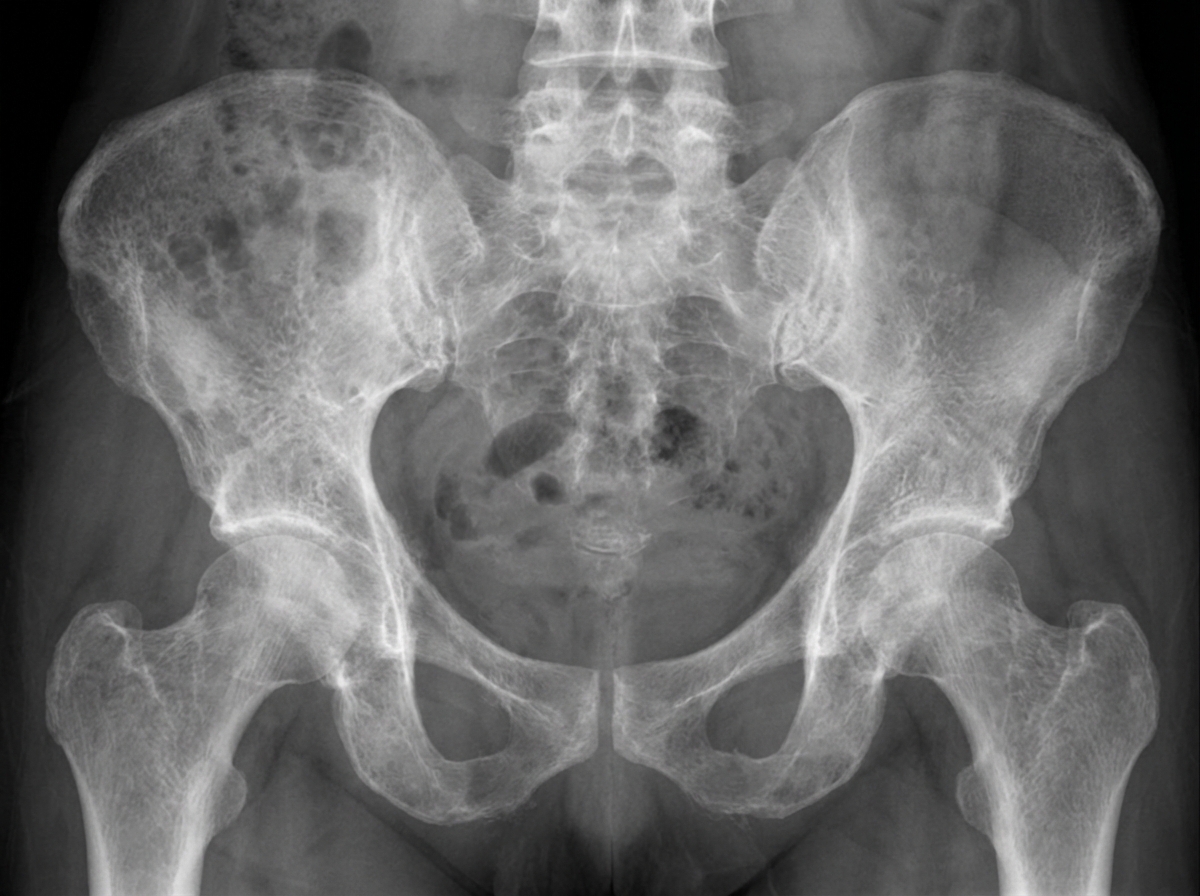
A 67-year-old male presents to his primary care physician complaining of left hip pain for the past six months. He denies any trauma or recent falls. He is accompanied by his wife who reports that he has experienced progressive hearing loss over the same time period. The patient has also noticed that he is no longer able to fit into his favorite hat even though it previously fit well. A radiograph of the patient’s pelvis is shown. Which of the following laboratory abnormalities is most likely to be found in this patient?
Q205
A 32-year-old woman presents to the office with complaints of frothy urine and swelling in her body that started 6 days ago. She says that she first noticed the swelling in her face that gradually involved other parts of her body. On further questioning, she gives a history of rheumatoid arthritis for 2 years. She is taking Penicillamine and Methotrexate for the past 6 months. Vitals include: blood pressure 122/89 mm Hg, pulse rate 55/min, temperature 36.7°C (98.0°F), and a respiratory rate 14/min. On examination, there is generalized pitting edema along with some subcutaneous nodules on the dorsal aspect of the forearm.
Urinalysis
pH 6.6
Color light yellow
RBC none
WBC 1–2/HPF
Protein 4+
Cast fat globules
Glucose absent
Crystal none
Ketone absent
Nitrite absent
24 hours urine protein excretion 4.8 g
Basic metabolic panel
Sodium 141 mEq/L
Potassium 5.1 mEq/L
Chloride 101 mEq/L
Bicarbonate 22 mEq/L
Albumin 3.2 mg/dL
Urea nitrogen 17 mg/dL
Creatinine 1.3 mg/dL
Uric Acid 6.8 mg/ dL
Calcium 8.9 mg/ dL
Glucose 111 mg/dL
A renal biopsy is ordered which shows diffuse capillary and glomerular basement membrane thickening. Which of the following is the most likely cause for her impaired renal function?
Q206
A 62-year-old man comes to the physician because of fatigue and decreased urine output for 2 weeks. He has not been to the physician for many years and takes no medications. Serum studies show a urea nitrogen concentration of 42 mg/dL and a creatinine concentration of 2.3 mg/dL. Urinalysis shows heavy proteinuria. A photomicrograph of a section of a kidney biopsy specimen is shown. Which of the following is the most likely underlying cause of this patient's symptoms?
Q207
An 80-year-old woman died due to the respiratory complications of lung cancer. She had been a heavy smoker, and battled COPD and adenocarcinoma of the lungs for the last 20 years. The autopsy also revealed a pathological finding in the mitral valve. Which of the following was most likely seen?
Q208
A 30-year-old man presents to the emergency department with complaints of red, pinkish urine in the morning. He adds that he has been feeling some abdominal pain. The patient is not taking any medication, and his laboratory test results are as follows:
Hb 11.0 g/dL
RBC 3.7 x 10¹²/L
WBC 4,000/mm3
PLT 100,000/mm3
Reticulocytes 17% of red cells
Coombs test Negative
Blood smear Polychromasia
Which statement is true about this patient’s condition?
Q209
A 49-year-old female with a long history of poorly controlled diabetes mellitus visits her primary care physician with 2+ non-pitting edema in her legs. The patient has a serum creatinine of 2.9 mg/dL and a blood urea nitrogen of 61 mg/dL. A 24-hour urine collection reveals 8.5 grams of protein. A renal biopsy is obtained. Which of the following histologic findings is most likely to be seen upon tissue analysis:
Q210
A 26-year-old woman presents with episodes of intermittent fever, arthralgias, constant fatigue, weight loss, and plaque-like rash on sun-exposed areas, which have been gradually increasing over the last 6 months. On presentation, her vital signs include: blood pressure is 110/80 mm Hg, heart rate is 87/min, respiratory rate is 14/min, and temperature is 37.5°C (99.5°F). Physical examination reveals an erythematous scaling rash on the patient’s face distributed in a ‘butterfly-like’ fashion, erythematous keratinized patches on the sun-exposed areas, and mild lower leg edema. During the workup, the patient is found to be positive for anti-Sm (anti-Smith) antibodies. Which process is altered in this patient?
Systemic Pathology US Medical PG Practice Questions and MCQs
Question 201: A previously healthy 6-year-old girl is brought to the physician by her parents because of slowed growth and fatigue. Over the past year, she went from average height for her age group to the shortest in her class. She has also been having more problems concentrating in class and is less interested in playing. She has not had any change in appetite or diet. She is at the 10th percentile for height and the 90th percentile for weight. Vital signs are within normal limits. There is a nontender mass palpated on the anterior cervical examination. Serum laboratory studies show thyroid-stimulating hormone level of 6.7 μU/mL. Further evaluation is most likely to show which of the following findings?
A. Positive serum thyroid stimulating hormone receptor antibody
B. Psammoma bodies on fine needle aspiration
C. Lymphocytic infiltration on fine needle aspiration (Correct Answer)
D. Increased uptake on I-131 scan in a discrete 1-cm nodule
E. Low urine iodine levels
Explanation: ***Lymphocytic infiltration on fine needle aspiration***
- The patient presents with symptoms of **hypothyroidism** (slowed growth, fatigue, poor concentration, weight gain) and an elevated **TSH** level (6.7 μU/mL). This clinical picture, along with a firm, nontender goiter, is highly suggestive of **Hashimoto's thyroiditis**.
- **Lymphocytic infiltration** of the thyroid gland is the characteristic histological finding in Hashimoto's thyroiditis, typically confirmed by **fine-needle aspiration (FNA)**.
*Positive serum thyroid stimulating hormone receptor antibody*
- **TSH receptor antibodies** are characteristic of **Graves' disease**, which causes hyperthyroidism, not the hypothyroidism seen in this patient.
- While antibodies against thyroid peroxidase (TPOAb) and thyroglobulin (TgAb) are found in Hashimoto's thyroiditis, TSH receptor antibodies are not.
*Psammoma bodies on fine needle aspiration*
- **Psammoma bodies** are concentric calcifications seen on histology, primarily associated with **papillary thyroid carcinoma**.
- This patient's presentation (fatigue, slowed growth, elevated TSH) is not indicative of thyroid malignancy.
*Increased uptake on I-131 scan in a discrete 1-cm nodule*
- **Increased radioactive iodine uptake** in a discrete nodule suggests **hot nodule** or **toxic adenoma**, conditions associated with hyperthyroidism.
- This finding is inconsistent with the patient's symptoms and elevated TSH, which indicate hypothyroidism.
*Low urine iodine levels*
- **Low urine iodine levels** indicate **iodine deficiency**, which can lead to hypothyroidism and goiter.
- While possible, the presence of a distinct goiter and likely autoimmune etiology in a developed country makes primary **Hashimoto's thyroiditis** a more direct diagnosis for lymphocytic infiltration during further evaluation.
Question 202: A 19-year-old woman presents to the primary care clinic to establish care. She has no acute complaints or concerns. Upon further questioning, she shares that she gets frequent nosebleeds and often bleeds from her gums a little after brushing her teeth. She also typically has relatively heavy menstrual periods, soaking eight tampons per day. She has not had any serious bleeding events, and she has never had a blood transfusion. Physical exam is unremarkable. A complete blood count shows mild anemia with a normal platelet count. Which of the following is the next best step in the management of this patient?
A. Perform platelet aggregation tests (Correct Answer)
B. Start desmopressin
C. Start intravenous immunoglobulin
D. Start corticosteroids
E. Perform bone marrow biopsy
Explanation: ***Perform platelet aggregation tests***
- The patient's history of **frequent nosebleeds, gum bleeding after tooth brushing**, and **heavy menstrual bleeding (menorrhagia) with a normal platelet count** is highly suggestive of **von Willebrand disease** or a **platelet function disorder**.
- **Platelet aggregation tests** and **von Willebrand factor (vWF) studies** are necessary to differentiate between various platelet function defects and von Willebrand disease, and to guide appropriate treatment.
- The combination of mucocutaneous bleeding with normal platelet count indicates a **qualitative platelet defect or vWF deficiency** rather than a quantitative platelet problem.
*Start desmopressin*
- **Desmopressin** is used to treat certain bleeding disorders, including types of von Willebrand disease and mild hemophilia A, by promoting the release of vWF and factor VIII.
- However, initiating this treatment **without a definitive diagnosis** is premature; further diagnostic testing is required to identify the underlying cause of her bleeding and determine if desmopressin would be effective.
*Start intravenous immunoglobulin*
- **Intravenous immunoglobulin (IVIG)** is typically used for conditions like **immune thrombocytopenia (ITP)**, where there is an autoimmune destruction of platelets, leading to a low platelet count.
- This patient has a **normal platelet count**, ruling out ITP as the direct cause of her bleeding symptoms, making IVIG an inappropriate first-line treatment.
*Start corticosteroids*
- **Corticosteroids** are anti-inflammatory and immunosuppressive agents often used in the management of autoimmune conditions affecting blood counts, such as **ITP**.
- Given the patient's **normal platelet count** and the absence of clear autoimmune markers or thrombocytopenia, corticosteroids are not indicated and would likely delay proper diagnosis.
*Perform bone marrow biopsy*
- A **bone marrow biopsy** is indicated in cases of unexplained cytopenias (low blood cell counts) or suspected hematologic malignancies to assess bone marrow function and cellularity.
- This patient has **normal platelet counts** and no signs of malignancy, and her bleeding symptoms point towards a primary hemostasis defect (platelet function or vWF), making a bone marrow biopsy an unnecessary and invasive procedure at this stage.
Question 203: A 61-year-old construction worker comes to the physician because of a 3-month history of progressively worsening cough and shortness of breath. He has had a 7.5-kg (16.5-lb) weight loss during this period. He smokes occasionally and does not drink alcohol. Physical examination shows clubbing of the fingers. End-inspiratory crackles are heard in both lower lung fields. X-ray of the chest shows bilateral reticulonodular densities with interstitial fibrosis. Histologic examination of a lung biopsy specimen shows noncaseating granulomas in the interstitium. Which of the following is the most likely underlying mechanism of this patient's condition?
A. Aspergillus-induced eosinophil release
B. IgE-mediated histamine release
C. Elastase-mediated parenchymal destruction
D. IgG-mediated immune complex deposition
E. Silica-induced macrophage activation (Correct Answer)
Explanation: ***Silica-induced macrophage activation***
- The patient's presentation with **progressive cough and shortness of breath**, **weight loss**, **clubbing**, **interstitial crackles**, and **bilateral reticulonodular densities with interstitial fibrosis** in a **construction worker** suggests **silicosis**.
- **Silicosis** is characterized by the inhalation of silica particles, which are then phagocytosed by **macrophages**, leading to their activation, release of inflammatory mediators, and subsequent **granuloma formation** and **fibrosis**.
- Construction workers have occupational exposure to **crystalline silica dust** from cutting, grinding, or drilling concrete, stone, or masonry materials.
*Aspergillus-induced eosinophil release*
- This mechanism is characteristic of **allergic bronchopulmonary aspergillosis (ABPA)**, which typically presents with asthma-like symptoms, recurrent pulmonary infiltrates, and eosinophilia.
- The patient's biopsy showing **noncaseating granulomas without eosinophils** makes ABPA unlikely.
*IgE-mediated histamine release*
- This describes a **Type I hypersensitivity reaction** often seen in **allergic asthma** or anaphylaxis, where IgE antibodies bind to mast cells and basophils, releasing histamine upon allergen exposure.
- This mechanism does not explain the **interstitial fibrosis** and **noncaseating granulomas** observed in the patient's lung biopsy.
*Elastase-mediated parenchymal destruction*
- This mechanism is central to the pathogenesis of **emphysema**, where an imbalance between proteases (like elastase) and antiproteases leads to the destruction of alveolar walls.
- While smoking is a risk factor for emphysema, the imaging findings of **reticulonodular densities** and **interstitial fibrosis**, along with **noncaseating granulomas**, point away from isolated emphysema.
*IgG-mediated immune complex deposition*
- This mechanism (Type III hypersensitivity) is seen in conditions like **hypersensitivity pneumonitis** or some forms of vasculitis.
- **Hypersensitivity pneumonitis** can occur in farmers exposed to organic antigens (e.g., moldy hay causing "Farmer's Lung") and can present with interstitial lung disease and granulomas.
- However, this patient's occupational exposure as a construction worker and the classic histologic finding of **noncaseating granulomas in the interstitium** with the clinical presentation point more strongly to **silicosis** from silica dust exposure rather than hypersensitivity pneumonitis.
Question 204: A 67-year-old male presents to his primary care physician complaining of left hip pain for the past six months. He denies any trauma or recent falls. He is accompanied by his wife who reports that he has experienced progressive hearing loss over the same time period. The patient has also noticed that he is no longer able to fit into his favorite hat even though it previously fit well. A radiograph of the patient’s pelvis is shown. Which of the following laboratory abnormalities is most likely to be found in this patient?
A. Elevated serum calcium
B. Decreased serum alkaline phosphatase
C. Decreased serum calcium
D. Elevated serum parathyroid hormone
E. Elevated serum alkaline phosphatase (Correct Answer)
Explanation: ***Elevated serum alkaline phosphatase***
- The patient's symptoms (hip pain, progressive hearing loss, increased hat size) suggest **Paget's disease of bone**, which is characterized by accelerated bone turnover.
- **Alkaline phosphatase** is an enzyme produced by osteoblasts, and its elevation in serum is a hallmark of increased bone formation and remodeling seen in Paget's disease.
*Elevated serum calcium*
- In uncomplicated Paget's disease, serum calcium levels are typically **normal**, as the increased bone turnover usually maintains a balance between resorption and formation.
- Hypercalcemia in Paget's disease is rare and may occur in cases of **immobility** or concomitant primary hyperparathyroidism.
*Decreased serum alkaline phosphatase*
- This would indicate reduced osteoblastic activity or bone formation, which is the opposite of the accelerated bone remodeling seen in **Paget's disease**.
- Conditions like **hypophosphatasia** or severe malnutrition might lead to decreased alkaline phosphatase.
*Decreased serum calcium*
- Hypocalcemia is not a typical feature of Paget's disease unless there are other contributing factors such as **malabsorption** or **renal failure**.
- Bone turnover in Paget's disease usually maintains normal serum calcium levels through coupled osteoclastic and osteoblastic activity.
*Elevated serum parathyroid hormone*
- While **elevated parathyroid hormone** can cause increased bone turnover, it primarily does so by increasing osteoclastic activity to release calcium from bone, leading to hypercalcemia.
- In Paget's disease, **parathyroid hormone levels are typically normal** unless there is co-existing primary hyperparathyroidism.
Question 205: A 32-year-old woman presents to the office with complaints of frothy urine and swelling in her body that started 6 days ago. She says that she first noticed the swelling in her face that gradually involved other parts of her body. On further questioning, she gives a history of rheumatoid arthritis for 2 years. She is taking Penicillamine and Methotrexate for the past 6 months. Vitals include: blood pressure 122/89 mm Hg, pulse rate 55/min, temperature 36.7°C (98.0°F), and a respiratory rate 14/min. On examination, there is generalized pitting edema along with some subcutaneous nodules on the dorsal aspect of the forearm.
Urinalysis
pH 6.6
Color light yellow
RBC none
WBC 1–2/HPF
Protein 4+
Cast fat globules
Glucose absent
Crystal none
Ketone absent
Nitrite absent
24 hours urine protein excretion 4.8 g
Basic metabolic panel
Sodium 141 mEq/L
Potassium 5.1 mEq/L
Chloride 101 mEq/L
Bicarbonate 22 mEq/L
Albumin 3.2 mg/dL
Urea nitrogen 17 mg/dL
Creatinine 1.3 mg/dL
Uric Acid 6.8 mg/ dL
Calcium 8.9 mg/ dL
Glucose 111 mg/dL
A renal biopsy is ordered which shows diffuse capillary and glomerular basement membrane thickening. Which of the following is the most likely cause for her impaired renal function?
A. Membranous nephropathy (Correct Answer)
B. Diabetic glomerulonephropathy
C. Minimal change disease
D. Renal amyloidosis
E. Lipoid nephrosis
Explanation: **Membranous nephropathy**
- The patient's presentation with **nephrotic syndrome** (frothy urine, generalized edema, significant proteinuria > 3.5g/24h, hypoalbuminemia) and **renal biopsy findings of diffuse capillary and glomerular basement membrane thickening** are characteristic of membranous nephropathy.
- **Penicillamine**, which the patient is taking for rheumatoid arthritis, is a known cause of **secondary membranous nephropathy**.
*Diabetic glomerulonephropathy*
- While diabetes can cause nephrotic syndrome and renal impairment, there is **no history or evidence of diabetes** in this patient (fasting glucose 111 mg/dL is borderline but not diagnostic).
- Diabetic nephropathy typically shows **nodular glomerulosclerosis (Kimmelstiel-Wilson nodules) and mesangial expansion** on biopsy, not the diffuse GBM thickening described here.
- The patient's age and clinical presentation do not suggest longstanding diabetes.
*Minimal change disease*
- This condition typically presents with **abrupt onset of nephrotic syndrome**, primarily in children, and is characterized by a **normal renal biopsy on light microscopy** (hence "minimal change") with effacement of foot processes on electron microscopy.
- The patient's **diffuse capillary and glomerular basement membrane thickening** on biopsy contradicts minimal change disease.
*Renal amyloidosis*
- While amyloidosis can cause nephrotic syndrome and generalized edema, the **renal biopsy findings for amyloidosis would typically show Congo red-positive amyloid deposits**, which are not described here.
- Although rheumatoid arthritis can be a risk factor for secondary amyloidosis (AA amyloidosis), the description of diffuse capillary and glomerular basement membrane thickening is more specific to membranous nephropathy.
*Lipoid nephrosis*
- **Lipoid nephrosis** is an older term for **minimal change disease**.
- As explained above, minimal change disease is inconsistent with the **diffuse capillary and glomerular basement membrane thickening** observed on renal biopsy.
Question 206: A 62-year-old man comes to the physician because of fatigue and decreased urine output for 2 weeks. He has not been to the physician for many years and takes no medications. Serum studies show a urea nitrogen concentration of 42 mg/dL and a creatinine concentration of 2.3 mg/dL. Urinalysis shows heavy proteinuria. A photomicrograph of a section of a kidney biopsy specimen is shown. Which of the following is the most likely underlying cause of this patient's symptoms?
A. Amyloidosis
B. Diabetes mellitus (Correct Answer)
C. Dyslipidemia
D. Fibromuscular dysplasia
E. Severe hypertension
Explanation: ***Diabetes mellitus***
- The kidney biopsy shows **diffuse glomerulosclerosis** with **Kimmelstiel-Wilson nodules** (nodular mesangial sclerosis), which are pathognomonic for **diabetic nephropathy**.
- **Heavy proteinuria**, elevated BUN (42 mg/dL) and creatinine (2.3 mg/dL), along with the patient's age, are consistent with long-standing diabetes mellitus, even if previously undiagnosed.
- Diabetic nephropathy is the leading cause of end-stage renal disease in the United States.
*Amyloidosis*
- While amyloidosis can cause nephrotic syndrome and renal failure, the characteristic histology shows **extracellular amorphous deposits** that stain with **Congo red** and demonstrate apple-green birefringence under polarized light.
- The mesangial nodular pattern seen in diabetic nephropathy is distinct from the amyloid deposits seen in amyloidosis.
- Systemic amyloidosis typically presents with other organ involvement such as **cardiomyopathy**, **hepatosplenomegaly**, or **macroglossia**.
*Dyslipidemia*
- **Dyslipidemia** is a common comorbidity of nephrotic syndrome and diabetic nephropathy, but it is not a direct cause of the structural glomerular damage.
- It represents a metabolic consequence rather than the underlying etiology of the renal pathology.
*Fibromuscular dysplasia*
- **Fibromuscular dysplasia** affects the **renal arteries**, causing **renovascular hypertension** and renal ischemia.
- It typically presents with hypertension in young to middle-aged women and an abdominal bruit, not with heavy proteinuria and glomerular nodular sclerosis.
- The histology would show arterial wall changes, not glomerular pathology.
*Severe hypertension*
- **Severe hypertension** causes hypertensive nephrosclerosis with arteriolosclerosis and global glomerulosclerosis, but not the characteristic **nodular mesangial expansion** (Kimmelstiel-Wilson nodules) seen in diabetic nephropathy.
- While hypertension commonly accompanies diabetic nephropathy, the specific histological findings of nodular glomerulosclerosis are pathognomonic for diabetes mellitus.
- Hypertensive nephrosclerosis shows arteriolar hyalinosis and ischemic changes, which differ from diabetic glomerular changes.
Question 207: An 80-year-old woman died due to the respiratory complications of lung cancer. She had been a heavy smoker, and battled COPD and adenocarcinoma of the lungs for the last 20 years. The autopsy also revealed a pathological finding in the mitral valve. Which of the following was most likely seen?
A. Ruptured papillary muscle
B. Destructive vegetations
C. Discoloration of leaflets
D. Stenosis of leaflets
E. Non-destructive vegetations (Correct Answer)
Explanation: ***Non-destructive vegetations***
- The patient's age (80 years old), history of **lung cancer**, and prolonged illness are all factors associated with **non-bacterial thrombotic endocarditis (NBTE)**.
- NBTE, also known as **marantic endocarditis**, involves the formation of sterile, non-destructive vegetations on heart valves, commonly linked to **malignancy** and **hypercoagulable states**.
*Ruptured papillary muscle*
- This is typically a complication of an **acute myocardial infarction**, not specifically associated with cancer or COPD.
- Would lead to **acute severe mitral regurgitation**, presenting with more acute cardiac symptoms.
*Destructive vegetations*
- **Destructive vegetations** are characteristic of **infective endocarditis**, which typically presents with fever, new murmurs, and signs of infection, none of which are mentioned.
- There is no indication of bacterial infection or other conditions predisposing to infective endocarditis.
*Discoloration of leaflets*
- While other forms of valve disease or post-mortem changes might cause discoloration, it is not a specific pathological finding related to the patient's underlying conditions in the way that NBTE vegetations are.
- Discoloration alone does not represent a primary disease process of the valve.
*Stenosis of leaflets*
- **Mitral stenosis** is more commonly caused by **rheumatic heart disease** or age-related calcification, which is not indicated by the patient's history.
- While severe calcification can occur with age, the presence of **malignancy** and prolonged illness points more strongly to NBTE.
Question 208: A 30-year-old man presents to the emergency department with complaints of red, pinkish urine in the morning. He adds that he has been feeling some abdominal pain. The patient is not taking any medication, and his laboratory test results are as follows:
Hb 11.0 g/dL
RBC 3.7 x 10¹²/L
WBC 4,000/mm3
PLT 100,000/mm3
Reticulocytes 17% of red cells
Coombs test Negative
Blood smear Polychromasia
Which statement is true about this patient’s condition?
A. CD25 deficiency is expected to be seen
B. Rituximab therapy is effective
C. Patient is at great risk for bleeding
D. Urinary hemosiderin testing will be negative
E. Eculizumab can be used to treat this condition (Correct Answer)
Explanation: ***Eculizumab can be used to treat this condition***
- The patient's symptoms (red, pinkish urine in the morning, abdominal pain), laboratory findings (anemia, thrombocytopenia, reticulocytosis, negative Coombs test, polychromasia), and clinical presentation are highly suggestive of **Paroxysmal Nocturnal Hemoglobinuria (PNH)**.
- **Eculizumab** is a monoclonal antibody that inhibits C5 complement protein, preventing the formation of the membrane attack complex and thus reducing hemolysis in PNH.
*CD25 deficiency is expected to be seen*
- **CD25** is a component of the IL-2 receptor, and its deficiency is not characteristic of PNH.
- PNH is characterized by a deficiency of **GPI-anchored proteins** like CD55 and CD59 on the surface of red blood cells, which protect against complement-mediated lysis.
*Rituximab therapy is effective*
- **Rituximab** is an anti-CD20 monoclonal antibody used primarily for B-cell lymphomas and autoimmune conditions, not PNH.
- Its mechanism of action is unrelated to the pathophysiology of PNH, which involves complement dysregulation.
*Patient is at great risk for bleeding*
- The patient has **thrombocytopenia** (PLT 100,000/mm3), which does put them at an increased risk of bleeding.
- However, in PNH, patients are at a higher risk of **thrombosis** (blood clots), which can be life-threatening, in addition to hemolysis and bone marrow failure.
*Urinary hemosiderin testing will be negative*
- The patient experiences **hemoglobinuria** ("red, pinkish urine in the morning"), which is indicative of chronic intravascular hemolysis.
- With ongoing hemolysis and hemoglobinuria, **urinary hemosiderin** (iron stored in renal tubular cells as a result of chronic hemoglobin reabsorption) would be expected to be positive, not negative.
Question 209: A 49-year-old female with a long history of poorly controlled diabetes mellitus visits her primary care physician with 2+ non-pitting edema in her legs. The patient has a serum creatinine of 2.9 mg/dL and a blood urea nitrogen of 61 mg/dL. A 24-hour urine collection reveals 8.5 grams of protein. A renal biopsy is obtained. Which of the following histologic findings is most likely to be seen upon tissue analysis:
A. Normal glomeruli
B. Crescentic proliferation in Bowman’s space
C. Nodular thickening of the glomerular basement membrane (Correct Answer)
D. Lymphocytic infiltration of glomerular tufts
E. Non-caseating interstitial granuloma
Explanation: ***Nodular thickening of the glomerular basement membrane***
- The patient's history of **poorly controlled diabetes**, **nephrotic range proteinuria** (8.5 grams/24 hours), elevated creatinine, and BUN are highly suggestive of **diabetic nephropathy**.
- **Kimmelstiel-Wilson lesions**, characterized by **nodular thickening of the glomerular basement membrane** due to deposition of mesangial matrix, are pathognomonic for diabetic nephropathy.
*Normal glomeruli*
- The presence of **severe proteinuria** (8.5g/24h) and **renal insufficiency** (creatinine 2.9 mg/dL, BUN 61 mg/dL) indicates significant renal damage, making perfectly normal glomeruli highly unlikely.
- These clinical findings directly contradict a diagnosis of normal glomerular function.
*Crescentic proliferation in Bowman’s space*
- **Crescentic proliferation**, which is characterized by the accumulation of cells (macrophages, epithelial cells) in Bowman's space, is typical of rapidly progressive glomerulonephritis (RPGN).
- While RPGN can cause renal failure, it's not the primary or most characteristic finding in the context of long-standing, poorly controlled diabetes with nephrotic-range proteinuria.
*Lymphocytic infiltration of glomerular tufts*
- **Lymphocytic infiltration of glomerular tufts** is observed in certain forms of glomerulonephritis, such as lupus nephritis or some immune complex-mediated diseases.
- This finding is not characteristic of diabetic nephropathy, which primarily involves structural changes to the glomerular basement membrane and mesangium.
*Non-caseating interstitial granuloma*
- **Non-caseating granulomas** in the kidney are a hallmark of **sarcoidosis**, an inflammatory disease that can affect various organs, including the kidneys.
- While sarcoidosis can cause renal dysfunction, it does not typically present with the specific combination of long-standing diabetes and massive proteinuria described in this case, nor is it histologically characterized by nodular glomerular changes.
Question 210: A 26-year-old woman presents with episodes of intermittent fever, arthralgias, constant fatigue, weight loss, and plaque-like rash on sun-exposed areas, which have been gradually increasing over the last 6 months. On presentation, her vital signs include: blood pressure is 110/80 mm Hg, heart rate is 87/min, respiratory rate is 14/min, and temperature is 37.5°C (99.5°F). Physical examination reveals an erythematous scaling rash on the patient’s face distributed in a ‘butterfly-like’ fashion, erythematous keratinized patches on the sun-exposed areas, and mild lower leg edema. During the workup, the patient is found to be positive for anti-Sm (anti-Smith) antibodies. Which process is altered in this patient?
A. Protein folding
B. Base-excision repair
C. DNA transcription
D. Ineffective clearance of cellular debris (Correct Answer)
E. Mismatch repair
Explanation: ***Ineffective clearance of cellular debris***
- The patient's symptoms (fever, arthralgias, fatigue, weight loss, malar rash, photosensitive rash) along with a positive **anti-Sm antibody** are highly indicative of **Systemic Lupus Erythematosus (SLE)**.
- SLE is characterized by a defect in the **clearance of apoptotic cellular debris**, often due to complement deficiencies (particularly C1q, C2, C4) or defects in phagocytic clearance mechanisms.
- This ineffective clearance leads to prolonged exposure of intracellular nuclear antigens (including Smith antigen), which triggers autoantibody formation and immune complex deposition, causing the multisystem manifestations seen in SLE.
*Protein folding*
- **Protein folding disorders** involve the misfolding of proteins, which can lead to conditions like cystic fibrosis or Alzheimer's disease.
- This process is not directly implicated in the pathogenesis of SLE or the symptoms presented.
*Base-excision repair*
- **Base-excision repair** is a DNA repair pathway that primarily fixes damaged bases in DNA.
- While DNA damage can contribute to disease, defects in this specific repair mechanism are not a hallmark of SLE.
*DNA transcription*
- **DNA transcription** is the process by which genetic information from DNA is "transcribed" into RNA.
- While various autoimmune diseases can affect gene expression, a primary defect in the basic process of transcription itself is not characteristic of SLE.
*Mismatch repair*
- **Mismatch repair** is a DNA repair system that corrects errors, such as mispaired bases, that occur during DNA replication.
- Defects in mismatch repair are associated with conditions like Lynch syndrome, not the autoimmune manifestations seen in SLE.