A 52-year-old man is diagnosed with chronic renal failure. He is on hemodialysis. The physicians have advised him that he needs a renal transplant. The human leukocyte antigen (HLA) genotype is A7/A5, B2/B9, and C8/C3. For each locus, the maternal allele is listed 1st and the paternal allele is listed 2nd. There are several potential donors available for the renal graft. Which of the following donors would be the closest match?
Q162
A 40-year-old male with a history of chronic alcoholism recently received a liver transplant. Two weeks following the transplant, the patient presents with a skin rash and frequent episodes of bloody diarrhea. A colonoscopy is performed and biopsy reveals apoptosis of colonic epithelial cells. What is most likely mediating these symptoms?
Q163
A 16-year-old presents to the primary care physician because he has noticed an increase in the size of his breast tissue over the past 3 years. He states that he is significantly taller than his entire class at school although he feels increasingly weak and uncoordinated. He performs at the bottom of his grade level academically. On physical exam the patient has marked gynecomastia with small firm testes. The physician decides to perform a karyotype on the patient. What is the most likely outcome of this test?
Q164
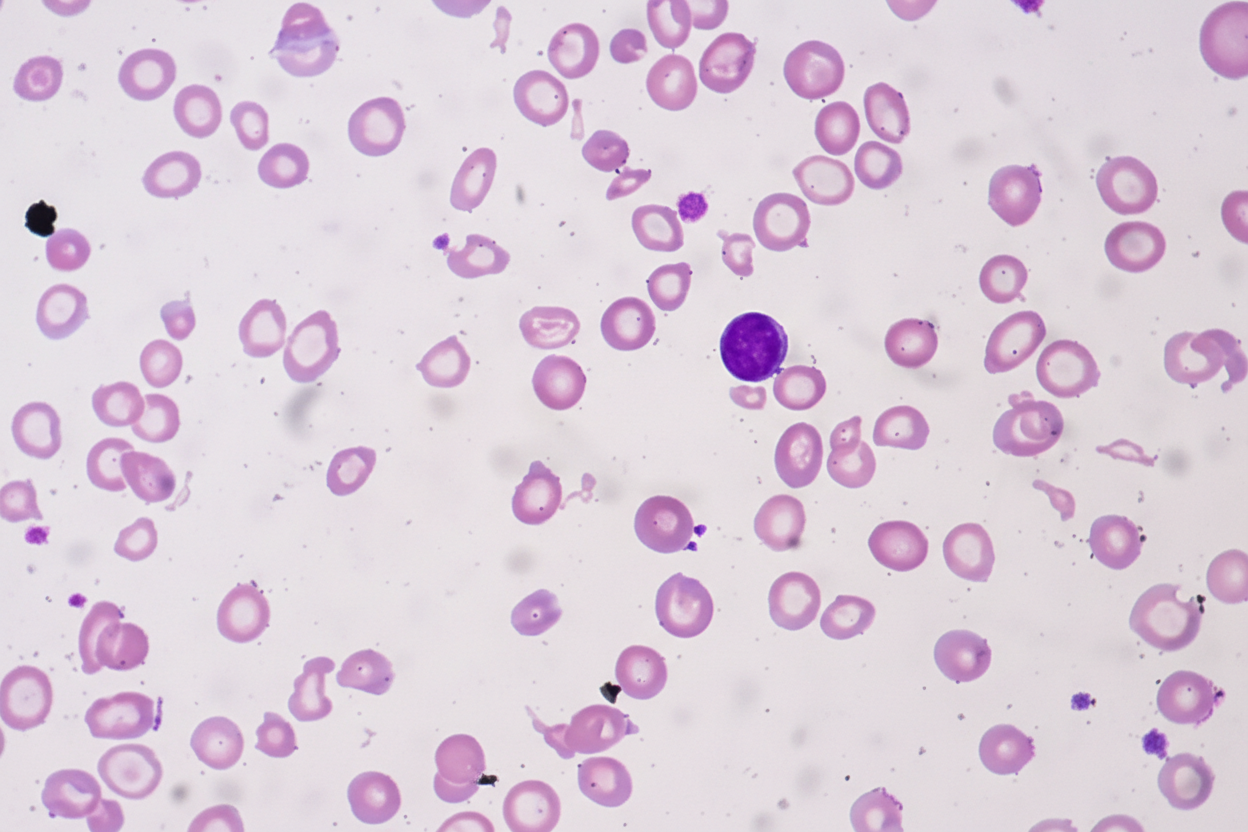
A 35-year-old African American man presents with fever, abdominal pain, and severe weakness since yesterday. On physical examination, the patient is jaundiced and shows a generalized pallor. Past medical history is significant for recently receiving anti-malaria prophylaxis before visiting Nigeria. Laboratory tests show decreased glucose-6-phosphate dehydrogenase (G6PD) levels. Peripheral smear shows the presence of bite cells and Heinz bodies. Which of the following is the most likely diagnosis in this patient?
Q165
A 4-year-old boy is brought to the physician because of yellowish discoloration of his eyes and skin for 5 days. He has had generalized fatigue and mild shortness of breath over the past 2 months. Two weeks ago, he was treated for a urinary tract infection with antibiotics. His father has a history of undergoing a splenectomy in his childhood. Examination shows pale conjunctivae and jaundice. The abdomen is soft and nontender; the spleen is palpated 4 to 5 cm below the left costal margin. Laboratory studies show:
Hemoglobin 9.9 g/dL
Mean corpuscular volume 88 μm3
Mean corpuscular hemoglobin 31.7 pg/cell
Mean corpuscular hemoglobin concentration 37.0% Hb/cell
Leukocyte count 6600/mm3
Platelet count 233,000/mm3
Red cell distribution width 24.3% (N = 13–15)
Serum
Bilirubin
Total 12.3 mg/dL
Direct 1.8 mg/dL
Lactate dehydrogenase 401 U/L
Which of the following is the most likely cause of these findings?
Q166
A 42-year-old man presents to his primary care provider complaining of foamy urine for the last 2 weeks. He has also begun to notice swelling in his hands and feet, and he says that his shoes have not been fitting normally. On exam, the patient has a temperature of 98.8°F (37.1°C), blood pressure is 132/84 mmHg, pulse is 64/min, and respirations are 12/min. The patient has 2+ pitting edema bilaterally up to his shins. A 24-hour urine study is found to contain 9.0 g of protein. The patient is referred to a specialist and undergoes a renal biopsy. On light microscopy, the glomeruli demonstrate basement membrane thickening. On electron microscopy, subepithelial deposits are seen. Which of the following is a characteristic of this patient’s disease?
Q167
A 72-year-old woman is brought to the emergency department because of severe pain in her left hip after a fall this morning. She has smoked one pack of cigarettes daily for 45 years. Her only medication is a vitamin D supplement. Physical examination shows that her left leg is externally rotated and appears shorter than her right leg. An x-ray of the pelvis shows a fracture of the neck of the left femur. Which of the following changes in bone architecture is the most likely underlying cause of this patient's symptoms?
Q168
A 23-year-old Sicilian male presents to his primary care physician complaining of lethargy, joint pain, and urinary frequency. Vitals signs include T 98.7 F, HR 96 bpm, BP 135/71 mm/Hg, RR 18 breaths/minute, O2 99%. Laboratory findings include: random glucose 326 mg/dL, Hemoglobin 7.1, and elevated reticulocyte count and transferrin saturation. The patient is not surprised that his "blood level is low" and suggests that he might need another transfusion. An echocardiogram demonstrates restrictive cardiomyopathy. The disorder with which this patient presents can be characterized by which of the following?
Q169
A 48-year-old Caucasian male suffering from ischemic heart disease is placed on a heart transplant list. Months later, he receives a heart from a matched donor. During an endomyocardial biopsy performed 3 weeks later, there is damage consistent with acute graft rejection. What is most likely evident on the endomyocardial biopsy?
Q170
An 11-year-old boy presents to the emergency department with sudden pain. The patient's parents state the child suddenly felt pain in his hands an hour ago. He has not eaten anything new lately. He did play football earlier this morning and admits to being tackled forcefully multiple times. The child is doing well in school and is proud that he has a new girlfriend. The child has a past medical history of obesity and is not currently on any medications. His temperature is 100°F (37.8°C), blood pressure is 120/68 mmHg, pulse is 100/min, respirations are 11/min, and oxygen saturation is 98% on room air. Cardiopulmonary exam is within normal limits. On physical exam of the patient's extremities, there was painful and symmetrical swelling of his hands and feet but no rashes were present. The patient is started on analgesics. Which of the following is the most likely cause of this patient's presentation?
Systemic Pathology US Medical PG Practice Questions and MCQs
Question 161: A 52-year-old man is diagnosed with chronic renal failure. He is on hemodialysis. The physicians have advised him that he needs a renal transplant. The human leukocyte antigen (HLA) genotype is A7/A5, B2/B9, and C8/C3. For each locus, the maternal allele is listed 1st and the paternal allele is listed 2nd. There are several potential donors available for the renal graft. Which of the following donors would be the closest match?
A. Donor E: A7/A8, B9/B27, C3/C4
B. Donor D: A4/A7, B1/B8, C8/C3
C. Donor B: A5/A12, B22/9, C4/C3
D. Donor C: A7/A4, B2/B4, C8/C3
E. Donor A: A7/A5, B8/B2, C3/C8 (Correct Answer)
Explanation: ***Donor A: A7/A5, B8/B2, C3/C8***
- **A locus:** Perfect match (A7 and A5 both shared) - 2/2 alleles
- **B locus:** Partial match (B2 shared, B8 not) - 1/2 alleles
- **C locus:** Perfect match (C8 and C3 both shared) - 2/2 alleles
- **Total: 5 out of 6 alleles match** - This is the **best possible match** among all donors, minimizing risk of graft rejection through maximum HLA compatibility.
*Donor C: A7/A4, B2/B4, C8/C3*
- A locus: Partial match (A7 shared) - 1/2 alleles
- B locus: Partial match (B2 shared) - 1/2 alleles
- C locus: Perfect match (C8 and C3 both shared) - 2/2 alleles
- Total: 4 out of 6 alleles match - Second best option
*Donor B: A5/A12, B22/9, C4/C3*
- A locus: Partial match (A5 shared) - 1/2 alleles
- B locus: Partial match (B9 shared) - 1/2 alleles
- C locus: Partial match (C3 shared) - 1/2 alleles
- Total: 3 out of 6 alleles match
*Donor D: A4/A7, B1/B8, C8/C3*
- A locus: Partial match (A7 shared) - 1/2 alleles
- B locus: No match (neither B1 nor B8 shared) - 0/2 alleles
- C locus: Perfect match (C8 and C3 both shared) - 2/2 alleles
- Total: 3 out of 6 alleles match
*Donor E: A7/A8, B9/B27, C3/C4*
- A locus: Partial match (A7 shared) - 1/2 alleles
- B locus: Partial match (B9 shared) - 1/2 alleles
- C locus: Partial match (C3 shared) - 1/2 alleles
- Total: 3 out of 6 alleles match
Question 162: A 40-year-old male with a history of chronic alcoholism recently received a liver transplant. Two weeks following the transplant, the patient presents with a skin rash and frequent episodes of bloody diarrhea. A colonoscopy is performed and biopsy reveals apoptosis of colonic epithelial cells. What is most likely mediating these symptoms?
A. Donor T-cells (Correct Answer)
B. Recipient T-cells
C. Recipient B-cells
D. Recipient antibodies
E. Donor B-cells
Explanation: ***Donor T-cells***
- This clinical presentation of **skin rash**, **bloody diarrhea**, and **colonic epithelial apoptosis** following an allogeneic transplant (like a liver transplant) is classic for **Graft-versus-Host Disease (GVHD)**.
- In GVHD, **immunocompetent T-cells from the donor** recognize the recipient's tissues as foreign and mount an immune attack, causing damage to organs like the skin, gastrointestinal tract, and liver.
*Recipient T-cells*
- **Recipient T-cells** are typically immunosuppressed following an organ transplant to prevent organ rejection.
- Furthermore, if activated, recipient T-cells would target the donor organ (the liver in this case), leading to **rejection**, rather than the systemic symptoms observed (skin rash, bloody diarrhea) which suggest an attack by donor cells on recipient tissues.
*Recipient B-cells*
- While recipient B-cells can be involved in **antibody-mediated rejection** of the transplanted organ, they are not the primary mediators of **cellular GVHD**.
- **Antibody-mediated rejection** would typically involve antibodies targeting the donor liver, leading to liver dysfunction, not the widespread GVHD symptoms described.
*Recipient antibodies*
- **Recipient antibodies** are primarily involved in **antibody-mediated rejection** of the transplanted organ, which would manifest as dysfunction of the transplanted liver.
- They do not mediate the symptoms of **Graft-versus-Host Disease (GVHD)**, which is a cell-mediated immune response.
*Donor B-cells*
- **Donor B-cells** are generally not the primary mediators of GVHD.
- While donor immune cells are crucial for GVHD, the major players are **donor T-cells**, which directly recognize and attack host tissues.
Question 163: A 16-year-old presents to the primary care physician because he has noticed an increase in the size of his breast tissue over the past 3 years. He states that he is significantly taller than his entire class at school although he feels increasingly weak and uncoordinated. He performs at the bottom of his grade level academically. On physical exam the patient has marked gynecomastia with small firm testes. The physician decides to perform a karyotype on the patient. What is the most likely outcome of this test?
A. 47, XYY
B. 45, XO
C. 47, XXY (Correct Answer)
D. 47, XXX
E. 46, XY
Explanation: ***47, XXY***
The constellation of **gynecomastia, tall stature, learning difficulties, and small testes** is classic for **Klinefelter syndrome**, which is characterized by a **47, XXY** karyotype.
The presence of an extra X chromosome leads to **hypogonadism** and **endocrine imbalances**, explaining the physical and developmental findings.
*47, XYY*
- Individuals with **47, XYY syndrome** are typically tall but do not usually present with breast enlargement or other features of hypogonadism.
- They may have an increased risk of learning difficulties and behavioral problems.
*45, XO*
- This karyotype, also known as **Turner syndrome**, is characterized by the absence of an X chromosome and typically affects **females**.
- Common features include **short stature, webbed neck, and ovarian dysfunction**, which are inconsistent with the patient's presentation.
*47, XXX*
- This karyotype, known as **Triple X syndrome**, affects **females** and is characterized by the presence of an extra X chromosome.
- While some individuals may experience learning difficulties or developmental delays, it does not cause gynecomastia or small testes in males.
*46, XY*
- This is the **normal male karyotype** and would not explain the patient's symptoms of gynecomastia, small testes, tall stature, or learning difficulties.
- These symptoms suggest an underlying chromosomal abnormality.
Question 164: A 35-year-old African American man presents with fever, abdominal pain, and severe weakness since yesterday. On physical examination, the patient is jaundiced and shows a generalized pallor. Past medical history is significant for recently receiving anti-malaria prophylaxis before visiting Nigeria. Laboratory tests show decreased glucose-6-phosphate dehydrogenase (G6PD) levels. Peripheral smear shows the presence of bite cells and Heinz bodies. Which of the following is the most likely diagnosis in this patient?
A. Autoimmune hemolytic anemia
B. Sickle cell disease
C. Glucose-6-phosphate-dehydrogenase (G6PD) deficiency (Correct Answer)
D. Microangiopathic hemolytic anemia
E. Paroxysmal nocturnal hemoglobinuria (PNH)
Explanation: ***Glucose-6-phosphate-dehydrogenase (G6PD) deficiency***
- The patient's presentation with **fever, abdominal pain, jaundice, and pallor** following **anti-malarial prophylaxis** (known triggers for G6PD deficiency) is highly suggestive of an acute hemolytic crisis.
- The laboratory findings of **decreased G6PD levels, bite cells, and Heinz bodies** on peripheral smear are pathognomonic for G6PD deficiency causing hemolytic anemia.
*Autoimmune hemolytic anemia*
- This condition is typically characterized by a **positive Coombs test**, which is not mentioned here and would not explain the presence of bite cells or Heinz bodies.
- It results from the body's immune system attacking its own red blood cells, rather than oxidative stress from drug exposure.
*Sickle cell disease*
- Patients with sickle cell disease have **abnormally shaped red blood cells** (sickle cells) and experience vaso-occlusive crises, often presenting with severe pain, but the key findings of bite cells and Heinz bodies are not characteristic.
- While it can manifest with anemia and jaundice, the specific trigger and peripheral smear findings point away from sickle cell disease.
*Microangiopathic hemolytic anemia*
- This involves red blood cell fragmentation due to passage through fibrin strands in small vessels, leading to **schistocytes** on peripheral smear, not bite cells or Heinz bodies.
- Conditions like **DIC, TTP, or HUS** are common causes, none of which are suggested by the clinical picture or lab findings.
*Paroxysmal nocturnal hemoglobinuria (PNH)*
- PNH is characterized by **dark urine in the morning (hemoglobinuria)**, thrombosis, and bone marrow failure, and it is a clonal hematopoietic stem cell disorder.
- The diagnosis is confirmed by flow cytometry showing absence of **CD55 and CD59** on red blood cells, and the peripheral smear findings are not consistent with PNH.
Question 165: A 4-year-old boy is brought to the physician because of yellowish discoloration of his eyes and skin for 5 days. He has had generalized fatigue and mild shortness of breath over the past 2 months. Two weeks ago, he was treated for a urinary tract infection with antibiotics. His father has a history of undergoing a splenectomy in his childhood. Examination shows pale conjunctivae and jaundice. The abdomen is soft and nontender; the spleen is palpated 4 to 5 cm below the left costal margin. Laboratory studies show:
Hemoglobin 9.9 g/dL
Mean corpuscular volume 88 μm3
Mean corpuscular hemoglobin 31.7 pg/cell
Mean corpuscular hemoglobin concentration 37.0% Hb/cell
Leukocyte count 6600/mm3
Platelet count 233,000/mm3
Red cell distribution width 24.3% (N = 13–15)
Serum
Bilirubin
Total 12.3 mg/dL
Direct 1.8 mg/dL
Lactate dehydrogenase 401 U/L
Which of the following is the most likely cause of these findings?
A. Decreased synthesis of alpha chains of hemoglobin
B. Thrombotic microangiopathy
C. Decreased CD55 and CD59 in RBC
D. Defective spectrin in the RBC membrane (Correct Answer)
E. Deficient glucose-6 phosphate dehydrogenase
Explanation: ***Defective spectrin in the RBC membrane***
- This presentation is highly suggestive of **hereditary spherocytosis**, an autosomal dominant disorder characterized by **defects in red blood cell membrane proteins** like spectrin, ankyrin, or band 3.
- The patient exhibits classic signs of **hemolytic anemia** (jaundice, fatigue, splenomegaly, elevated unconjugated bilirubin, high LDH, high RDW), a family history of splenectomy, and a high MCHC, all consistent with hereditary spherocytosis.
*Decreased synthesis of alpha chains of hemoglobin*
- This describes **alpha-thalassemia**, which is caused by reduced or absent alpha-globin chain production, leading to **microcytic, hypochromic anemia**.
- While it can cause hemolysis, the **normal MCV** (88 μm3) and **high MCHC** observed in this patient make alpha-thalassemia less likely.
*Thrombotic microangiopathy*
- This is a group of disorders characterized by **microangiopathic hemolytic anemia**, **thrombocytopenia**, and **organ damage** due to microvascular thrombi.
- While it causes hemolytic anemia (high LDH, jaundice), the patient's **normal platelet count** and lack of severe multi-organ involvement make this diagnosis unlikely.
*Decreased CD55 and CD59 in RBC*
- This is the hallmark of **paroxysmal nocturnal hemoglobinuria (PNH)**, an acquired clonal stem cell disorder resulting in unregulated complement activation on red blood cells.
- PNH causes hemolytic anemia and often presents with **hemoglobinuria**, **thrombosis**, and bone marrow failure, which are not described in this case, and usually has a normal MCHC.
*Deficient glucose-6 phosphate dehydrogenase*
- **G6PD deficiency** is an X-linked disorder causing episodic hemolytic anemia, typically triggered by **oxidative stress** from certain foods (fava beans), drugs (sulfa drugs, antimalarials), or infections.
- While the patient was treated with antibiotics, his symptoms are prolonged, and the absence of specific triggers or evidence of **Heinz bodies** (oxidized hemoglobin seen in G6PD deficiency) makes this less likely.
Question 166: A 42-year-old man presents to his primary care provider complaining of foamy urine for the last 2 weeks. He has also begun to notice swelling in his hands and feet, and he says that his shoes have not been fitting normally. On exam, the patient has a temperature of 98.8°F (37.1°C), blood pressure is 132/84 mmHg, pulse is 64/min, and respirations are 12/min. The patient has 2+ pitting edema bilaterally up to his shins. A 24-hour urine study is found to contain 9.0 g of protein. The patient is referred to a specialist and undergoes a renal biopsy. On light microscopy, the glomeruli demonstrate basement membrane thickening. On electron microscopy, subepithelial deposits are seen. Which of the following is a characteristic of this patient’s disease?
A. X-linked condition
B. Antibodies to alveolar basement membrane
C. Loss of podocyte foot processes
D. Antibodies to phospholipase A2 receptor (Correct Answer)
E. IgA immune complex deposition
Explanation: ***Antibodies to phospholipase A2 receptor***
- The patient's presentation with **foamy urine**, **edema**, and **9.0 g of protein** in a 24-hour urine study indicates **nephrotic syndrome**. Renal biopsy findings of **glomerular basement membrane thickening** on light microscopy and **subepithelial deposits** on electron microscopy are characteristic of **membranous nephropathy**.
- Approximately 70-80% of primary membranous nephropathy cases are associated with **autoantibodies to the M-type phospholipase A2 receptor (PLA2R)**, a protein expressed on podocytes.
*X-linked condition*
- This description is characteristic of **Alport syndrome**, a genetic disorder leading to progressive kidney disease, hearing loss, and eye abnormalities.
- Alport syndrome presents with **hematuria** rather than significant proteinuria, and biopsy would show **laminar splitting of the glomerular basement membrane**.
*Antibodies to alveolar basement membrane*
- This describes **Goodpasture syndrome**, which is characterized by the presence of anti-glomerular basement membrane (anti-GBM) antibodies that target both the kidney and the lung.
- Patients typically present with rapidly progressive glomerulonephritis and pulmonary hemorrhage, and biopsy would show **linear IgG deposition** along the glomerular basement membrane on immunofluorescence.
*Loss of podocyte foot processes*
- This is a characteristic finding in **minimal change disease** and **focal segmental glomerulosclerosis (FSGS)**, two other causes of nephrotic syndrome.
- Minimal change disease typically shows normal glomeruli on light microscopy, while FSGS shows segmental sclerosis. Neither shows subepithelial deposits.
*IgA immune complex deposition*
- This is the hallmark of **IgA nephropathy (Berger's disease)** or **Henoch-Schönlein purpura** in children.
- Patients typically present with **hematuria**, often macroscopic, following an upper respiratory or gastrointestinal infection. Biopsy would show IgA deposits in the mesangium, not subepithelial deposits.
Question 167: A 72-year-old woman is brought to the emergency department because of severe pain in her left hip after a fall this morning. She has smoked one pack of cigarettes daily for 45 years. Her only medication is a vitamin D supplement. Physical examination shows that her left leg is externally rotated and appears shorter than her right leg. An x-ray of the pelvis shows a fracture of the neck of the left femur. Which of the following changes in bone architecture is the most likely underlying cause of this patient's symptoms?
A. Subperiosteal bone resorption and cystic degeneration
B. Deposition of lamellar bone interspersed with woven bone
C. Formation of multiple sclerotic lesions in bony cortex
D. Loss of cortical bone mass and thinning of trabeculae (Correct Answer)
E. Overgrowth of cortical bone and reduced marrow space
Explanation: ***Loss of cortical bone mass and thinning of trabeculae***
- The patient's age (72 years), female sex, and smoking history are significant risk factors for **osteoporosis**, which leads to **reduced bone mineral density**.
- **Osteoporotic bones** are characterized by **thinning of cortical bone** and **loss of trabecular bone**, making them brittle and highly susceptible to **fragility fractures**, such as a femoral neck fracture after a fall.
*Subperiosteal bone resorption and cystic degeneration*
- This pattern of bone change is characteristic of **hyperparathyroidism**, specifically **osteitis fibrosa cystica**.
- While hyperparathyroidism can cause bone fragility, the clinical presentation (isolated fall-related fracture, no other symptoms of hyperparathyroidism) does not specifically point to this condition.
*Deposition of lamellar bone interspersed with woven bone*
- This describes bone changes seen in conditions with **disordered bone remodeling**, such as **Paget's disease of bone**.
- Paget's disease commonly presents with focal areas of enlarged, deformed, and weak bones, which would typically be reported on X-ray as thickened cortices rather than fragility fracture in this context.
*Formation of multiple sclerotic lesions in bony cortex*
- **Sclerotic lesions** indicate areas of increased bone density, which can be seen in conditions like **osteoblastic metastases** or **osteopetrosis**.
- These conditions typically increase bone mass or density, making bones harder but often more brittle, but usually not associated with the primary pathology in this scenario.
*Overgrowth of cortical bone and reduced marrow space*
- This describes changes seen in various **sclerotic bone disorders**, including **osteopetrosis** (marble bone disease) or severe forms of **sclerotic dysplasias**.
- These conditions are rare and result in abnormally dense but fragile bones, but they are not the most likely underlying cause for a hip fracture in an elderly woman with typical risk factors for osteoporosis.
Question 168: A 23-year-old Sicilian male presents to his primary care physician complaining of lethargy, joint pain, and urinary frequency. Vitals signs include T 98.7 F, HR 96 bpm, BP 135/71 mm/Hg, RR 18 breaths/minute, O2 99%. Laboratory findings include: random glucose 326 mg/dL, Hemoglobin 7.1, and elevated reticulocyte count and transferrin saturation. The patient is not surprised that his "blood level is low" and suggests that he might need another transfusion. An echocardiogram demonstrates restrictive cardiomyopathy. The disorder with which this patient presents can be characterized by which of the following?
A. Mutations resulting in copper accumulation
B. Presence of the fetal hemoglobin
C. Absence of the hemoglobin alpha-chain
D. Mutation resulting in increased iron absorption
E. Absence of the hemoglobin beta-chain (Correct Answer)
Explanation: ***Absence of the hemoglobin beta-chain***
- The patient's symptoms (lethargy, joint pain, elevated glucose, restrictive cardiomyopathy, high transferrin saturation, and need for transfusions) in a **Sicilian male** are highly suggestive of **beta-thalassemia major**, which involves a reduced or absent production of hemoglobin beta-chains.
- This leads to ineffective erythropoiesis, **chronic anemia**, and subsequent **iron overload** due to frequent transfusions and increased intestinal iron absorption.
*Mutation resulting in increased iron absorption*
- This describes **hereditary hemochromatosis**, which can present with increased iron absorption, joint pain, and diabetes, but typically does not involve the severe, transfusion-dependent anemia and high reticulocyte count seen in this patient.
- While iron overload is present in this patient, it's primarily secondary to the underlying anemia and transfusions, not a primary mutation in iron absorption regulation.
*Absence of the hemoglobin alpha-chain*
- This describes **alpha-thalassemia**. The most severe form, **hydrops fetalis**, is incompatible with life, and milder forms present differently, often without the severe, transfusion-dependent anemia and systemic iron overload from transfusions seen here.
- Beta-thalassemia is more common in Mediterranean populations and aligns better with the clinical picture of profound anemia, extramedullary hematopoiesis, and resultant iron overload.
*Presence of the fetal hemoglobin*
- While patients with thalassemia may have **increased fetal hemoglobin (HbF)** as a compensatory mechanism, its *presence* is not the primary characteristic of the disease itself, but rather a response to the deficient or absent adult hemoglobin chain production.
- The fundamental genetic defect lies in the reduced or absent synthesis of adult hemoglobin chains (alpha or beta).
*Mutations resulting in copper accumulation*
- This describes **Wilson's disease**, which involves copper accumulation and can affect the liver, brain, and other organs, but does not present with severe anemia requiring transfusions or the specific type of iron overload-related cardiomyopathy and diabetes seen here.
- The laboratory findings of high reticulocytes, low hemoglobin, and high transferrin saturation specifically point to a primary hematological disorder with secondary iron loading rather than a copper metabolism disorder.
Question 169: A 48-year-old Caucasian male suffering from ischemic heart disease is placed on a heart transplant list. Months later, he receives a heart from a matched donor. During an endomyocardial biopsy performed 3 weeks later, there is damage consistent with acute graft rejection. What is most likely evident on the endomyocardial biopsy?
A. Granuloma
B. Atherosclerosis
C. Lymphocytic infiltrate (Correct Answer)
D. Tissue necrosis
E. Fibrosis
Explanation: ***Lymphocytic infiltrate***
- Acute graft rejection, especially within weeks of transplantation, is characterized by a **cellular immune response** dominated by **T lymphocytes** invading the allograft.
- These lymphocytes target donor major histocompatibility complex (MHC) molecules, leading to myocyte damage and dysfunction, which would be visible as a lymphocytic infiltrate on biopsy.
*Granuloma*
- Granulomas are aggregates of **macrophages**, often seen in chronic inflammatory conditions like tuberculosis, sarcoidosis, or fungal infections.
- They are not typical findings in the context of acute allograft rejection.
*Atherosclerosis*
- Atherosclerosis is a disease of large and medium-sized arteries characterized by **plaque formation**, primarily involving lipid deposition and inflammation, which narrows the arterial lumen.
- While it can affect transplanted organs (e.g., transplant vasculopathy, a form of chronic rejection), it is not the primary mechanism or histological finding in **acute cellular rejection** occurring three weeks post-transplant.
*Tissue necrosis*
- While acute rejection can *lead* to tissue necrosis due to severe inflammation and ischemia, necrosis alone is a broad term and not the most specific or defining histological feature of acute cellular rejection.
- The preceding and primary histopathological hallmark of acute cellular rejection is the **inflammatory cell infiltrate**, particularly lymphocytes attacking the graft.
*Fibrosis*
- Fibrosis, or the deposition of excess connective tissue, is a characteristic feature of **chronic rejection** or chronic injury processes.
- It indicates long-standing damage and repair, which is unlikely to be the predominant finding in a biopsy three weeks after transplantation indicative of acute rejection.
Question 170: An 11-year-old boy presents to the emergency department with sudden pain. The patient's parents state the child suddenly felt pain in his hands an hour ago. He has not eaten anything new lately. He did play football earlier this morning and admits to being tackled forcefully multiple times. The child is doing well in school and is proud that he has a new girlfriend. The child has a past medical history of obesity and is not currently on any medications. His temperature is 100°F (37.8°C), blood pressure is 120/68 mmHg, pulse is 100/min, respirations are 11/min, and oxygen saturation is 98% on room air. Cardiopulmonary exam is within normal limits. On physical exam of the patient's extremities, there was painful and symmetrical swelling of his hands and feet but no rashes were present. The patient is started on analgesics. Which of the following is the most likely cause of this patient's presentation?
A. Viral infection
B. Osteomyelitis
C. Sexually transmitted infection
D. Benign edema secondary to trauma
E. Altered red blood cell morphology (Correct Answer)
Explanation: ***Altered red blood cell morphology***
- The sudden onset of **painful, symmetrical swelling of hands and feet** (dactylitis) in an 11-year-old African American boy, especially in the context of physical stress (football), is highly suggestive of a **vaso-occlusive crisis** in **sickle cell disease**.
- **Sickle cell disease** involves genetically altered hemoglobin leading to **sickling of red blood cells**, which obstructs small blood vessels and causes pain and inflammation in extremities.
*Viral infection*
- While viral infections can cause musculoskeletal pain, they typically do not present with such **acute, symmetrical, and painful swelling** confined primarily to the hands and feet.
- The absence of other common viral symptoms like widespread rash, upper respiratory symptoms, or severe fatigue makes this less likely.
*Osteomyelitis*
- **Osteomyelitis** usually presents with localized, severe bone pain and often has a focal area of tenderness or swelling, rather than **symmetrical swelling of hands and feet**.
- It is typically associated with **fever** and elevated inflammatory markers, but the widespread nature of the pain makes a single focus of infection less probable.
*Sexually transmitted infection*
- An 11-year-old boy, despite having a girlfriend, is **unlikely to have an STI** as the cause of sudden, painful hand and foot swelling.
- While some STIs can cause reactive arthritis, the presentation here is not typical of such conditions (e.g., usually affecting larger joints).
*Benign edema secondary to trauma*
- While trauma could cause swelling, the **symmetrical and sudden onset of pain and swelling in both hands and feet** makes isolated benign edema from trauma less likely.
- Furthermore, trauma-induced edema is generally localized to the site of injury and not typically diffuse across multiple extremities simultaneously without significant, widespread injury.