
Endocrine pathology — MCQs

A 37-year-old woman comes to the physician because of irregular menses and generalized fatigue for the past 4 months. Menses previously occurred at regular 25- to 29-day intervals and lasted for 5 days but now occur at 45- to 60-day intervals. She has no history of serious illness and takes no medications. She is 155 cm (5 ft 1 in) tall and weighs 89 kg (196 lb); BMI is 37 kg/m2. Her temperature is 37°C (98.6°F), pulse is 90/min, and blood pressure is 146/100 mm Hg. Examination shows facial hair as well as comedones on the face and back. There are multiple ecchymotic patches on the trunk. Neurological examination shows weakness of the iliopsoas and biceps muscles bilaterally. Laboratory studies show: Hemoglobin 13.1 g/dL Leukocyte count 13,500/mm3 Platelet count 510,000/mm3 Serum Na+ 145 mEq/L K+ 3.3 mEq/L Cl- 100 mEq/L Glucose 188 mg/dL Which of the following is the most likely diagnosis?
A 45-year-old woman comes to the physician because of fatigue, irregular menses, and recurrent respiratory infections for the past 6 months. Her blood pressure is 151/82 mm Hg. Physical examination shows a round face, thinning of the skin, and multiple bruises on her arms. Further studies confirm the diagnosis of an ACTH-secreting pituitary adenoma. This patient is at greatest risk for which of the following?
A 48-year-old woman presents to her primary care physician with complaints of persistent fatigue, dizziness, and weight loss for the past 3 months. She has a history of hypothyroidism and takes thyroxine replacement. Her blood pressure is 90/60 mm Hg in a supine position and 65/40 mm Hg while sitting, temperature is 36.8°C (98.2°F), and pulse is 75/min. On physical examination, there is a mild increase in thyroid size, with a rubbery consistency. Her skin shows diffuse hyperpigmentation, more pronounced in the oral mucosa and palmar creases. Which of the following best represent the etiology of this patient’s condition?
A 37-year-old female presents to her primary care physician with constipation and abdominal pain. She notes that the pain has been present for several days and is not related to food. She also reports increased urinary frequency without incontinence, as well as increased thirst. She takes no medications, but notes taking vitamin supplements daily. Her vital signs are: BP 130/72 mmHg, HR 82 bpm, T 97.0 degrees F, and RR 12 bpm. Lab studies reveal: Na 139, K 4.1, Cl 104, HCO3 25, Cr 0.9, and Ca 12.4. Further studies show an increased ionized calcium, decreased PTH, and normal phosphate. What is the most likely cause of this patient's symptoms?
A 53-year-old man comes to the physician because of fatigue, recurrent diarrhea, and an 8-kg (17.6-lb) weight loss over the past 6 months. He has a 4-month history of recurrent blistering rashes on different parts of his body that grow and develop into pruritic, crusty lesions before resolving spontaneously. Physical examination shows scaly lesions in different phases of healing with central, bronze-colored induration around the mouth, perineum, and lower extremities. Laboratory studies show: Hemoglobin 10.1 mg/dL Mean corpuscular volume 85 μm3 Mean corpuscular hemoglobin 30.0 pg/cell Serum Glucose 236 mg/dL Abdominal ultrasonography shows a 3-cm, solid mass located in the upper abdomen. This patient's mass is most likely derived from which of the following types of cells?
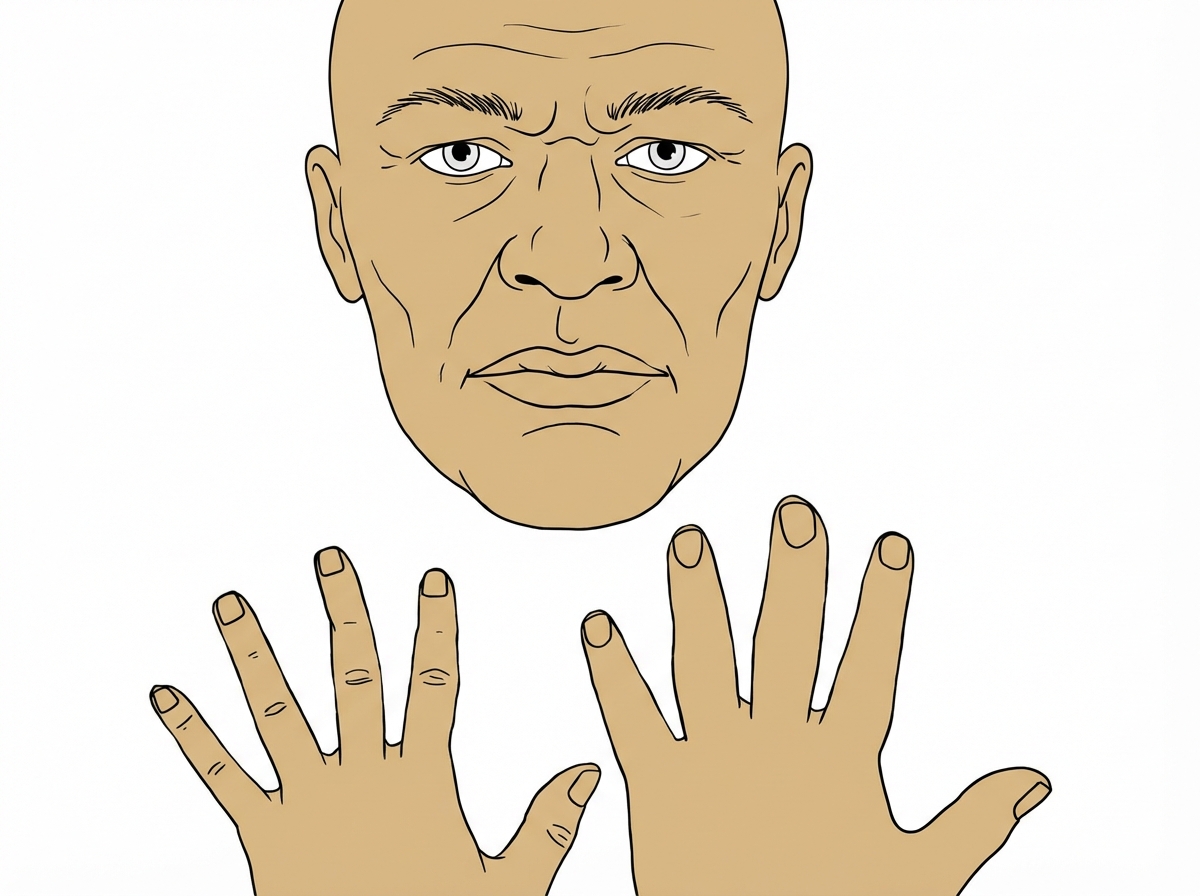
A 43-year-old man visits his physician’s office for a routine check-up. He tells his physician that he is otherwise healthy, except for persistent headaches that he gets every morning. Upon further questioning, he reveals that he has been changing glove sizes quite frequently over the past couple of years. His wedding ring doesn’t fit him anymore. He thought this was probably due to some extra weight that he has put on. Vital signs include: blood pressure 160/90 mm Hg, heart rate 82/min, and respiratory rate 21/min. His current physical appearance is cataloged in the image. His past medical history is significant for diabetes for which he has been receiving treatment for the past 2 years. Which of the following organs most likely has a structural abnormality that has resulted in this patient’s current presentation?
A 55-year-old man presents to the emergency department because of an excruciating headache that started suddenly after he got home from work. He also reports having double vision. Specifically, in the last week he almost got into two car accidents with vehicles that "came out of nowhere" while he was trying to merge on the highway. Physical examination is notable for ptosis of the left eye, which is also inferiorly and laterally deviated. The patient is treated emergently and then started on a hormone replacement in order to avoid life-threatening post-treatment complications. The patient's current presentation was associated with a pathologic process that existed for several months prior to this event. Which of the following symptoms could this patient have experienced as part of that pre-existing pathology?
A 52-year-old woman presents to her primary care physician with symptoms of heat intolerance, unintentional weight loss, feelings of anxiety, and excessive energy that hinder her from falling asleep at night. On physical exam, the patient is found to have mildly protuberant eyes bilaterally as well as discoloration and swelling of her shins. Which of the following lab results would most likely be present in this patient?
An otherwise healthy 47-year-old woman comes to the physician for the evaluation of a 4-month history of worsening fatigue and constipation. She has also noticed that her cheeks appear fuller and her voice has become hoarse. Her temperature is 36.3°C (97.3°F) and pulse is 59/min. Examination of the neck shows a painless, mildly enlarged thyroid gland. Her skin is dry and cool and her nails appear brittle. Serum studies show antibodies against thyroid peroxidase. A biopsy of the thyroid gland is most likely to show which of the following?
A 36-year-old man is admitted to the hospital because of a 1-day history of epigastric pain and vomiting. He has had similar episodes of epigastric pain in the past. He drinks 8 oz of vodka daily. Five days after admission, the patient develops aspiration pneumonia and sepsis. Despite appropriate therapy, the patient dies. At autopsy, the pancreas appears gray, enlarged, and nodular. Microscopic examination of the pancreas shows localized deposits of calcium. This finding is most similar to an adaptive change that can occur in which of the following conditions?
Want unlimited practice?
Get full access to all questions, explanations, and performance tracking.
Scan to download app