
Renal tumors — MCQs

A 57-year-old man comes to the physician with a 3-month history of right flank pain. Urinalysis shows 60 RBC/hpf. Renal ultrasound shows a 3 cm, well-defined mass in the upper pole of the right kidney. A photomicrograph of a section of the resected mass is shown. Which of the following is the most likely diagnosis?
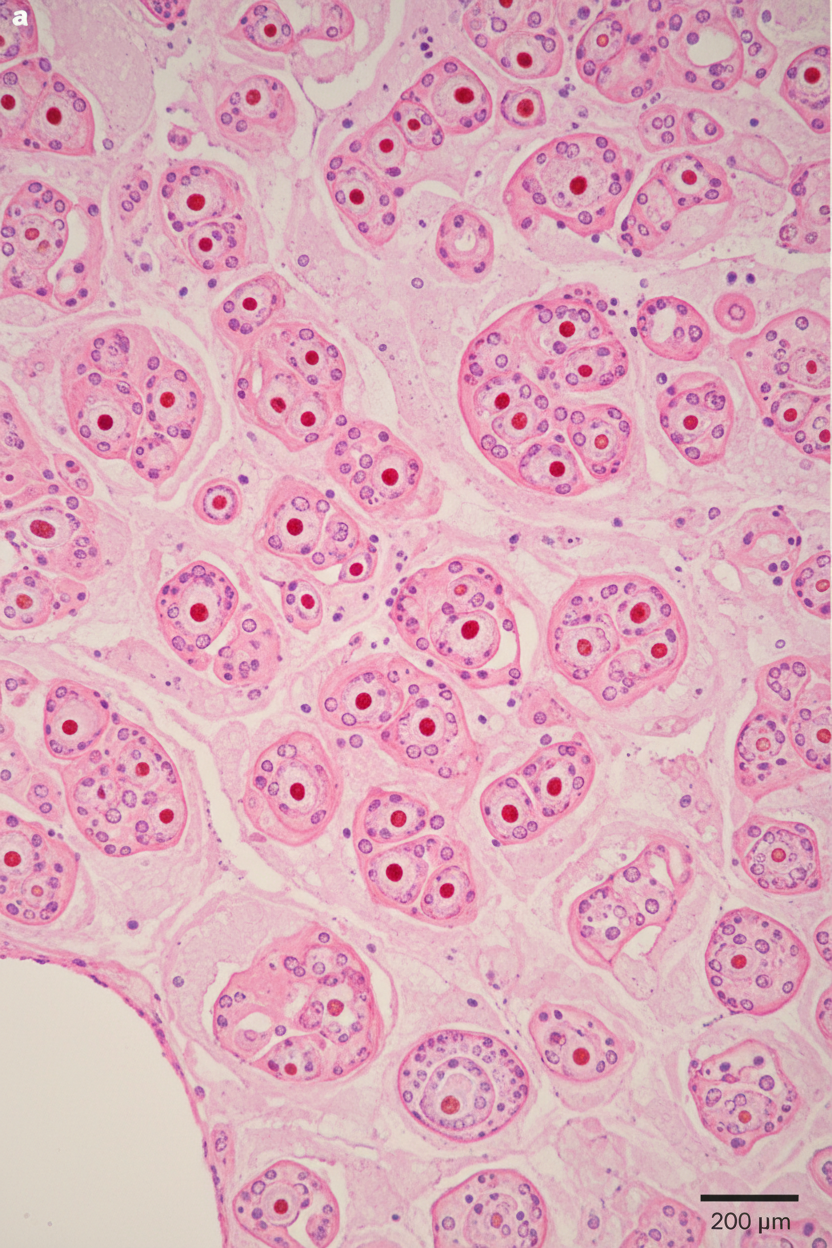
A 69-year-old man comes to the physician because of a 1-week history of blood in the urine and fatigue. He also has had a 5.0-kg (11-lb) weight loss during the past month. Physical examination shows pallor and cachexia. A nontender right flank mass is palpated. A CT scan of the chest, abdomen, and pelvis shows a 5-cm right upper pole renal mass and several pulmonary lesions. A biopsy specimen of an affected area of the lung is obtained. A photomicrograph of the biopsy specimen is shown. Molecular evaluation of the specimen is most likely to show which of the following genetic changes?
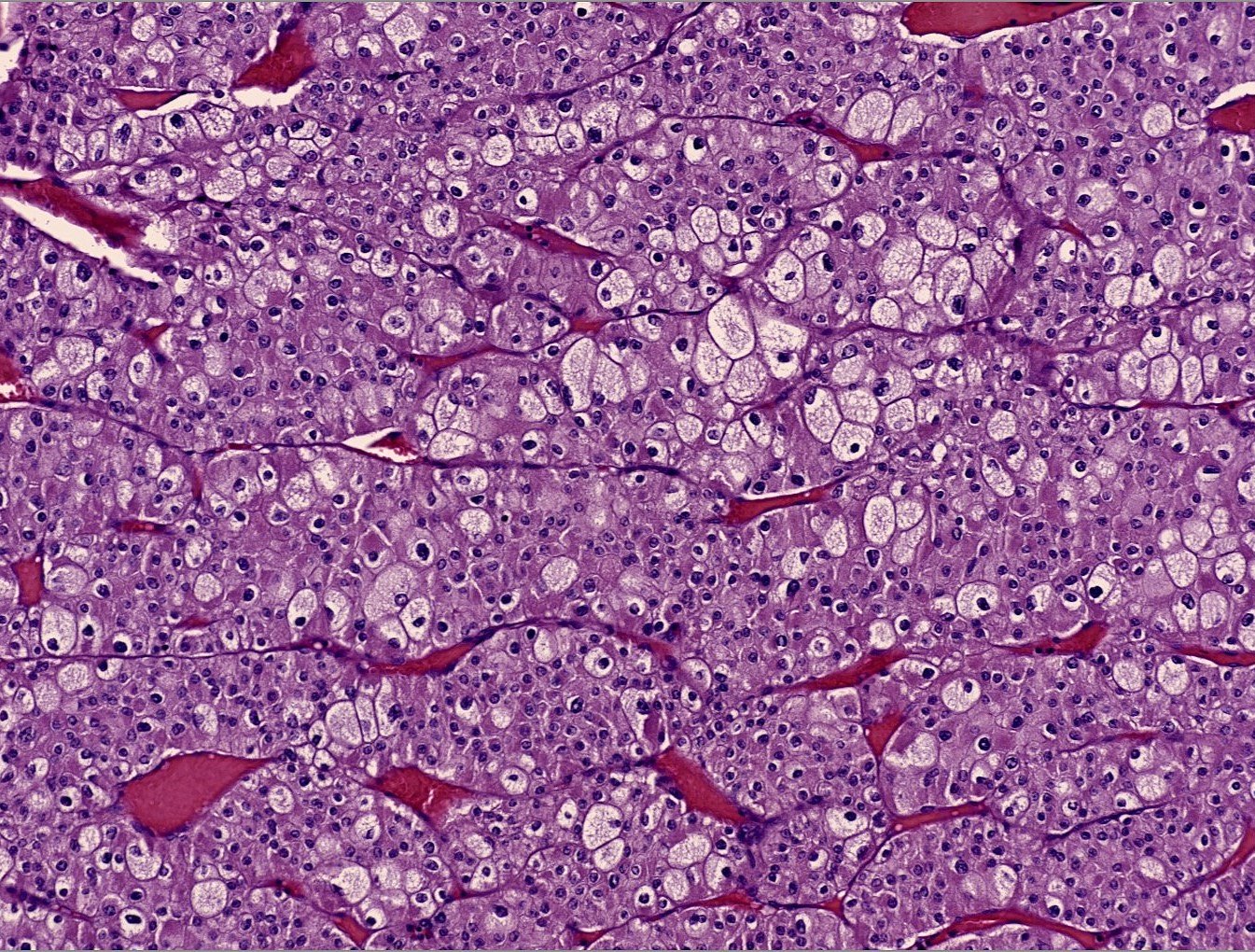
A 4-year-old girl is being followed by the pediatric oncology team after her pediatrician found a palpable abdominal mass towards the right flank 2 weeks ago. Abdominal ultrasonography detected a solid mass in the right kidney without infiltration of the renal vein and inferior vena cava. The contrast-enhanced computed tomography (CT) confirmed the presence of a solitary mass in the right kidney surrounded by a pseudocapsule consisting of a rim of normal tissue, displacing it medially, and distorting the collecting system. No nodal involvement was detected. In which of the following chromosomes would you expect a genetic abnormality?
A newborn is brought to the pediatric clinic by his mother because she has noticed a swelling in the belly while dressing her baby. On physical examination, the newborn is found to have a non-tender upper abdominal mass. The clinician also noticed absent irises and undescended testes in this baby. A magnetic resonance image (MRI) scan of the abdomen shows a mass of intra-renal origin. Which 1 of the following genetic disorders is most probably the cause of this neonate’s symptoms and signs?
A 75-year-old man comes to the physician because of abdominal pain and nausea over the past 2 weeks and a 1-month history of pain in his knees and hips. He has smoked one pack of cigarettes daily for 30 years. Physical examination shows decreased muscle strength. Laboratory studies show: Hemoglobin 11.0 mg/dL Serum Creatinine 1.5 mg/dL Calcium 12.2 mg/dL Parathyroid hormone 115 pg/mL Parathyroid hormone-related peptide elevated Urine Blood 2+ Ultrasonography of his abdomen shows a 6-cm mass in his right kidney. Nephrectomy is performed. A photograph of the resected specimen is shown. The patient's tumor most likely originated from which of the following locations?
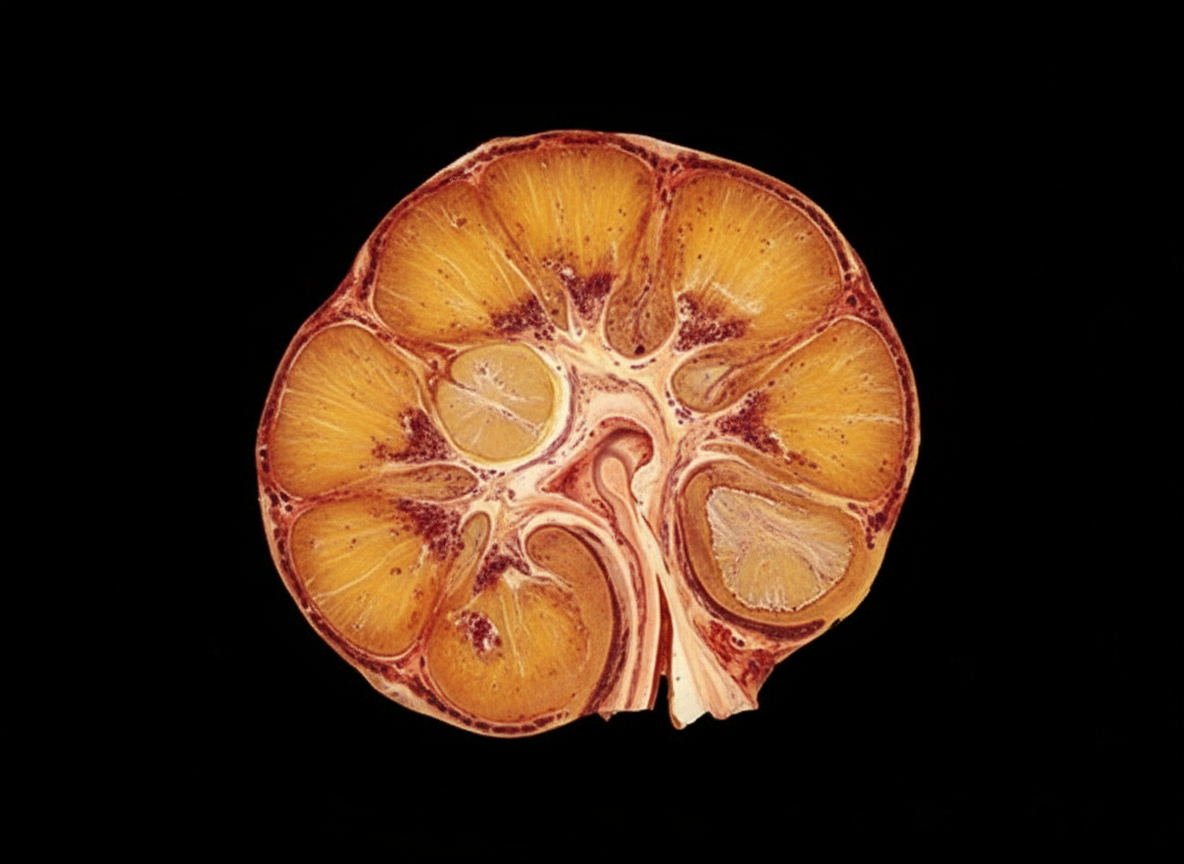
A 1-year-old boy is brought to the physician for the evaluation of swelling around the eyelids. He was born at term after an uncomplicated pregnancy. He is at the 95th percentile for weight and 60th percentile for length. His blood pressure is 130/86 mm Hg. Physical examination shows an empty scrotal sac and a left-sided abdominal mass. Ophthalmologic examination shows no abnormalities. Urinalysis shows a proteinuria of 3+ and fatty casts. Abdominal ultrasound shows a hypervascular mass at the upper pole of the kidney. Which of the following best describes the pathogenesis of this patient's disease?
A 32-year-old man presents to the emergency room for a generalized tonic-clonic seizure. After stabilizing the patient, a full radiologic evaluation reveals multiple contrast-enhancing lesions in the brain, lungs, and liver. According to his wife, he lost several pounds in the last few months. The medical history is relevant for cryptorchidism, with abdominal testes that were surgically transferred to the scrotum just before he turned 1-year old. His lab investigation reveals: α-fetoprotein: 9 ng/mL (normal values < 10 ng/mL) Human chorionic gonadotropin: 1,895 IU/L (normal values < 0.5 IU/L) Which of the following microscopic features best describes the lesions seen in this patient's imaging study?
A 59-year-old Caucasian man presents with a one-month history of left flank fullness and pain. The patient has stable angina, which is controlled with medications including atorvastatin, metoprolol, and aspirin. His vital signs are within normal limits. BMI is 32 kg/m2. Clinical examination reveals a 10 x 10-cm palpable mass in the left flank. Testicular examination indicates left varicocele. Laboratory parameters are as follows: Urine Blood 3+ WBC none RBC 65/hpf without dysmorphic features Abdominal CT scan confirms the presence of a large solid mass originating in the left kidney with impingement on the left renal vein. Based on the most likely diagnosis, which of the following is considered a risk factor in this patient?
An obese 63-year-old man comes to the physician because of 3 episodes of red urine over the past week. He has also had recurrent headaches and intermittent blurry vision during the past month. He has benign prostatic hyperplasia. He works as an attendant at a gas station. The patient has smoked one pack of cigarettes daily for the last 40 years. He does not drink alcohol. Current medications include tamsulosin. His temperature is 37.4°C (99.4°F), pulse is 90/min, and blood pressure is 152/95 mm Hg. Examination shows a flushed face. Cardiopulmonary examination shows no abnormalities. The abdomen is soft and non-tender. Digital rectal examination shows an enlarged prostate with no nodules. Urinalysis shows: Blood 3+ Glucose negative Protein negative WBC 1-2/hpf RBC 40-45/hpf RBC casts none Which of the following is the most likely diagnosis?
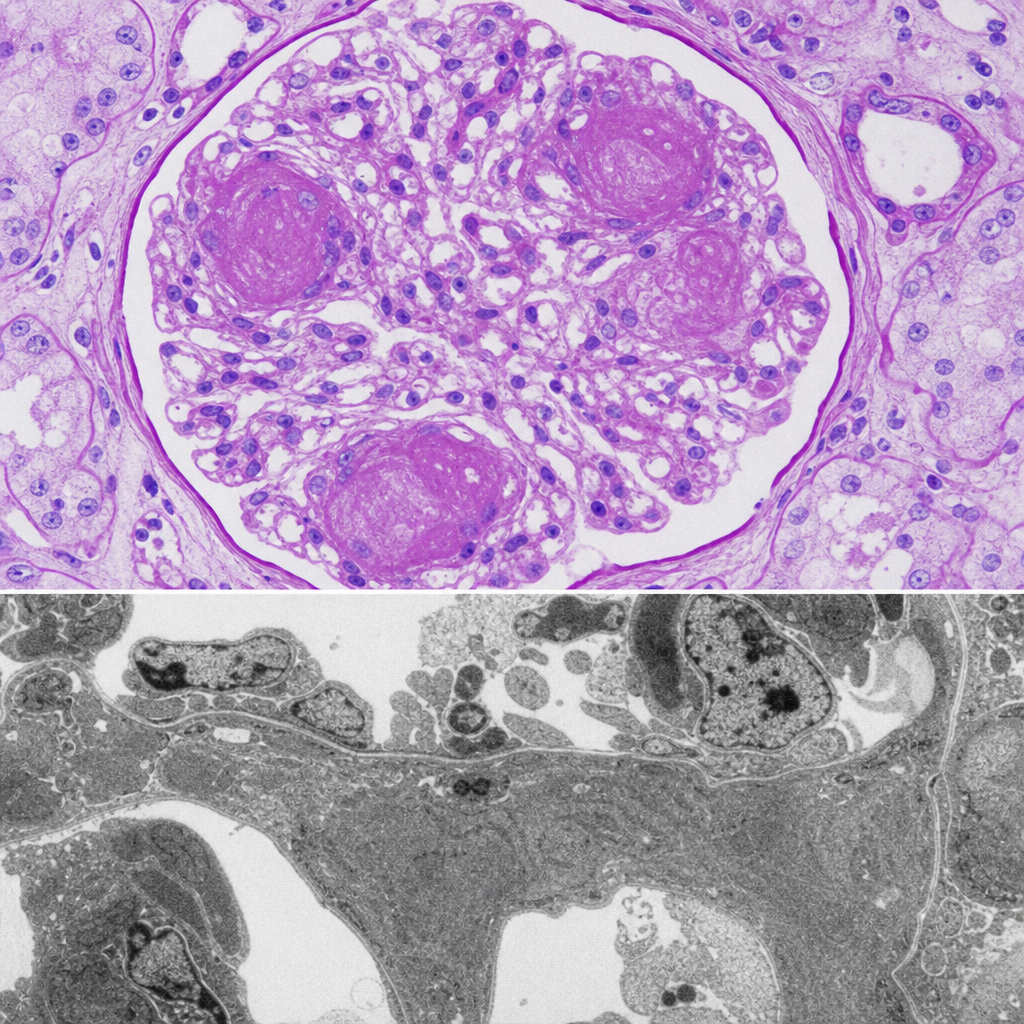
A 45-year-old woman with longstanding type 2 diabetes mellitus and hypertension presents with nephrotic-range proteinuria. Renal biopsy is performed. The photomicrograph shows PAS-positive, ovoid to spherical, acellular deposits within the mesangium of glomeruli, expanding the mesangial matrix and compressing adjacent capillary loops. Electron microscopy confirms mesangial matrix expansion without electron-dense subepithelial or subendothelial deposits. Which of the following named lesions is depicted?
Want unlimited practice?
Get full access to all questions, explanations, and performance tracking.
Scan to download app