
Pulmonary infections — MCQs

A 45-year-old male alcoholic presents with fever, productive cough, and foul-smelling sputum for the past two weeks. Vital signs are T 38.3 C, HR 106, BP 118/64 and RR 16. Oxygen saturation on room air is 90%. Given a diagnosis of aspiration pneumonia, initial chest radiograph findings would most likely include:
A 60-year-old man presents with fever and cough productive of rust-colored sputum and is diagnosed with community acquired pneumonia. The causative organism is isolated, and a Gram stain is shown in Figure 1. Which of the following most correctly describes additional features of the most likely causative organism?
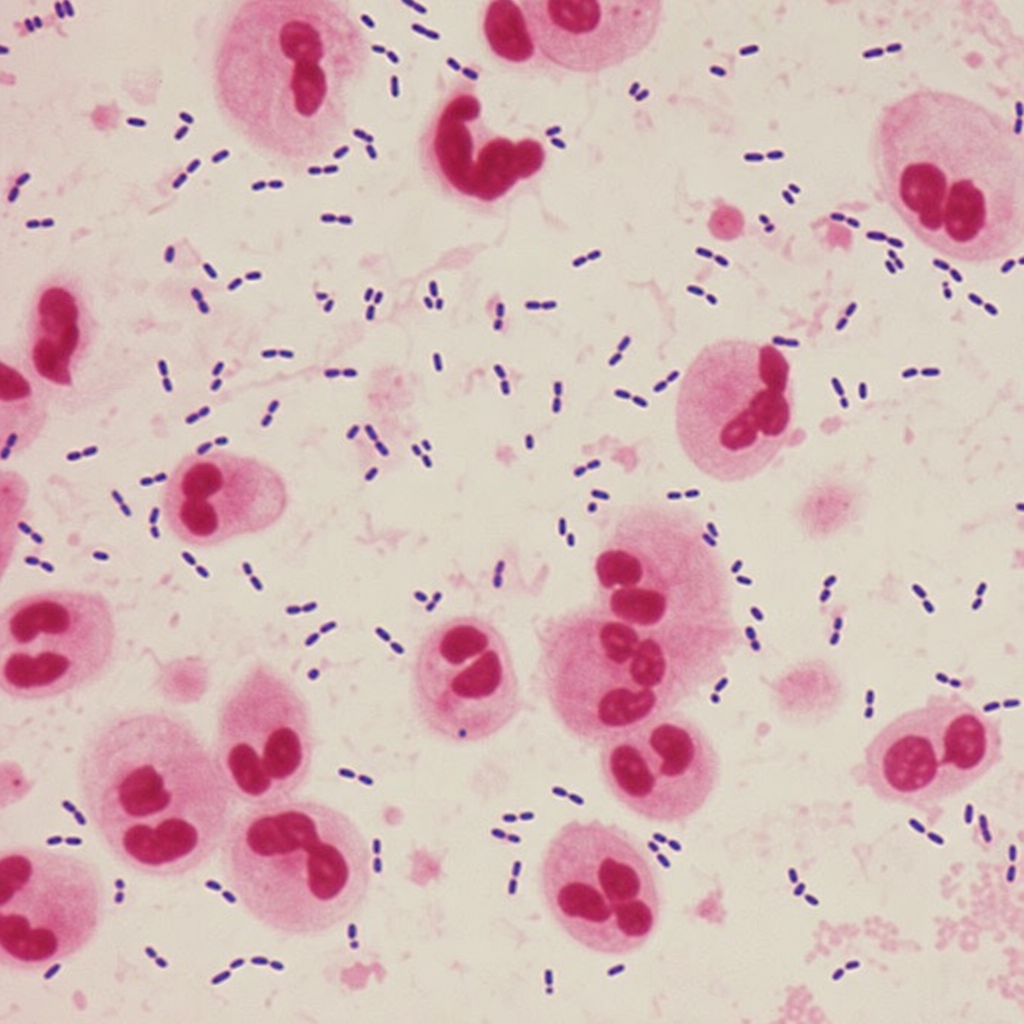
A 50-year-old man with a remote history of intravenous drug use and a past medical history of AIDS presents to his primary care provider with several weeks of productive cough and a mild fever. He was in his normal state of health and slowly started to develop these symptoms. He is hoping to be prescribed an antibiotic so he can get back to “normal”. Family history is significant for cardiovascular disease and diabetes. He takes antiviral medication and a multivitamin daily. His heart rate is 90/min, respiratory rate is 19/min, blood pressure is 135/85 mm Hg, and temperature is 38.3°C (100.9°F). On physical examination, he looks uncomfortable. A chest examination reveals consolidation in the right lower lung. Chest radiography confirms right lower lobe pneumonia. Of the following options, which is the most likely cause of the patient’s pneumonia?
A 32-year-old man comes to the physician because of a 3-week history of cough, weight loss, and night sweats. He migrated from Sri Lanka 6 months ago. He appears emaciated. His temperature is 38.1°C (100.5°F). Physical examination shows enlargement of the right supraclavicular lymph node. Chest and abdominal examination show no abnormalities. An interferon-gamma assay is positive. A biopsy specimen of the cervical lymph node is most likely to show the causal organism in which of the following locations?
A 40-year-old man presents to the office complaining of chills, fever, and productive cough for the past 24 hours. He has a history of smoking since he was 18 years old. His vitals are: heart rate of 85/min, respiratory rate of 20/min, temperature 39.0°C (102.2°F), blood pressure 110/70 mm Hg. On physical examination, there is dullness on percussion on the upper right lobe, as well as bronchial breath sounds and egophony. The plain radiograph reveals an increase in density with an alveolar pattern in the upper right lobe. Which one is the most common etiologic agent of the suspected disease?
A 34-year-old woman comes to the physician because of a 6-week history of fever and productive cough with blood-tinged sputum. She has also had a 4-kg (8.8-lb) weight loss during the same time period. Examination shows enlarged cervical lymph nodes. An x-ray of the chest shows a 2.5-cm pulmonary nodule in the right upper lobe. A biopsy specimen of the lung nodule shows caseating granulomas with surrounding multinucleated giant cells. Which of the following is the most likely underlying cause of this patient's pulmonary nodule?
A 35-year-old male presents to the emergency room with difficulty breathing. He is accompanied by his wife who reports that they were eating peanuts while lying in bed on their backs when he suddenly started coughing profusely. He has a significant cough and has some trouble breathing. His past medical history is notable for obesity, obstructive sleep apnea, seasonal allergies, and alcohol abuse. He uses a continuous positive airway pressure machine nightly. His medications include cetirizine and fish oil. He has a 10 pack-year smoking history. His temperature is 98.6°F (37°C), blood pressure is 125/30 mmHg, pulse is 110/min, and respirations are 23/min. Which of the following lung segments is most likely affected in this patient?
A 31-year-old female undergoing treatment for leukemia is found to have a frontal lobe abscess accompanied by paranasal swelling. She additionally complains of headache, facial pain, and nasal discharge. Biopsy of the infected tissue would most likely reveal which of the following?
A 50-year-old man presents to the urgent care clinic for 3 hours of worsening cough, shortness of breath, and dyspnea. He works as a long-haul truck driver, and he informs you that he recently returned to the west coast from a trip to Arkansas. His medical history is significant for gout, hypertension, hypercholesterolemia, diabetes mellitus type 2, chronic obstructive pulmonary disease (COPD), and mild intellectual disability. He currently smokes 1 pack of cigarettes/day, drinks a 6-pack of beer/day, and he endorses a past history of injection drug use but currently denies any illicit drug use. The vital signs include: temperature 36.7°C (98.0°F), blood pressure 126/74 mm Hg, heart rate 87/min, and respiratory rate 23/min. His physical examination shows mild, bilateral, coarse rhonchi, but otherwise clear lungs on auscultation, grade 2/6 holosystolic murmur, and a benign abdominal physical examination. He states that he ran out of his albuterol inhaler 6 days ago and has been meaning to follow-up with his primary care physician (PCP) for a refill. Complete blood count (CBC) and complete metabolic panel are within normal limits. He also has a D-dimer result within normal limits. Which of the following is the most appropriate next step in evaluation?
A 27-year-old G2P1 female gives birth to a baby girl at 33 weeks gestation. The child is somnolent with notable difficulty breathing. Pulse pressure is widened. She is profusely cyanotic. Auscultation is notable for a loud single S2. An echocardiogram demonstrates an enlarged heart and further studies show blood from the left ventricle entering the pulmonary circulation as well as the systemic circulation. Which of the following processes was most likely abnormal in this patient?
Want unlimited practice?
Get full access to all questions, explanations, and performance tracking.
Scan to download app