
Paraneoplastic syndromes — MCQs

A 74-year-old man presents to the physician with a painful lesion over his right lower limb which began 2 days ago. He says that the lesion began with pain and severe tenderness in the area. The next day, the size of the lesion increased and it became erythematous. He also mentions that a similar lesion had appeared over his left lower limb 3 weeks earlier, but it disappeared after a few days of taking over the counter analgesics. There is no history of trauma, and the man does not have any known medical conditions. On physical examination, the physician notes a cordlike tender area with erythema and edema. There are no signs suggestive of deep vein thrombosis or varicose veins. Which of the following malignancies is most commonly associated with the lesion described in the patient?
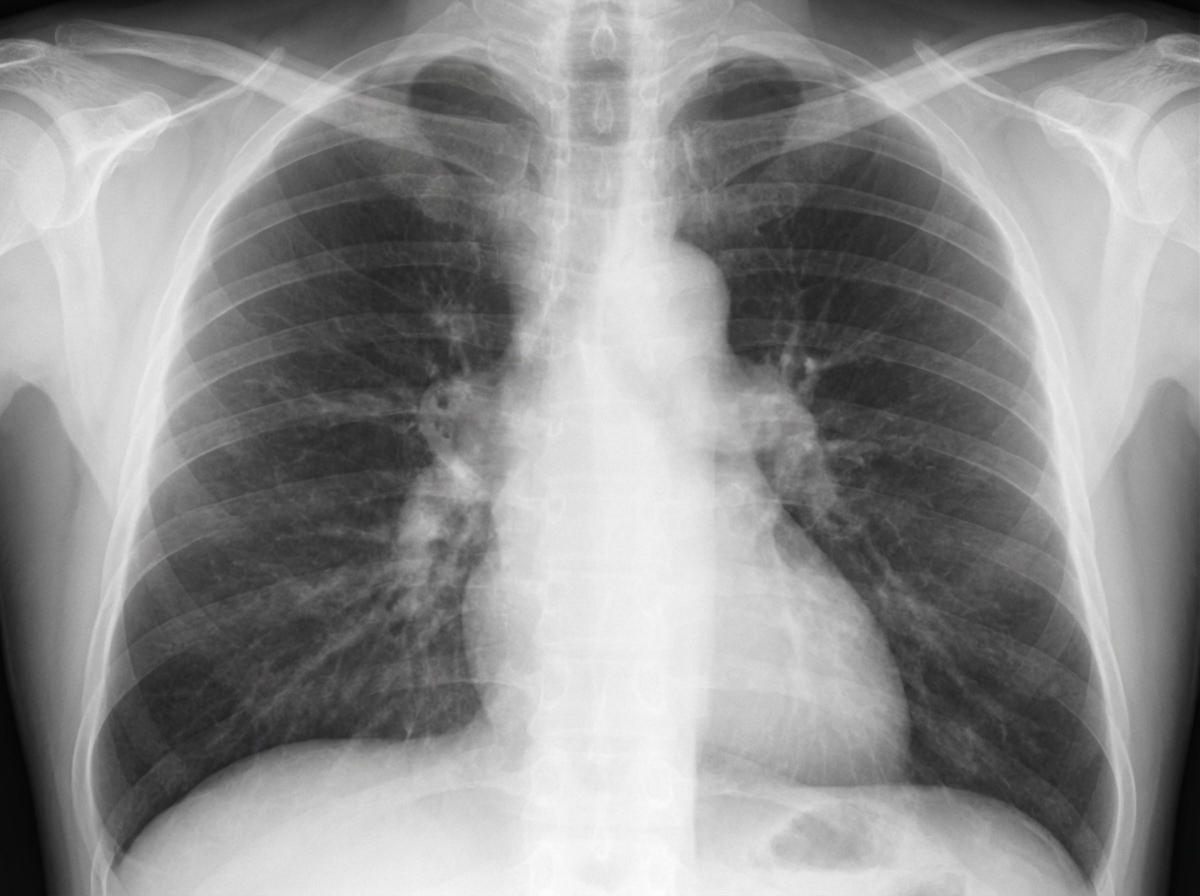
A 61-year-old man presents to the urgent care clinic complaining of cough and unintentional weight loss over the past 3 months. He works as a computer engineer, and he informs you that he has been having to meet several deadlines recently and has been under significant stress. His medical history is significant for gout, hypertension, hypercholesterolemia, diabetes mellitus type 2, and pulmonary histoplasmosis 10 years ago. He currently smokes 2 packs of cigarettes/day, drinks a 6-pack of beer/day, and he endorses a past history of cocaine use back in the early 2000s but currently denies any drug use. The vital signs include: temperature 36.7°C (98.0°F), blood pressure 126/74 mm Hg, heart rate 87/min, and respiratory rate 18/min. His physical examination shows minimal bibasilar rales, but otherwise clear lungs on auscultation, grade 2/6 holosystolic murmur, and a benign abdominal physical examination. However, on routine lab testing, you notice that his sodium is 127 mEq/L. His chest X-ray is shown in the picture. Which of the following is the most likely underlying diagnosis?
A 61-year-old woman comes to the physician because of a 1-week history of dizziness, nausea, vomiting, and repeated falls. Neurologic examination shows past-pointing on a finger-nose test. She has a broad-based gait. Ophthalmologic exam shows rhythmic leftward movement of the globes. A serum antibody assay is positive for anti-Yo antibodies directed at proteins expressed by Purkinje cells. This patient's condition is most likely associated with which of the following tumors?
A 59-year-old woman comes to the physician because of upper extremity weakness and fatigue for the past 4 months. She has had difficulty combing her hair and lifting objects. She has also had difficulty rising from her bed in the mornings for 2 months. Over the past month, she started using over-the-counter mouth rinses for dry mouth. She has smoked 1 pack of cigarettes daily for 40 years. Examination shows decreased deep tendon reflexes. Repetitive muscle tapping shows increased reflex activity. There are no fasciculations or muscle atrophy. A low-dose CT scan of the chest shows a 3-cm mass with heterogeneous calcifications in the center of the right lung. Which of the following is the most likely underlying mechanism responsible for this patient’s current symptoms?
A 39-year-old female presents with confusion. Her husband reports that she doesn't know where she is and cannot remember the date. She was recently diagnosed with small cell lung cancer. Vital signs are T 37C, HR 80, BP 120/80 mmHg, RR 14, and O2 sat 99% on room air. She is not orthostatic. Physical examination reveals moist mucous membranes and normal capillary refill. A basic metabolic profile reveals that serum sodium is 129. Regarding this patient's illness, which of the following is true?
A 51-year-old woman comes to the physician because of swelling of her legs for 4 months. She first noticed the changes on the left leg, followed by the right leg. Sometimes her legs are itchy. She has a 1-month history of hoarseness. She returned from a trip to Mexico 8 months ago. She has a history of hypertension, constipation, and coronary artery disease. She works as a teacher at a primary school. Her mother had type-2 diabetes mellitus. She smoked one-half pack of cigarettes daily for 6 years but stopped smoking 11 years ago. She drinks one glass of wine daily and occasionally more on the weekend. Current medications include aspirin, bisoprolol, and atorvastatin. She is 165 cm (5 ft 5 in) tall and weighs 82 kg (181 lb); BMI is 30.1 kg/m2. Vital signs are within normal limits. Examination shows bilateral pretibial non-pitting edema. The skin is indurated, cool, and dry. Peripheral pulses are palpated bilaterally. The remainder of the examination shows no abnormalities. The patient is at increased risk for which of the following conditions?
A 31-year-old man comes to the physician because of worsening abdominal pain, an inability to concentrate at work, and a general lack of motivation over the past several months. He has a history of spontaneous passage of two kidney stones. His father and uncle underwent thyroidectomy before the age of 35 for thyroid cancer. Physical examination shows diffuse tenderness over the abdomen. Serum studies show: Na+ 142 mEq/L K+ 3.7 mEq/L Glucose 131 mg/dL Ca2+ 12.3 mg/dL Albumin 4.1 g/dL Parathyroid hormone 850 pg/mL Further evaluation is most likely to show elevated levels of which of the following?
A lung mass of a 50 pack-year smoker is biopsied. If ADH levels were grossly increased, what would most likely be the histologic appearance of this mass?
A 54-year-old man comes to the emergency department for nausea and vomiting for the past 2 days. The patient reports that he felt tired and weak for the past week without any obvious precipitating factors. Past medical history is significant for hypertension controlled with hydrochlorothiazide. He denies diarrhea, changes in diet, recent surgery, vision changes, or skin pigmentation but endorses a 10-lb weight loss, headaches, fatigue, and a chronic cough for 2 years. He smokes 2 packs per day for the past 20 years but denies alcohol use. Physical examination demonstrates generalized weakness with no peripheral edema. Laboratory tests are shown below: Serum: Na+: 120 mEq/L Cl-: 97 mEq/L K+: 3.4 mEq/L HCO3-: 24 mEq/L Ca2+: 10 mg/dL Osmolality: 260 mOsm/L Urine: Na+: 25 mEq/L Osmolality: 285 mOsm/L Specific gravity: 1.007 What is the most likely finding in this patient?
An obese 63-year-old man comes to the physician because of 3 episodes of red urine over the past week. He has also had recurrent headaches and intermittent blurry vision during the past month. He has benign prostatic hyperplasia. He works as an attendant at a gas station. The patient has smoked one pack of cigarettes daily for the last 40 years. He does not drink alcohol. Current medications include tamsulosin. His temperature is 37.4°C (99.4°F), pulse is 90/min, and blood pressure is 152/95 mm Hg. Examination shows a flushed face. Cardiopulmonary examination shows no abnormalities. The abdomen is soft and non-tender. Digital rectal examination shows an enlarged prostate with no nodules. Urinalysis shows: Blood 3+ Glucose negative Protein negative WBC 1-2/hpf RBC 40-45/hpf RBC casts none Which of the following is the most likely diagnosis?
Want unlimited practice?
Get full access to all questions, explanations, and performance tracking.
Scan to download app