
Abnormalities in wound healing — MCQs

A 62-year-old woman is hospitalized for an open reduction of a fracture of her right femur following a motor vehicle accident 2 hours prior. She has had rheumatoid arthritis for 12 years. She was hospitalized 1 month ago for an exacerbation of rheumatoid arthritis. Since then, she has been taking a higher dose of prednisone to control the flare. Her other medications include calcium supplements, methotrexate, and etanercept. She has had appropriate nutrition over the years with regular follow-ups with her healthcare providers. Her vital signs are within normal limits. Cardiovascular examination shows no abnormalities. In order to reduce the risk of post-operative wound failure, which of the following is the most appropriate modification in this patient’s drug regimen?
A 55-year-old African American female presents to her breast surgeon for a six-month follow-up visit after undergoing a modified radical mastectomy for invasive ductal carcinoma of the left breast. She reports that she feels well and her pain has been well controlled with ibuprofen. However, she is frustrated that her incisional scar is much larger than she expected. She denies any pain or pruritus associated with the scar. Her past medical history is notable for systemic lupus erythematosus and multiple dermatofibromas on her lower extremities. She has had no other surgeries. She currently takes hydroxychloroquine. On examination, a raised hyperpigmented rubbery scar is noted at the inferior border of the left breast. It appears to have extended beyond the boundaries of the initial incision. Left arm range of motion is limited due to pain at the incisional site. Abnormal deposition of which of the following molecules is most likely responsible for the appearance of this patient’s scar?
A 48-year-old man is brought to the emergency department with a stab wound to his chest. The wound is treated in the emergency room. Three months later he develops a firm 4 x 3 cm nodular mass with intact epithelium over the site of the chest wound. On local examination, the scar is firm, non-tender, and there is no erythema. The mass is excised and microscopic examination reveals fibroblasts with plentiful collagen. Which of the following processes is most likely related to the series of events mentioned above?
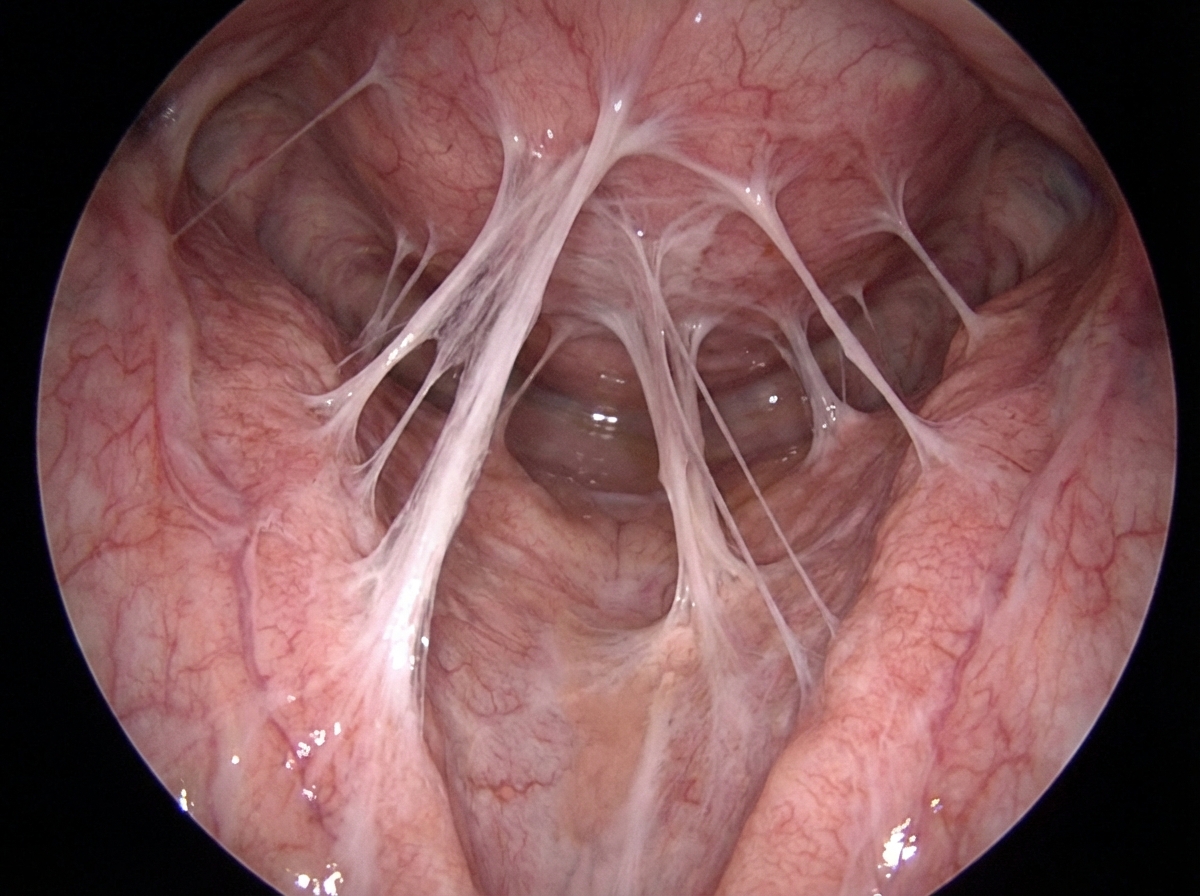
A 28-year-old woman and her husband are admitted to the office due to difficulties conceiving a child for the past year. Her menarche was at the age of 15 years, and her periods have been regular since then. Her medical history is positive for an abortion with curettage 5 years ago. A spermogram on the partner is performed, and it shows motile sperm cells. An ultrasound is performed on the patient and it is unremarkable. The laboratory results show that the FSH, LH, TSH, and prolactin levels are within normal ranges. A hysteroscopy is additionally performed and multiple adhesions are found in the uterus (refer to the image). Which of the following is the most likely composition of the scar tissue present in the uterus?
A 35-year-old man is pulled out of a burning building. He is unconscious and severely injured. He is transported to the nearest emergency department. Upon arrival, he is stabilized and evaluated for burns and trauma. Approximately 40% of his body is covered in burns. The burned areas appear blackened and charred but the skin is mostly intact. It is noted that the patient has loss of pain sensation in the burnt areas with minimal blanching on palpation. The affected area is leathery when palpated. What category of burn did the patient most likely to suffer from?
A 56-year-old woman undergoes open reduction and internal fixation of the distal tibia 1 day after a fall. She has had rheumatoid arthritis for 12 years and diabetes mellitus for 2 years. Her medications over the past year have included metformin, prednisone, calcium supplements, and methotrexate. Prior to surgery, insulin was added to her medications, and the dose of prednisone was increased. She has had appropriate nutrition over the years with regular follow-ups with her healthcare professional. Which of the following is the most appropriate supplement to prevent wound failure in this patient?
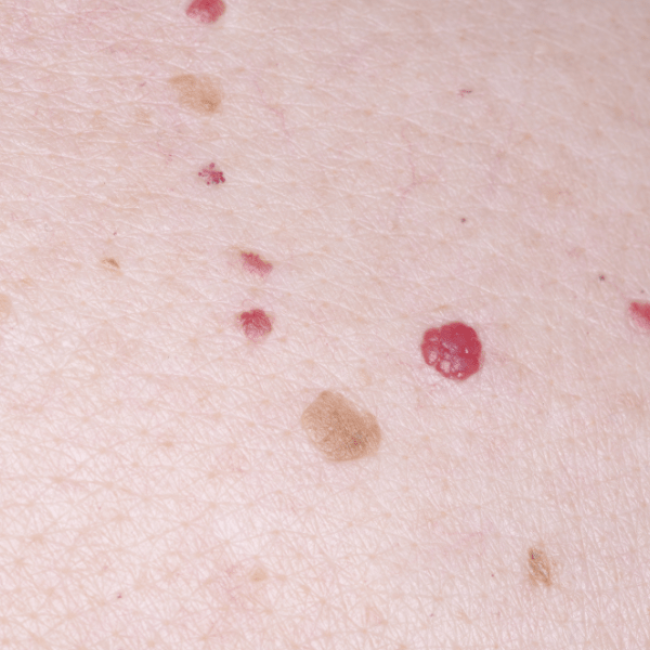
A 51-year-old woman presents to the dermatologist with concern for a new skin lesion (Image A). You note two similar lesions on her back. Which of the following is a true statement about these lesions?
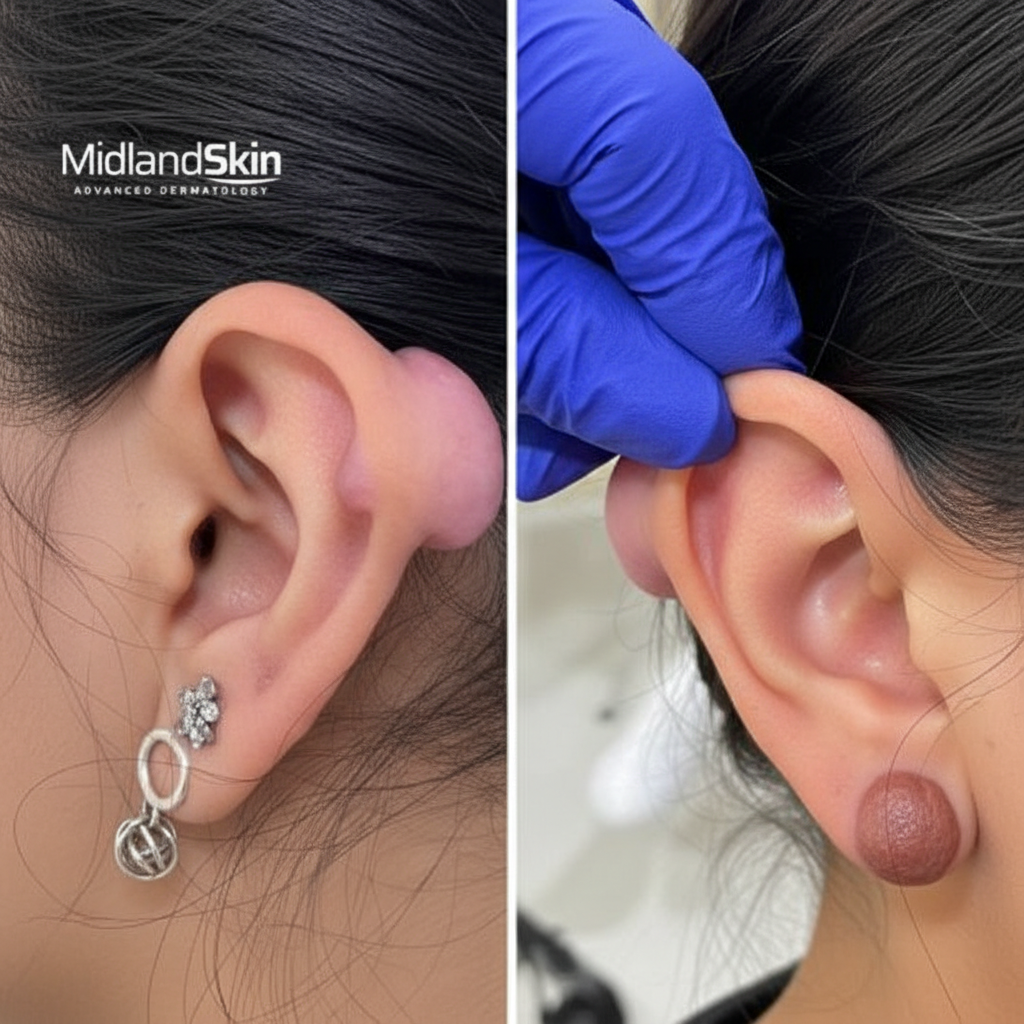
A 23-year-old woman comes to the physician for evaluation of two masses on her right auricle for several months. The masses appeared a few weeks after she had her ear pierced and have increased in size since then. A photograph of her right ear is shown. Which of the following is the most likely cause of these findings?
A 31-year-old Israeli male with a history of heavy smoking presents to your office with painful ulcerations on his hands and feet. Upon examination, he is found to have hypersensitivity to intradermally injected tobacco extract. Which of the following processes is most likely responsible for his condition?
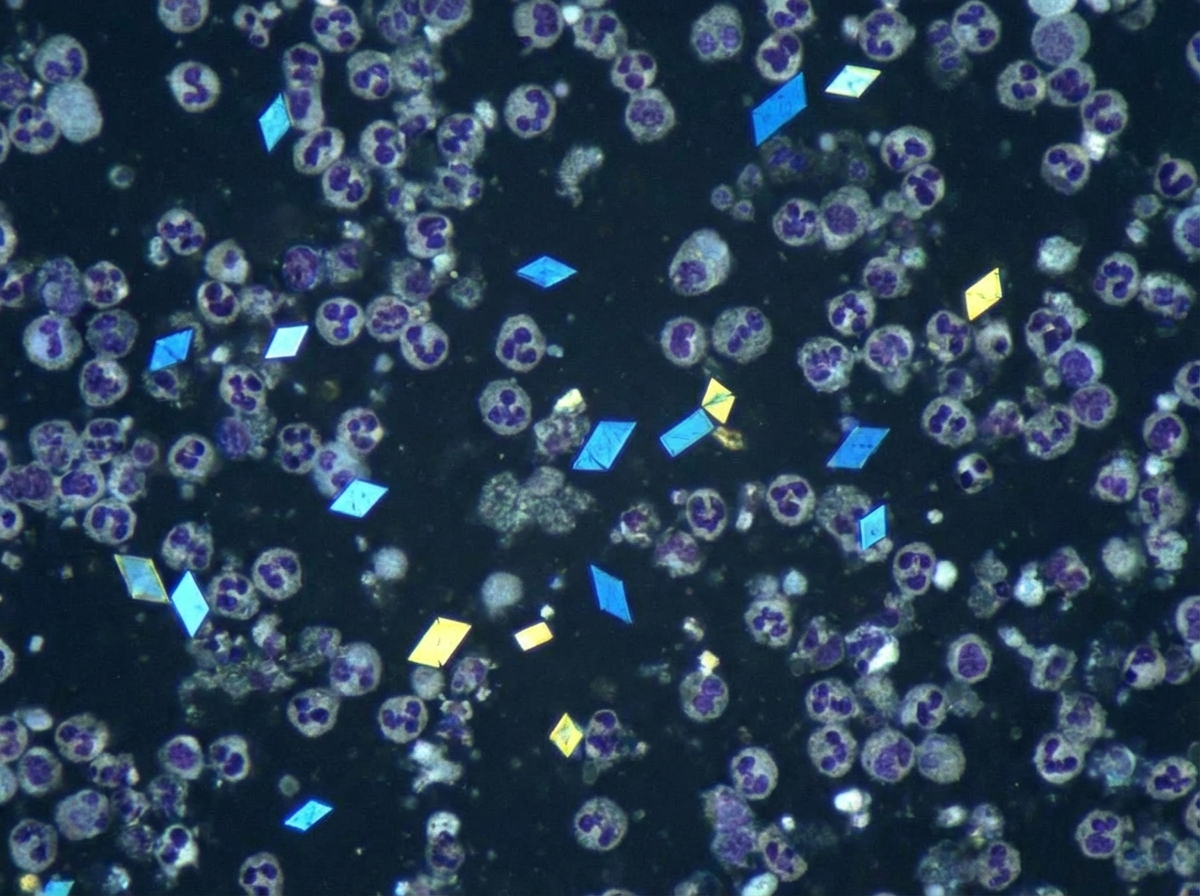
A 62-year-old man comes to the physician because of a swollen and painful right knee for the last 3 days. He has no history of joint disease. His vital signs are within normal limits. Examination shows erythema and swelling of the right knee, with limited range of motion due to pain. Arthrocentesis of the right knee joint yields 7 mL of cloudy fluid with a leukocyte count of 29,000/mm3 (97% segmented neutrophils). Compensated polarized light microscopy of the aspirate is shown. Which of the following is the most likely underlying mechanism of this patient's knee pain?
Want unlimited practice?
Get full access to all questions, explanations, and performance tracking.
Scan to download app