
Splenic pathology — MCQs

A 32 year-old African American man with a past medical history of sickle cell anemia presents to his primary care physician for a routine check-up. He has no complaints. His physician notes that he likely has an increased susceptibility to infections with certain organisms. Which of the following patient groups has a similar pattern of increased susceptibility?
A 60-year-old man presents to his physician as part of his routine annual medical check-up. He has no specific complaints but mentions that he has often experienced fatigue over the past few months. His past medical history is noncontributory. On physical examination, his temperature is 37.2°C (98.8°F), pulse rate is 84/min, blood pressure is 130/86 mm Hg, and respiratory rate is 18/min. On general examination, mild pallor is present. Palpation of the abdomen reveals splenomegaly, which extends 6.35 cm (2.5 in) below the left costal margin. There is no hepatomegaly. Laboratory studies show the following values: Hemoglobin 9.7 g/dL Total leukocyte count 30,000/mm3 Granulocytes 83% Lymphocytes 10% Eosinophils 5% Basophils 1% Monocytes 1% Platelet count 700,000/mm3 The physician orders a bone marrow biopsy analysis of hematopoietic cells. The report shows the presence of a t(9;22)(q34; q11) translocation. Which of the following is the most likely diagnosis?
A 9-year-old boy is brought to the physician by his parents because of right-sided shoulder pain for 1 day. He has not had chills or sweating. Over the past year, he was treated twice in the emergency department for painful swelling of his hands and feet. He emigrated with his family from Kenya 2 years ago. His temperature is 37.4°C (99.3°F), pulse is 96/min, and blood pressure is 123/82 mm Hg. Physical examination shows no tenderness, erythema, or joint swelling of the shoulder. Laboratory studies show: Hemoglobin 7 g/dL Mean corpuscular volume 88 μm Reticulocyte count 9% Leukocyte count 12,000/mm3 A peripheral blood smear is most likely to show which of the following abnormalities?
A 66-year-old woman is brought to the emergency department because of fever, chills, night sweats, and progressive shortness of breath for 1 week. She also reports generalized fatigue and nausea. She has type 2 diabetes mellitus and hypothyroidism. Current medications include metformin, sitagliptin, and levothyroxine. She appears ill. Her temperature is 38.7°C (101.7°F), pulse is 104/min, and blood pressure is 160/90 mm Hg. Examination shows pale conjunctivae and small nontender hemorrhagic macules over her palms and soles. Crackles are heard at both lung bases. A grade 2/6 mid-diastolic murmur is heard best at the third left intercostal space and is accentuated by leaning forward. The spleen is palpated 1–2 cm below the left costal margin. Laboratory studies show: Hemoglobin 10.6 g/dL Leukocyte count 18,300/mm3 Erythrocyte sedimentation rate 48 mm/h Urine Protein 1+ Blood 2+ RBCs 20-30/hpf WBCs 0-2/hpf An echocardiography shows multiple vegetations on the aortic valve. Blood cultures grow S. gallolyticus. She is treated with ampicillin and gentamicin for 2 weeks and her symptoms resolve. A repeat echocardiography at 3 weeks shows mild aortic regurgitation with no vegetations. Which of the following is the most appropriate next step in management?
A 55-year-old man comes to the physician for a routine health visit. He feels well except for occasional left-sided abdominal discomfort and left shoulder pain. He has smoked 1 pack of cigarettes daily for 20 years. He does not drink alcohol. His pulse is 85/min and his blood pressure is 130/70 mmHg. Examination shows a soft, nontender abdomen. The spleen is palpated 5 cm below the costal margin. There is no lymphadenopathy present. The remainder of the examination shows no abnormalities. Laboratory studies show: Hemoglobin 12.2 g/dL Hematocrit 36 % Leukocyte count 34,000/mm3 Platelet count 450,000/mm3 Cytogenetic testing of his blood cells is pending. Further evaluation of this patient is most likely to show which of the following findings?
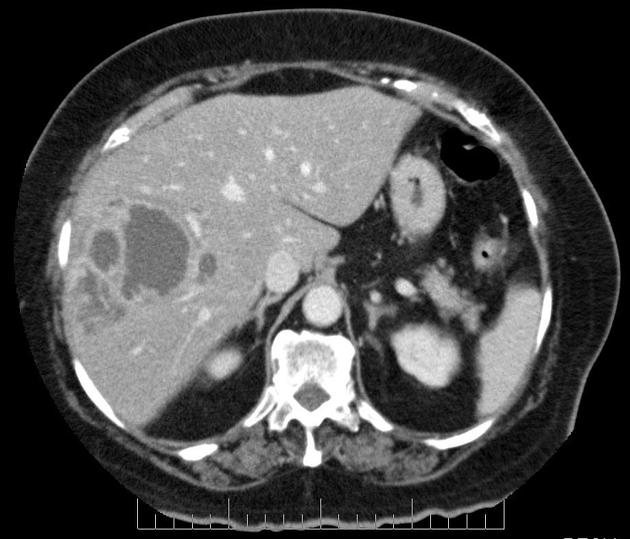
A 40-year-old man presents to the office with complaints of epigastric discomfort for the past 6 months. He adds that the discomfort is not that bothersome as it does not interfere with his daily activities. He does not have any other complaints at the moment. The past medical history is insignificant. He is a non-smoker and does not consume alcohol. He recently came back from a trip to South America where he visited a relative who owned a sheep farm. On physical examination, he has a poorly palpable epigastric non-tender mass with no organomegaly. The hepatitis B and C serology are negative. The liver CT scan and MRI are shown. What is the most likely diagnosis?
A 3-year-old boy is brought to the physician because of a 5-day history of yellowing of his eyes and skin. He has had generalized fatigue and mild shortness of breath over the past 2 months. Examination shows pale conjunctivae and scleral jaundice. The spleen is palpated 4 cm below the left costal margin. Laboratory studies show a hemoglobin concentration of 8.5 g/dL and a mean corpuscular volume of 76 μm3. A peripheral blood smear shows round erythrocytes that lack central pallor. Which of the following is the most likely cause of the splenomegaly seen in this child?
A 45-year-old woman presents to the emergency department after sustaining a gunshot wound to her shoulder. During the course of the physical exam, the physician notes her spleen is palpable 10 cm below the left costal margin. Additionally, radiography of her shoulder showed several 'punched-out' areas of lytic bone. While this was considered an incidental finding at the time, she was referred to her primary care physician for further workup. Subsequent biopsy of the spleen demonstrated that this patient’s splenomegaly was caused by an infiltrative process. Which of the following processes would most likely result in splenomegaly in this patient?
A 64-year-old man comes to the emergency department complaining of fatigue and abdominal distension. He has a remote history of intravenous drug use. Vital signs include a normal temperature, blood pressure of 120/80 mm Hg, and a pulse of 75/min. Physical examination reveals jaundice and a firm liver. Abdominal ultrasonography shows liver surface nodularity, moderate splenomegaly, and increased diameter of the portal vein. Complete blood count of the patient is shown: Hemoglobin 14 g/dL Mean corpuscular volume 90/μm3 Mean corpuscular hemoglobin 30 pg/cell Mean corpuscular hemoglobin concentration 34% Leukocyte count 7,000/mm3 Platelet count 50,000/mm3 Which of the following best represents the mechanism of low platelet count in this patient?
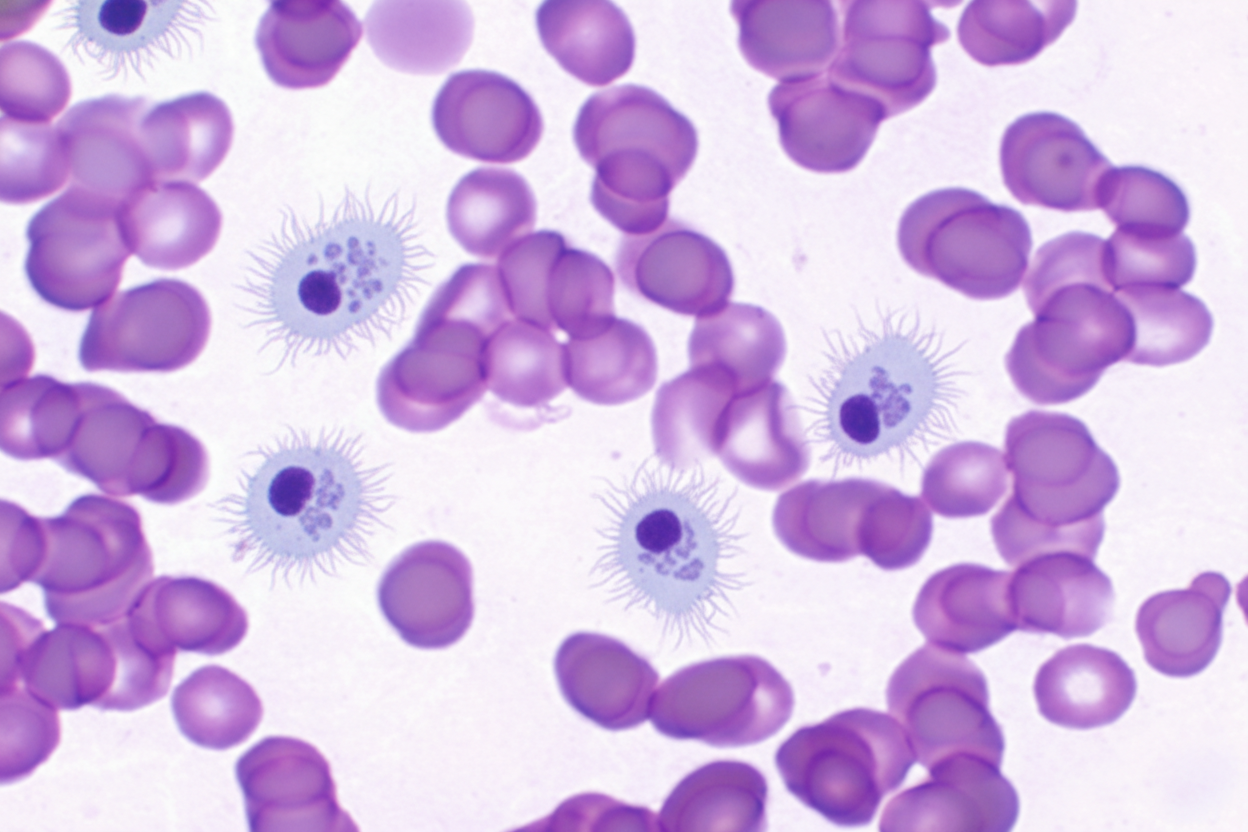
A 62-year-old man comes to the physician because of easy bruising and recurrent nosebleeds over the past 4 months. During the same time period, the patient has felt weak and has had a 10-kg (22-lb) weight loss. Physical examination shows mucosal pallor and bruising on the upper and lower extremities in various stages of healing. The spleen is palpated 4 cm below the left costal margin. Laboratory studies show anemia and thrombocytopenia. A photomicrograph of a peripheral blood smear is shown. Histologic examination of a bone marrow biopsy in this patient is most likely to show which of the following findings?
Want unlimited practice?
Get full access to all questions, explanations, and performance tracking.
Scan to download app