
Plasma cell disorders — MCQs

A 72-year-old African American man presents with progressive fatigue, difficulty breathing on exertion, and lower extremity swelling for 3 months. The patient was seen at the emergency department 2 times before. The first time was because of back pain, and the second was because of fever and cough. He took medications at the emergency room, but he refused to do further tests recommended to him. He does not smoke or drink alcohol. His family history is irrelevant. His vital signs include a blood pressure of 110/80 mm Hg, temperature of 37.2°C (98.9°F), and regular radial pulse of 90/min. On physical examination, the patient looks pale, and his tongue is enlarged. Jugular veins become distended on inspiration. Pitting ankle edema is present on both sides. Bilateral basal crackles are audible on the chest auscultation. Hepatomegaly is present on abdominal palpation. Chest X-ray shows osteolytic lesions of the ribs. ECG shows low voltage waves and echocardiogram shows a speckled appearance of the myocardium with diastolic dysfunction and normal appearance of the pericardium. Which of the following best describes the mechanism of this patient’s illness?
A 61-year-old woman presents to her primary care physician for a routine check-up. Physical examination demonstrates asymmetric peripheral neuropathy in her feet. The patient has no previous relevant history and denies any symptoms of diabetes. Routine blood work shows normal results, and she is referred to a hematologist. Subsequent serum protein electrophoresis demonstrates a slightly elevated gamma globulin level, and monoclonal gammopathy of undetermined significance is diagnosed. Which of the following diseases is most likely to develop over the course of this patient’s condition?
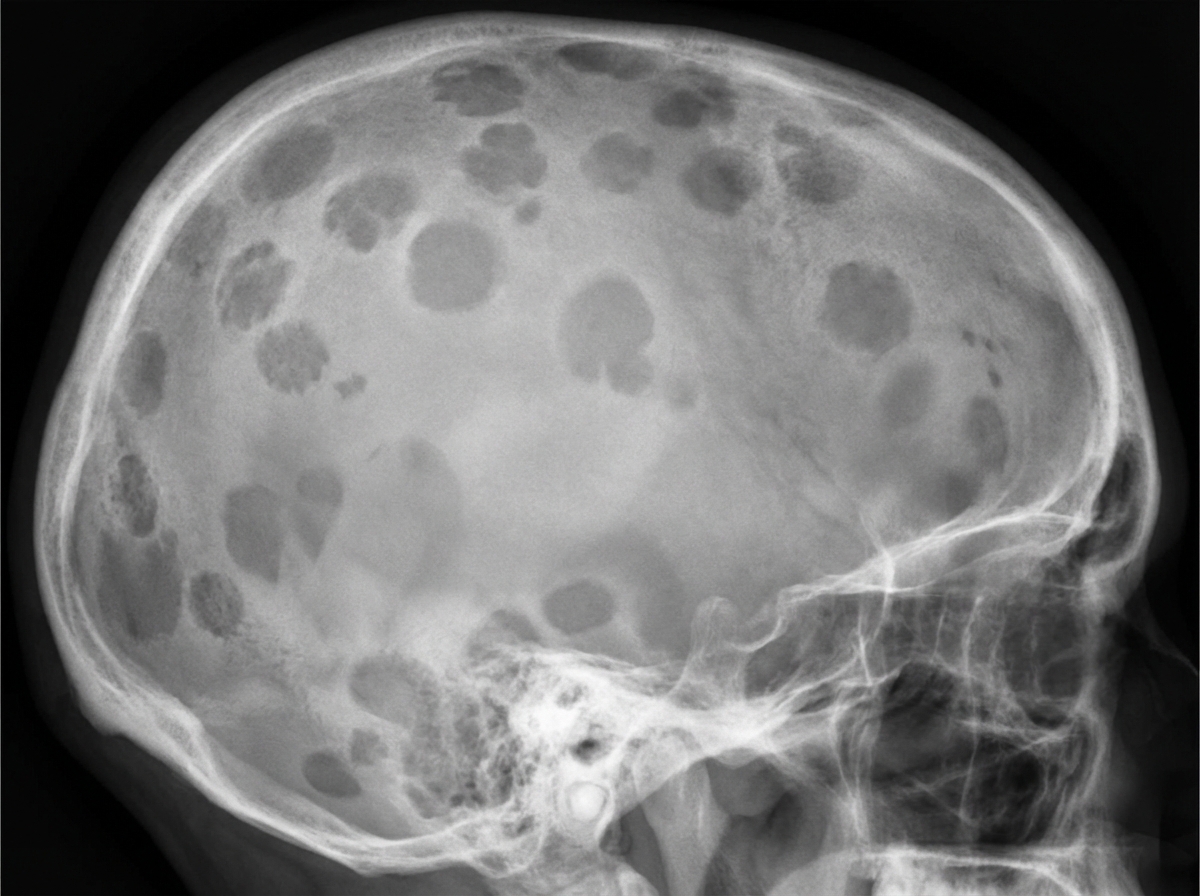
A 70-year-old man comes to the physician because of progressive fatigue and lower back pain for the past 4 months. The back pain worsened significantly after he had a minor fall while doing yard work the previous day. For the past year, he has had a feeling of incomplete emptying of his bladder after voiding. His vital signs are within normal limits. Examination shows bilateral paravertebral muscle spasm, severe tenderness over the second lumbar vertebra, and mild tenderness over the lower thoracic vertebrae. Neurologic examination shows no abnormalities. His hemoglobin is 10.5 g/dl, alkaline phosphatase is 110 U/L, and serum calcium is 11.1 mg/dl. An x-ray of the skull is shown. Which of the following is the most appropriate next step in diagnosis?
A 61-year-old man presents to the emergency department with new-onset dizziness. He reports associated symptoms of confusion, headaches, and loss of coordination. The patient’s wife also mentions he has had recent frequent nosebleeds. Physical examination demonstrates a double vision. Routine blood work is significant for a slightly reduced platelet count. A noncontrast CT of the head is normal. A serum protein electrophoresis is performed and shows an elevated IgM spike. The consulting hematologist strongly suspects Waldenström’s macroglobulinemia. Which of the following is the best course of treatment for this patient?
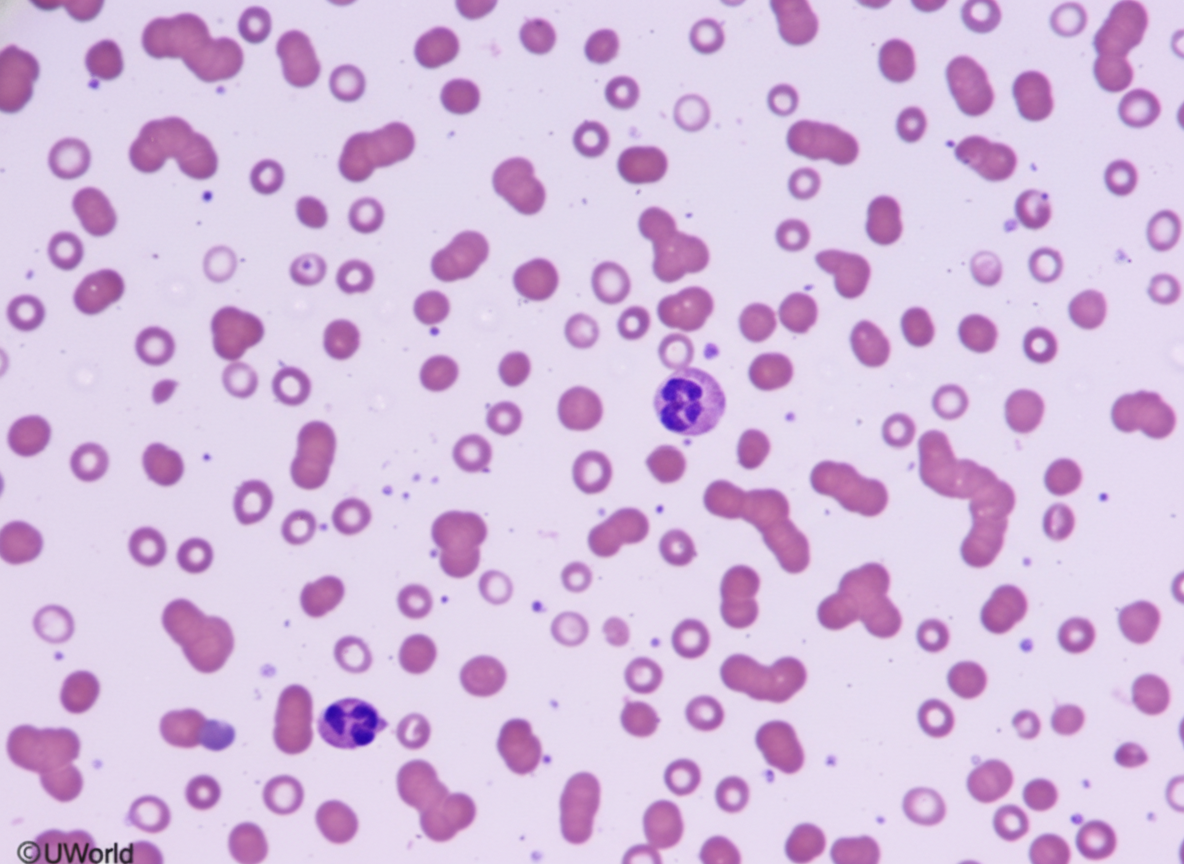
A 69-year-old woman comes to the physician because of a 3-week history of headache and worsening vision. Ophthalmologic examination shows a visual acuity of 20/120 in the right eye and 20/80 in the left eye. Physical examination shows no other abnormalities. Laboratory studies show a hemoglobin of 14.2 g/dL and total serum calcium of 9.9 mg/dL. A photomicrograph of a peripheral blood smear is shown. Serum electrophoresis shows increased concentration of a pentameric immunoglobulin. Which of the following is the most likely diagnosis?
A 73-year-old man comes to the physician because of progressive fatigue and shortness of breath on exertion for 3 weeks. He has swelling of his legs. He has not had nausea or vomiting. His symptoms began shortly after he returned from a trip to Cambodia. He occasionally takes ibuprofen for chronic back pain. He has a history of arterial hypertension and osteoarthritis of both knees. He had an episode of pneumonia 4 months ago. His current medications include lisinopril and hydrochlorothiazide. He has no history of drinking or smoking. His temperature is 37°C (98.6°F), pulse is 101/min, and blood pressure is 135/76 mm Hg. Examination shows pitting edema of the upper and lower extremities. Laboratory studies show: Hemoglobin 14.1 g/dL Leukocyte count 6,800/mm3 Platelet count 216,000/mm3 Serum Urea nitrogen 26 mg/dL Creatinine 2.9 mg/dL Albumin 1.6 g/dL Urine Blood negative Protein 4+ Glucose negative Renal biopsy with Congo red stain shows apple-green birefringence under polarized light. Further evaluation of this patient is most likely to show which of the following findings?
A 67-year-old man presents to the emergency department with altered mental status. The patient is non-verbal at baseline, but his caretakers at the nursing home noticed he was particularly somnolent recently. The patient has a past medical history of diabetes and Alzheimer dementia. His temperature is 99.7°F (37.6°C), blood pressure is 157/98 mmHg, pulse is 150/min, respirations are 16/min, and oxygen saturation is 98% on room air. Laboratory values are obtained and shown below. Hemoglobin: 9 g/dL Hematocrit: 33% Leukocyte count: 8,500/mm^3 with normal differential Platelet count: 197,000/mm^3 Serum: Na+: 139 mEq/L Cl-: 102 mEq/L K+: 4.3 mEq/L HCO3-: 25 mEq/L BUN: 37 mg/dL Glucose: 99 mg/dL Creatinine: 2.4 mg/dL Ca2+: 12.2 mg/dL The patient has lost 20 pounds over the past month. His parathyroid hormone is within normal limits, and his urinary calcium is increased. Physical exam demonstrates discomfort when the patient's lower back and extremities are palpated. Which of the following is the most accurate diagnostic test for this patient's underlying diagnosis?
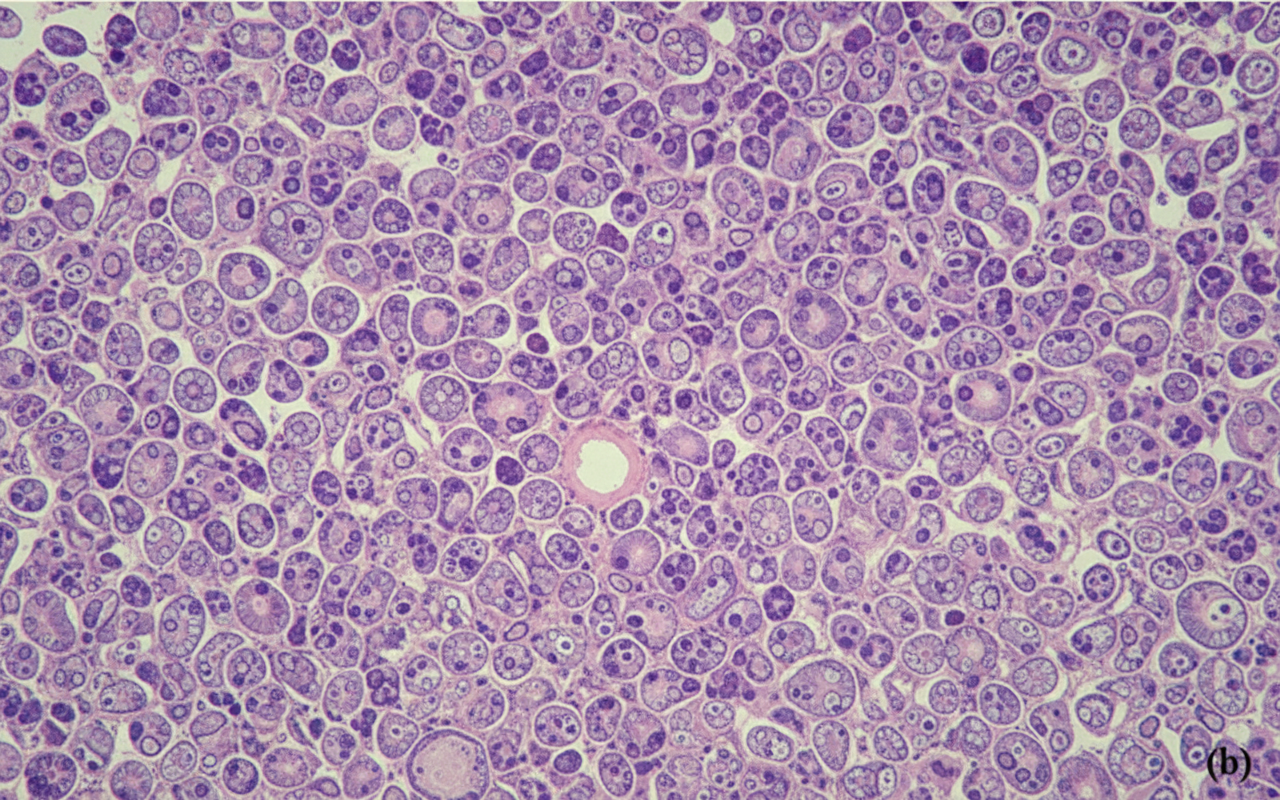
A 60-year-old woman comes to the physician because of lower back pain, generalized weakness, and weight loss that has occurred over the past 6 weeks. She also says that her urine has appeared foamy recently. Physical examination shows focal midline tenderness of the lumbar spine and conjunctival pallor. Her temperature is 100.5°F (38°C). A photomicrograph of a bone marrow biopsy specimen is shown. Further evaluation of this patient is most likely to show which of the following findings?
A 62-year-old retired professor comes to the clinic with the complaints of back pain and increasing fatigue over the last 4 months. For the past week, his back pain seems to have worsened. It radiates to his legs and is burning in nature, 6/10 in intensity. There is no associated tingling sensation. He has lost 4.0 kg (8.8 lb) in the past 2 months. There is no history of trauma. He has hypertension which is well controlled with medications. Physical examination is normal. Laboratory studies show normocytic normochromic anemia. Serum calcium is 12.2 mg/dL and Serum total proteins is 8.8 gm/dL. A serum protein electrophoresis shows a monoclonal spike. X-ray of the spine shows osteolytic lesions over L2–L5 and right femur. A bone marrow biopsy reveals plasmacytosis. Which of the following is the most preferred treatment option?
A previously healthy 68-year-old woman is brought to the emergency department because of a 3-day history of nausea, anorexia, polyuria, and confusion. Her only medication is acetaminophen, which she takes daily for back pain that started 6 weeks ago. Physical examination shows conjunctival pallor. She is oriented to person but not to time or place. Laboratory studies show a hemoglobin concentration of 9.3 g/dL, a serum calcium concentration of 13.8 mg/dL, and a serum creatinine concentration of 2.1 mg/dL. Her erythrocyte sedimentation rate is 65 mm/h. Which of the following is the most likely underlying cause of this patient's condition?
Want unlimited practice?
Get full access to all questions, explanations, and performance tracking.
Scan to download app