
Pheochromocytoma and paraganglioma — MCQs

A 27-year-old man comes to the physician because of worsening abdominal pain over the last several months. He has also had recent feelings of sadness and a lack of motivation at work, where he is employed as a computer programmer. He denies suicidal thoughts. He has a history of multiple kidney stones. He has a family history of thyroid cancer in his father and uncle, who both underwent thyroidectomy before age 30. His temperature is 37°C (98°F), blood pressure is 138/86 mm Hg, and pulse is 87/min. Physical examination shows diffuse tenderness over the abdomen and obesity but is otherwise unremarkable. Serum studies show: Na+ 141 mEq/L K+ 3.6 mEq/L Glucose 144 mg/dL Ca2+ 12.1 mg/dL Albumin 4.1 g/dL PTH 226 pg/mL (normal range 12–88 pg/mL) Results of a RET gene test return abnormal. The physician refers him to an endocrine surgeon. Which of the following is the most appropriate next step in diagnosis?
A previously healthy 61-year-old man comes to the physician because of a 6-month history of morning headaches. He also has fatigue and trouble concentrating on his daily tasks at work. He sleeps for 8 hours every night; his wife reports that he sometimes stops breathing for a few seconds while sleeping. His pulse is 71/min and blood pressure is 158/96 mm Hg. He is 178 cm (5 ft 10 in) tall and weighs 100 kg (220 lb); BMI is 31.6 kg/m2 . Which of the following is the most likely cause of this patient's hypertension?
A patient presents with periods of severe headaches and flushing however every time they have come to the physician they have not experienced any symptoms. The only abnormal finding is a blood pressure of 175 mmHg/100 mmHg. It is determined that the optimal treatment for this patient is surgical. Prior to surgery which of the following noncompetitive inhibitors should be administered?
A 30-year-old man comes to the physician for follow-up evaluation for hypertension. He reports a 1-month history of episodic throbbing headaches, palpitations, and paroxysmal sweating. Blood pressure is 160/90 mm Hg. He appears pale but physical examination is otherwise unremarkable. Laboratory studies show elevated urine and plasma metanephrines. A CT scan of the abdomen shows a mass in the left adrenal gland. Which of the following is the most appropriate initial pharmacotherapy for this patient?
A 27-year-old man comes to the physician because of a 4-month history of recurrent episodes of headaches, palpitations, and sweating. He was adopted shortly after birth and does not know his biological parents. His pulse is 103/min and blood pressure is 160/105 mm Hg. Physical examination shows multiple soft, yellow papules on the tip of the tongue. There is a 2-cm, firm thyroid nodule. He has long and slender upper extremities, and his elbows and knees can be hyperextended. The most likely cause of this patient's condition is a mutation in which of the following genes?
A 21-year-old male college student is very anxious about having thyroid cancer as he found a lump in his neck a few days ago. He has also had diarrhea and a feeling of warmth on his face for 3 days now. His father and uncle both have been diagnosed with thyroid cancer. The lump is about 1 cm in diameter and is fixed and nontender on palpation. Physical examination is otherwise unremarkable. Ultrasound shows a non-cystic cold nodule that requires fine needle aspiration for diagnosis. Thyroid functions tests are normal, and his calcitonin level is 346 ug/ml. Which of the following genetic mutations would warrant thyroidectomy in this patient?
A 51-year-old African American man with a history of poorly controlled hypertension presents to the emergency room with blurry vision and dyspnea. He reports rapid-onset blurred vision and difficulty breathing 4 hours prior to presentation. He takes lisinopril, hydrochlorothiazide, and spironolactone but has a history of poor medication compliance. He has a 50 pack-year smoking history and drinks 4-6 shots of vodka per day. His temperature is 99.2°F (37.3°C), blood pressure is 195/115 mmHg, pulse is 85/min, and respirations are 20/min. On exam, he is ill-appearing and pale. He is intermittently responsive and oriented to person but not place or time. Fundoscopic examination reveals swelling of the optic disc with blurred margins. A biopsy of this patient’s kidney would most likely reveal which of the following?
A 28-year-old man presents with painless cervical lymphadenopathy. Excisional lymph node biopsy is performed. The photomicrograph shows effacement of normal nodal architecture by a mixed infiltrate of lymphocytes, plasma cells, eosinophils, and neutrophils. Scattered among the infiltrate are large binucleated cells with prominent eosinophilic 'owl-eye' nucleoli. Immunohistochemistry shows these large cells are CD15+, CD30+, CD20−, and CD45−. Which of the following cell types represents the malignant population in this lesion?
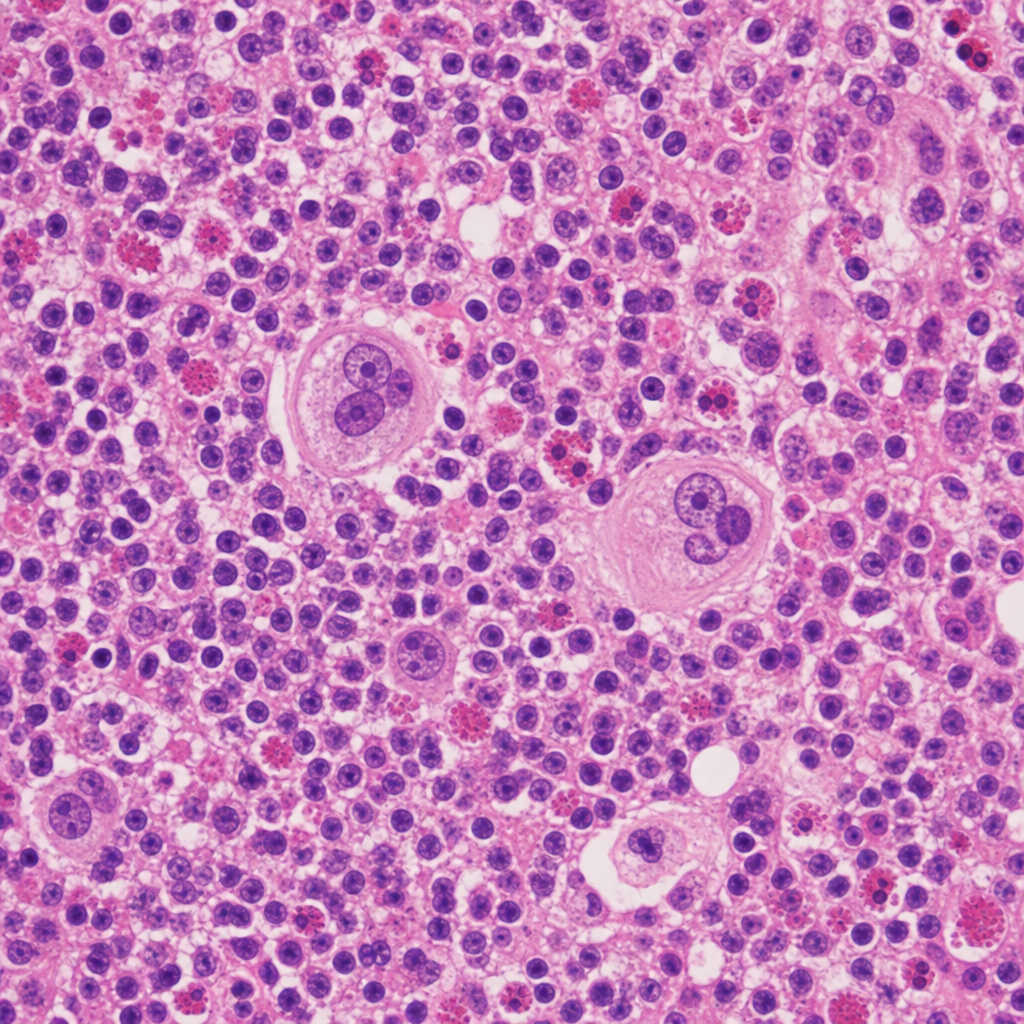
A 67-year-old man with a history of chronic alcohol use and cirrhosis undergoes liver biopsy for evaluation of worsening hepatic function. The photomicrograph shows hepatocytes with eosinophilic, irregularly shaped intracytoplasmic rope-like inclusions. Surrounding these cells is a neutrophilic infiltrate. The inclusions stain positively with ubiquitin immunohistochemistry. Which of the following best describes the composition of the inclusions seen in this biopsy?
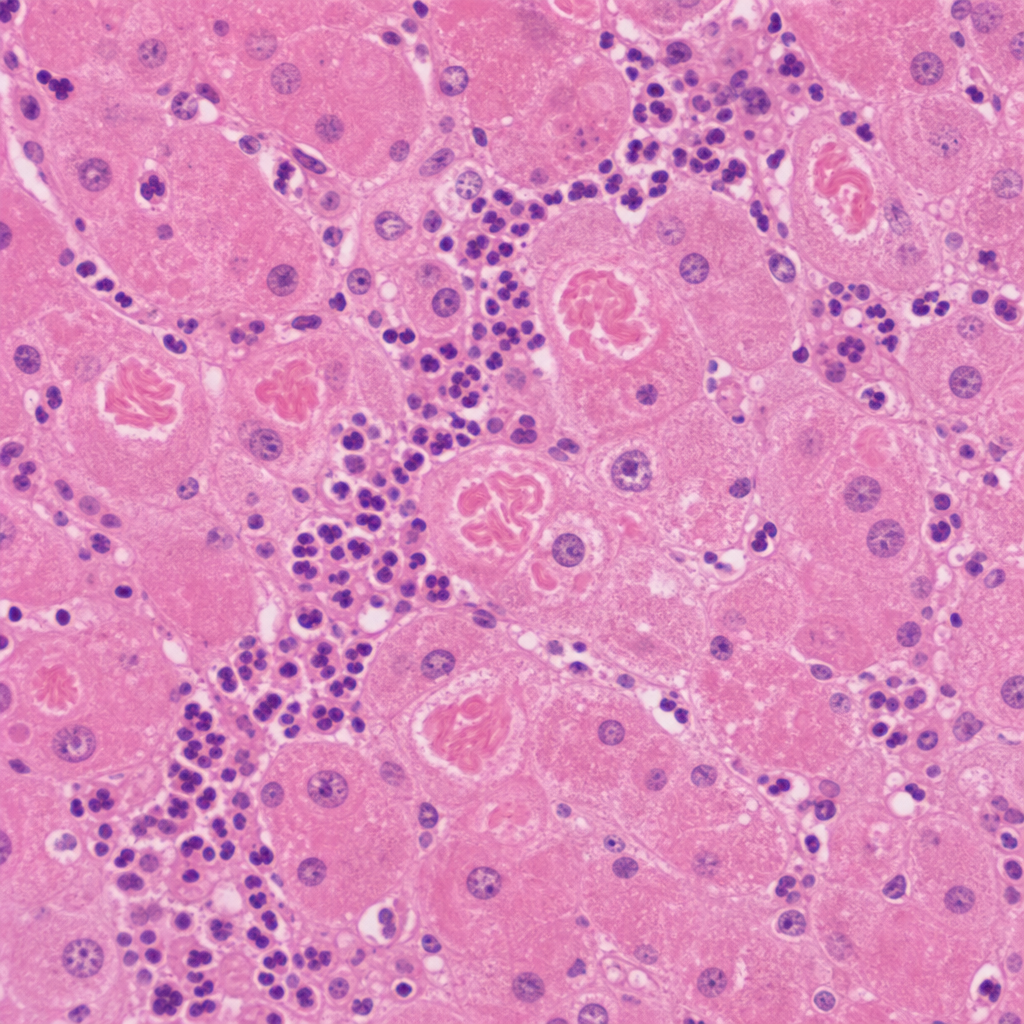
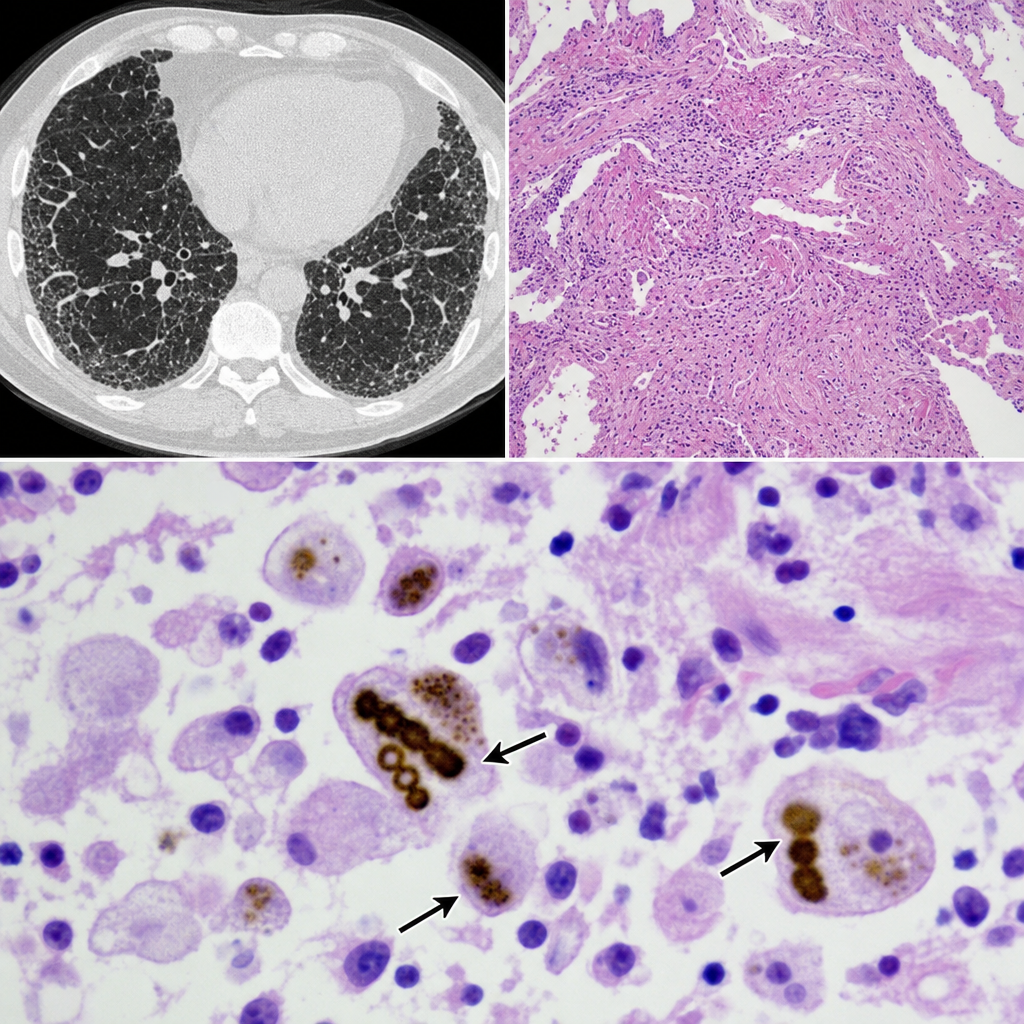
A 58-year-old man with a 40-pack-year smoking history presents with progressive dyspnea and a non-productive cough. Chest CT shows bilateral lower-lobe predominant interstitial thickening. An open lung biopsy is performed. The biopsy reveals golden-brown, beaded, dumbbell-shaped structures coated with iron-protein complexes within alveolar macrophages, accompanied by interstitial fibrosis. Which of the following is the most accurate characterization of these structures?
Want unlimited practice?
Get full access to all questions, explanations, and performance tracking.
Scan to download app