
Intracellular accumulations — MCQs

A 45-year-old man comes to the physician for a routine health maintenance examination. He feels well. He has type 2 diabetes mellitus. There is no family history of serious illness. He works as an engineer at a local company. He does not smoke. He drinks one glass of red wine every other day. He does not use illicit drugs. His only medication is metformin. He is 180 cm (5 ft 11 in) tall and weighs 100 kg (220 lb); BMI is 31 kg/m2. His vital signs are within normal limits. Examination shows a soft, nontender abdomen. The liver is palpated 2 to 3 cm below the right costal margin. Laboratory studies show an aspartate aminotransferase concentration of 100 U/L and an alanine aminotransferase concentration of 130 U/L. Liver biopsy shows hepatocyte ballooning degeneration, as well as inflammatory infiltrates with scattered lymphocytes, neutrophils, and Kupffer cells. Which of the following is the most likely diagnosis?
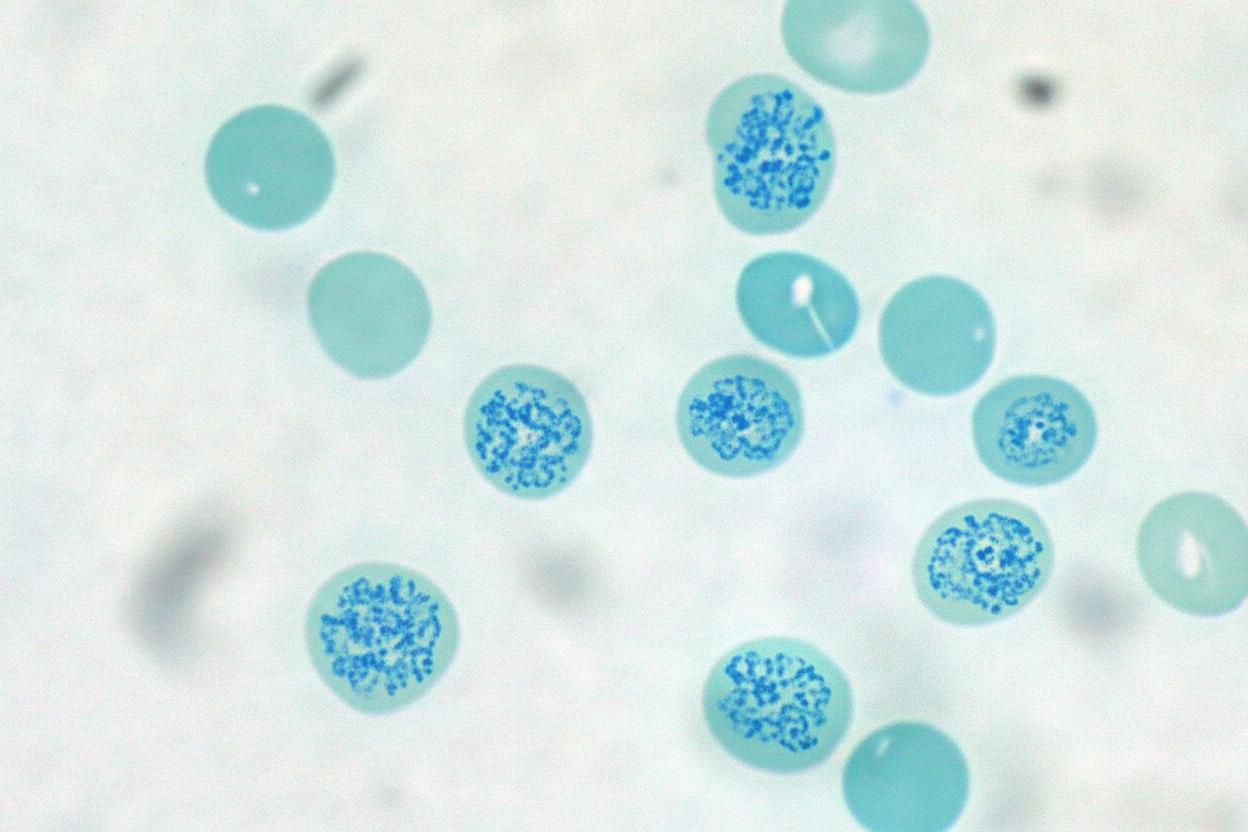
A 59-year-old woman with a history of chronic kidney disease comes to the physician for a 3-month history of easy fatiguability. Physical examination shows subconjunctival pallor. Her hemoglobin concentration is 8.9 g/dL, mean corpuscular volume is 86 μm3, and serum ferritin is 225 ng/mL. Treatment with erythropoietin is begun. A peripheral blood smear is obtained one week after treatment. A photomicrograph of the smear after specialized staining is shown. The prominent color of the intracellular structure in some of the cells is most likely the result of staining which of the following?
A 43-year-old man presents to his primary care provider with concerns about general weakness and decreased concentration over the past several months. He reports constipation and unintentional weight loss of about 9.1 kg (20 lb). The past medical history is noncontributory. He works as a bank manager and occasionally drinks alcohol but does not smoke tobacco. Today, the vital signs include blood pressure 145/90 mm Hg, heart rate 60/min, respiratory rate 19/min, and temperature 36.6°C (97.9°F). On physical examination, the patient looks fatigued. His heart has a regular rate and rhythm, and his lungs are clear to auscultation bilaterally. Laboratory studies show: Calcium 14.5 mg/dL Phosphate 2.2 mg/dL Parathyroid hormone (PTH) 18 pg/mL Parathyroid hormone-related protein (PTHrP) 4 pmol/L Normal value: < 2 pmol/L Calcitriol 46 pg/mL Normal value: 25–65 pg/mL T3 120 ng/mL T4 10.2 mcg/dL Taking into account the clinical and laboratory findings, what is the most likely cause of this patient's hypercalcemia?
A 49-year-old man comes to the physician because of a 6-month history of increasing fatigue and reduced libido. He also complains of joint pain in both of his hands. His vital signs are within normal limits. Physical examination shows tanned skin and small testes. The second and third metacarpophalangeal joints of both hands are tender to palpation and range of motion is limited. The liver is palpated 2 to 3 cm below the right costal margin. Histopathologic examination of a liver biopsy specimen shows intracellular material that stains with Prussian blue. This patient is at greatest risk for developing which of the following complications?
A 42-year-old man with systolic heart failure secondary to amyloidosis undergoes heart transplantation. The donor heart is obtained from a 17-year-old boy who died in a motor vehicle collision. Examination of the donor heart during the procedure shows a flat, yellow-white discoloration with an irregular border on the luminal surface of the aorta. A biopsy of this lesion is most likely to show which of the following?
A 45-year-old man comes to the physician for his routine health maintenance examination. He was diagnosed with diabetes mellitus 4 years ago. His medical history is otherwise unremarkable. He takes no medications other than daily metformin. He has consumed a can of beer every night for the past 10 years. His blood pressure is 145/90 mm Hg. His body mass index is 31 kg/m2. Physical examination shows no abnormalities. Laboratory studies show: Partial thromboplastin time (activated) 30 seconds (N=25-40 seconds) Prothrombin time 13 seconds (N=11-15 seconds) International normalized ratio 1.2 Serum albumin 4 g/dL Bilirubin, total 0.9 mg/dL Direct 0.2 mg/dL Alkaline phosphatase 45 U/L Aspartate aminotransferase (AST, GOT) 43 U/L Alanine aminotransferase (ALT, GPT) 56 U/L γ-Glutamyltransferase (GGT) 43 U/L (N=5-50 U/L) Hepatitis A antibody Negative Hepatitis B surface antigen Negative Hepatitis C antibody Negative Liver biopsy shows excessive intracellular fat accumulation, hepatocyte ballooning, and perivenular infiltration of lymphocytes and neutrophils without significant fibrosis. Which of the following best describes these findings?
Parkinson’s disease is a progressive neurodegenerative disease. It is characterized by a loss of dopaminergic neurons in the substantia nigra pars compacta and the formation of cellular inclusions called Lewy bodies. These are composed of α-synuclein that has been bound to ubiquitin. In healthy individuals, α-synuclein bound to ubiquitin would be degraded by which of the following?
Two weeks after returning from vacation in Mexico, a 21-year-old man comes to the emergency department because of malaise, nausea, vomiting, fever, and abdominal pain. He has no history of serious illness and takes no medications. Physical examination shows scleral icterus and right upper quadrant tenderness. The liver is palpated 1.5 cm below the right costal margin. A biopsy specimen of this patient's liver would most likely show which of the following findings?
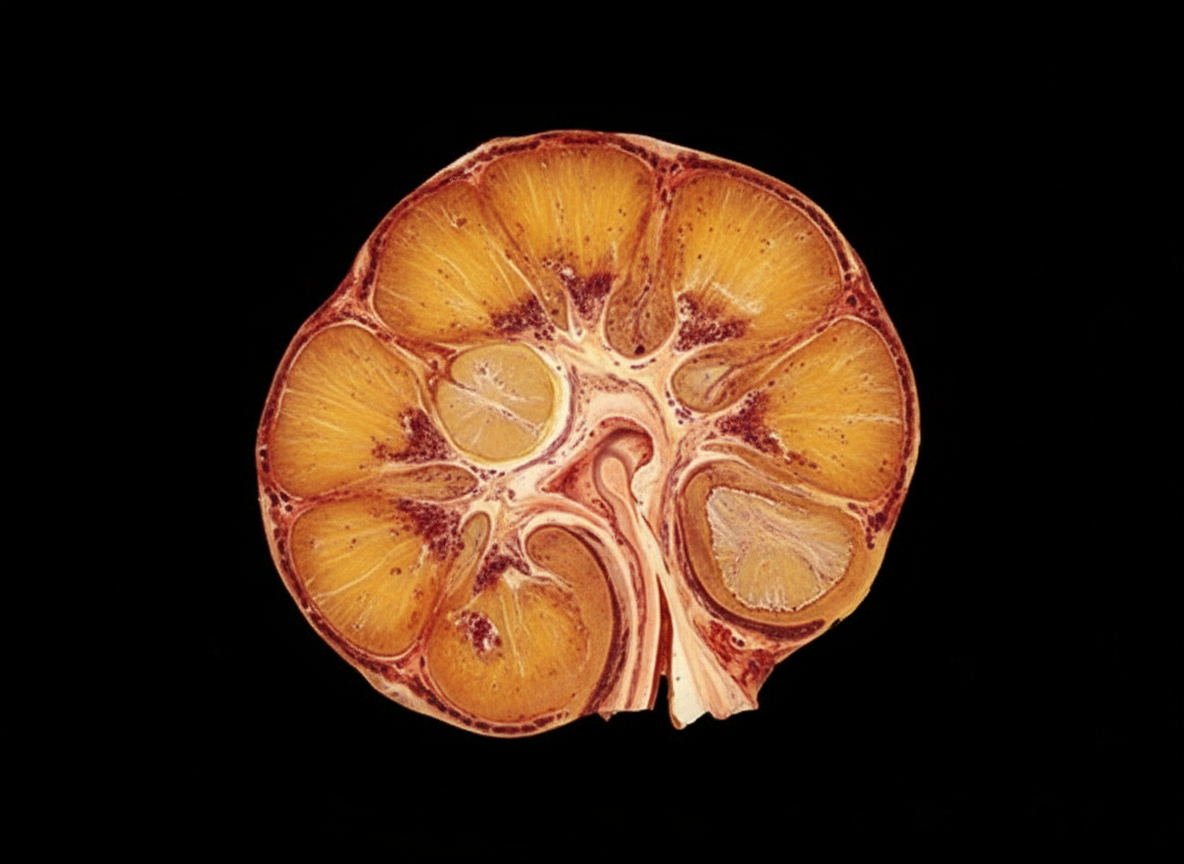
A 75-year-old man comes to the physician because of abdominal pain and nausea over the past 2 weeks and a 1-month history of pain in his knees and hips. He has smoked one pack of cigarettes daily for 30 years. Physical examination shows decreased muscle strength. Laboratory studies show: Hemoglobin 11.0 mg/dL Serum Creatinine 1.5 mg/dL Calcium 12.2 mg/dL Parathyroid hormone 115 pg/mL Parathyroid hormone-related peptide elevated Urine Blood 2+ Ultrasonography of his abdomen shows a 6-cm mass in his right kidney. Nephrectomy is performed. A photograph of the resected specimen is shown. The patient's tumor most likely originated from which of the following locations?
A 32-year-old woman presents to her primary care physician for an annual checkup. She reports that she has been feeling well and has no medical concerns. Her past medical history is significant for childhood asthma but she has not experienced any symptoms since she was a teenager. Physical exam reveals a 1-centimeter hard mobile mass in the left upper outer quadrant of her breast. A mammogram was performed and demonstrated calcifications within the mass so a biopsy was obtained. The biopsy shows acinar proliferation with intralobular fibrosis. Which of the following conditions is most likely affecting this patient?
Want unlimited practice?
Get full access to all questions, explanations, and performance tracking.
Scan to download app