
Second trimester serum screening — MCQs

A 40-year-old woman in her 18th week of pregnancy based on the last menstrual period (LMP) presents to her obstetrician for an antenatal check-up. The antenatal testing is normal, except the quadruple screen results which are given below: Maternal serum alpha-fetoprotein (MS-AFP) low Unconjugated estriol low Human chorionic gonadotropin (hCG) high Inhibin-A high Which of the following conditions is the most likely the cause of the abnormal quadruple screen?
A 36-year-old G3P2002 presents to her obstetrician’s office for her first prenatal visit at ten weeks and two days gestation. She notes that she has felt nauseous the last several mornings and has been especially tired for a few weeks. Otherwise, she feels well. The patient has had two uncomplicated spontaneous vaginal deliveries at full term with her last child born six years ago. She is concerned about the risk of Down syndrome in this fetus, as her sister gave birth to an affected child at age 43. The patient has a history of generalized anxiety disorder, atopic dermatitis, and she is currently on escitalopram. At this visit, this patient’s temperature is 98.6°F (37.0°C), pulse is 70/min, blood pressure is 121/67 mmHg, and respirations are 13/min. The patient appears anxious, but overall comfortable, and cardiopulmonary and abdominal exams are unremarkable. Pelvic exam reveals normal female external genitalia, a closed and slightly soft cervix, a ten-week-sized uterus, and no adnexal masses. Which of the following is the best next step for definitively determining whether this patient’s fetus has Down syndrome?
A 35-year-old woman gravida 2, para 1, comes to the physician for her first prenatal visit. Pregnancy and delivery of her first child were uncomplicated. She is not sure about the date of her last menstrual period. Pelvic examination shows a uterus consistent in size with a 10-week gestation. An ultrasound examination confirms the gestational age and shows one fetus with no indication of multiple gestations. During counseling on pregnancy risks and possible screening and diagnostic tests, the patient states she would like to undergo screening for Down syndrome. She would prefer immediate and secure screening with a low risk to herself and the fetus. Which of the following is the most appropriate next step in management at this time?
A 28-year-old G2P1 female is concerned that she may give birth to another child with Down syndrome. She states that she may not be able to take care of another child with this disorder. Which of the following tests can confirm the diagnosis of Down syndrome in utero?
A 25-year-old G1P0000 presents to her obstetrician’s office for her first prenatal visit. She had a positive pregnancy test 6 weeks ago, and her last period was about two months ago, though at baseline her periods are irregular. Aside from some slight nausea in the mornings, she feels well. Which of the following measurements would provide the most accurate dating of this patient’s pregnancy?
A 30-year-old primigravida schedules an appointment with her obstetrician for a regular check-up. She says that everything is fine, although she reports that her baby has stopped moving as much as previously. She is 22 weeks gestation. She denies any pain or vaginal bleeding. The obstetrician performs an ultrasound and also orders routine blood and urine tests. On ultrasound, there is no fetal cardiac activity or movement. The patient is asked to wait for 1 hour, after which the scan is to be repeated. The second scan shows the same findings. Which of the following is the most likely diagnosis?
A 38-year-old woman, gravida 2, para 1, at 24 weeks' gestation comes to the physician for a routine prenatal evaluation. She has no history of major medical illness and takes no medications. Fetal ultrasonography shows a cardiac defect resulting from abnormal development of the endocardial cushions. This defect is most likely to result in which of the following?
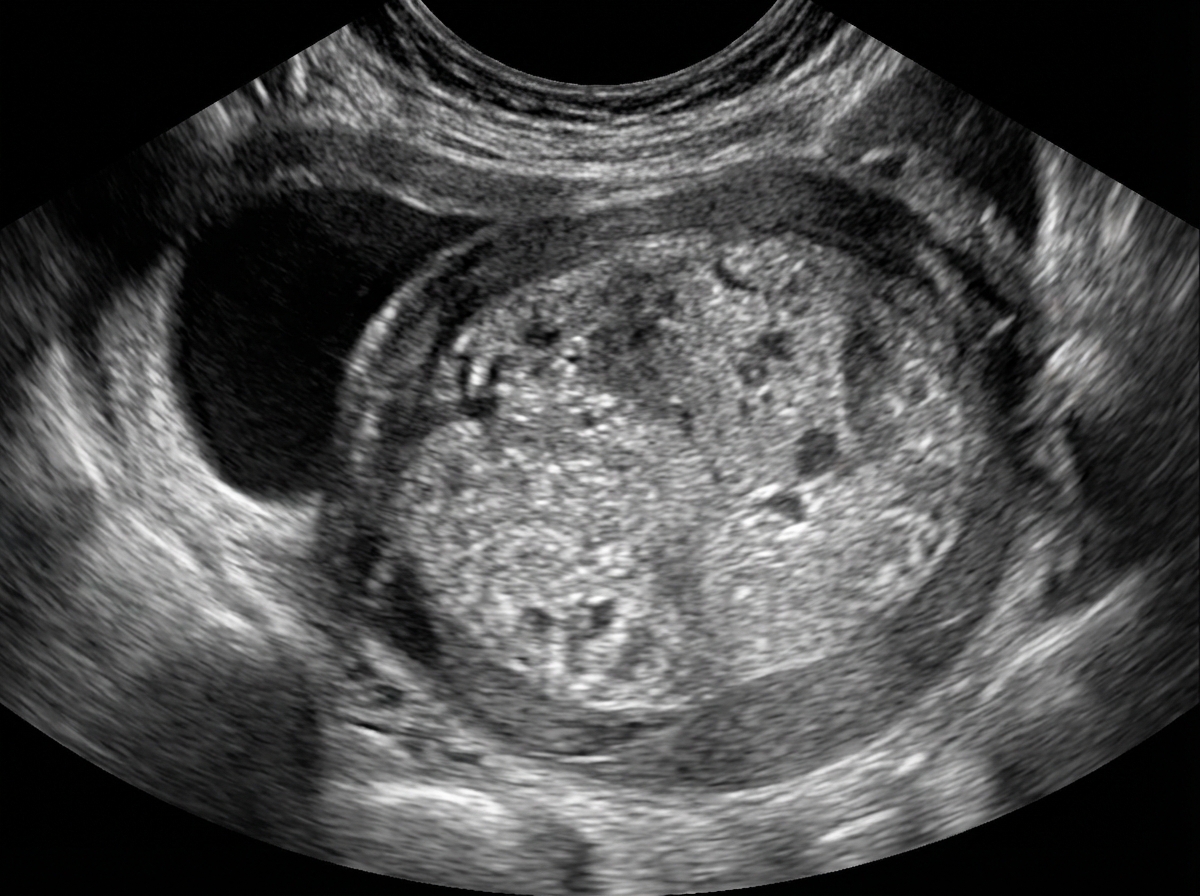
A 28-year-old primigravid woman comes to the emergency department because of a 12-hour history of lower abdominal pain and vaginal bleeding. She also had nausea and fatigue for the past 3 weeks. Her last menstrual period was 8 weeks ago. Prior to that, her menses occurred regularly at 30-day intervals and lasted for 4 days. There is no history of medical illness, and she takes no medications. Her temperature is 37°C (98.6°F), pulse is 95/min, and blood pressure is 100/70 mm Hg. Pelvic examination is painful and shows a uterus consistent in size with a 13-week gestation. A urine pregnancy test is positive. β-HCG level is 106,000 mIU/mL (N < 5 mIU/mL). Transvaginal ultrasonography shows unclear, amorphous fetal parts and a large placenta with multiple cystic spaces. Which of the following is the most likely cause of this patient's condition?
A 27-year-old woman presented with a malodorous discharge in the vagina which started a week earlier. On examination, Whiff's test is positive and the gram stain shows the presence of clue cells. This infection is commonly treated with which of the following?
A female presents with postcoital bleeding. Which of the following is the most appropriate investigation?
Want unlimited practice?
Get full access to all questions, explanations, and performance tracking.
Scan to download app