
Merkel cell polyomavirus — MCQs

A 63-year-old woman presents to the outpatient clinic complaining of severe vulvar itching. The pruritus started 1 year ago and became worse over the last several months. She has tried over-the-counter topical steroids without relief. She is not currently sexually active. Her medical history is notable for long-standing lichen sclerosus. The physical examination reveals an ulcerated small nodule on the right labium majus, as well as dry, thin, white lesions encircling the genital and perianal areas. Which of the following is the most likely diagnosis?
A 14-month-old boy is brought to the clinic for evaluation of a rash. The rash started on the face and spread to the trunk. He also had a fever and cough for the past 2 days. His mother says that they recently immigrated from Asia and cannot provide vaccination records. The physical examination reveals a maculopapular rash on the face, trunk, and proximal limbs with no lymphadenopathy. Blue-white spots are noted on the oral mucosa and there is bilateral mild conjunctival injection. The causative agent of this condition belongs to which of the following virus families?
Researchers are investigating a new strain of a virus that has been infecting children over the past season and causing dermatitis. They have isolated the virus and have run a number of tests to determine its structure and characteristics. They have found that this new virus has an outer coating that is high in phospholipids. Protein targeting assays and immunofluorescence images have shown that the outer layer contains numerous surface proteins. On microscopy, these surface proteins are also expressed around the nucleus of cells derived from the infected tissue of the children. This virus’s structure most closely resembles which of the following?
A 65-year-old man with a 40-pack-year smoking history presents with hemoptysis and a persistent cough. Chest CT shows a 3.5 cm centrally located mass in the right main bronchus. Positron emission tomography confirms a malignant nodule. Bronchoscopy with transbronchial biopsy is performed and a specimen sample of the nodule is sent for frozen section analysis. The tissue sample is most likely to show which of the following tumor types?
A 28-year-old male with a history of HIV infection is found to have a CD4+ T lymphocyte count of 68 cells per microliter. As a consequence of his HIV infection, this patient is at increased risk of malignancy due to which of the following?
An investigator is studying the replication of a virus in denucleated embryonic fibroblasts. After the fibroblasts are infected with the virus, viral proteins are directly translated from the virion's genetic material using fibroblast ribosomes. The resultant large polypeptides are then cleaved into smaller peptides by viral proteases to generate mature viral proteins. Finally, the virion's genetic material is replicated using a protein translated from the virion's genetic material. Which of the following is the most likely virus being evaluated in this study?
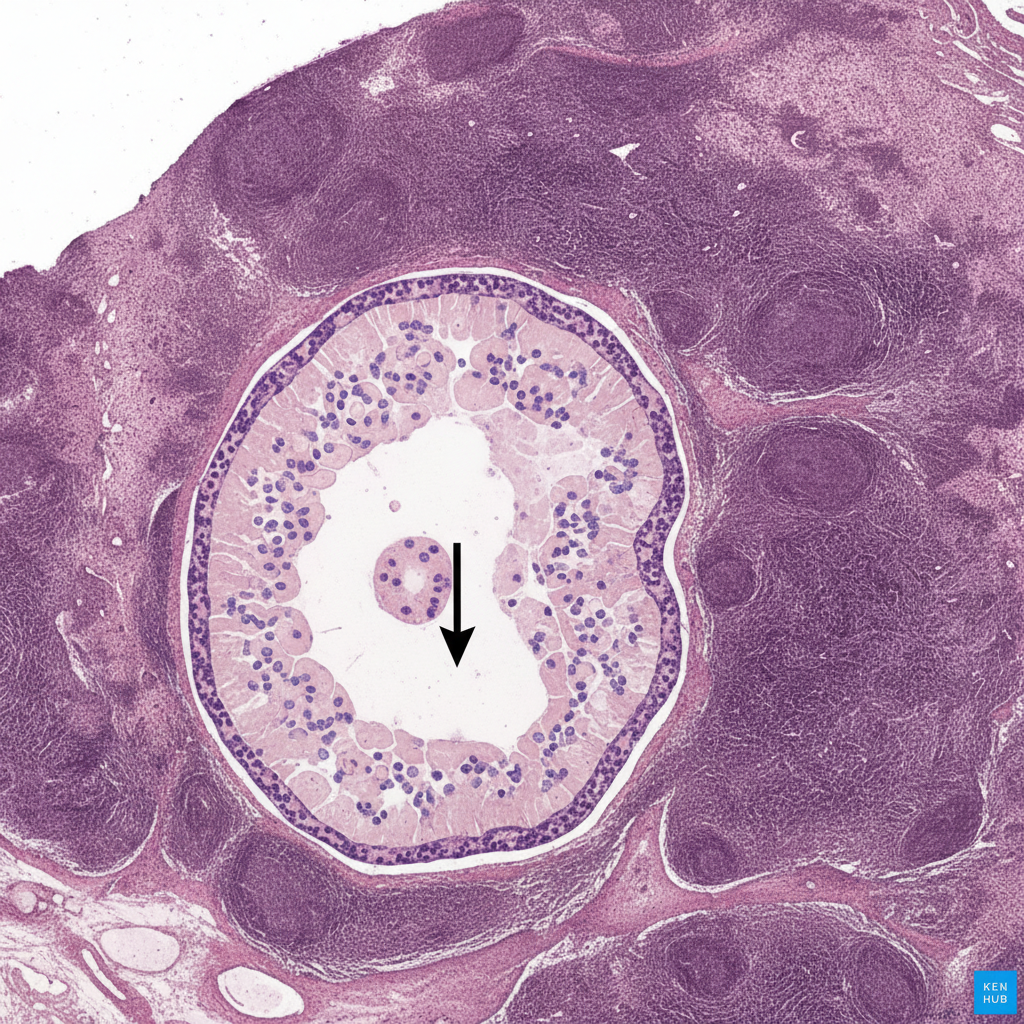
A study is designed to assess the functions of immune components. The investigator obtains a lymph node biopsy from a healthy subject and observes it under a microscope. A photomicrograph of the cross-section of this lymph node is shown. Which of the following immunologic processes most likely occurs in the region labeled with an arrow?
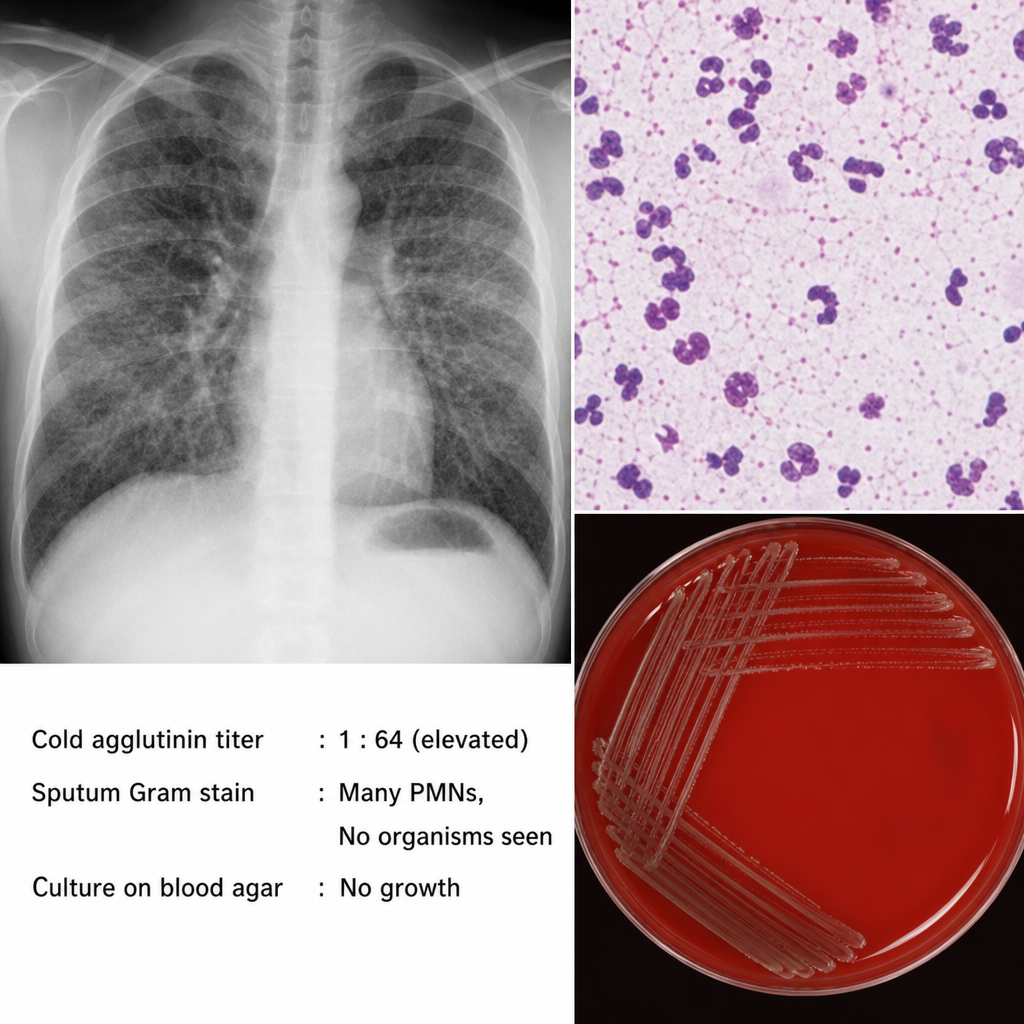
A 19-year-old college student presents with a 10-day history of low-grade fever, malaise, and a non-productive cough that has worsened despite a 5-day course of amoxicillin prescribed by his primary care physician. He lives in a dormitory. Chest radiograph shows diffuse interstitial infiltrates disproportionate to his relatively mild clinical appearance. A cold agglutinin titer is elevated. Sputum Gram stain shows many polymorphonuclear cells but no organisms. Cultures on standard blood agar show no growth after 48 hours. Which of the following features of the causative organism most directly explains the failure of amoxicillin therapy and the absence of organisms on Gram stain?
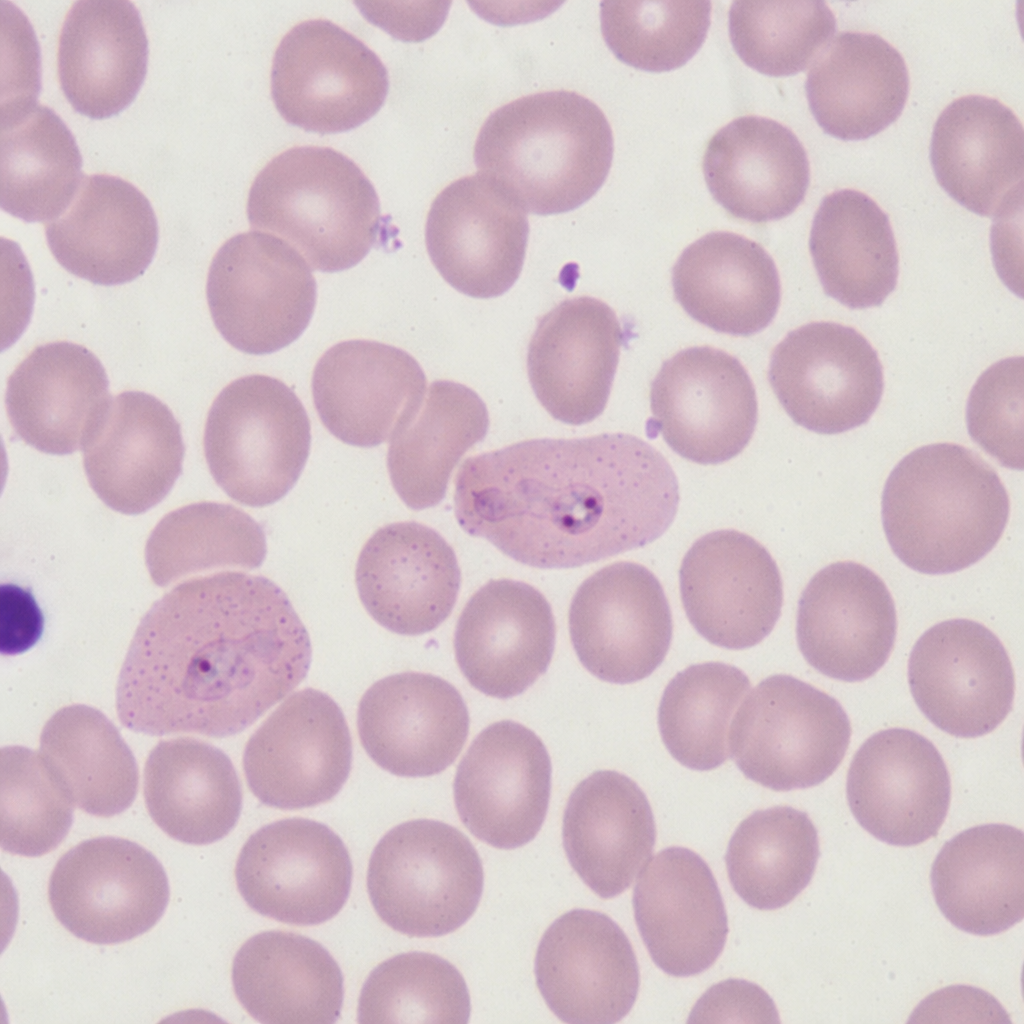
A blood smear from a 28-year-old traveler returning from South Asia shows enlarged erythrocytes with irregular, ameboid-appearing trophozoites and fine pink stippling of the red cell cytoplasm. The patient has a fever every 48 hours and hemoglobin of 11.8 g/dL. Which of the following morphological features on this smear most specifically distinguishes the causative organism from other species in the same genus?
A 16-year-old male is brought to the clinic by his mother for the complaints of fever, nonproductive cough, fatigue, lack of appetite, and sore throat for the past 2 months. Several other students at his high school have had similar symptoms. Physical exam shows a whitish membrane in his oropharynx, bilateral enlarged cervical lymphadenopathy, and mild splenomegaly. Which of the following tests is most likely to diagnose his condition?
Want unlimited practice?
Get full access to all questions, explanations, and performance tracking.
Scan to download app