
Mechanisms of viral oncogenesis — MCQs

A scientist is researching the long term effects of the hepatitis viruses on hepatic tissue. She finds that certain strains are oncogenic and increase the risk of hepatocellular carcinoma. However, they appear to do so via different mechanisms. Which of the following answer choices correctly pairs the hepatitis virus with the correct oncogenic process?
A 38-year-old woman makes an appointment with her family physician for a routine check-up after being away due to travel for 1 year. She recently had a screening Pap smear, which was negative for malignancy. Her past medical history is significant for a Pap smear 2 years ago that reported a low-grade squamous intraepithelial lesion (LSIL). A subsequent colposcopy diagnosed high-grade cervical intraepithelial neoplasia (CIN2). The patient is surprised by the differences in her diagnostic tests. You explain to her the basis for the difference and reassure her. With this in mind, which of the following HPV serotypes is most likely to be present in the patient?
A 28-year-old male with a history of HIV infection is found to have a CD4+ T lymphocyte count of 68 cells per microliter. As a consequence of his HIV infection, this patient is at increased risk of malignancy due to which of the following?
A 63-year-old man presents to his primary care physician because he has been having headaches and hearing loss. In addition, he says that he has been having difficulty opening his jaw to eat and recurrent middle ear infections. Physical exam reveals enlarged neck lymph nodes and a mass in the nasopharynx. Biopsy of the mass reveals undifferentiated squamous epithelial cells. The organism that is most likely associated with this patient's disease is also associated with which of the following disorders?
A 16-year-old boy is brought to the physician because of a lesion that has been growing on his jaw over the past several months. He recently immigrated to the USA from Kenya with his family. Physical examination shows a 3-cm solid mass located above the left mandible. There is cervical lymphadenopathy. Biopsy of the mass shows sheets of lymphocytes and interspersed reactive histiocytes with abundant, clear cytoplasm and phagocytosed debris. Which of the following mechanisms is most likely directly responsible for the malignant transformation of this patient's cells?
A 34-year-old man presents to an outpatient clinic with chronic fatigue and bumps on his neck, right axilla, and groin. Upon questioning, he reveals he frequently visits Japan on business and is rather promiscuous on his business trips. He denies use of barrier protection. On examination, there is generalized lymphadenopathy. Routine lab work reveals abnormal lymphocytes on peripheral smear. The serum calcium is 12.2 mg/dL. Which of the following viruses is associated with this patient’s condition?
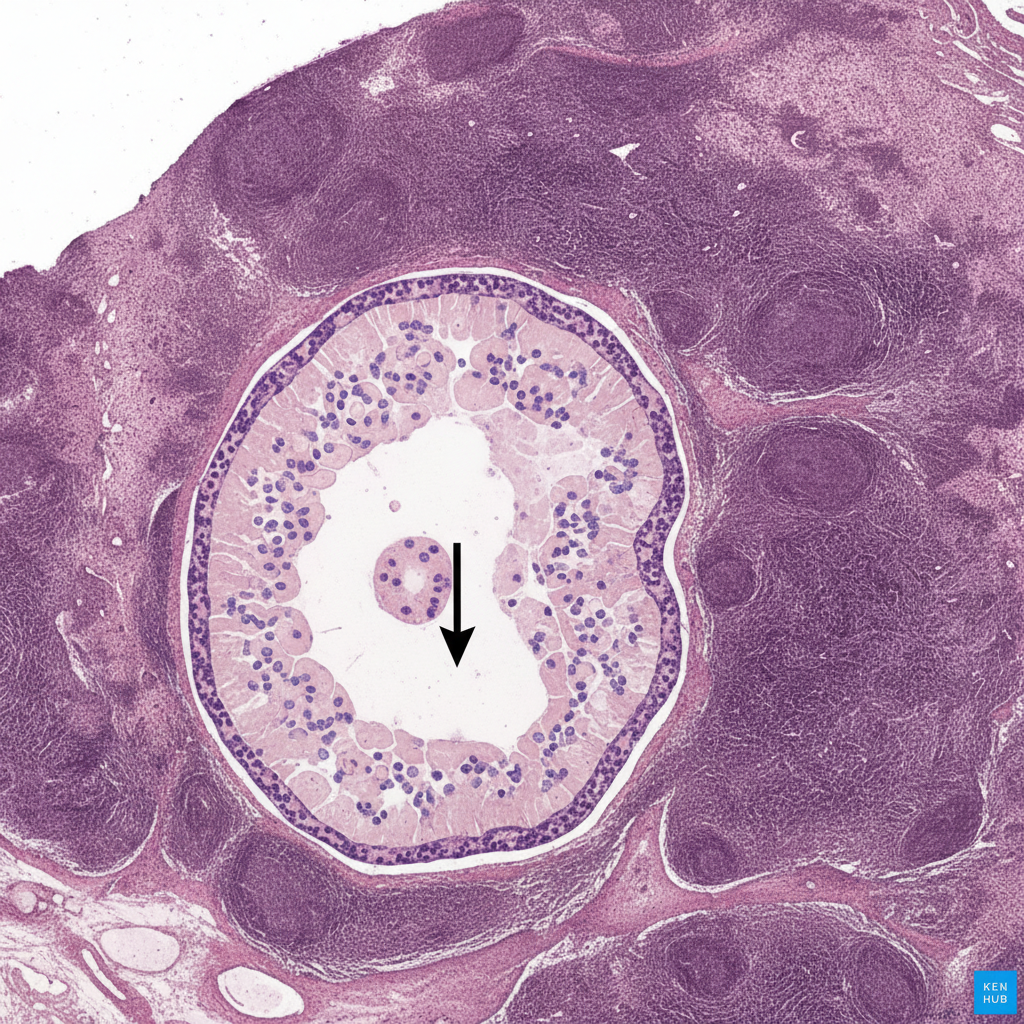
A study is designed to assess the functions of immune components. The investigator obtains a lymph node biopsy from a healthy subject and observes it under a microscope. A photomicrograph of the cross-section of this lymph node is shown. Which of the following immunologic processes most likely occurs in the region labeled with an arrow?
A 26-year-old woman comes to the physician because of several days of fever, abdominal cramps, and diarrhea. She drank water from a stream 1 week ago while she was hiking in the woods. Abdominal examination shows increased bowel sounds. Stool analysis for ova and parasites shows flagellated multinucleated trophozoites. Further evaluation shows the presence of antibodies directed against the pathogen. Secretion of these antibodies most likely requires binding of which of the following?
A 12-year-old girl presents to her physician for the evaluation of episodic shortness of breath and cough. These episodes occur more frequently in spring. Her mother has a history of similar complaints. The physical examination reveals bilateral wheezes on chest auscultation. The initial response to pollen consists of the production of IgM; however, over time, antigen-specific IgE becomes predominant. This change from an IgM to an IgE response is caused by which of the following processes?
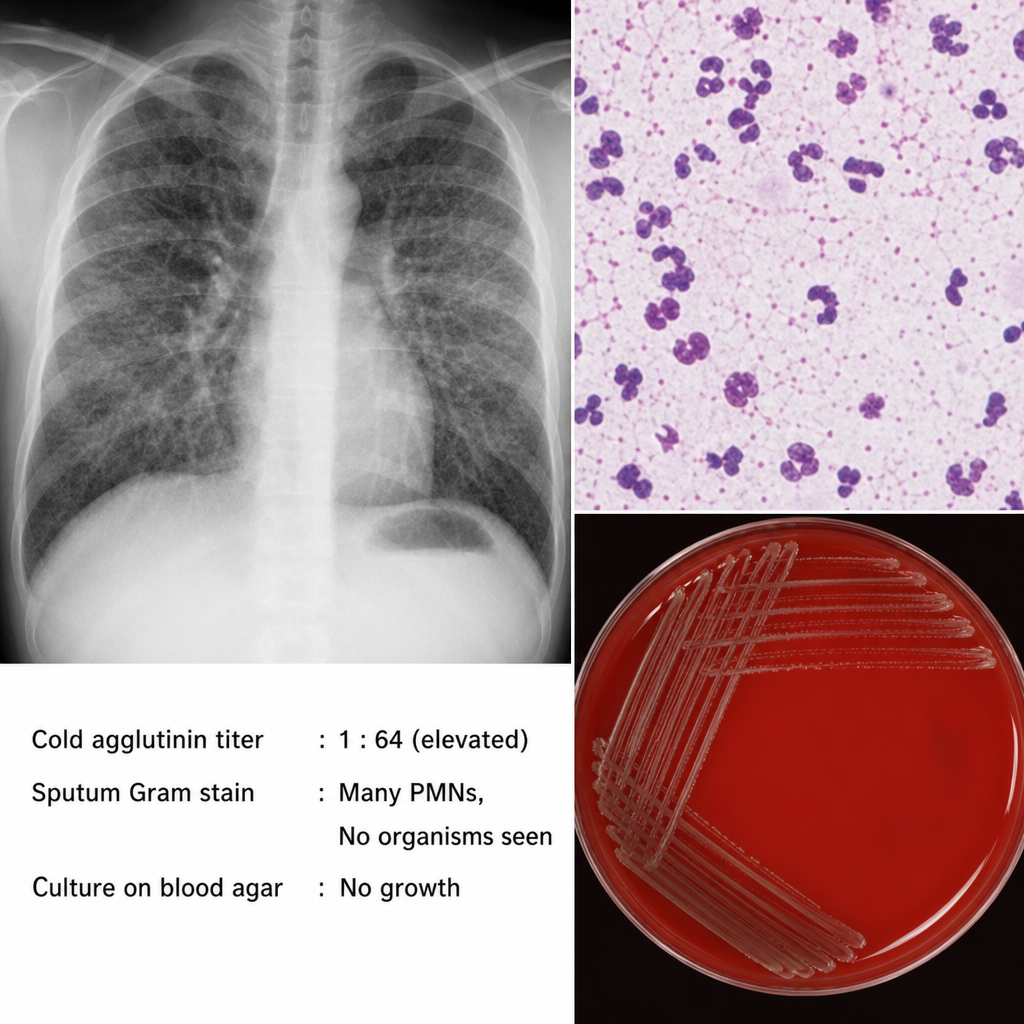
A 19-year-old college student presents with a 10-day history of low-grade fever, malaise, and a non-productive cough that has worsened despite a 5-day course of amoxicillin prescribed by his primary care physician. He lives in a dormitory. Chest radiograph shows diffuse interstitial infiltrates disproportionate to his relatively mild clinical appearance. A cold agglutinin titer is elevated. Sputum Gram stain shows many polymorphonuclear cells but no organisms. Cultures on standard blood agar show no growth after 48 hours. Which of the following features of the causative organism most directly explains the failure of amoxicillin therapy and the absence of organisms on Gram stain?
Want unlimited practice?
Get full access to all questions, explanations, and performance tracking.
Scan to download app