
HCV resistance and treatment failure — MCQs

A 23-year-old male with a homozygous CCR5 mutation is found to be immune to HIV infection. The patient’s CCR5 mutation interferes with the function of which viral protein?
A 52-year-old man presents to his physician after his routine screening revealed that he has elevated liver enzymes. He complains of occasional headaches during the past year, but otherwise feels well. The patient reports that he was involved in a serious car accident in the 1980s. He does not smoke or drink alcohol. He has no history of illicit intravenous drug use. He does not currently take any medications and has no known allergies. His father had a history of alcoholism and died of liver cancer. The patient appears thin. His temperature is 37.8°C (100°F), pulse is 100/min, and blood pressure is 110/70 mm Hg. The physical examination reveals no abnormalities. The laboratory test results show the following: Complete blood count Hemoglobin 14 g/dL Leukocyte count 10,000/mm3 Platelet count 146,000/mm3 Comprehensive metabolic profile Glucose 150 mg/dL Albumin 3.2 g/dL Total bilirubin 1.5 mg/dL Alkaline phosphatase 75 IU/L AST 95 IU/L ALT 73 IU/L Other lab tests HIV negative Hepatitis B surface antigen negative Hepatitis C antibody positive HCV RNA positive HCV genotype 1 A liver biopsy is performed and shows mononuclear infiltrates localized to portal tracts that reveal periportal hepatocyte necrosis. Which of the following is the most appropriate next step in management?
A 45-year-old man presents for follow-up to monitor his chronic hepatitis C treatment. The patient was infected with hepatitis C genotype 1, one year ago. He has been managed on a combination of pegylated interferon-alpha and ribavirin, but a sustained viral response has not been achieved. Past medical history is significant for non-alcoholic fatty liver disease for the last 5 years. Which of the following, if added to the patient’s current treatment regimen, would most likely benefit this patient?
A 42-year-old male with a history significant for IV drug use comes to the emergency department complaining of persistent fatigue and malaise for the past three weeks. On physical exam, you observe a lethargic male with icteric sclera and hepatomegaly. AST and ALT are elevated at 600 and 750, respectively. HCV RNA is positive. Albumin is 3.8 g/dL and PT is 12. A liver biopsy shows significant inflammation with bridging fibrosis. What is the current first-line treatment?
A 57-year-old man comes to the physician because of generalized malaise, yellowish discoloration of the eyes, and pruritus on the back of his hands that worsens when exposed to sunlight for the past several months. He has not seen a physician in 15 years. Physical examination shows scleral icterus and mild jaundice. There is a purpuric rash with several small vesicles and hyperpigmented lesions on the dorsum of both hands. The causal pathogen of this patient's underlying condition was most likely acquired in which of the following ways?
A 32-year-old man is brought to the emergency department with fever, dyspnea, and impaired consciousness. His wife reports that he has also had an episode of dark urine today. Two weeks ago, he returned from a trip to the Republic of Congo. His temperature is 39.4°C (103°F), pulse is 114/min, and blood pressure is 82/51 mm Hg. Physical examination shows scleral icterus. Decreased breath sounds and expiratory crackles are heard on auscultation of the lungs bilaterally. His hemoglobin concentration is 6.3 g/dL. A blood smear shows red blood cells with normal morphology and ring-shaped inclusions. Further laboratory testing shows normal rates of NADPH production. Which of the following is the most appropriate pharmacotherapy for this patient?
Two viruses, X and Y, infect the same cell and begin to reproduce within the cell. As a result of the co-infection, some viruses are produced where the genome of Y is surrounded by the nucleocapsid of X and vice versa with the genome of X and nucleocapsid of Y. When the virus containing genome X surrounded by the nucleocapsid of Y infects another cell, what is the most likely outcome?
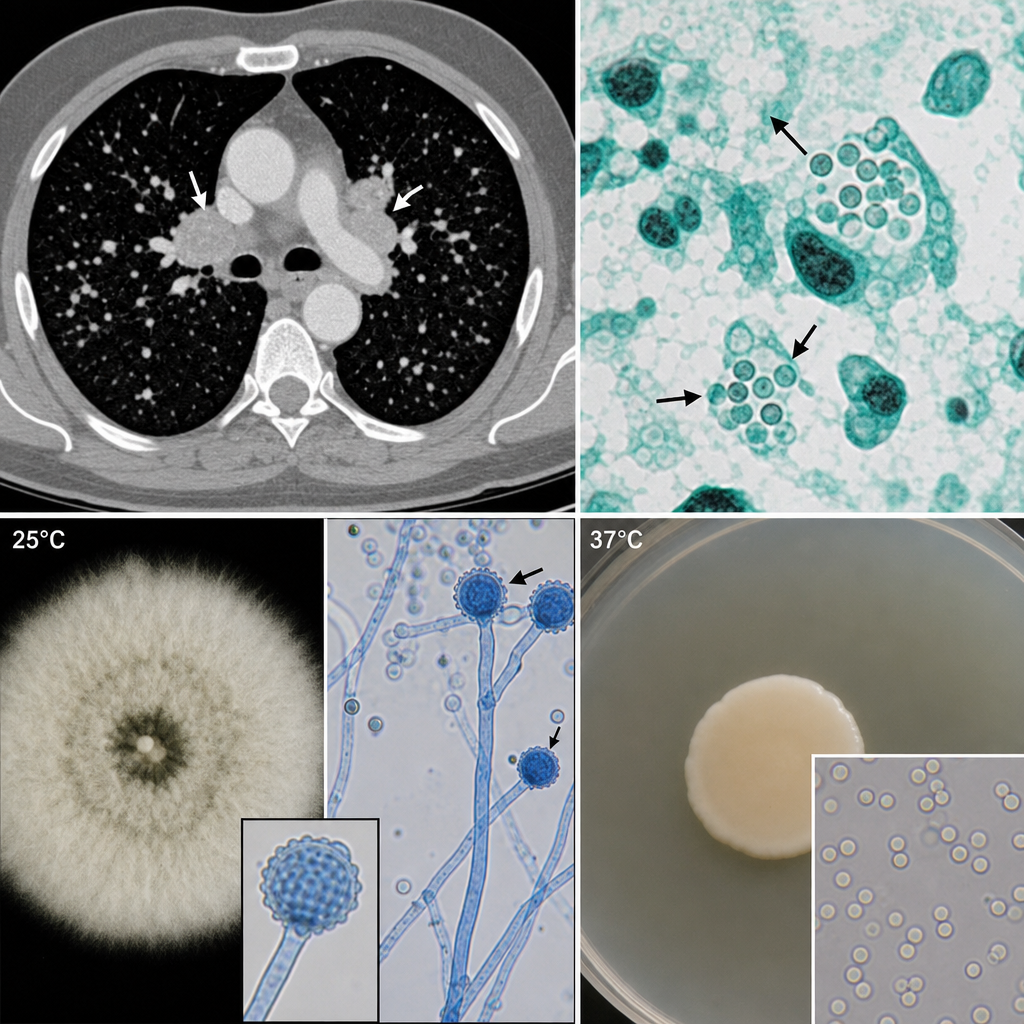
A 45-year-old immunocompetent woman from rural Ohio presents with a 3-week history of low-grade fever, night sweats, and a non-productive cough. She recently helped clean out an old barn near a dried river bed. Chest CT reveals mediastinal lymphadenopathy and multiple small pulmonary nodules. A bronchoalveolar lavage specimen is sent for fungal culture. At 25°C, the organism grows as a mold with tuberculate macroconidia. At 37°C, the same isolate grows as small yeast cells (2–4 µm) found inside macrophages on cytology. A colleague suggests the presentation is more consistent with Blastomyces dermatitidis based on the geographic exposure. Which of the following findings would most definitively argue against the colleague's proposed organism and confirm the correct diagnosis?
A group of researchers conducted various studies on hepatitis C incidence and prevalence. They noticed that there is a high prevalence of hepatitis C in third-world countries, where it has a significant impact on the quality of life of the infected individual. The research group made several attempts to produce a vaccine that prevents hepatitis C infection but all attempts failed. Which of the following would most likely be the reason for the failure to produce a vaccine?
A 13-year-old boy presents to the pediatrician with yellow discoloration of the sclerae since yesterday, and dark-colored urine for 2 days. A detailed history is taken and reveals that he had a cough, cold, and fever the week before the onset of the current symptoms, and was treated with over-the-counter medications. He reports an improvement in his upper respiratory symptoms but has been experiencing fatigue, nausea, and poor appetite since then. There is no past history of recurrent nausea, vomiting, jaundice or abdominal pain, and he has not received any blood transfusion. In addition, he frequently eats at a roadside restaurant near his school. His growth and development are normal for his age and sex. The temperature is 37.9°C (100.2°F), pulse is 96/min, blood pressure is 110/70 mm Hg, and the respiratory rate is 22/min. The physical examination shows icterus. The examination of the abdomen reveals tender hepatomegaly with the liver having a firm, sharp, and smooth edge. The laboratory test results are as follows: Hemoglobin 14.2 g/dL WBC (white blood cell) 10,500/mm3 Differential leukocyte count Segmented neutrophils 56% Bands 4% Lymphocytes 35% Eosinophils 2% Basophils 0% Monocytes 3% Platelet count 270,000/mm3 Serum total bilirubin 8.4 mg/dL Serum direct bilirubin 7.8 mg/dL Serum alanine aminotransferase 350 U/L Serum alkaline phosphatase 95 U/L Prothrombin time 20 seconds Which of the following laboratory tests is most likely used to diagnose the condition of this patient?
Want unlimited practice?
Get full access to all questions, explanations, and performance tracking.
Scan to download app