
HBV vaccination and prevention — MCQs

A 35-year-old male anesthesiologist presents to the occupational health clinic after a needlestick exposure while obtaining an arterial line in a patient with cirrhosis. In addition to a standard bloodborne pathogen laboratory panel sent for all needlestick exposures at his hospital, additional hepatitis panels are ordered upon the patient's request. The patient's results are shown below: HIV 4th generation Ag/Ab: Negative/Negative Hepatitis B surface antigen (HBsAg): Negative Hepatitis C antibody: Negative Anti-hepatitis B surface antibody (HBsAb): Positive Anti-hepatitis B core IgM antibody (HBc IgM): Negative Anti-hepatitis B core IgG antibody (HBc IgG): Positive What is the most likely explanation of the results above?
A 52-year-old male patient with chronic alcoholism presents to an ambulatory medical clinic, where the hepatologist elects to perform comprehensive hepatitis B screening, in addition to several other screening and preventative measures. Given the following choices, which serologic marker, if positive, would indicate the patient’s immunity to the hepatitis B virus?
A 28-year-old woman comes to the emergency department for a 1-week history of jaundice and nausea. She recalls eating some seafood last weekend at a cookout. She lives at home with her 2-year-old son who attends a daycare center. The child's immunizations are up-to-date, and his last hepatitis A vaccine was administered 6 weeks ago. The woman's temperature is 37.5°C (99.5°F), pulse is 82/min, and blood pressure is 134/84 mm Hg. Examination shows scleral icterus. The liver is palpated 2-cm below the right costal margin and is tender. Her serum studies show: Total bilirubin 3.4 mg/dL Alkaline phosphatase 89 U/L AST 185 U/L ALT 723 U/L Hepatitis A IgM antibody positive Hepatitis B surface antibody positive Hepatitis B surface antigen negative Hepatitis B core IgM antibody negative Hepatitis C antibody negative Which of the following health maintenance recommendations is most appropriate for the child at this time?
A 28-year-old woman gives birth to a 2.2 kg child while on vacation. The mother's medical records are faxed to the hospital and demonstrate the following on hepatitis panel: hepatitis B surface antigen (HbsAg) positive, anti-hepatitis B core antigen (anti-HbcAg) positive, hepatitis C RNA is detected, hepatitis C antibody is reactive. Which of the following should be administered to the patient's newborn child?
A 3255-g (7-lb) female newborn is delivered at term. Pregnancy and delivery were uncomplicated. On the day of her birth, she is given a routine childhood vaccine that contains a noninfectious glycoprotein. This vaccine will most likely help prevent infection by which of the following pathogens?
A 35-year-old man with no known past medical history presents to his physician because he is applying for a job as a healthcare worker, which requires screening for the hepatitis B virus (HBV). The patient states that he is in good health and denies any symptoms. His vital signs and physical exam are unremarkable. Labs are drawn, and the patient's HBV serology shows the following: HBsAg: positive anti-HBsAg antibody: negative anti-HBcAg IgM: negative anti-HBcAg IgG: positive HBeAg: negative anti-HBeAg antibody: positive Which of the following best describes this patient's results?
A 26-year-old woman comes to the physician because of several days of fever, abdominal cramps, and diarrhea. She drank water from a stream 1 week ago while she was hiking in the woods. Abdominal examination shows increased bowel sounds. Stool analysis for ova and parasites shows flagellated multinucleated trophozoites. Further evaluation shows the presence of antibodies directed against the pathogen. Secretion of these antibodies most likely requires binding of which of the following?
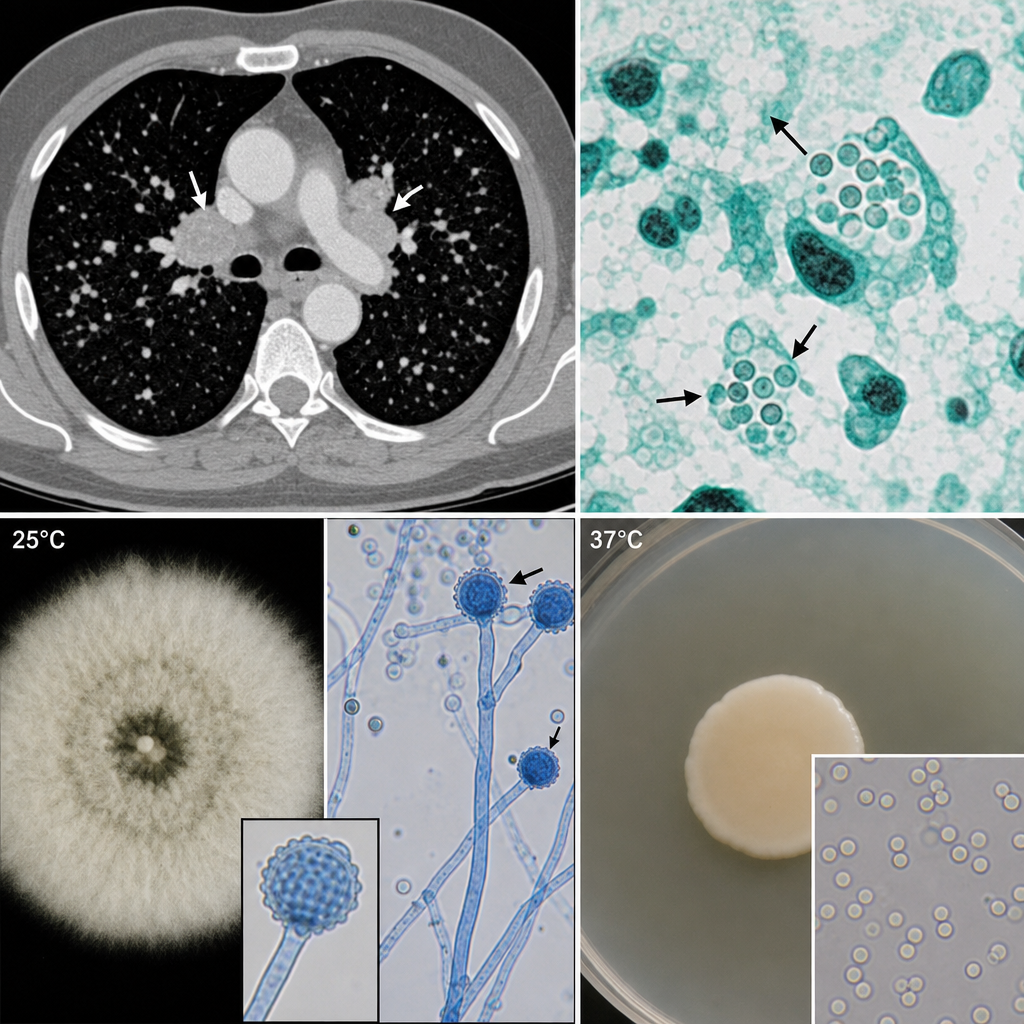
A 45-year-old immunocompetent woman from rural Ohio presents with a 3-week history of low-grade fever, night sweats, and a non-productive cough. She recently helped clean out an old barn near a dried river bed. Chest CT reveals mediastinal lymphadenopathy and multiple small pulmonary nodules. A bronchoalveolar lavage specimen is sent for fungal culture. At 25°C, the organism grows as a mold with tuberculate macroconidia. At 37°C, the same isolate grows as small yeast cells (2–4 µm) found inside macrophages on cytology. A colleague suggests the presentation is more consistent with Blastomyces dermatitidis based on the geographic exposure. Which of the following findings would most definitively argue against the colleague's proposed organism and confirm the correct diagnosis?
A group of researchers conducted various studies on hepatitis C incidence and prevalence. They noticed that there is a high prevalence of hepatitis C in third-world countries, where it has a significant impact on the quality of life of the infected individual. The research group made several attempts to produce a vaccine that prevents hepatitis C infection but all attempts failed. Which of the following would most likely be the reason for the failure to produce a vaccine?
A 13-year-old boy presents to the pediatrician with yellow discoloration of the sclerae since yesterday, and dark-colored urine for 2 days. A detailed history is taken and reveals that he had a cough, cold, and fever the week before the onset of the current symptoms, and was treated with over-the-counter medications. He reports an improvement in his upper respiratory symptoms but has been experiencing fatigue, nausea, and poor appetite since then. There is no past history of recurrent nausea, vomiting, jaundice or abdominal pain, and he has not received any blood transfusion. In addition, he frequently eats at a roadside restaurant near his school. His growth and development are normal for his age and sex. The temperature is 37.9°C (100.2°F), pulse is 96/min, blood pressure is 110/70 mm Hg, and the respiratory rate is 22/min. The physical examination shows icterus. The examination of the abdomen reveals tender hepatomegaly with the liver having a firm, sharp, and smooth edge. The laboratory test results are as follows: Hemoglobin 14.2 g/dL WBC (white blood cell) 10,500/mm3 Differential leukocyte count Segmented neutrophils 56% Bands 4% Lymphocytes 35% Eosinophils 2% Basophils 0% Monocytes 3% Platelet count 270,000/mm3 Serum total bilirubin 8.4 mg/dL Serum direct bilirubin 7.8 mg/dL Serum alanine aminotransferase 350 U/L Serum alkaline phosphatase 95 U/L Prothrombin time 20 seconds Which of the following laboratory tests is most likely used to diagnose the condition of this patient?
Want unlimited practice?
Get full access to all questions, explanations, and performance tracking.
Scan to download app