
Coagulase-negative staphylococci — MCQs

A 22-year-old sexually active, otherwise healthy female presents to her primary care physician complaining of several days of dysuria, frequency, urgency, and suprapubic pain. She denies fever, flank pain, vaginal itching, or vaginal bleeding/discharge. Which organism is most likely responsible for this patient's symptoms?
A 28-year-old woman comes to the physician because of a 4-day history of lower abdominal pain and pain with urination. Five months ago, she was treated for gonococcal urethritis. She recently moved in with her newlywed husband. She is sexually active with her husband and they do not use condoms. Her only medication is an oral contraceptive. Her temperature is 37.5°C (99.7°F) and blood pressure is 120/74 mm Hg. There is tenderness to palpation over the pelvic region. Pelvic examination shows a normal-appearing vulva and vagina. Laboratory studies show: Leukocyte count 8,400/mm3 Urine pH 6.7 Protein trace WBC 60/hpf Nitrites positive Bacteria positive Which of the following is the most likely causal organism?
A 63-year-old man comes to the physician for evaluation of fever and a nonproductive cough for the past 2 weeks. During this period, he has also had fatigue, myalgia, and difficulty breathing. Five weeks ago, he underwent an aortic prosthetic valve replacement due to high-grade aortic stenosis. The patient has a history of hypertension, asthma, and type 2 diabetes mellitus. A colonoscopy 2 years ago was normal. The patient has smoked one pack of cigarettes daily for the past 40 years. He has never used illicit drugs. Current medications include aspirin, warfarin, lisinopril, metformin, inhaled albuterol, and a multivitamin. The patient appears lethargic. Temperature is 38.6°C (101.5°F), pulse is 105/min, and blood pressure is 140/60 mm Hg. Rales are heard on auscultation of the lungs. A grade 2/6, diastolic blowing murmur is heard over the left sternal border and radiates to the right sternal border. A photograph of his right index finger is shown. Laboratory studies show a leukocyte count of 13,800/mm3 and an erythrocyte sedimentation rate of 48 mm/h. Which of the following is the most likely causal organism?
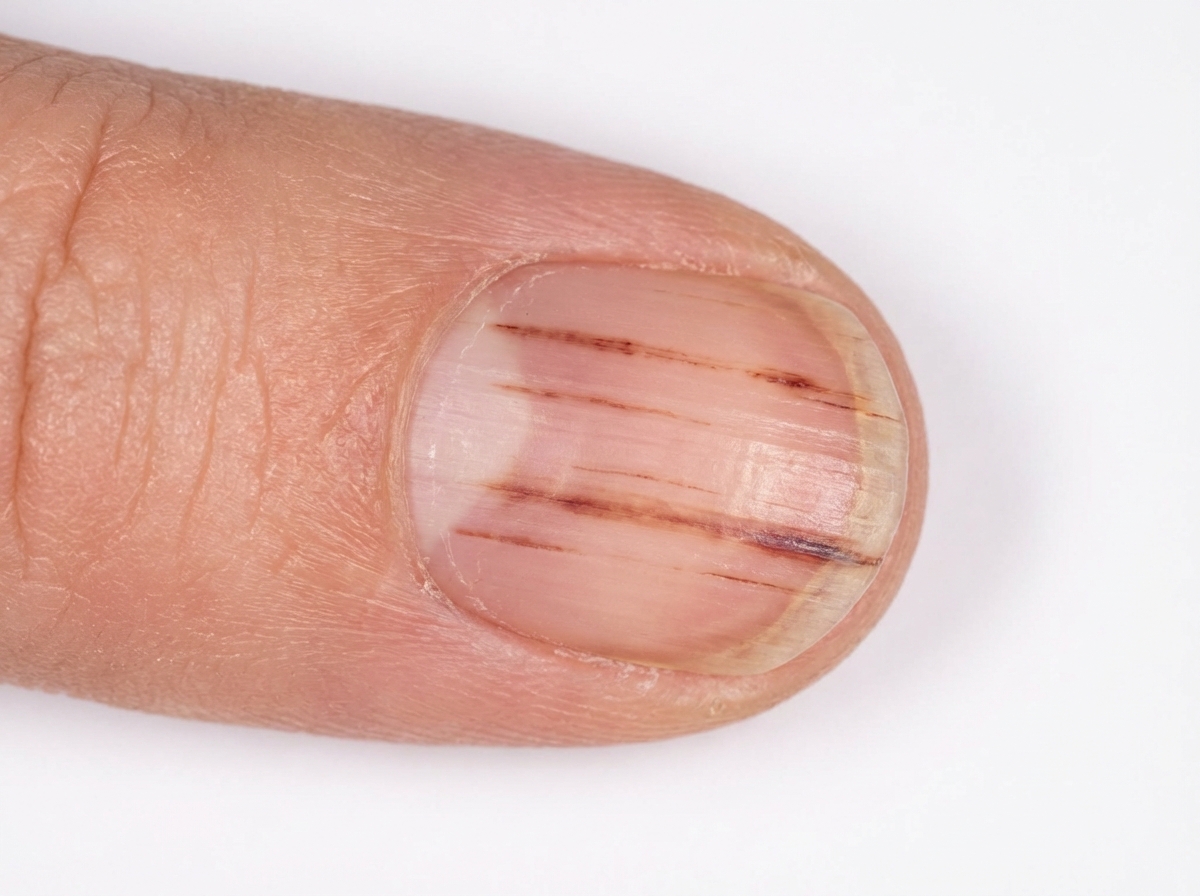
A 25-year-old woman comes to the physician because of a 2-day history of a burning sensation when urinating and increased urinary frequency. She is concerned about having contracted a sexually transmitted disease. Physical examination shows suprapubic tenderness. Urinalysis shows a negative nitrite test and positive leukocyte esterases. Urine culture grows organisms that show resistance to novobiocin on susceptibility testing. Which of the following is the most likely causal organism of this patient's symptoms?
A 64-year-old female with type 2 diabetes mellitus comes to the physician because of a 1-week history of painful red swelling on her left thigh. Examination shows a 3- x 4-cm, tender, fluctuant mass. Incision and drainage of the abscess are performed. Culture of the abscess fluid grows gram-positive, coagulase-positive cocci that are resistant to oxacillin. Which of the following best describes the mechanism of resistance of the causal organism to oxacillin?
A 25-year-old woman has dysuria, pyuria, increased frequency of urination, and fever of 1-day duration. She is sexually active. Urine cultures show gram-positive bacteria in clusters that are catalase-positive and coagulase-negative. The patient is started on trimethoprim-sulfamethoxazole. Which of the following characteristics is used to identify the offending organism?
A 24-year-old man presents with low-grade fever and shortness of breath for the last 3 weeks. Past medical history is significant for severe mitral regurgitation status post mitral valve replacement five years ago. His temperature is 38.3°C (101.0°F) and respiratory rate is 18/min. Physical examination reveals vertical hemorrhages under his nails, multiple painless erythematous lesions on his palms, and two tender, raised nodules on his fingers. Cardiac auscultation reveals a new-onset 2/6 holosystolic murmur loudest at the apex with the patient in the left lateral decubitus position. A transesophageal echocardiogram reveals vegetations on the prosthetic valve. Blood cultures reveal catalase-positive, gram-positive cocci. Which of the following characteristics is associated with the organism most likely responsible for this patient’s condition?
Blood cultures are sent to the laboratory. Intravenous antibiotic therapy is started. Transesophageal echocardiography shows a large, oscillating vegetation attached to the tricuspid valve. There are multiple small vegetations attached to tips of the tricuspid valve leaflets. There is moderate tricuspid regurgitation. The left side of the heart and the ejection fraction are normal. Which of the following is the most likely causal organism of this patient's condition?
A 65-year-old man presents with low-grade fever and malaise for the last 4 months. He also says he has lost 9 kg (20 lb) during this period and suffers from extreme fatigue. Past medical history is significant for a mitral valve replacement 5 years ago. His temperature is 38.1°C (100.6°F), respirations are 22/min, pulse is 102/min, and blood pressure is 138/78 mm Hg. On physical examination, there is a new onset 2/6 holosystolic murmur loudest in the apical area of the precordium. Which of the following organisms is the most likely cause of this patient’s condition?
A patient is infected with a pathogen and produces many antibodies to many antigens associated with that pathogen via Th cell-activated B cells. This takes place in the germinal center of the lymphoid tissues. If the same patient is later re-infected with the same pathogen, the immune system will respond with a much stronger response, producing antibodies with greater specificity for that pathogen in a shorter amount of time. What is the term for this process that allows the B cells to produce antibodies specific to that antigen?
Want unlimited practice?
Get full access to all questions, explanations, and performance tracking.
Scan to download app