
Bacillus species — MCQs

A 32-year-old woman comes to the emergency department with a 2-day history of abdominal pain and diarrhea. She has had about 8 voluminous stools per day, some of which were bloody. She visited an international food festival three days ago. She takes no medications. Her temperature is 39.5°C (103.1°F), pulse is 90/min, and blood pressure is 110/65 mm Hg. Examination shows a tender abdomen, increased bowel sounds, and dry mucous membranes. Microscopic examination of the stool shows polymorphonuclear leukocytes. Stool culture results are pending. Which of the following most likely caused the patient's symptoms?
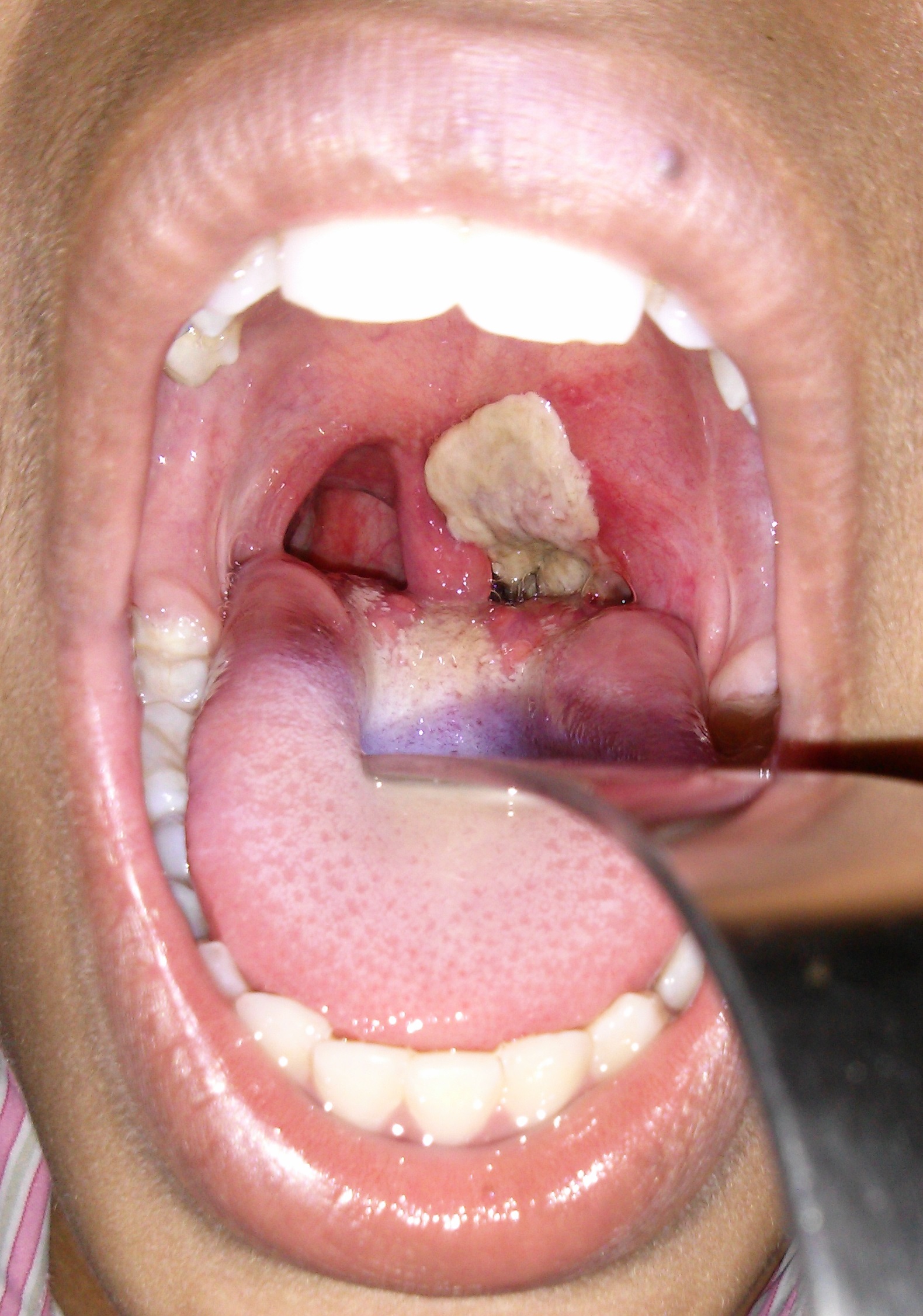
A 12-year-old boy presents to the emergency room with difficulty breathing after several days of severe sore throat. Further history reveals that his family immigrated recently from Eastern Europe and he has never previously seen a doctor. Physical exam shows cervical lymphadenopathy with extensive neck edema as well as the finding shown in the image provided. You suspect a bacteria that causes the disease by producing an AB type exotoxin. Which of the following is the proper medium to culture the most likely cause of this infection?
A 30-year-old woman comes to the emergency department because of fever, watery diarrhea, and abdominal cramping for the past 24 hours. She recently went to an international food fair. Her temperature is 39°C (102.2°F). Physical examination shows increased bowel sounds. Stool cultures grow gram-positive, spore-forming, anaerobic rods that produce alpha toxin. The responsible organism also causes which of the following physical examination findings?
A 50-year-old farmer presents to a physician with painless, black, severely swollen pustules on the left hand. Examination reveals extensive swelling around the wound. Microscopy reveals gram-positive bacilli with a bamboo stick appearance. Culture shows large, gray, non-hemolytic colonies with irregular borders. Which of the following is the most likely diagnosis?
A 55-year-old woman with type 2 diabetes mellitus is admitted to the hospital because of a 2-day history of fever, breathlessness, and cough productive of large quantities of green sputum. She drinks 8 beers daily. Her temperature is 39°C (102.2°F), pulse is 110/min, respirations are 28/min, and blood pressure is 100/60 mm Hg. Blood and sputum cultures grow gram-negative, catalase-positive, capsulated bacilli. Which of the following components of the causal organism is the most likely cause of this patient's hypotension?
A 35-year-old patient with no significant past medical history arrives to the ED with abdominal cramps, nausea, and vomiting. He has had no recent travel or chemical exposures; however, three other members of his family also arrived concurrently to the ED with abdominal cramps, nausea, and vomiting. When asked about their recent activities, they recall that they had shared a lunch of leftover fried rice and soft boiled eggs about 5 hours earlier. The patients are otherwise afebrile and deny any history of diarrhea. Which of the following toxins is the most likely to have caused these symptoms?
A 73-year-old man is brought to the emergency department because of fever, headaches, and confusion for the past 24 hours. Three years ago, he underwent heart transplantation because of congestive heart failure. His temperature is 38.1°C (100.5°F). He is oriented only to person. Physical examination shows nuchal rigidity. A cerebrospinal fluid culture on blood agar grows colonies of a gram-positive bacillus surrounded by a narrow transparent rim. Administration of which of the following antibiotics is most likely to be effective in the treatment of this patient's condition?
A 71-year-old woman presents with high-grade fever and chills, difficulty breathing, and a productive cough with rust-colored sputum. She complains of a sharp left-sided chest pain. Physical examination reveals increased fremitus, dullness to percussion, and bronchial breath sounds on the lower left side. A chest X-ray shows left lower lobe consolidation. The offending organism that was cultured from the sputum was catalase-negative and had a positive Quellung reaction. The organism will show which gram stain results?
A 29-year-old woman comes to the military physician because of a 2-day history of fever, joint pain, dry cough, chest pain, and a painful red rash on her lower legs. Two weeks ago, she returned from military training in Southern California. She appears ill. Her temperature is 39°C (102.1°F). Physical examination shows diffuse inspiratory crackles over all lung fields and multiple tender erythematous nodules over the anterior aspect of both legs. A biopsy specimen of this patient's lungs is most likely to show which of the following?
An 11-year-old boy presents with a sore throat, fever, chills, and difficulty swallowing for the past 3 days. The patient’s mother says that last night he was short of breath and had a headache. Past medical history is unremarkable. The patient has not been vaccinated as his mother thinks it is "unnecessary". His temperature is 38.3°C (101.0°F), blood pressure is 120/70 mm Hg, pulse is 110/min, and respiratory rate is 18/min. On physical examination, the patient is ill-appearing and dehydrated. A grayish-white membrane and pharyngeal erythema are present in the oropharynx. Significant cervical lymphadenopathy is also present. A throat swab is taken and gram staining shows gram-positive club-shaped bacilli along with few neutrophils. Which of the following would most likely be the result of the bacterial culture of the throat swab in this patient?
Want unlimited practice?
Get full access to all questions, explanations, and performance tracking.
Scan to download app