
Proteus species — MCQs

A 26-year-old female presents to her primary care physician concerned that she has contracted a sexually transmitted disease. She states that she is having severe pain whenever she urinates and seems to be urinating more frequently than normal. She reports that her symptoms started after she began having unprotected sexual intercourse with 1 partner earlier this week. The physician obtains a urinalysis which demonstrates the following, SG: 1.010, Leukocyte esterase: Positive, Nitrites: Positive, Protein: Trace, pH: 5.0, RBC: Negative. A urease test is performed which is negative. This patient has most likely been infected with which of the following organisms?
A 32-year-old woman comes to the physician because of a 1-week history of left flank pain and dysuria. She has had 2 episodes of urinary tract infection over the past 2 years. Her temperature is 37°C (98.6°F) and pulse is 82/min. An ultrasound of the kidneys shows left-sided hydronephrosis and echogenic foci with acoustic shadowing. A photomicrograph of the urine is shown. The crystals observed are most likely composed of which of the following?
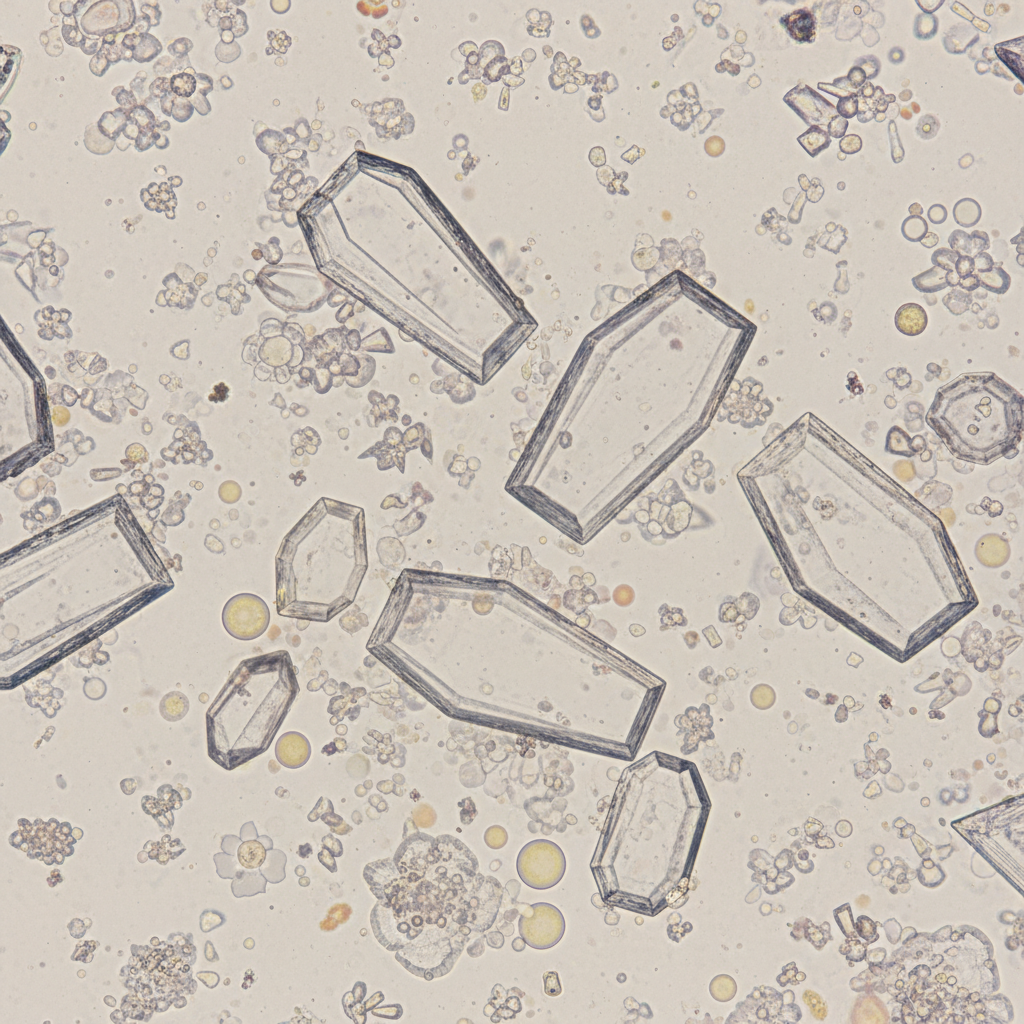
A 32-year-old man with hypertension and gout comes to the physician with left flank pain and bloody urine for two days. He does not smoke cigarettes but drinks two beers daily. Home medications include hydrochlorothiazide and ibuprofen as needed for pain. Physical examination shows left costovertebral angle tenderness. Urine dipstick is strongly positive for blood. Microscopic analysis of a stone found in the urine reveals a composition of magnesium ammonium phosphate. Which of the following is the strongest predisposing factor for this patient's condition?
A 26-year-old woman presents to the emergency department with fever, chills, lower quadrant abdominal pain, and urinary frequency for the past week. Her vital signs include temperature 38.9°C (102.0°F), pulse 110/min, respirations 16/min, and blood pressure 122/78 mm Hg. Physical examination is unremarkable. Urinalysis reveals polymorphonuclear leukocytes (PMNs) > 10 cells/HPF and the presence of bacteria (> 105 CFU/mL). Which of the following is correct concerning the most likely microorganism responsible for this patient’s condition?
A 25-year-old woman presents to the clinic with complaints of dysuria and increased urinary frequency. Her urinalysis results are negative for nitrites. Urine microscopy shows the findings in figure A. What is the most likely cause underlying her symptoms?
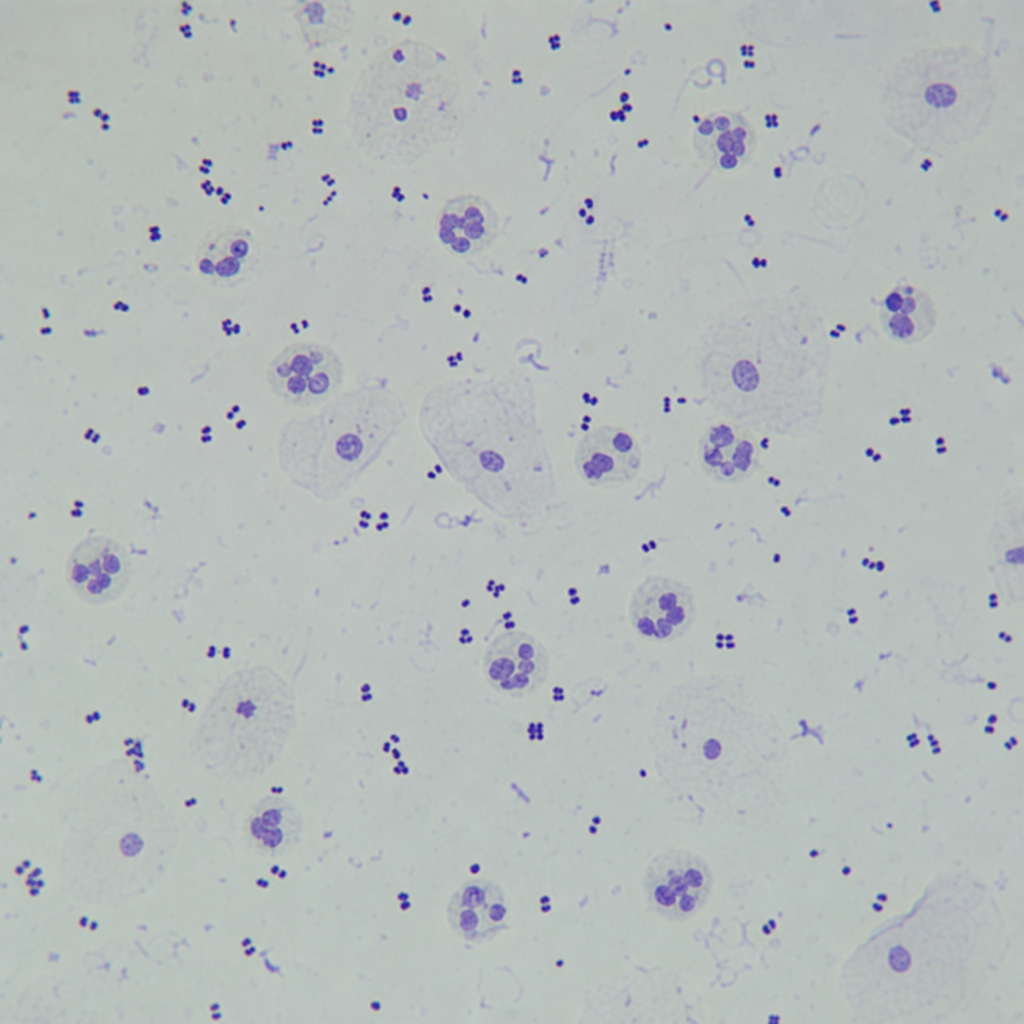
A previously healthy 26-year-old woman comes to the physician because of a 2-day history of pain with urination. She has been sexually active with two partners over the past year. She uses condoms for contraception. Vital signs are within normal limits. Physical examination shows suprapubic tenderness. Urinalysis shows neutrophils and a positive nitrite test. Urine culture grows gram-negative, oxidase-negative rods that form greenish colonies on eosin-methylene blue agar. Which of the following virulence factors of the causal organism increases the risk of infection in this patient?
A previously healthy 24-year-old woman comes to the physician because of a 1-day history of nausea and weakness. She is sexually active with 2 male partners and uses an oral contraceptive; she uses condoms inconsistently. Her last menstrual period was 4 days ago. Her temperature is 38.4°C (101°F). Physical examination shows right costovertebral angle tenderness. Pelvic examination is normal. Which of the following is the most likely cause of this patient's condition?
A 27-year-old woman comes to the physician for a 1-week-history of painful urination and urinary frequency. She has no history of serious illness and takes no medications. She is sexually active with her boyfriend. Her temperature is 36.7°C (98.1°F). There is no costovertebral angle tenderness. Urine dipstick shows leukocyte esterase. A Gram stain does not show any organisms. Which of the following is the most likely causal pathogen?
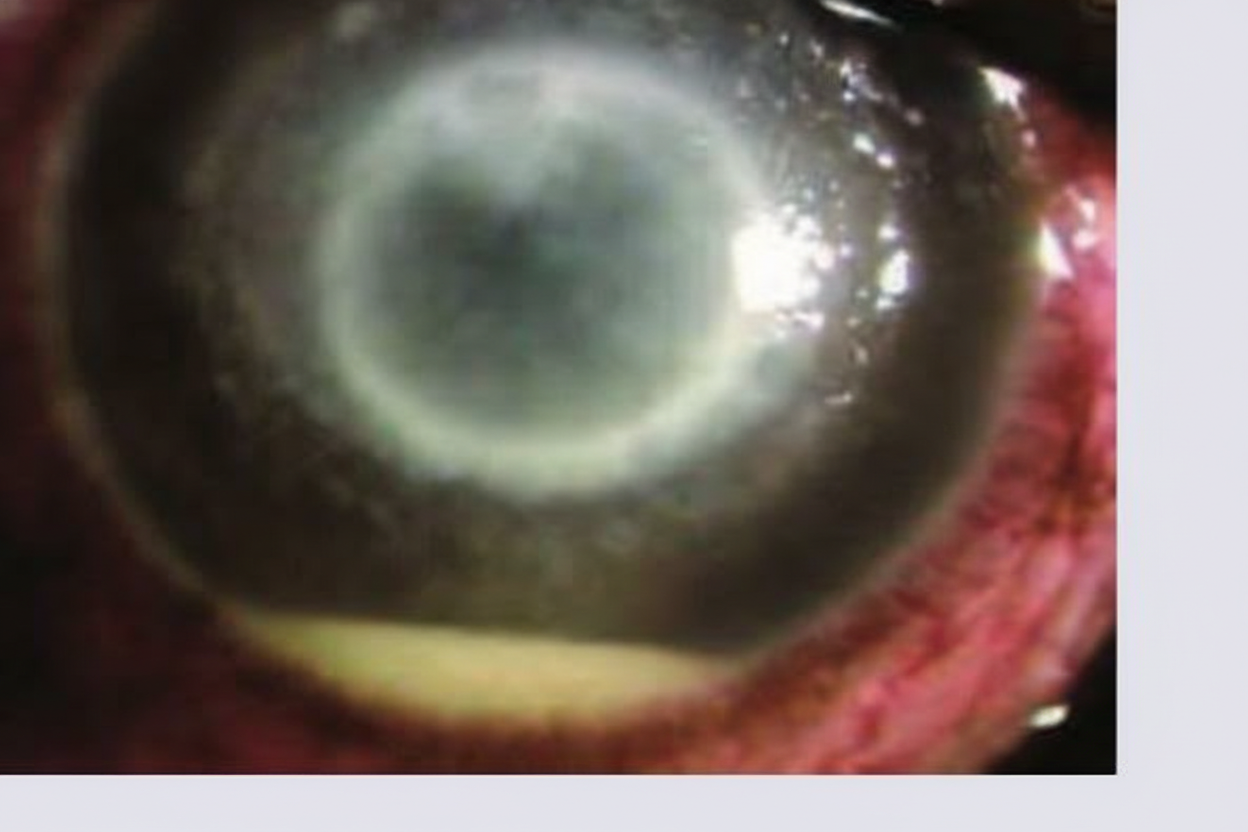
A 45-year-old man comes to the physician because of a 1-day history of progressive pain and blurry vision of his right eye. He has difficulties opening the eye because of pain. His left eye is asymptomatic. He wears contact lenses. He has bronchial asthma treated with inhaled salbutamol. He works as a kindergarten teacher. His temperature is 37°C (98.6°F), pulse is 85/min, and blood pressure is 135/75 mm Hg. Examination shows a visual acuity in the left eye of 20/25 and the ability to count fingers at 3 feet in the right eye. A photograph of the right eye is shown. Which of the following is the most likely diagnosis?
A 23-year-old man comes to the physician because of a 2-day history of profuse watery diarrhea and abdominal cramps. Four days ago, he returned from a backpacking trip across Southeast Asia. Physical examination shows dry mucous membranes and decreased skin turgor. Stool culture shows gram-negative, oxidase-positive, curved rods that have a single polar flagellum. The pathogen responsible for this patient's condition most likely has which of the following characteristics?
Want unlimited practice?
Get full access to all questions, explanations, and performance tracking.
Scan to download app