An investigator is studying the growth of an organism in different media. The organism is inoculated on a petri dish that contains heated sheep blood, vancomycin, nystatin, trimethoprim, and colistin. The resulting growth medium is incubated at 37°C. Numerous small, white colonies are seen after incubation for 48 hours. This organism is most likely to cause which of the following conditions?
Q42
A 13-year-old boy is brought by his mother to the emergency department because he has had fever, chills, and severe coughing for the last two days. While they originally tried to manage his condition at home, he has become increasingly fatigued and hard to arouse. He has a history of recurrent lung infections and occasionally has multiple foul smelling stools. On presentation, his temperature is 102.2 °F (39 °C), blood pressure is 106/71 mmHg, pulse is 112/min, and respirations are 20/min. Physical exam reveals scattered rhonchi over both lung fields, rales at the base of the right lung base and corresponding dullness to percussion. The most likely organism responsible for this patient's symptoms has which of the following characteristics?
Q43
A 21-year-old man presents to the emergency department with a 1-week history of increasing knee pain. Specifically, he says that the pain is severe enough that he is no longer able to bend his knee. His past medical history is not significant, but he says that he is sexually active with multiple partners. On physical exam, his right knee is found to be swollen, erythematous, and tender to palpation. Laboratory testing demonstrates an elevated erythrocyte sedimentation rate and C-reactive protein. Which of the following properties describes the organism that is most likely responsible for this patient's symptoms?
Q44
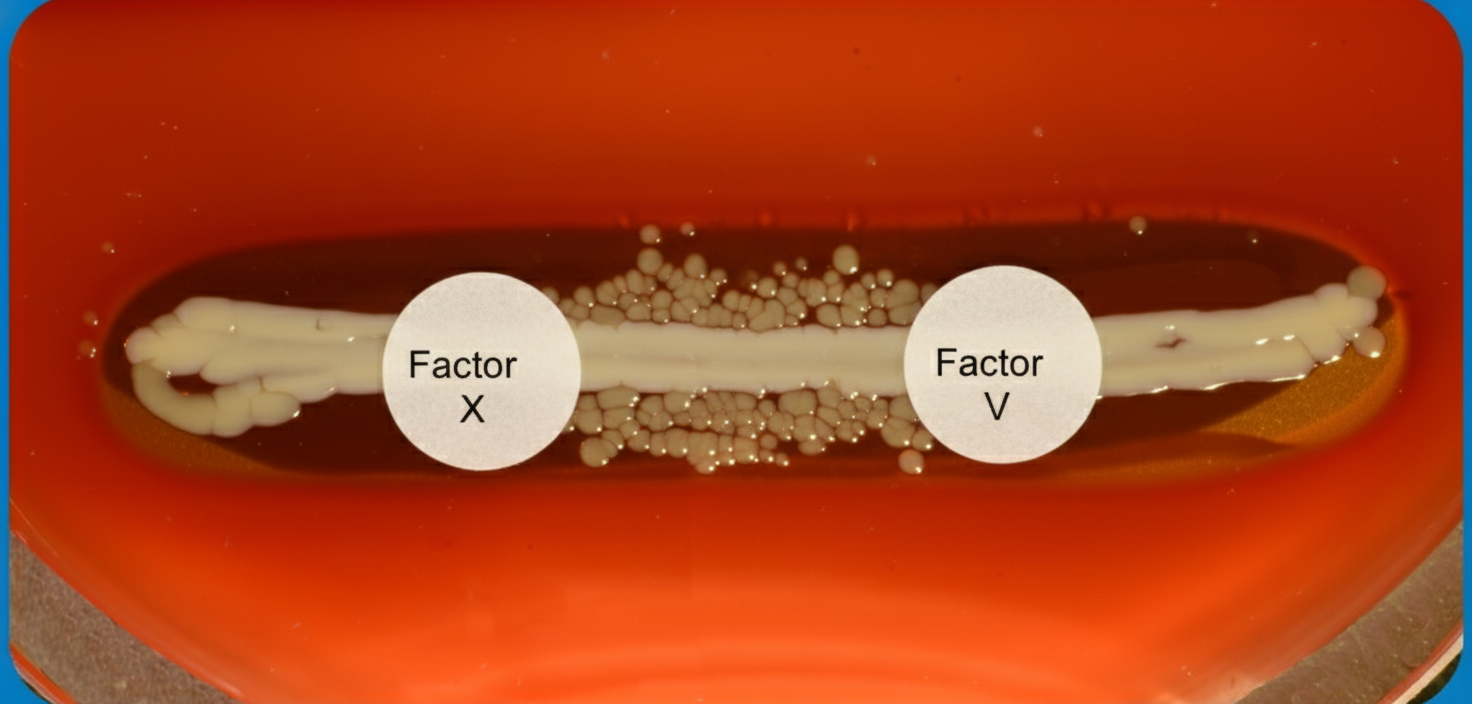
A 6-month old child is brought to the ER by parents for one day of fever, decreased feeding, and lethargy. They report that neither she nor her siblings are immunized due to their concerns about vaccinations. On exam, the infant is toxic-appearing. Antibiotics are started and lumbar puncture reveals bacterial meningitis caused by a gram-negative, encapsulated organism that requires chocolate agar and the two factors shown in Image A for growth. Which organism does this best describe?
Q45
A 39-year-old man presents to his primary care physician with a 10-hour history of severe diarrhea. He says that he was recently at a company picnic and after returning home he began to experience severe watery diarrhea. He says that the diarrhea was accompanied by nausea and abdominal pain. His physician informs him that he was likely infected by a lactose-fermenting, gram-negative organism. Which of the following changes would be seen in a cell that was affected by the heat stable toxin produced by this organism?
Q46
A 42-year-old homeless male presents with fever and cough. He was found unconscious on the side of the road and was brought to the emergency room. He is noticeably drunk and is unable to answer any questions. On physical exam his temperature is 103°F (40°C), blood pressure is 130/85 mmHg, pulse is 110/min, respirations are 23/min, and pulse oximetry is 96% on room air. You note decreased breath sounds in the right lower lobe. The pathogen most likely responsible for this patient's symptoms has which of the following features?
Q47
A 53-year-old man presents to your Louisiana gulf coast community hospital with 48 hours of profuse watery diarrhea and 24 hours of vomiting and chills. The patient has a past medical history significant for hypertension and hypercholesterolemia. The patient denies sick contacts or any interaction with animals for the last month. Two days ago the patient attended a family crawfish boil where oysters, boiled crabs, and crawfish were consumed. Stool occult blood was negative. What is the most likely etiology of the patient's symptoms?
Q48
A 24-year-old man presents to the office, complaining of a rash and “not feeling well.” The patient reports fatigue, a headache, and a possible fever. He says he has felt this way since a camping trip with his family in North Carolina, but he denies any contact with sick individuals. On examination, his vital signs include: temperature 38.5°C (101.3°F), blood pressure 100/60 mm Hg, heart rate 82 beats per minute, respiratory rate 14 breaths per minute, and O2 saturation 99% on room air. The patient appears unwell. He has a maculopapular rash on his upper and lower extremities, including the palms of his hands and soles of his feet. He says he started feeling sick a few days before he got the rash, which prompted him to come into the office. The patient denies itching but admits to some nausea and vomiting. He also admits to unprotected sex with a single female partner for the past three years. What is the most likely causative agent of this patient’s presentation?
Q49
A 2-year-old boy is brought to the physician because of fever, productive cough, and shortness of breath. Since birth, he has had multiple respiratory infections requiring treatment with antibiotics. His immunizations are up-to-date. He is in the 10th percentile for height and weight. His temperature is 38°C (100.3°F). Examination detects diffuse bilateral wheezing and cervical lymphadenopathy. Flow cytometric analysis of a serum sample from the patient fails to fluoresce after incubation with dihydrorhodamine. This patient is at greatest risk of infection with which of the following organisms?
Q50
A 29-year-old woman presents to her primary care provider complaining of lower back pain. She reports a 3 day history of extreme right lower back pain. She also reports mild dysuria. Her past medical history is notable for recurrent urinary tract infections leading to 3 emergency room visits over the past year. Her family history is notable for renal cell carcinoma in her paternal grandfather and diabetes in her father. Her temperature is 99.5°F (37.5°C), blood pressure is 125/75 mmHg, pulse is 82/min, and respirations are 18/min. On exam, she has mild right costovertebral angle tenderness. Radiography demonstrates a vague radiopaque structure in the right lower abdomen. Results of a urinalysis are shown below:
Appearance: Hazy, yellow
Protein: Negative
Specific gravity: 1.029
WBC: 2+
Casts: None
Bacteria: None
pH: 8.9
Blood: Negative
Bilirubin: Negative
Urobilinogen: < 2.0
A urine culture is pending. Which of the following pathogens is most likely responsible for this patient’s condition?
Gram-negative US Medical PG Practice Questions and MCQs
Question 41: An investigator is studying the growth of an organism in different media. The organism is inoculated on a petri dish that contains heated sheep blood, vancomycin, nystatin, trimethoprim, and colistin. The resulting growth medium is incubated at 37°C. Numerous small, white colonies are seen after incubation for 48 hours. This organism is most likely to cause which of the following conditions?
A. Pontiac fever
B. Pseudomembranous colitis
C. Hemolytic uremic syndrome
D. Oral thrush
E. Gonorrhea (Correct Answer)
Explanation: ***Gonorrhea***
- The growth medium described is **Thayer-Martin agar**, a selective medium containing **heated sheep blood** (supplies NAD+), **vancomycin** (inhibits Gram-positives), **colistin** (inhibits Gram-negatives), **nystatin** (inhibits fungi), and **trimethoprim** (inhibits Proteus). This medium is specifically designed for the isolation of *Neisseria gonorrhoeae* from polymicrobial samples.
- *Neisseria gonorrhoeae* typically grows as **small, translucent-to-white colonies** on selective media like Thayer-Martin agar, and incubation at 37°C in CO2 (not explicitly mentioned but often required) for 24-48 hours yields visible growth, causing **gonorrhea**.
*Pontiac fever*
- Pontiac fever is a mild, self-limiting form of **legionellosis**, caused by *Legionella pneumophila*.
- *Legionella* requires a specialized medium such as **buffered charcoal yeast extract (BCYE) agar** for growth, not Thayer-Martin agar.
*Pseudomembranous colitis*
- This condition is caused by **toxin-producing *Clostridioides difficile***, often after antibiotic use.
- *C. difficile* is an obligate anaerobe and requires **anaerobic conditions** and specific selective media (e.g., CCFA agar) for isolation, not Thayer-Martin agar under aerobic conditions.
*Hemolytic uremic syndrome*
- Hemolytic uremic syndrome (HUS) is often caused by **Shiga toxin-producing *Escherichia coli* (STEC)**, particularly O157:H7.
- STEC can be isolated on media like **sorbitol MacConkey agar (SMAC)**, where O157:H7 appears as non-sorbitol fermenting colonies, distinct from the growth seen on Thayer-Martin.
*Oral thrush*
- Oral thrush is caused by *Candida albicans*, a yeast.
- *Candida* would be inhibited by **nystatin** in the Thayer-Martin medium, which is an antifungal agent.
Question 42: A 13-year-old boy is brought by his mother to the emergency department because he has had fever, chills, and severe coughing for the last two days. While they originally tried to manage his condition at home, he has become increasingly fatigued and hard to arouse. He has a history of recurrent lung infections and occasionally has multiple foul smelling stools. On presentation, his temperature is 102.2 °F (39 °C), blood pressure is 106/71 mmHg, pulse is 112/min, and respirations are 20/min. Physical exam reveals scattered rhonchi over both lung fields, rales at the base of the right lung base and corresponding dullness to percussion. The most likely organism responsible for this patient's symptoms has which of the following characteristics?
A. Mixed anaerobic rods
B. Lancet-shaped diplococci
C. Mucoid lactose-fermenting rod
D. Green gram-negative rod (Correct Answer)
E. Coagulase-positive, gram-positive cocci
Explanation: ***Green gram-negative rod***
- The patient's history of **recurrent lung infections** and **foul-smelling stools (malabsorption)** is highly suggestive of **cystic fibrosis (CF)**.
- **Pseudomonas aeruginosa**, a **green gram-negative rod** (due to pyocyanin pigment), is a common cause of severe pulmonary infections in CF patients and is a significant contributor to morbidity and mortality.
*Mixed anaerobic rods*
- This typically causes **aspiration pneumonia**, often involving the posterior segments of the upper lobes or superior segments of the lower lobes.
- While patients with CF can have aspiration, the **recurrent nature** and specific **malabsorption symptoms** point more strongly to *Pseudomonas*.
*Lancet-shaped diplococci*
- This describes **Streptococcus pneumoniae**, a common cause of **community-acquired pneumonia**.
- While possible, it does not explain the recurrent infections or the patient's underlying condition of malabsorption and is less specific for CF-related pneumonia than *Pseudomonas*.
*Mucoid lactose-fermenting rod*
- This describes **Klebsiella pneumoniae**, which can cause severe pneumonia, often with **currant jelly sputum**.
- While *Klebsiella* can cause lung infections, it is not as characteristic of recurrent infections in CF patients as *Pseudomonas*, and the malabsorption connection is weaker.
*Coagulase-positive, gram-positive cocci*
- This describes **Staphylococcus aureus**, which is another common pathogen in CF, especially in younger patients.
- However, the description of a "green" gram-negative rod in the correct option points more specifically to *Pseudomonas aeruginosa*, which becomes increasingly prevalent and problematic in older CF patients.
Question 43: A 21-year-old man presents to the emergency department with a 1-week history of increasing knee pain. Specifically, he says that the pain is severe enough that he is no longer able to bend his knee. His past medical history is not significant, but he says that he is sexually active with multiple partners. On physical exam, his right knee is found to be swollen, erythematous, and tender to palpation. Laboratory testing demonstrates an elevated erythrocyte sedimentation rate and C-reactive protein. Which of the following properties describes the organism that is most likely responsible for this patient's symptoms?
A. Tick borne gram-variable
B. Gram-negative rod
C. Gram-positive cocci in clusters
D. Gram-positive cocci in chains
E. Gram-negative diplococci (Correct Answer)
Explanation: ***Gram-negative diplococci***
- The patient's presentation with **acute, severe monoarticular arthritis** (knee pain and swelling), elevated inflammatory markers (ESR, CRP), and a history of **multiple sexual partners** strongly suggests **gonococcal arthritis**.
- **Neisseria gonorrhoeae** is a gram-negative diplococcus that is a common cause of septic arthritis in sexually active young adults.
*Tick borne gram-variable*
- This description typically refers to organisms like **Borrelia burgdorferi** (Lyme disease), which is transmitted by ticks and can cause arthritis.
- However, Lyme arthritis usually manifests as migratory polyarthritis and is not typically associated with a history of multiple sexual partners as a primary risk factor or the acute, severe, monoarticular presentation seen here.
*Gram-negative rod*
- Gram-negative rods, such as **Escherichia coli** or **Salmonella**, can cause septic arthritis, particularly in immunocompromised individuals or those with specific risk factors.
- While possible, it is less likely than Neisseria gonorrhoeae in a healthy, sexually active young man without other predisposing conditions, and the morphology "rod" is not consistent with the most probable pathogen.
*Gram-positive cocci in clusters*
- **Staphylococcus aureus** is a gram-positive coccus that typically grows in clusters and is the most common cause of **nongonococcal septic arthritis** in adults.
- While possible, the patient's sexual history and age make gonococcal arthritis more probable, and S. aureus usually enters via skin breaks, joint injections, or hematogenous spread from different sources.
*Gram-positive cocci in chains*
- **Streptococcus species** are gram-positive cocci that often grow in chains and can cause septic arthritis, particularly Group A Streptococcus.
- However, streptococcal arthritis is less common than gonococcal or staphylococcal arthritis in this demographic and clinical context, and there are no other signs of streptococcal infection.
Question 44: A 6-month old child is brought to the ER by parents for one day of fever, decreased feeding, and lethargy. They report that neither she nor her siblings are immunized due to their concerns about vaccinations. On exam, the infant is toxic-appearing. Antibiotics are started and lumbar puncture reveals bacterial meningitis caused by a gram-negative, encapsulated organism that requires chocolate agar and the two factors shown in Image A for growth. Which organism does this best describe?
A. Group B Streptococcus
B. Haemophilus influenzae (Correct Answer)
C. Moraxella catarrhalis
D. Streptococcus pneumoniae
E. Listeria monocytogenes
Explanation: **Haemophilus influenzae**
- This organism is a **gram-negative, encapsulated coccobacillus** that requires **chocolate agar** and **factors X (hemin) and V (NAD+)** for growth, which perfectly matches the description.
- In unvaccinated children, *H. influenzae* type b (Hib) is a significant cause of **bacterial meningitis**, epiglottitis, and other invasive infections, especially considering the family's anti-vaccination stance.
*Group B Streptococcus*
- **Group B Streptococcus (GBS)** is a **gram-positive coccus** and a common cause of early-onset neonatal sepsis and meningitis, typically in infants less than 3 months old.
- It does not require chocolate agar or specific growth factors X and V, and is **gram-positive**, not gram-negative.
*Moraxella catarrhalis*
- *Moraxella catarrhalis* is a **gram-negative diplococcus** and a common cause of otitis media, sinusitis, and bronchitis, but it is a rare cause of meningitis.
- While it is a gram-negative organism, it does not typically require chocolate agar or specific growth factors X and V for isolation, usually growing on standard blood agar.
*Streptococcus pneumoniae*
- *Streptococcus pneumoniae* is a **gram-positive coccus** that is a leading cause of bacterial meningitis in children and adults.
- It is **gram-positive**, not gram-negative, and grows on blood agar, not specifically requiring chocolate agar or factors X and V.
*Listeria monocytogenes*
- *Listeria monocytogenes* is a **gram-positive rod** and a cause of meningitis in neonates, immunocompromised individuals, and the elderly.
- It is a **gram-positive rod**, contrary to the gram-negative, encapsulated organism described, and does not require chocolate agar or factors X and V for growth.
Question 45: A 39-year-old man presents to his primary care physician with a 10-hour history of severe diarrhea. He says that he was recently at a company picnic and after returning home he began to experience severe watery diarrhea. He says that the diarrhea was accompanied by nausea and abdominal pain. His physician informs him that he was likely infected by a lactose-fermenting, gram-negative organism. Which of the following changes would be seen in a cell that was affected by the heat stable toxin produced by this organism?
A. Decreased cyclic adenosine monophosphate
B. Increased cyclic guanosine monophosphate (Correct Answer)
C. Increased cyclic adenosine monophosphate
D. Increased calcium
E. Decreased cyclic guanosine monophosphate
Explanation: ***Increased cyclic guanosine monophosphate***
- The organism described (lactose-fermenting, gram-negative, causing watery diarrhea with a heat-stable toxin) is characteristic of **enterotoxigenic E. coli (ETEC)**.
- ETEC's **heat-stable toxin (ST)** binds to the guanylate cyclase receptor on intestinal cells, leading to an increase in intracellular **cyclic guanosine monophosphate (cGMP)**. This elevation then activates protein kinase G, which phosphorylates and opens CFTR chloride channels, causing chloride and water secretion into the intestinal lumen, leading to secretory diarrhea.
*Decreased cyclic adenosine monophosphate*
- This is an incorrect effect for the heat-stable toxin. ETEC's other toxin, the **heat-labile toxin (LT)**, acts similarly to cholera toxin by increasing **cyclic adenosine monophosphate (cAMP)**, but the question specifically mentions the heat-stable toxin.
- Lowered cAMP would typically lead to decreased secretion and potentially constipation or reduced fluid loss, not the severe watery diarrhea observed.
*Increased cyclic adenosine monophosphate*
- While increased cAMP can cause secretory diarrhea (e.g., via ETEC LT or cholera toxin), the question specifically refers to the **heat-stable toxin (ST)**, which acts through the **cGMP** pathway, not cAMP.
- The heat-labile toxin (LT) of ETEC causes an increase in cAMP, but its mechanism is different from the ST.
*Increased calcium*
- An increase in intracellular calcium is not the primary mechanism of action for either the heat-stable or heat-labile toxins of ETEC or other common bacterial toxins causing secretory diarrhea.
- While calcium signaling is crucial for various cellular processes, it is not the direct target or primary second messenger for ETEC toxins in inducing secretory diarrhea.
*Decreased cyclic guanosine monophosphate*
- ETEC's heat-stable toxin directly activates guanylate cyclase, leading to an **increase**, not a decrease, in **cGMP**.
- A decrease in cGMP would not explain the severe watery diarrhea characteristic of ETEC infection with the heat-stable toxin.
Question 46: A 42-year-old homeless male presents with fever and cough. He was found unconscious on the side of the road and was brought to the emergency room. He is noticeably drunk and is unable to answer any questions. On physical exam his temperature is 103°F (40°C), blood pressure is 130/85 mmHg, pulse is 110/min, respirations are 23/min, and pulse oximetry is 96% on room air. You note decreased breath sounds in the right lower lobe. The pathogen most likely responsible for this patient's symptoms has which of the following features?
A. Disc-shaped yeast seen on methenamine silver stain
B. Negative-sense, single-stranded RNA virus
C. Organism that forms black colonies on cysteine-tellurite agar
D. Gram-negative organism that produces mucoid colonies on MacConkey agar (Correct Answer)
E. Gram-positive, catalase-positive organism that forms cocci in clusters
Explanation: ***Gram-negative organism that produces mucoid colonies on MacConkey agar***
- This describes ***Klebsiella pneumoniae***, a common cause of **aspiration pneumonia** in individuals with altered consciousness, such as this intoxicated homeless man.
- ***Klebsiella*** pneumonia is characterized by its **"currant jelly" sputum** and often affects the **right lower lobe**, consistent with the patient's decreased breath sounds.
*Disc-shaped yeast seen on methenamine silver stain*
- This describes ***Pneumocystis jirovecii***, which causes **Pneumocystis pneumonia (PCP)**, primarily in **immunocompromised patients** (e.g., HIV/AIDS).
- While this patient is homeless, there is no information to suggest he is immunocompromised, and his acute presentation with fever and cough is more typical of bacterial aspiration.
*Negative-sense, single-stranded RNA virus*
- This describes various viruses, including **influenza virus** or **respiratory syncytial virus (RSV)**.
- Viral pneumonias typically cause more diffuse lung involvement and are less likely to present with focal decreased breath sounds in a specific lobe, especially in the context of aspiration risk.
*Organism that forms black colonies on cysteine-tellurite agar*
- This describes ***Corynebacterium diphtheriae***, the causative agent of **diphtheria**.
- Diphtheria primarily causes **pharyngitis** with a pseudomembrane, not pneumonia with focal lung findings, and is rare in developed countries due to vaccination.
*Gram-positive, catalase-positive organism that forms cocci in clusters*
- This describes ***Staphylococcus aureus***. While ***S. aureus*** can cause pneumonia (especially **healthcare-associated** or **post-viral pneumonia**), ***Klebsiella*** is a more common pathogen in aspiration pneumonia, particularly in individuals with alcoholism.
- ***S. aureus*** pneumonia can be severe but doesn't specifically fit the typical aspiration scenario as well as ***Klebsiella***.
Question 47: A 53-year-old man presents to your Louisiana gulf coast community hospital with 48 hours of profuse watery diarrhea and 24 hours of vomiting and chills. The patient has a past medical history significant for hypertension and hypercholesterolemia. The patient denies sick contacts or any interaction with animals for the last month. Two days ago the patient attended a family crawfish boil where oysters, boiled crabs, and crawfish were consumed. Stool occult blood was negative. What is the most likely etiology of the patient's symptoms?
A. Vibrio vulnificus (Correct Answer)
B. Brucella melitensis
C. Campylobacter jejuni
D. Shigella dysenteriae
E. Listeria monocytogenes
Explanation: ***Vibrio vulnificus***
- The patient's history of consuming **raw oysters** at a crawfish boil in the **Gulf Coast region**, followed by rapid onset of **profuse watery diarrhea, vomiting, and chills**, is consistent with *Vibrio* species infection.
- *Vibrio vulnificus* is found in **warm brackish and saltwater**, particularly along the Gulf Coast, and is commonly acquired through contaminated raw oysters.
- While *V. vulnificus* is more notorious for **severe wound infections and primary septicemia** (especially in patients with chronic liver disease), it can also cause **gastroenteritis** with watery diarrhea, though less commonly than *V. parahaemolyticus*.
- Among the options provided, *Vibrio vulnificus* is the **most appropriate choice** given the seafood exposure in this geographic location.
*Brucella melitensis*
- **Brucellosis** is typically associated with consumption of **unpasteurized dairy products** or direct contact with infected livestock (goats, sheep, cattle).
- Presents with an **insidious onset** of undulant fever, night sweats, arthralgia, and hepatosplenomegaly, not acute gastroenteritis.
- The patient **denied animal contact**, making *Brucella* unlikely.
*Campylobacter jejuni*
- *Campylobacter jejuni* causes **inflammatory diarrhea** that is often **bloody**, along with fever and abdominal cramps.
- Typically acquired through contaminated **poultry**, unpasteurized milk, or contaminated water, not seafood.
- The specific history of **raw oyster consumption** and **negative stool occult blood** make this less likely.
*Shigella dysenteriae*
- **Shigellosis** classically presents with **bloody diarrhea (dysentery)**, fever, and severe abdominal cramps.
- The patient's **stool occult blood was negative**, ruling out the classic bloody diarrhea of shigellosis.
- Transmission is fecal-oral through contaminated food or water, not specifically associated with seafood.
*Listeria monocytogenes*
- **Listeriosis** is associated with **deli meats, soft cheeses, and unpasteurized dairy products**, not seafood.
- Can cause febrile gastroenteritis but more commonly causes invasive disease in **pregnant women, neonates, elderly, and immunocompromised** patients.
- The acute presentation following seafood consumption is not typical for *Listeria*.
Question 48: A 24-year-old man presents to the office, complaining of a rash and “not feeling well.” The patient reports fatigue, a headache, and a possible fever. He says he has felt this way since a camping trip with his family in North Carolina, but he denies any contact with sick individuals. On examination, his vital signs include: temperature 38.5°C (101.3°F), blood pressure 100/60 mm Hg, heart rate 82 beats per minute, respiratory rate 14 breaths per minute, and O2 saturation 99% on room air. The patient appears unwell. He has a maculopapular rash on his upper and lower extremities, including the palms of his hands and soles of his feet. He says he started feeling sick a few days before he got the rash, which prompted him to come into the office. The patient denies itching but admits to some nausea and vomiting. He also admits to unprotected sex with a single female partner for the past three years. What is the most likely causative agent of this patient’s presentation?
A. A positive-sense, single-stranded RNA virus that is non-enveloped
B. A gram-negative bacterium transmitted via the Ixodes tick
C. A sexually transmitted spirochete
D. A protozoan transmitted via the Ixodes tick
E. A gram-negative bacterium transmitted via the Dermacentor tick (Correct Answer)
Explanation: ***A gram-negative bacteria transmitted via the Dermacentor tick***
- This description refers to **Rickettsia rickettsii**, the causative agent of **Rocky Mountain spotted fever (RMSF)**, which is endemic to North Carolina and presents with fever, headache, and a **maculopapular rash on the palms and soles** after a camping trip.
- While patients can present with headache, nausea, and vomiting, **RMSF** is a relevant diagnosis due to the patient's exposure history and characteristic rash distribution, and it can be fatal if not treated promptly with doxycycline.
*A positive-sense, single-stranded RNA virus that is non-enveloped*
- This describes viruses like **picornaviruses** (e.g., enteroviruses), which can cause rashes and flu-like symptoms, but typically do not present with the classic **palms and soles rash distribution** seen here.
- The patient's history of a camping trip and location in North Carolina points away from common viral exanthems unless there's an outbreak of a specific arbovirus or enterovirus.
*A gram-negative bacterium transmitted via the Ixodes tick*
- This describes **Borrelia burgdorferi**, the causative agent of **Lyme disease**, which is transmitted by the **Ixodes (deer) tick**.
- Lyme disease typically presents with **erythema migrans (bull's-eye rash)**, fever, and fatigue, which is different from the maculopapular rash on palms and soles seen in this patient.
*A sexually transmitted spirochete*
- This describes **Treponema pallidum**, the causative agent of **syphilis**. While secondary syphilis can cause a **maculopapular rash on the palms and soles** and flu-like symptoms, the temporal association with a camping trip and absence of earlier signs of syphilis make it less likely in this acute presentation than a tick-borne illness.
- Although the patient reports unprotected sex, the history of recent camping in North Carolina and acute symptoms are more consistent with a tick-borne illness.
*A protozoan transmitted via the Ixodes tick*
- This describes **Babesia microti**, which causes **babesiosis**. Babesiosis presents with fever, fatigue, and hemolytic anemia, but typically **does not cause a rash**.
- Other protozoan infections are less likely to manifest with a rash and the classic distribution described.
Question 49: A 2-year-old boy is brought to the physician because of fever, productive cough, and shortness of breath. Since birth, he has had multiple respiratory infections requiring treatment with antibiotics. His immunizations are up-to-date. He is in the 10th percentile for height and weight. His temperature is 38°C (100.3°F). Examination detects diffuse bilateral wheezing and cervical lymphadenopathy. Flow cytometric analysis of a serum sample from the patient fails to fluoresce after incubation with dihydrorhodamine. This patient is at greatest risk of infection with which of the following organisms?
A. Streptococcus pyogenes
B. Clostridioides difficile
C. Serratia marcescens (Correct Answer)
D. Enterococcus faecium
E. Streptococcus pneumoniae
Explanation: ***Serratia marcescens***
- The **dihydrorhodamine (DHR) flow cytometry test** measures the respiratory burst activity of phagocytes. A failure to fluoresce indicates a defect in **NADPH oxidase**, which is characteristic of **Chronic Granulomatous Disease (CGD)**.
- Patients with CGD are particularly susceptible to infections with **catalase-positive organisms** like *Serratia marcescens*, *Staphylococcus aureus*, *Burkholderia cepacia*, *Nocardia*, and *Aspergillus*.
*Streptococcus pyogenes*
- This organism is **catalase-negative**, meaning it produces hydrogen peroxide that phagocytes with CGD can still use to generate reactive oxygen species.
- Therefore, CGD patients are not at an increased risk of infection with *Streptococcus pyogenes* compared to the general population.
*Clostridioides difficile*
- This bacterium primarily causes **gastrointestinal infections**, particularly after antibiotic use.
- It is not a typical opportunistic pathogen that disproportionately affects individuals with chronic granulomatous disease.
*Enterococcus faecium*
- *Enterococcus faecium* is a **catalase-negative** bacterium, similar to *Streptococcus pyogenes*.
- CGD patients are not at an increased risk of infection with catalase-negative organisms.
*Streptococcus pneumoniae*
- *Streptococcus pneumoniae* is a **catalase-negative** organism, similar to other streptococci.
- Patients with CGD generally handle infections with catalase-negative bacteria effectively.
Question 50: A 29-year-old woman presents to her primary care provider complaining of lower back pain. She reports a 3 day history of extreme right lower back pain. She also reports mild dysuria. Her past medical history is notable for recurrent urinary tract infections leading to 3 emergency room visits over the past year. Her family history is notable for renal cell carcinoma in her paternal grandfather and diabetes in her father. Her temperature is 99.5°F (37.5°C), blood pressure is 125/75 mmHg, pulse is 82/min, and respirations are 18/min. On exam, she has mild right costovertebral angle tenderness. Radiography demonstrates a vague radiopaque structure in the right lower abdomen. Results of a urinalysis are shown below:
Appearance: Hazy, yellow
Protein: Negative
Specific gravity: 1.029
WBC: 2+
Casts: None
Bacteria: None
pH: 8.9
Blood: Negative
Bilirubin: Negative
Urobilinogen: < 2.0
A urine culture is pending. Which of the following pathogens is most likely responsible for this patient’s condition?
A. Escherichia coli
B. Enterococcus
C. Citrobacter freundii
D. Proteus mirabilis (Correct Answer)
E. Staphylococcus epidermidis
Explanation: ***Proteus mirabilis***
* The patient's presentation with **lower back pain**, **dysuria**, **costovertebral angle tenderness**, a **radiopaque structure** (likely a kidney stone), and a **highly alkaline urine pH (8.9)** is highly suggestive of a **struvite stone** (magnesium ammonium phosphate).
* **Proteus mirabilis** is a common **urease-producing** bacterium that hydrolyzes urea into ammonia, leading to an alkaline urine pH and the precipitation of struvite crystals, forming **staghorn calculi**.
*Escherichia coli*
* While *E. coli* is the most common cause of uncomplicated UTIs, it is typically unable to alkalinize urine to such a high degree (pH 8.9) and is not usually associated with the formation of **struvite stones** due to its lack of significant urease activity.
* *E. coli* infections usually present with acidic or neutral urine unless there is co-infection with a urease-positive organism.
*Enterococcus*
* *Enterococcus* species can cause UTIs and may sometimes produce urease, but they are less commonly associated with the formation of large **struvite stones** leading to such a distinct clinical picture with high urine pH as seen in this patient.
* The presence of a significant radiopaque structure and a highly alkaline pH points more strongly towards *Proteus* due to its potent urease activity.
*Citrobacter freundii*
* *Citrobacter freundii* is a gram-negative bacterium that can cause UTIs and has some urease activity, but it is less frequently implicated in the rapid formation of large **struvite stones** compared to *Proteus mirabilis*.
* While it can cause an alkaline urine pH, the combination of recurrent UTIs, a large stone, and extremely high pH makes *Proteus* a more probable pathogen.
*Staphylococcus epidermidis*
* *Staphylococcus epidermidis* is a common skin commensal and a frequent contaminant in urine cultures; while it can cause UTIs, especially in catheterized patients, it is not known to be a significant **urease producer** leading to a highly alkaline urine pH or **struvite stone formation**.
* Its presence in urine typically does not result in the distinct clinical and laboratory findings observed in this patient.