A 39-year-old man presents with a 4-week history of painless, non-discharging lesions on his penis and scrotum. He was diagnosed with chronic myeloid leukemia two years ago and treated with imatinib. He currently takes no medications. He has a 20-pack-year smoking history and drinks 1-2 beers on weekends. He reports unprotected intercourse with a woman while traveling abroad 4 months ago. His temperature is 37°C, pulse is 85/min, and blood pressure is 128/82 mm Hg. Examination reveals three non-tender lesions, each approximately 1 cm in size, on his genitalia. There is no inguinal lymphadenopathy. Which of the following is the most likely causative organism?
Q32
Four days after being admitted to the hospital for widespread second-degree burns over his arms and thorax, a 29-year-old man develops a fever and wound discharge. His temperature is 38.8°C (101.8°F). Examination shows a discolored burn eschar with edema and redness of the surrounding skin. The wounds have a sickly, sweet odor. A culture of the affected tissue grows an aerobic, gram-negative rod. The causal pathogen most likely produces which of the following substances?
Q33
A previously healthy 29-year-old man comes to the emergency department for a 2-day history of abdominal pain, vomiting, and watery diarrhea. Bowel movements occur every 3 hours and are non-bloody. He recently returned from a backpacking trip in Central America. He does not take any medications. Stool culture shows gram-negative, rod-shaped bacteria that ferment lactose. Which of the following toxins is most likely to be involved in the pathogenesis of this patient's symptoms?
Q34
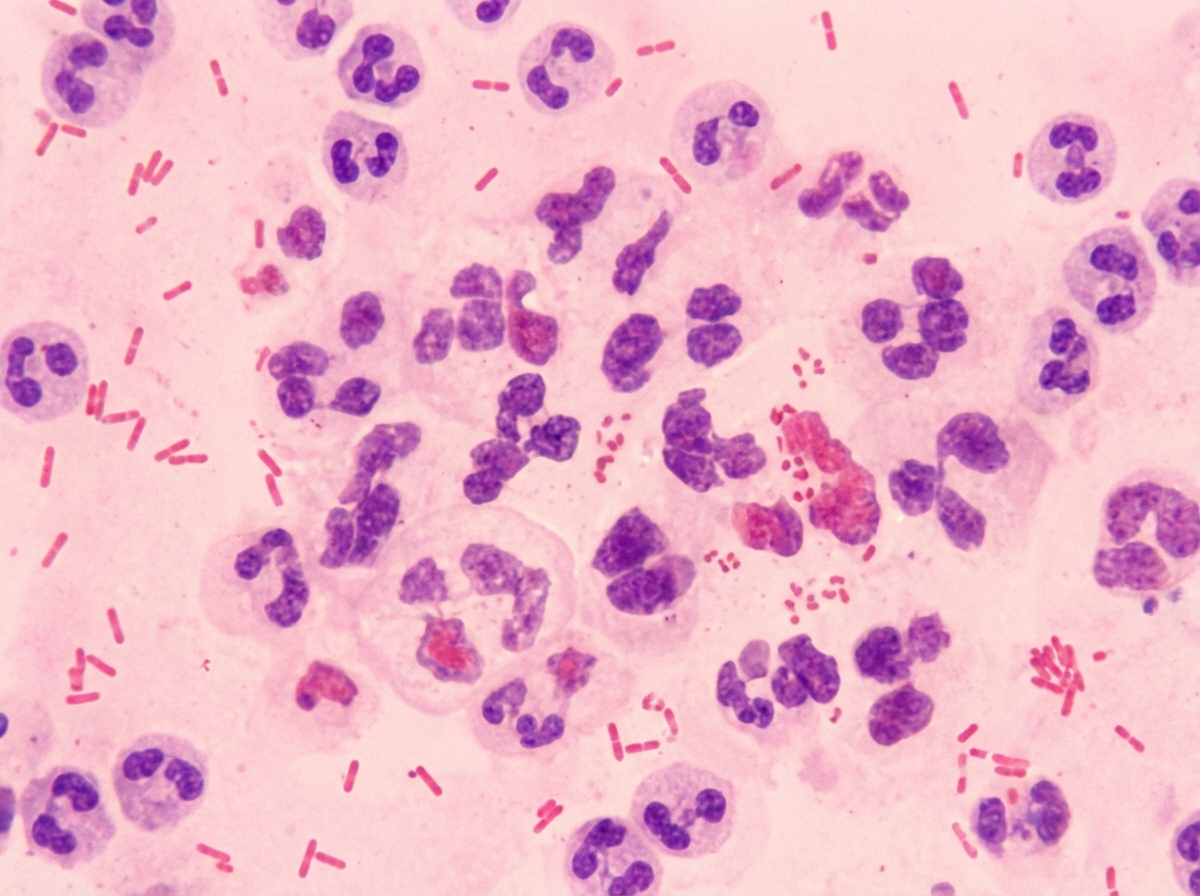
A 3-day-old boy is brought to the physician by his mother because of irritability and feeding intolerance for 1 day. His temperature is 39.2°C (102.6°F). Physical examination shows a bulging anterior fontanelle. A photomicrograph of a Gram stain of the cerebrospinal fluid is shown. Further evaluation shows that the organism expresses the K1 capsular polysaccharide. Which of the following is the most likely causal pathogen?
Q35
A 24-year-old woman presents to the ED with symptoms of pelvic inflammatory disease despite being previously treated with azithromycin for chlamydial infection. Based on your clinical understanding about the epidemiology of PID, you decide to obtain a gram stain which shows a gram-negative diplococci. What is the next step in order to confirm the identity of the organism described?
Q36
A 25-day-old male infant presents to the emergency department because his mother states that he has been acting irritable for the past 2 days and has now developed a fever. On exam, the infant appears uncomfortable and has a temperature of 39.1 C. IV access is immediately obtained and a complete blood count and blood cultures are drawn. Lumbar puncture demonstrates an elevated opening pressure, elevated polymorphonuclear neutrophil, elevated protein, and decreased glucose. Ampicillin and cefotaxime are immediately initiated and CSF culture eventually demonstrates infection with a Gram-negative rod. Which of the following properties of this organism was necessary for the infection of this infant?
Q37
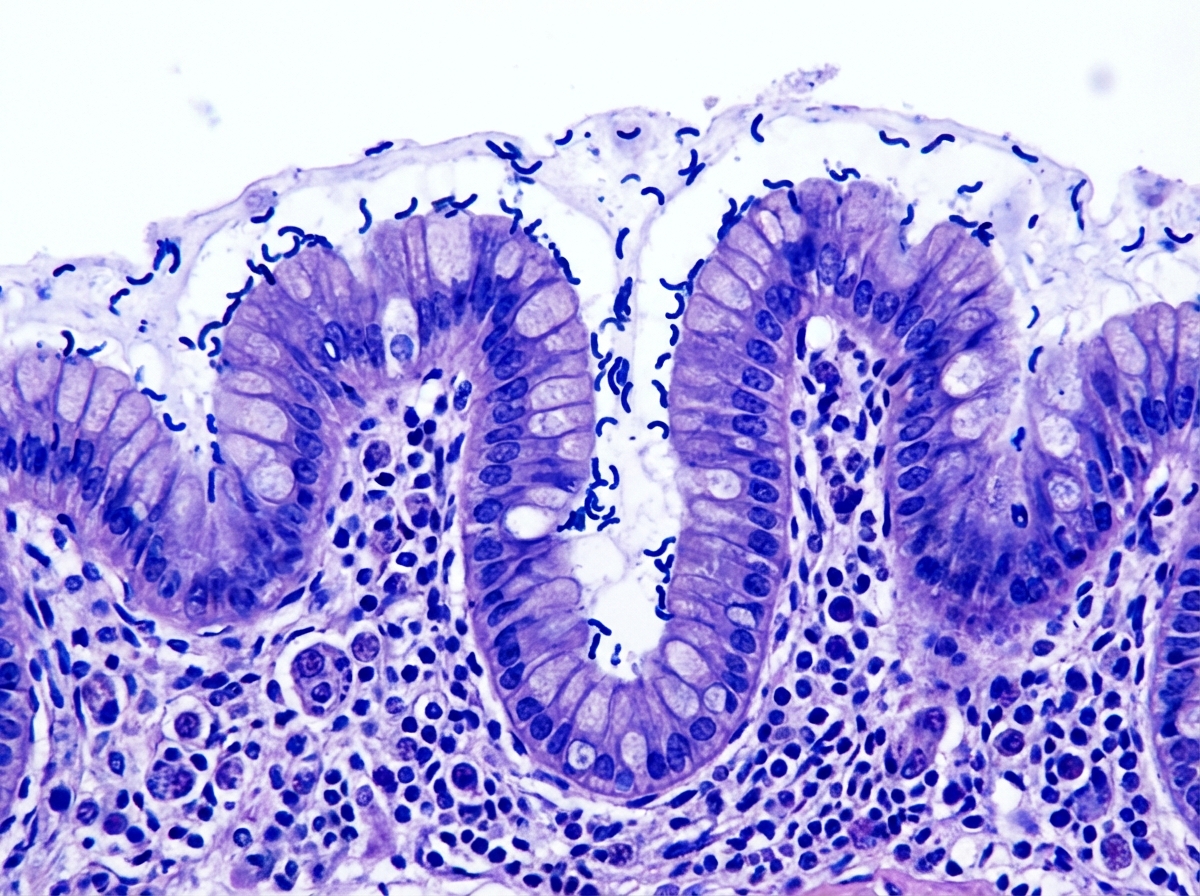
A 51-year-old man seeks evaluation from his family physician with a complaint of heartburn, which has been gradually increasing over the last 10 years. The heartburn gets worse after eating spicy foods and improves with antacids. The past medical history is benign. He is a security guard and works long hours at night. He admits to smoking 1.5 packs of cigarettes every day. Upper gastrointestinal endoscopy reveals several gastric ulcers and regions of inflammation. A biopsy is obtained, which revealed gram-negative bacteria colonized on the surface of the regenerative epithelium of the stomach, as shown in the micrograph below. Which of the following bacterial products is responsible for neutralizing the acidity of the stomach?
Q38
A 71-year-old man comes to the emergency department because of pain and swelling in his left leg that started after he cut his foot while swimming in the ocean. He has a history of alcoholic cirrhosis. His temperature is 38.3°C (101.0°F). Examination of the left foot shows a small, purulent wound with surrounding swelling and dusky redness extending to the mid-calf. There are numerous hemorrhagic blisters and the entire lower leg is exquisitely tender to light palpation. There is no crepitus. Blood cultures grow gram-negative, oxidase-positive, halophilic bacilli. Which of the following is the most likely causal organism?
Q39
A 22-year-old sexually active, otherwise healthy female presents to her primary care physician complaining of several days of dysuria, frequency, urgency, and suprapubic pain. She denies fever, flank pain, vaginal itching, or vaginal bleeding/discharge. Which organism is most likely responsible for this patient's symptoms?
Q40
A 38-year-old man complains of a persistent high fever with chills, malaise, and diffuse abdominal pain for over a week. He recently returned from a trip to India. The fever began slowly and climbed its way up to 40.0°C (104.0°F) over the last 4 days. A physical exam reveals a white-coated tongue, enlarged spleen, and rose spots on the abdomen. A bone marrow aspirate was sent for culture which revealed motile gram-negative rods. Which of the following is true about the organism and the pathophysiology of this condition?
Gram-negative US Medical PG Practice Questions and MCQs
Question 31: A 39-year-old man presents with a 4-week history of painless, non-discharging lesions on his penis and scrotum. He was diagnosed with chronic myeloid leukemia two years ago and treated with imatinib. He currently takes no medications. He has a 20-pack-year smoking history and drinks 1-2 beers on weekends. He reports unprotected intercourse with a woman while traveling abroad 4 months ago. His temperature is 37°C, pulse is 85/min, and blood pressure is 128/82 mm Hg. Examination reveals three non-tender lesions, each approximately 1 cm in size, on his genitalia. There is no inguinal lymphadenopathy. Which of the following is the most likely causative organism?
A. Haemophilus ducreyi
B. Chlamydia trachomatis
C. Treponema pallidum (Correct Answer)
D. Herpes simplex virus
E. Klebsiella granulomatis
Explanation: ***Treponema pallidum***
- The presentation of **painless, non-discharging genital lesions** (chancre) after unprotected intercourse 4 months prior is highly characteristic of **primary syphilis**, caused by *Treponema pallidum*.
- The absence of **inguinal lymphadenopathy** is not uncommon in early primary syphilis, and the patient's history of travel and unprotected sex increases the risk.
*Haemophilus ducreyi*
- This bacterium causes **chancroid**, which typically presents as **painful genital ulcers** with irregular borders and often significant **inguinal lymphadenopathy** (buboes).
- The patient's lesions are described as painless, ruling out chancroid.
*Chlamydia trachomatis*
- While certain serovars of *Chlamydia trachomatis* cause **lymphogranuloma venereum (LGV)**, initial lesions are usually small, transient, and often go unnoticed, followed by prominent and often painful **inguinal lymphadenopathy**.
- Other serovars cause nongonococcal urethritis or cervicitis, which do not typically present with the described painless ulcers.
*Herpes simplex virus*
- **Herpes simplex virus (HSV)** infection usually causes **painful, vesicular lesions** that can ulcerate and crust, often accompanied by prodromal symptoms like itching or tingling.
- The lesions in this case are described as painless and non-vesicular.
*Klebsiella granulomatis*
- This organism causes **granuloma inguinale (donovanosis)**, which is characterized by **painless, beefy-red, friable ulcers** that can be extensive and bleed easily.
- While painless, the description of "non-discharging lesions" and the typical appearance of syphilis differ from the classic "beefy red" appearance of donovanosis.
Question 32: Four days after being admitted to the hospital for widespread second-degree burns over his arms and thorax, a 29-year-old man develops a fever and wound discharge. His temperature is 38.8°C (101.8°F). Examination shows a discolored burn eschar with edema and redness of the surrounding skin. The wounds have a sickly, sweet odor. A culture of the affected tissue grows an aerobic, gram-negative rod. The causal pathogen most likely produces which of the following substances?
A. Tetanospasmin
B. Alpha toxin
C. Streptolysin O
D. Protein A
E. Phospholipase C (Correct Answer)
Explanation: ***Phospholipase C***
* The clinical presentation—**fever**, **discolored burn eschar**, **edema**, **redness**, and a **sickly, sweet odor** in a burn patient—strongly suggests infection with *Pseudomonas aeruginosa*.
* *Pseudomonas aeruginosa* is a **gram-negative rod** notorious for causing burn wound infections, and it produces several virulence factors, including **phospholipase C**, which contributes to tissue damage and necrosis.
* *Tetanospasmin*
* **Tetanospasmin** is a neurotoxin produced by *Clostridium tetani*, causing **tetanus**; it is not associated with burn wound infections.
* *Clostridium tetani* is an **anaerobic gram-positive rod**, inconsistent with the aerobic gram-negative rod described.
* *Alpha toxin*
* **Alpha toxin** is a hemolysin produced by *Clostridium perfringens* (gangrene) and *Staphylococcus aureus* (various infections), but neither matches the **gram-negative rod** description.
* *S. aureus* is a **gram-positive coccus**, and *C. perfringens* is an **anaerobic gram-positive rod**.
* *Streptolysin O*
* **Streptolysin O** is a hemolysin and virulence factor produced by **Group A Streptococcus** (*Streptococcus pyogenes*).
* *Streptococcus pyogenes* is a **gram-positive coccus**, not a gram-negative rod, and causes strep throat, impetigo, and necrotizing fasciitis, not typically burn wound infections with a **sickly, sweet odor**.
* *Protein A*
* **Protein A** is a surface protein found on *Staphylococcus aureus* that binds to the Fc region of antibodies, preventing opsonization and phagocytosis.
* *Staphylococcus aureus* is a **gram-positive coccus**, not a gram-negative rod, and while it can cause burn infections, it does not typically produce the **sickly, sweet odor** associated with *Pseudomonas*.
Question 33: A previously healthy 29-year-old man comes to the emergency department for a 2-day history of abdominal pain, vomiting, and watery diarrhea. Bowel movements occur every 3 hours and are non-bloody. He recently returned from a backpacking trip in Central America. He does not take any medications. Stool culture shows gram-negative, rod-shaped bacteria that ferment lactose. Which of the following toxins is most likely to be involved in the pathogenesis of this patient's symptoms?
A. Enterotoxin B
B. Cereulide
C. Toxin A
D. Heat-labile toxin (Correct Answer)
E. Shiga toxin
Explanation: ***Heat-labile toxin***
- The patient's symptoms (non-bloody watery diarrhea, vomiting) following travel to Central America are consistent with **traveler's diarrhea** caused by **enterotoxigenic Escherichia coli (ETEC)**.
- ETEC produces **heat-labile toxin (LT)**, which acts similarly to cholera toxin by activating **adenylate cyclase**, increasing **cAMP**, and leading to electrolyte and water secretion into the bowel lumen.
*Enterotoxin B*
- **Enterotoxin B** is a superantigen produced by **Staphylococcus aureus** and is primarily associated with **staphylococcal food poisoning**, characterized by rapid-onset nausea, vomiting, and non-bloody diarrhea.
- While it causes gastrointestinal symptoms, the stool culture showing a gram-negative, lactose-fermenting rod points away from **S. aureus** (a gram-positive coccus).
*Cereulide*
- **Cereulide** is a toxin produced by **Bacillus cereus**, typically associated with rapid-onset vomiting after consuming contaminated rice.
- The symptoms are more acute and the causative organism (gram-positive rod) does not match the stool culture findings.
*Toxin A*
- **Toxin A** (and Toxin B) are produced by **Clostridioides difficile** and are responsible for **pseudomembranous colitis**, characterized by severe watery diarrhea, abdominal pain, and sometimes fever, often following antibiotic use.
- The patient's presentation and the stool culture for a gram-negative, lactose-fermenting rod do not fit **C. difficile** infection.
*Shiga toxin*
- **Shiga toxin** is produced by **Shiga toxin-producing E. coli (STEC)**, including E. coli O157:H7, and **Shigella dysenteriae**.
- It typically causes **bloody diarrhea** (dysentery) and is associated with complications like **hemolytic uremic syndrome (HUS)**, which is not described in this patient's non-bloody diarrhea.
Question 34: A 3-day-old boy is brought to the physician by his mother because of irritability and feeding intolerance for 1 day. His temperature is 39.2°C (102.6°F). Physical examination shows a bulging anterior fontanelle. A photomicrograph of a Gram stain of the cerebrospinal fluid is shown. Further evaluation shows that the organism expresses the K1 capsular polysaccharide. Which of the following is the most likely causal pathogen?
A. Streptococcus agalactiae
B. Salmonella typhi
C. Listeria monocytogenes
D. Pseudomonas aeruginosa
E. Escherichia coli (Correct Answer)
Explanation: ***Escherichia coli***
- The combination of **bacterial meningitis** in a neonate (3-day-old irritable and feeding-intolerant boy with fever and bulging fontanelle) and the presence of **K1 capsular polysaccharide** on the gram-negative rod in cerebrospinal fluid (CSF) strongly indicates *E. coli*.
- **K1 capsular polysaccharide** is a major virulence factor for *E. coli* strains causing neonatal meningitis, allowing them to invade the central nervous system.
*Streptococcus agalactiae*
- This is a common cause of **early-onset neonatal sepsis and meningitis**, but it is a **Gram-positive coccus** and expresses **Group B Streptococcus (GBS) antigens**, not K1 capsular polysaccharide.
- The Gram stain would show chains of cocci, which contradicts the description of the photomicrograph (implying Gram-negative rods).
*Salmonella typhi*
- While *S. typhi* is a **Gram-negative rod**, it typically causes **typhoid fever** with systemic symptoms and is an uncommon cause of neonatal meningitis.
- It does not express the **K1 capsular polysaccharide** associated with neonatal *E. coli* meningitis.
*Listeria monocytogenes*
- This is a significant cause of **neonatal meningitis**, but it is a **Gram-positive rod** that can mimic Gram-negative rods on initial Gram stain interpretation but is not characterized by K1 capsular polysaccharide.
- *Listeria* infections are often acquired transplacentally or during delivery and show characteristic tumbling motility.
*Pseudomonas aeruginosa*
- *P. aeruginosa* is a **Gram-negative rod** but is a rare cause of **neonatal meningitis**, typically seen in preterm infants or those with indwelling catheters or compromised immune systems.
- It does not express the K1 capsular polysaccharide and is more commonly associated with nosocomial infections.
Question 35: A 24-year-old woman presents to the ED with symptoms of pelvic inflammatory disease despite being previously treated with azithromycin for chlamydial infection. Based on your clinical understanding about the epidemiology of PID, you decide to obtain a gram stain which shows a gram-negative diplococci. What is the next step in order to confirm the identity of the organism described?
A. Perform an RT-PCR
B. Culture in TCBS agar
C. Culture in Thayer-Martin media (Correct Answer)
D. Obtain an acid fast stain
E. Culture in Bordet-Gengou agar
Explanation: ***Culture in Thayer-Martin media***
- The presence of **gram-negative diplococci** in a patient with PID symptoms strongly suggests *Neisseria gonorrhoeae*.
- **Thayer-Martin media** is a selective **agar** specifically designed for the isolation and identification of *Neisseria* species, including *N. gonorrhoeae*, by inhibiting the growth of most commensal bacteria and fungi.
*Perform an RT-PCR*
- While **RT-PCR** can detect *Neisseria gonorrhoeae* nucleic acids, it is primarily used for **molecular diagnosis** and not directly for confirming the identity of a cultured organism visualized on gram stain.
- **RT-PCR** is generally used for direct detection from clinical samples and is particularly useful in situations where culture is difficult or unavailable.
*Culture in TCBS agar*
- **TCBS (Thiosulfate Citrate Bile Salts Sucrose) agar** is a selective medium primarily used for the isolation of *Vibrio* species, which are not typically associated with pelvic inflammatory disease or characterized as gram-negative diplococci.
- This medium is designed to differentiate between different *Vibrio* species based on sucrose fermentation.
*Obtain an acid fast stain*
- An **acid-fast stain** (e.g., Ziehl-Neelsen stain) is used to identify bacteria with a **waxy cell wall**, such as *Mycobacterium* species (e.g., *Mycobacterium tuberculosis*).
- *Neisseria gonorrhoeae* is not acid-fast, and this stain would not be appropriate for its identification.
*Culture in Bordet-Gengou agar*
- **Bordet-Gengou agar** is a specialized culture medium used for the isolation of *Bordetella pertussis*, the causative agent of whooping cough.
- This medium is not suitable for the isolation of *Neisseria gonorrhoeae*.
Question 36: A 25-day-old male infant presents to the emergency department because his mother states that he has been acting irritable for the past 2 days and has now developed a fever. On exam, the infant appears uncomfortable and has a temperature of 39.1 C. IV access is immediately obtained and a complete blood count and blood cultures are drawn. Lumbar puncture demonstrates an elevated opening pressure, elevated polymorphonuclear neutrophil, elevated protein, and decreased glucose. Ampicillin and cefotaxime are immediately initiated and CSF culture eventually demonstrates infection with a Gram-negative rod. Which of the following properties of this organism was necessary for the infection of this infant?
A. K capsule (Correct Answer)
B. M protein
C. Fimbriae
D. IgA protease
E. LPS endotoxin
Explanation: ***K capsule***
- The K capsule (specifically **K1 antigen**) is a specific virulence factor found in **E. coli** strains, which are a common cause of neonatal meningitis.
- This capsule is **antiphagocytic** and helps the bacteria evade the immune system, allowing it to cross the **blood-brain barrier** and cause meningitis in neonates.
*M protein*
- **M protein** is a major virulence factor associated with **Streptococcus pyogenes** (Group A Strep), playing a role in attachment and immune evasion.
- While *S. pyogenes* can cause infections, it is not typically the Gram-negative rod responsible for **neonatal meningitis** and its M protein is not relevant here.
*Fimbriae*
- **Fimbriae** (pili) are important for bacterial **adhesion** to host cells, often in the initial stages of infection, particularly in urinary tract infections (UTIs).
- While gram-negative rods possess fimbriae, the specific virulence factor critical for **meningitis** caused by *E. coli* in neonates is the K1 capsule, not fimbriae which are more for initial colonization.
*IgA protease*
- **IgA protease** is an enzyme produced by some bacteria (e.g., *N. meningitidis, H. influenzae, S. pneumoniae*) that cleaves **IgA antibodies**, helping them colonize mucous membranes.
- This enzyme is not a primary virulence factor for the **Gram-negative rod** causing neonatal meningitis, where capsule formation is more critical for invasion.
*LPS endotoxin*
- **Lipopolysaccharide (LPS) endotoxin** is a component of the outer membrane of Gram-negative bacteria and is responsible for many symptoms of sepsis and **systemic inflammation**.
- While LPS contributes to the overall disease severity, it primarily mediates **inflammation and fever**, and is not the specific factor necessary for **invasion and survival within the central nervous system**, which is facilitated by the K capsule.
Question 37: A 51-year-old man seeks evaluation from his family physician with a complaint of heartburn, which has been gradually increasing over the last 10 years. The heartburn gets worse after eating spicy foods and improves with antacids. The past medical history is benign. He is a security guard and works long hours at night. He admits to smoking 1.5 packs of cigarettes every day. Upper gastrointestinal endoscopy reveals several gastric ulcers and regions of inflammation. A biopsy is obtained, which revealed gram-negative bacteria colonized on the surface of the regenerative epithelium of the stomach, as shown in the micrograph below. Which of the following bacterial products is responsible for neutralizing the acidity of the stomach?
A. Urease (Correct Answer)
B. Hyaluronidase
C. Streptokinase
D. β-lactamase
E. Prostaglandins
Explanation: ***Urease***
- The bacteria described is likely ***Helicobacter pylori (H. pylori)***, which produces **urease**.
- **Urease** hydrolyzes urea into **ammonia** and carbon dioxide, with the **ammonia** neutralizing stomach acid locally, allowing the bacteria to survive and colonize the gastric mucosa.
*Hyaluronidase*
- **Hyaluronidase** is an enzyme that breaks down **hyaluronic acid**, part of the **extracellular matrix**, aiding in bacterial invasion.
- While it can be a virulence factor, it does not directly neutralize stomach acidity.
*Streptokinase*
- **Streptokinase** is an enzyme produced by *Streptococcus* species that converts **plasminogen to plasmin**, leading to the dissolution of blood clots.
- It is a virulence factor that helps in tissue invasion but has no role in neutralizing stomach acid.
*β-lactamase*
- **β-lactamase** is an enzyme that breaks down the **β-lactam ring** in antibiotics like penicillin, conferring antibiotic resistance.
- It does not have any function in neutralizing stomach acidity.
*Prostaglandins*
- **Prostaglandins** are signaling molecules produced by **host cells (not bacteria)** that play a role in **mucosal protection** and **inflammation** in the stomach.
- They are not bacterial products and therefore cannot be the answer to this question.
Question 38: A 71-year-old man comes to the emergency department because of pain and swelling in his left leg that started after he cut his foot while swimming in the ocean. He has a history of alcoholic cirrhosis. His temperature is 38.3°C (101.0°F). Examination of the left foot shows a small, purulent wound with surrounding swelling and dusky redness extending to the mid-calf. There are numerous hemorrhagic blisters and the entire lower leg is exquisitely tender to light palpation. There is no crepitus. Blood cultures grow gram-negative, oxidase-positive, halophilic bacilli. Which of the following is the most likely causal organism?
A. Shigella flexneri
B. Vibrio vulnificus (Correct Answer)
C. Clostridium perfringens
D. Pseudomonas aeruginosa
E. Streptococcus pyogenes
Explanation: ***Vibrio vulnificus***
- Presents with a classic picture of **rapidly progressing cellulitis** and **necrotizing fasciitis** with hemorrhagic bullae after exposure to **saltwater** in a patient with **cirrhosis**.
- It is a **halophilic (salt-loving) gram-negative bacillus** that is **oxidase-positive**, consistent with the blood culture findings.
- Patients with **liver disease** (especially cirrhosis) and **iron overload** are at extremely high risk for severe V. vulnificus infections.
*Shigella flexneri*
- Is typically associated with **dysentery** (bloody diarrhea), fever, and abdominal cramps.
- It is not halophilic and would not be associated with saltwater exposure or this clinical presentation.
*Clostridium perfringens*
- Is a common cause of **gas gangrene** (clostridial myonecrosis), characterized by rapid tissue destruction and **crepitus** due to gas production.
- This organism is a **gram-positive rod**, not a gram-negative bacillus, and crepitus was explicitly stated as absent.
*Pseudomonas aeruginosa*
- Can cause severe skin and soft tissue infections, especially in immunocompromised individuals or after water exposure (e.g., hot tubs, contaminated water).
- While it is an oxidase-positive gram-negative rod, it is **not halophilic** and is more commonly associated with freshwater or contaminated water sources rather than ocean exposure.
*Streptococcus pyogenes*
- A common cause of **streptococcal cellulitis** and **necrotizing fasciitis**.
- However, it is a **gram-positive coccus** in chains, not a gram-negative bacillus, making it inconsistent with the blood culture results.
Question 39: A 22-year-old sexually active, otherwise healthy female presents to her primary care physician complaining of several days of dysuria, frequency, urgency, and suprapubic pain. She denies fever, flank pain, vaginal itching, or vaginal bleeding/discharge. Which organism is most likely responsible for this patient's symptoms?
A. Escherichia coli (Correct Answer)
B. Chlamydia trachomatis
C. Proteus mirabilis
D. Staphylococcus saprophyticus
E. Klebsiella pneumoniae
Explanation: ***Escherichia coli***
- **_E. coli_** is the most common cause of **uncomplicated urinary tract infections (UTIs)**, accounting for 75-95% of cases.
- The patient's symptoms of **dysuria, frequency, urgency**, and **suprapubic pain** are classic for cystitis, a common manifestation of _E. coli_ infection.
*Chlamydia trachomatis*
- While _Chlamydia_ can cause **urethritis** with dysuria, it is often associated with vaginal discharge/bleeding and is primarily a sexually transmitted infection.
- The absence of **vaginal symptoms** makes it less likely to be the primary cause of these specific urinary symptoms in this scenario.
*Proteus mirabilis*
- **_Proteus mirabilis_** is a common cause of UTIs, particularly those associated with **struvite stones** due to its urease activity.
- While it can cause similar symptoms, it is less common than _E. coli_ in uncomplicated cystitis and often seen in complicated UTIs or those with a history of recurrent infections.
*Staphylococcus saprophyticus*
- _Staphylococcus saprophyticus_ is a common cause of UTIs in sexually active young women, but it is typically the **second most common** after _E. coli_.
- While a possibility, **_E. coli_ remains the most likely** given its high prevalence in uncomplicated cystitis.
*Klebsiella pneumoniae*
- _Klebsiella pneumoniae_ is more commonly associated with **hospital-acquired UTIs**, complicated UTIs, or infections in patients with underlying medical conditions, such as diabetes.
- It is a much less common cause of **uncomplicated community-acquired cystitis** in healthy young women compared to _E. coli_.
Question 40: A 38-year-old man complains of a persistent high fever with chills, malaise, and diffuse abdominal pain for over a week. He recently returned from a trip to India. The fever began slowly and climbed its way up to 40.0°C (104.0°F) over the last 4 days. A physical exam reveals a white-coated tongue, enlarged spleen, and rose spots on the abdomen. A bone marrow aspirate was sent for culture which revealed motile gram-negative rods. Which of the following is true about the organism and the pathophysiology of this condition?
A. Incidence increases after cholecystectomy.
B. Splenectomy may be necessary for carriers.
C. It survives intracellularly within phagocytes of Peyer's patches. (Correct Answer)
D. It forms blue-green colonies with fruity odor.
E. It releases a toxin which inactivates 60S ribosomes.
Explanation: ***It survives intracellularly within phagocytes of Peyer's patches.***
- *Salmonella Typhi*, the causative agent of **typhoid fever**, is a **facultative intracellular bacterium** that invades and replicates within macrophages, particularly in the **Peyer's patches** of the small intestine.
- This intracellular survival mechanism allows it to evade the host immune system and disseminate throughout the body, leading to systemic symptoms like persistent fever, hepatosplenomegaly, and rose spots.
*Incidence increases after cholecystectomy.*
- The **gallbladder** is a common site for chronic carriage of *Salmonella Typhi*, as the bacteria can establish a biofilm within the organ.
- While cholecystectomy may be considered in chronic carriers to eliminate the reservoir, it does not increase the incidence of typhoid fever; rather, it aims to reduce transmission.
*Splenectomy may be necessary for carriers.*
- **Splenectomy** is not a standard treatment for chronic carriers of *Salmonella Typhi*; the primary site of chronic carriage is the gallbladder.
- Treatment for carriers typically involves prolonged courses of antibiotics to eradicate the bacteria from the gallbladder and biliary tree.
*It forms blue-green colonies with fruity odor.*
- **Blue-green colonies with a fruity odor** are characteristic of *Pseudomonas aeruginosa* on specific culture media, not *Salmonella Typhi*.
- *Salmonella Typhi* typically forms non-lactose fermenting colonies on selective media like MacConkey agar.
*It releases a toxin which inactivates 60S ribosomes.*
- The toxin that inactivates 60S ribosomes is **Shiga toxin**, produced by *Shigella dysenteriae* and Shiga toxin-producing *E. coli* (STEC), leading to hemorrhagic colitis and hemolytic-uremic syndrome.
- *Salmonella Typhi* does not produce Shiga toxin; its pathogenesis primarily involves bacterial invasion and systemic dissemination.