
Biofilms in endocarditis — MCQs

A 34-year-old man comes to the physician because of fatigue and shortness of breath with moderate exertion for the past 2 months. Over the past 10 days, he has had low-grade fevers and night sweats. He has no history of serious illness except for a bicuspid aortic valve diagnosed 5 years ago. He has smoked one pack of cigarettes daily for 10 years and drinks 3–5 beers on social occasions. He does not use illicit drugs. The patient takes no medications. He appears weak. His temperature is 37.7°C (99.9°F), pulse is 70/min, and blood pressure is 128/64 mm Hg. The lungs are clear to auscultation. A grade 2/6 systolic murmur is heard best at the right sternal border and second intercostal space. There are several hemorrhages underneath his fingernails on both hands and multiple tender, red nodules on his fingers. Which of the following is the most likely causal organism?
A 37-year-old man with a history of IV drug use presents to the ED with complaints of fevers, chills, and malaise for one week. He admits to recently using IV and intramuscular heroin. Vital signs are as follows: T 40.0 C, HR 120 bpm, BP 110/68 mmHg, RR 14, O2Sat 98%. Examination reveals a new systolic murmur that is loudest at the lower left sternal border. Initial management includes administration of which of the following regimens?
Part of the success of the Streptococcus pyogenes bacterium lies in its ability to evade phagocytosis. Which of the following helps in this evasion?
A 45-year-old man comes to the physician because of a 1-month history of fever and poor appetite. Five weeks ago, he underwent molar extraction for dental caries. His temperature is 38°C (100.4°F). Cardiac examination shows a grade 2/6 holosystolic murmur heard best at the apex. A blood culture shows gram-positive, catalase-negative cocci. Transesophageal echocardiography shows a small vegetation on the mitral valve with mild regurgitation. The causal organism most likely has which of the following characteristics?
A 47-year-old woman comes to the physician because of a 6-week history of fatigue and low-grade fever. She has no history of serious illness except for a bicuspid aortic valve, diagnosed 10 years ago. She does not use illicit drugs. Her temperature is 37.7°C (99.9°F). Physical examination shows petechiae under the fingernails and multiple tender, red nodules on the fingers. A new grade 2/6 diastolic murmur is heard at the right second intercostal space. Which of the following is the most likely causal organism?
A 63-year-old female recovering from a total shoulder arthroplasty completed 6 days ago presents complaining of joint pain in her repaired shoulder. Temperature is 39 degrees Celsius. Physical examination demonstrates erythema and significant tenderness around the incision site. Wound cultures reveal Gram-positive cocci that are resistant to nafcillin. Which of the following organisms is the most likely cause of this patient's condition?
A 42-year-old woman presents to a medical office with complaints of fatigue, weight loss, and low-grade fever for 1 week. She noticed bleeding spots on her feet this morning. The past medical history is significant for a recent dental appointment. She is a non-smoker and does not drink alcohol. She does not currently take any medications. On examination, the vital signs include temperature 37.8°C (100.0°F), blood pressure 138/90 mm Hg, respirations 21/min, and pulse 87/min. Cardiac auscultation reveals a pansystolic murmur in the mitral area with radiation to the left axilla. Laboratory studies show hemoglobin levels of 17.2 g/dL, erythrocyte sedimentation rate (ESR) of 25 mm/h, and a white blood cell (WBC) count of 12,000 cells/mm3. An echocardiogram reveals valvular vegetations on the mitral valve with mild regurgitation. Blood samples are sent for bacterial culture. Empiric antibiotic therapy is initiated with ceftriaxone and vancomycin. The blood cultures most likely will yield the growth of which of the following organisms?
Blood cultures are sent to the laboratory and empiric treatment with intravenous vancomycin is started. Blood cultures grow gram-negative bacilli identified as Cardiobacterium hominis. Which of the following is the most appropriate next step in management?
A 24-year-old man presents with low-grade fever and shortness of breath for the last 3 weeks. Past medical history is significant for severe mitral regurgitation status post mitral valve replacement five years ago. His temperature is 38.3°C (101.0°F) and respiratory rate is 18/min. Physical examination reveals vertical hemorrhages under his nails, multiple painless erythematous lesions on his palms, and two tender, raised nodules on his fingers. Cardiac auscultation reveals a new-onset 2/6 holosystolic murmur loudest at the apex with the patient in the left lateral decubitus position. A transesophageal echocardiogram reveals vegetations on the prosthetic valve. Blood cultures reveal catalase-positive, gram-positive cocci. Which of the following characteristics is associated with the organism most likely responsible for this patient’s condition?
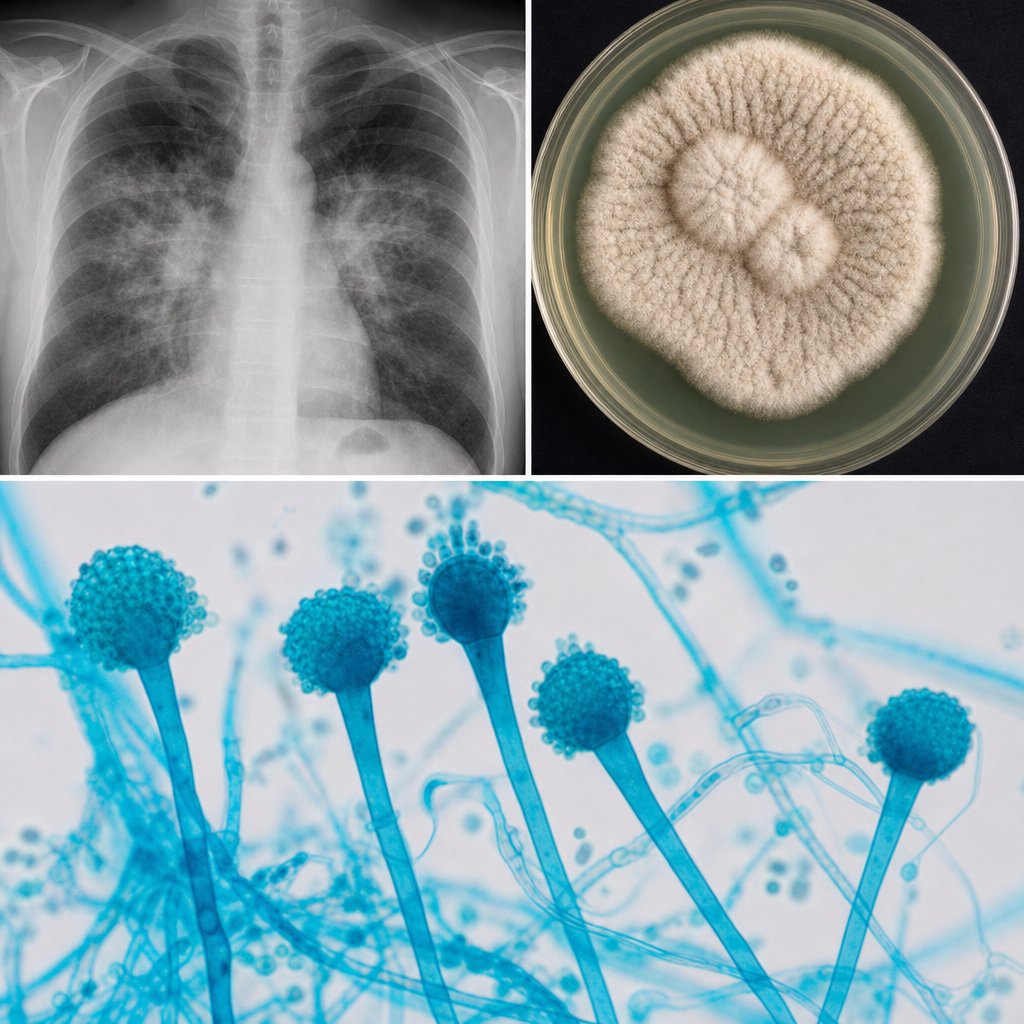
A 34-year-old man presents to the emergency department with a 3-day history of high fever, headache, and a productive cough. He recently returned from a construction project near the Ohio River Valley. Chest X-ray shows hilar lymphadenopathy and patchy infiltrates. A bronchoalveolar lavage specimen is sent to the laboratory. A methenamine silver stain of the BAL specimen identifies the causative organism, and culture later grows mold with tuberculate macroconidia.
Want unlimited practice?
Get full access to all questions, explanations, and performance tracking.
Scan to download app