
Bacterial culture methods — MCQs

A 42-year-old woman comes to her primary care physician with 2 days of fever and malaise. She also says that she has a painful red lesion on her left hand that she noticed after shucking oysters at a recent family reunion. Physical exam reveals a well-demarcated swollen, tender, warm, red lesion on her left hand. Pressing the lesion causes a small amount of purulent drainage. The material is cultured and the causative organism is identified. Which of the following characteristics describes the organism that is most associated with this patient's mechanism of infection?
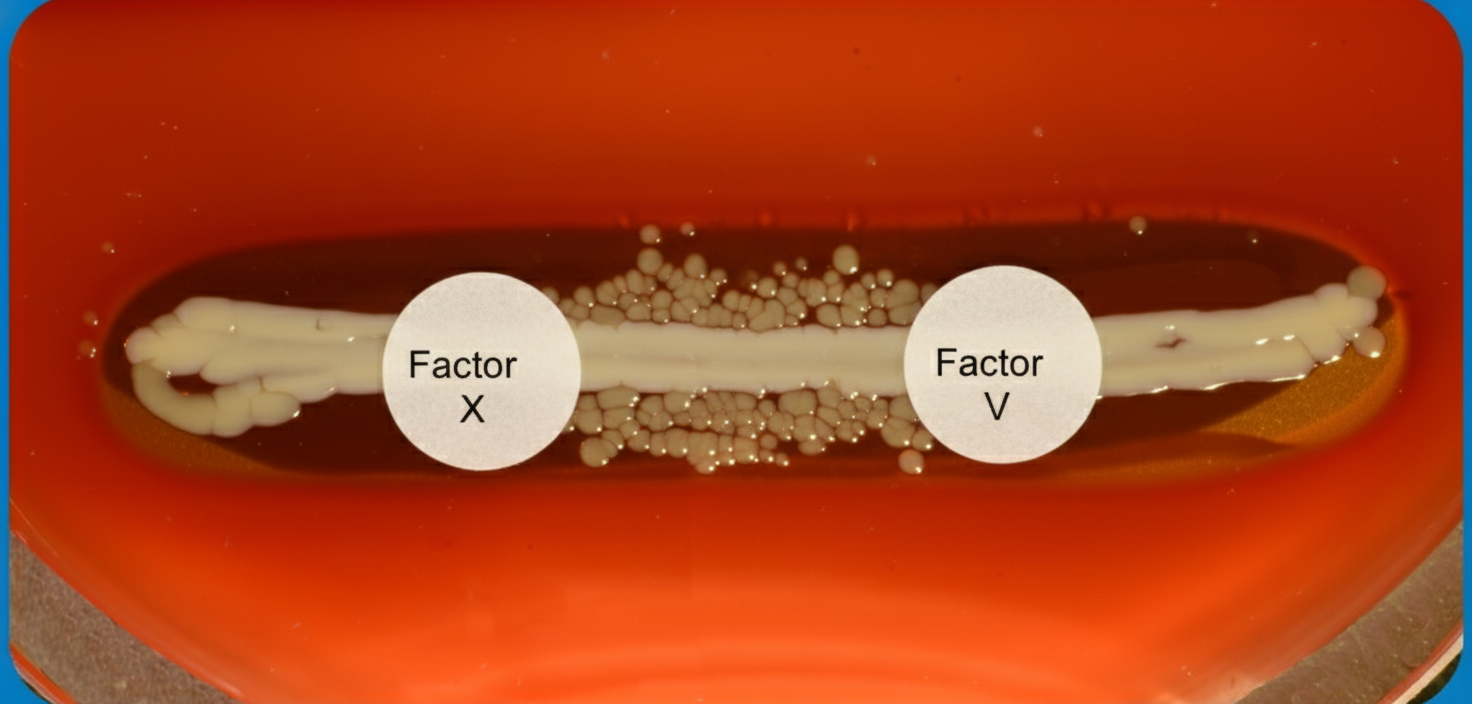
A 6-month old child is brought to the ER by parents for one day of fever, decreased feeding, and lethargy. They report that neither she nor her siblings are immunized due to their concerns about vaccinations. On exam, the infant is toxic-appearing. Antibiotics are started and lumbar puncture reveals bacterial meningitis caused by a gram-negative, encapsulated organism that requires chocolate agar and the two factors shown in Image A for growth. Which organism does this best describe?
An investigator is studying a strain of bacteria that retains a blue color after crystal violet dye and acetone are applied. The bacteria are inoculated in a petri dish containing hypotonic saline. After the addition of an antibiotic, the bacteria swell and rupture. This antibiotic most likely belongs to which of the following classes?
On the 4th day of hospital admission due to pneumonia, a 69-year-old woman develops non-bloody diarrhea and abdominal pain. She is currently treated with ceftriaxone. Despite the resolution of fever after the first 2 days of admission, her temperature is now 38.5°C (101.3°F). On physical examination, she has mild generalized abdominal tenderness without abdominal guarding or rebound tenderness. Laboratory studies show re-elevation of leukocyte counts. Ceftriaxone is discontinued. Given the most likely diagnosis in this patient, which of the following is the most sensitive test?
A 12-year-old boy admitted to the intensive care unit 1 day ago for severe pneumonia suddenly develops hypotension. He was started on empiric antibiotics and his blood culture reports are pending. According to the nurse, the patient was doing fine until his blood pressure suddenly dropped. Vital signs include: blood pressure is 88/58 mm Hg, temperature is 39.4°C (103.0°F), pulse is 120/min, and respiratory rate is 24/min. His limbs feel warm. The resident physician decides to start him on intravenous vasopressors, as the blood pressure is not responding to intravenous fluids. The on-call intensivist suspects shock due to a bacterial toxin. What is the primary mechanism responsible for the pathogenesis of this patient's condition?
A 42-year-old woman presents to a medical office with complaints of fatigue, weight loss, and low-grade fever for 1 week. She noticed bleeding spots on her feet this morning. The past medical history is significant for a recent dental appointment. She is a non-smoker and does not drink alcohol. She does not currently take any medications. On examination, the vital signs include temperature 37.8°C (100.0°F), blood pressure 138/90 mm Hg, respirations 21/min, and pulse 87/min. Cardiac auscultation reveals a pansystolic murmur in the mitral area with radiation to the left axilla. Laboratory studies show hemoglobin levels of 17.2 g/dL, erythrocyte sedimentation rate (ESR) of 25 mm/h, and a white blood cell (WBC) count of 12,000 cells/mm3. An echocardiogram reveals valvular vegetations on the mitral valve with mild regurgitation. Blood samples are sent for bacterial culture. Empiric antibiotic therapy is initiated with ceftriaxone and vancomycin. The blood cultures most likely will yield the growth of which of the following organisms?
A group of microbiological investigators is studying bacterial DNA replication in E. coli colonies. While the cells are actively proliferating, the investigators stop the bacterial cell cycle during S phase and isolate an enzyme involved in DNA replication. An assay of the enzyme's exonuclease activity determines that it is active on both intact and demethylated thymine nucleotides. Which of the following enzymes have the investigators most likely isolated?
A 69-year-old man is brought to the emergency department by his wife because of fever, cough, diarrhea, and confusion for 2 days. He recently returned from a cruise to the Caribbean. He has a history of chronic obstructive pulmonary disease. He has smoked one pack of cigarettes daily for 40 years. His temperature is 39.1°C (102.4°F), pulse is 83/min, and blood pressure is 111/65 mm Hg. He is confused and oriented only to person. Physical examination shows coarse crackles throughout both lung fields. His serum sodium concentration is 125 mEq/L. Culture of the most likely causal organism would require which of the following mediums?
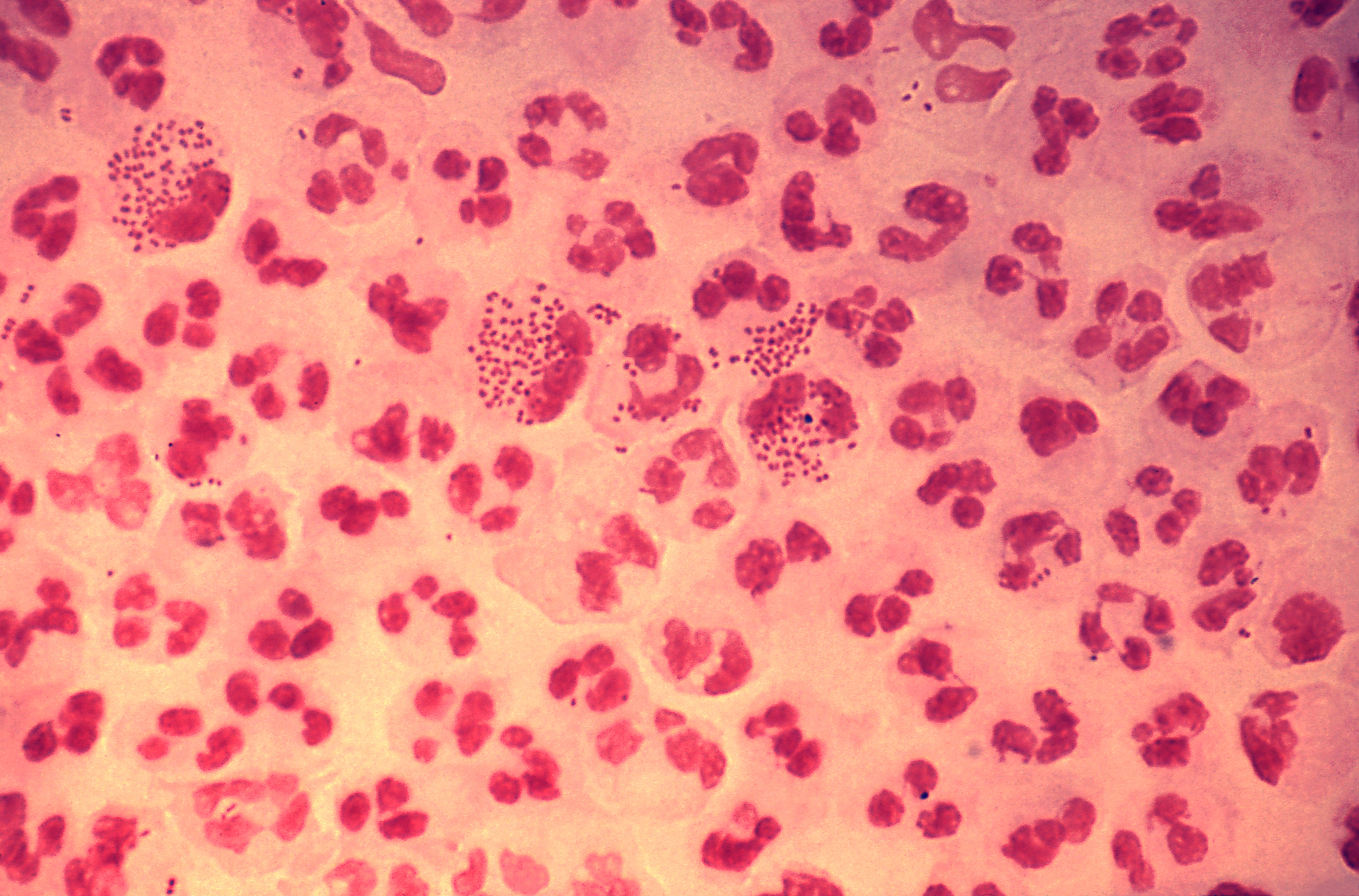
A 27-year-old woman presents to the clinic with severe pain in her left knee of 1-day duration. Physical examination reveals a red, swollen, warm, and tender left knee with a decreased range of motion. The patient affirms that she has been sexually active with several partners over the last year and that 1 of her partners has complained of dysuria and yellow urethral discharge. An arthrocentesis was performed and showed a WBC count of 60,000/µL, with 90% polymorphonuclear leukocytes. Visualization of the patient's synovial fluid is provided in the image. Which of the following is a characteristic feature of the organism causing this condition?
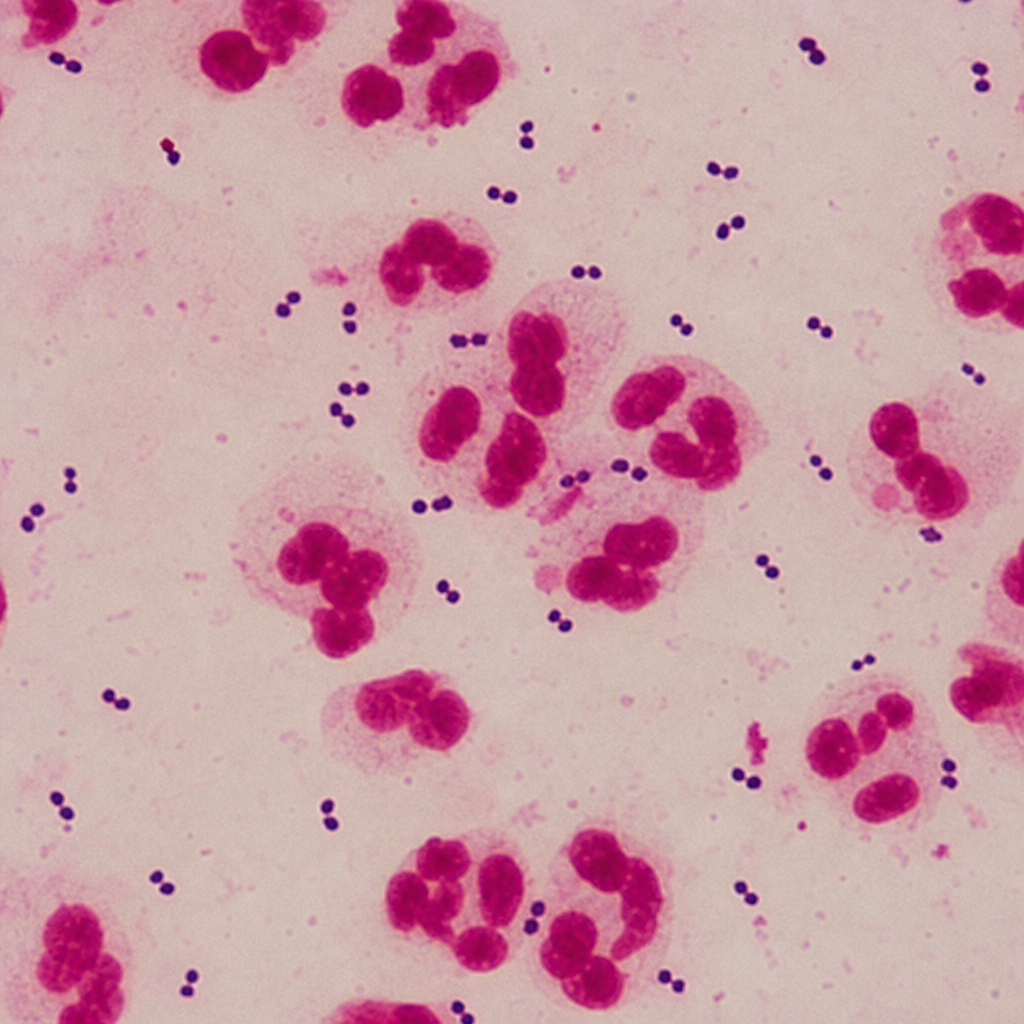
A 19-year-old college student is admitted with fever, nuchal rigidity, and a petechial rash progressing to purpura. Lumbar puncture reveals CSF with WBC 2,800 cells/µL (90% neutrophils), glucose 28 mg/dL (serum glucose 95 mg/dL), and protein 180 mg/dL. A Gram stain of CSF demonstrates Gram-negative diplococci within neutrophils. Blood cultures are pending. The organism is subsequently found to be oxidase-positive and ferments both glucose and maltose. Which of the following characteristics best distinguishes Neisseria meningitidis from Neisseria gonorrhoeae?
Want unlimited practice?
Get full access to all questions, explanations, and performance tracking.
Scan to download app