
Mycobacteria overview — MCQs

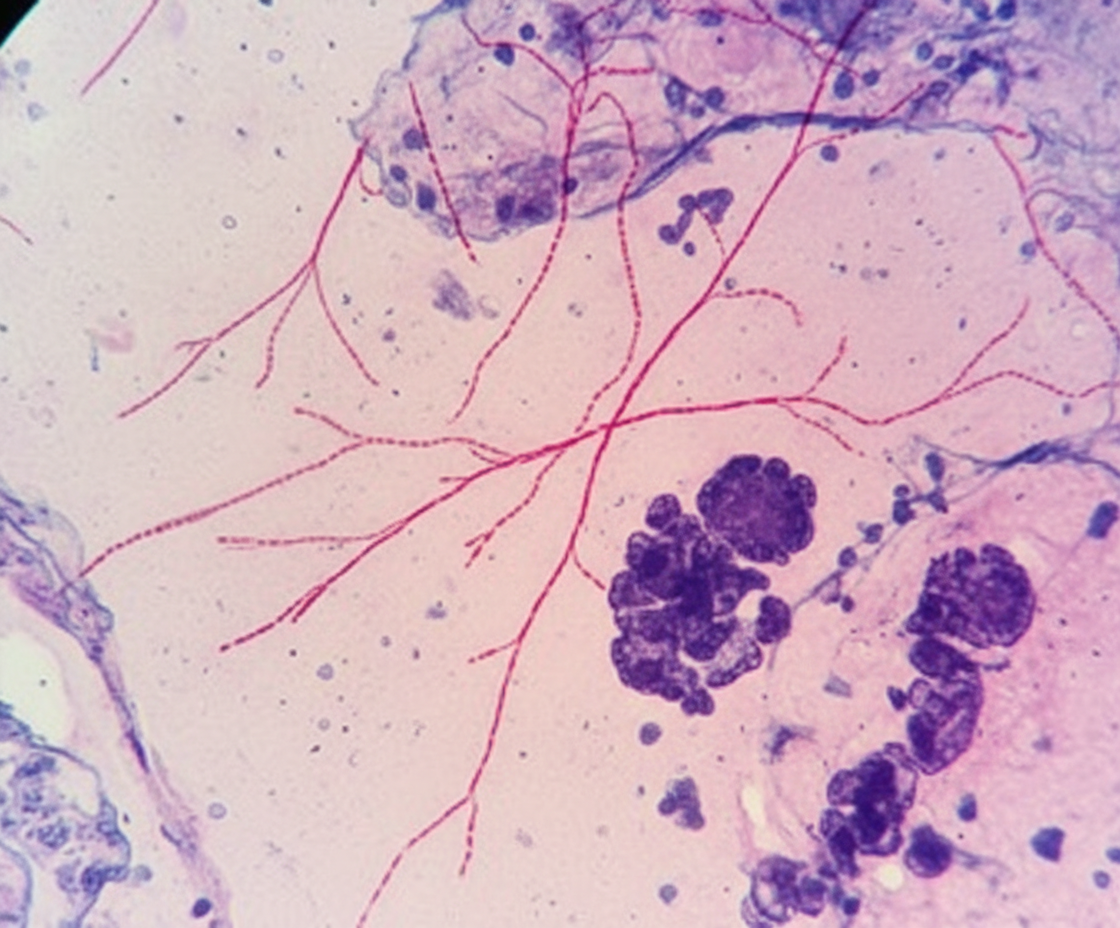
A medical technician is trying to isolate a pathogen from the sputum sample of a patient. The sample is heat fixed to a slide then covered with carbol fuchsin stain and heated again. After washing off the stain with clean water, the slide is covered with 1% sulfuric acid for decolorization. The sample is rinsed again and stained with methylene blue. Microscopic examination shows numerous red, branching filamentous organisms. Which of the following is the most likely isolated pathogen?
A 28-year-old woman comes to the physician because of a two-month history of fatigue and low-grade fevers. Over the past 4 weeks, she has had increasing shortness of breath, a productive cough, and a 5.4-kg (11.9-lb) weight loss. Three months ago, the patient returned from a two-month trip to China. The patient appears thin. Her temperature is 37.9°C (100.2°F), pulse is 75/min, and blood pressure is 125/70 mm Hg. Examination shows lymphadenopathy of the anterior and posterior cervical chain. Rales are heard at the left lower lobe of the lung on auscultation. Laboratory studies show a leukocyte count of 11,300/mm3 and an erythrocyte sedimentation rate of 90 mm/h. An x-ray of the chest shows a patchy infiltrate in the left lower lobe and ipsilateral hilar enlargement. Microscopic examination of the sputum reveals acid-fast bacilli; polymerase chain reaction is positive. Sputum cultures are pending. After placing the patient in an airborne infection isolation room, which of the following is the most appropriate next step in management?
A 32-year-old man comes to the physician because of a 3-week history of cough, weight loss, and night sweats. He migrated from Sri Lanka 6 months ago. He appears emaciated. His temperature is 38.1°C (100.5°F). Physical examination shows enlargement of the right supraclavicular lymph node. Chest and abdominal examination show no abnormalities. An interferon-gamma assay is positive. A biopsy specimen of the cervical lymph node is most likely to show the causal organism in which of the following locations?
A 55-year-old woman comes to the physician because of fevers for 2 weeks. She works as a nurse and recently returned from a charity work trip to India, where she worked in a medically-underserved rural community. A tuberculin skin test 3 months ago prior to her trip showed an induration of 3 mm. Physical examination is unremarkable. An x-ray of the chest shows right-sided hilar lymphadenopathy. A sputum culture shows acid-fast bacilli. Which of the following immunologic processes most likely occurred first?
A 55-year-old homeless man is presented to the emergency department by a group of volunteers after they found him coughing up blood during 1 of the beneficiary dinners they offer every week. His medical history is unknown as he recently immigrated from Bangladesh. He says that he has been coughing constantly for the past 3 months with occasional blood in his sputum. He also sweats a lot at nights and for the past 2 days, he has been thirsty with increased frequency of urination and feeling hungrier than usual. The respiratory rate is 30/min and the temperature is 38.6°C (101.5°F). He looks emaciated and has a fruity smell to his breath. The breath sounds are reduced over the apex of the right lung. The remainder of the physical exam is unremarkable. Biochemical tests are ordered, including a hemoglobin A1c (HbA1c) (8.5%) and chest radiography reveals cavitations in the apical region of the right lung. Which of the following immune cells is most critical in orchestrating the formation and maintenance of the granulomatous structure that led to these cavitations?
A 45-year-old man presents with well-circumscribed, hypopigmented patches on his face and arms. The lesions are asymmetric and show decreased sensation to light touch. Microscopic examination of a skin biopsy stained with Fite stain shows acid-fast bacilli within macrophages in dermal nerve bundles. Which of the following is the most appropriate treatment?
A 48-year-old man comes to the physician because of a hypopigmented skin lesion on his finger. He first noticed it 4 weeks ago after cutting his finger with a knife while preparing food. He did not feel the cut. For the past week, he has also had fever, fatigue, and malaise. He has not traveled outside the country since he immigrated from India to join his family in the United States 2 years ago. His temperature is 38.7°C (101.7°F). Physical examination shows a small, healing laceration on the dorsal aspect of the left index finger and an overlying well-defined, hypopigmented macule with raised borders. Sensation to pinprick and light touch is decreased over this area. Which of the following is the most likely causal pathogen of this patient's condition?
A 35-year-old man from Thailand presents with low-grade fever, chronic cough, and night sweats for 3 months. He describes the cough as productive and producing white sputum that is sometimes streaked with blood. He also says he has lost 10 lb in the last 3 months. Past medical history is unremarkable. The patient denies any smoking history, alcohol, or recreational drug use. The vital signs include blood pressure 115/75 mm Hg, heart rate 120/min, respiratory rate 20/min, and temperature 36.6℃ (97.8℉). On physical examination, the patient is ill-looking and thin with no pallor or jaundice. Cardiopulmonary auscultation reveals some fine crackles in the right upper lobe. A chest radiograph reveals a right upper lobe homogeneous density. Which of the following tests would be most helpful in making a definitive diagnosis of active infection in this patient?
A 68-year-old man comes to the physician because of a 1-month history of fatigue, low-grade fevers, and cough productive of blood-tinged sputum. He has type 2 diabetes mellitus and chronic kidney disease and underwent kidney transplantation 8 months ago. His temperature is 38.9°C (102.1°F) and pulse is 98/min. Examination shows rhonchi in the right lower lung field. An x-ray of the chest shows a right-sided lobar consolidation. A photomicrograph of specialized acid-fast stained tissue from a blood culture is shown. Which of the following is the strongest predisposing factor for this patient's condition?
A 16-year-old female presents to her pediatrician complaining of 2 weeks of fever and 1 week of swollen lumps in her left armpit. Upon examination of the left upper extremity, her physician notes the presence of a single papule which the patient claimed appeared one week ago. The patient started her first job at a pet store 2.5 weeks ago. Which of the following is the vector of transmission of the causative agent?
Want unlimited practice?
Get full access to all questions, explanations, and performance tracking.
Scan to download app