
Biomarkers in sepsis management — MCQs

A 25-day-old male infant presents to the emergency department because his mother states that he has been acting irritable for the past 2 days and has now developed a fever. On exam, the infant appears uncomfortable and has a temperature of 39.1 C. IV access is immediately obtained and a complete blood count and blood cultures are drawn. Lumbar puncture demonstrates an elevated opening pressure, elevated polymorphonuclear neutrophil, elevated protein, and decreased glucose. Ampicillin and cefotaxime are immediately initiated and CSF culture eventually demonstrates infection with a Gram-negative rod. Which of the following properties of this organism was necessary for the infection of this infant?
A 72-year-old man being treated for benign prostatic hyperplasia (BPH) is admitted to the emergency department for 1 week of dysuria, nocturia, urge incontinence, and difficulty initiating micturition. His medical history is relevant for hypertension, active tobacco use, chronic obstructive pulmonary disease, and BPH with multiple urinary tract infections. Upon admission, he is found with a heart rate of 130/min, respiratory rate of 19/min, body temperature of 39.0°C (102.2°F), and blood pressure of 80/50 mm Hg. Additional findings during the physical examination include decreased breath sounds, wheezes, crackles at the lung bases, and intense right flank pain. A complete blood count shows leukocytosis and neutrophilia with a left shift. A sample for arterial blood gas analysis (ABG) was taken, which is shown below. Laboratory test Serum Na+ 140 mEq/L Serum Cl- 102 mEq/L Serum K+ 4.8 mEq/L Serum creatinine (SCr) 2.3 mg/dL Arterial blood gas pH 7.12 Po2 82 mm Hg Pco2 60 mm Hg SO2% 92% HCO3- 12.0 mEq/L Which of the following best explains the patient’s condition?
A patient presents to the emergency room in an obtunded state. The patient is a known nurse within the hospital system and has no history of any medical problems. A finger stick blood glucose is drawn showing a blood glucose of 25 mg/dL. The patient's daughter immediately arrives at the hospital stating that her mother has been depressed recently and that she found empty syringes in the bathroom at the mother's home. Which of the following is the test that will likely reveal the diagnosis?
A research group is investigating an allosteric modulator to improve exercise resistance and tolerance at low-oxygen conditions. The group has created cultures of myocytes derived from high-performance college athletes. The application of this compound to these cultures in a low-oxygen environment and during vigorous contraction leads to longer utilization of glucose before reaching a plateau and cell death; however, the culture medium is significantly acidified in this experiment. An activating effect on which of the following enzymes would explain these results?
An 11-year-old male is brought in by ambulance to the emergency department after being a restrained passenger in a motor vehicle accident. His father was driving him to soccer practice when they were hit by a wrong way driver. On presentation, his temperature is 101°F (38.3°C), blood pressure is 100/62 mmHg, pulse is 108/min, and respirations are 21/min. He is found to be agitated and complains of nausea, severe epigastric pain, and lower extremity pain. Physical exam reveals lacerations and ecchymosis on his left forehead, right flank, and lower extremities. Radiographs demonstrate an open book fracture of the pelvis as well as bilateral femur fractures. Despite multiple interventions, his condition deteriorates and he passes away from his injuries. Post-mortem pathologic examination of abdominal tissues reveals white deposits containing calcium. Abnormal activity of which of the following proteins is most likely responsible for these deposits?
A person is exercising strenuously on a treadmill for 1 hour. An arterial blood gas measurement is then taken. Which of the following are the most likely values?
A 65-year-old man presents to the emergency department due to an episode of lightheadedness. The patient was working at his garage workbench when he felt like he was going to faint. His temperature is 98.8°F (37.1°C), blood pressure is 125/62 mmHg, pulse is 117/min, respirations are 14/min, and oxygen saturation is 98% on room air. Laboratory values are ordered as seen below. Hemoglobin: 7 g/dL Hematocrit: 22% Leukocyte count: 6,500/mm^3 with normal differential Platelet count: 197,000/mm^3 The patient is started on blood products and a CT scan is ordered. Several minutes later, his temperature is 99.5°F (37.5°C), blood pressure is 87/48 mmHg, and pulse is 180/min. The patient's breathing is labored. Which of the following is also likely to be true?
A 27-year-old man is brought to the emergency department by emergency medical services. The patient was an unrestrained passenger in a head-on collision that occurred 15 minutes ago and is currently unresponsive. His temperature is 99.5°F (37.5°C), blood pressure is 60/33 mmHg, pulse is 180/min, respirations are 17/min, and oxygen saturation is 95% on room air. A FAST exam demonstrates fluid in Morrison’s pouch. Laboratory values are drawn upon presentation to the ED and sent off. The patient is started on IV fluids and an initial trauma survey is started. Twenty minutes later, his blood pressure is 95/65 mmHg, and his pulse is 110/min. The patient is further stabilized and is scheduled for emergency surgery. Which of the following best represents this patient’s most likely initial laboratory values?
A previously healthy 17-year-old boy is brought to the emergency department because of fever, nausea, and myalgia for the past day. His temperature is 39.5°C (103.1°F), pulse is 112/min, and blood pressure is 77/55 mm Hg. Physical examination shows scattered petechiae over the anterior chest and abdomen. Blood culture grows an organism on Thayer-Martin agar. Which of the following virulence factors of the causal organism is most likely responsible for the high mortality rate associated with it?
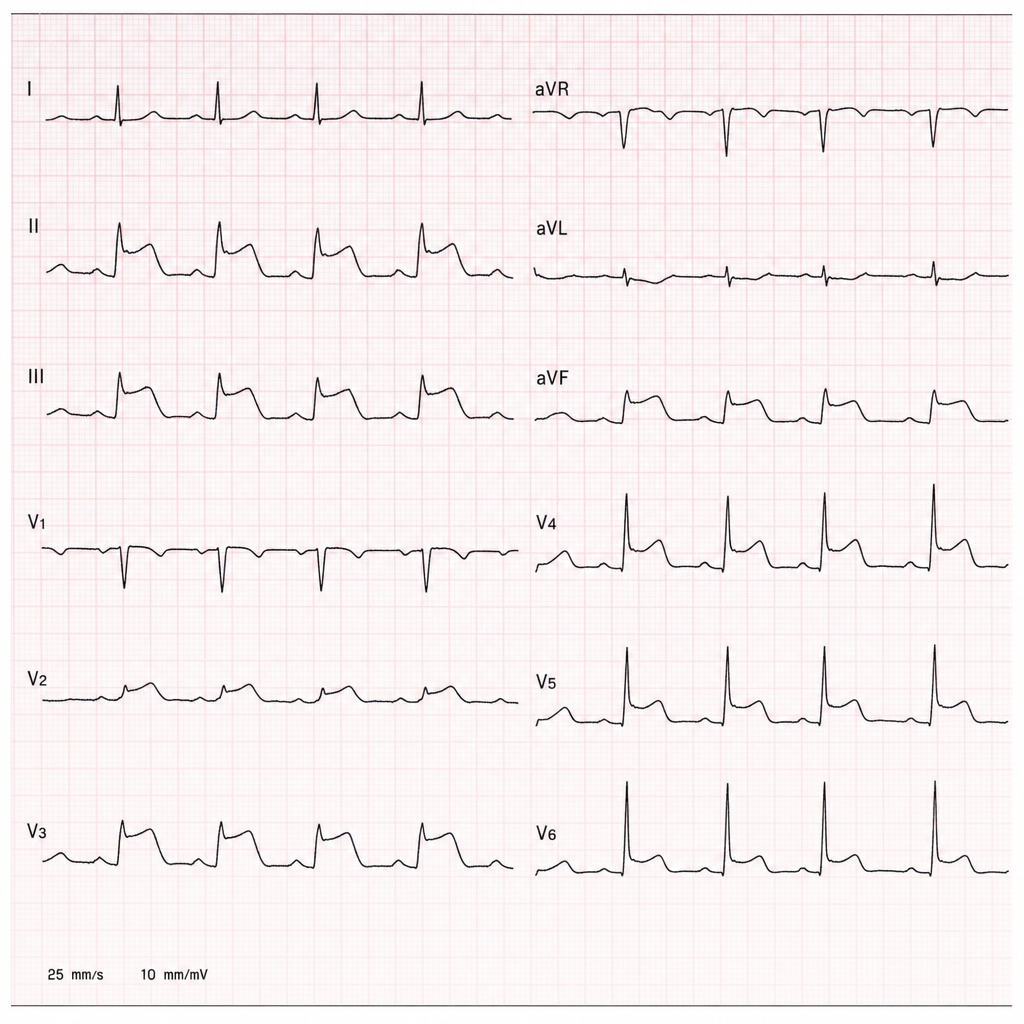
A 58-year-old man with hypertension and hyperlipidemia is brought to the emergency department by ambulance after collapsing at home. His wife states he complained of sudden severe chest pain radiating to the left arm 40 minutes ago, then became diaphoretic and lost consciousness briefly. On arrival, BP is 88/60 mmHg, HR 112 bpm, RR 22/min, SpO2 94% on room air. The ECG shown demonstrates 4 mm ST-segment elevation in leads II, III, and aVF with reciprocal changes in I and aVL. IV access is established, aspirin 325 mg has been given, and oxygen is being administered. The nearest percutaneous coronary intervention-capable facility is 25 minutes away. Which of the following is the most appropriate next step?
Want unlimited practice?
Get full access to all questions, explanations, and performance tracking.
Scan to download app