
Electrolyte management (particularly potassium) — MCQs

A 17-year-old male presents to your office complaining of polyuria, polydipsia, and unintentional weight loss of 12 pounds over the past 3 months. On physical examination, the patient is tachypneic with labored breathing. Which of the following electrolyte abnormalities would you most likely observe in this patient?
A 16-year-old woman presents to the emergency department for evaluation of acute vomiting and abdominal pain. Onset was roughly 3 hours ago while she was sleeping. She has no known past medical history. Her family history is positive for hypothyroidism and diabetes mellitus in her maternal grandmother. On examination, she is found to have fruity breath and poor skin turgor. She appears fatigued and her consciousness is slightly altered. Laboratory results show a blood glucose level of 691 mg/dL, sodium of 125 mg/dL, and elevated serum ketones. Of the following, which is the next best step in patient management?
An 8-year-old boy is brought to the emergency department with severe dyspnea, fatigue, and vomiting. His mother reports that he has been lethargic for the last several days with an increase in urine output. She thinks he may even be losing weight, despite eating and drinking more than normal for the last couple weeks. Laboratory results are notable for glucose of 440, potassium of 5.8, pH of 7.14 and HCO3 of 17. After administrating IV fluids and insulin, which of the following would you expect?
A 20-year-old male is brought by ambulance to the emergency room in extremis. He is minimally conscious, hypotensive, and tachypneic, and his breath gives off a "fruity" odor. An arterial blood gas and metabolic panel show anion gap metabolic acidosis. This patient is most likely deficient in which of the following metabolic actions?
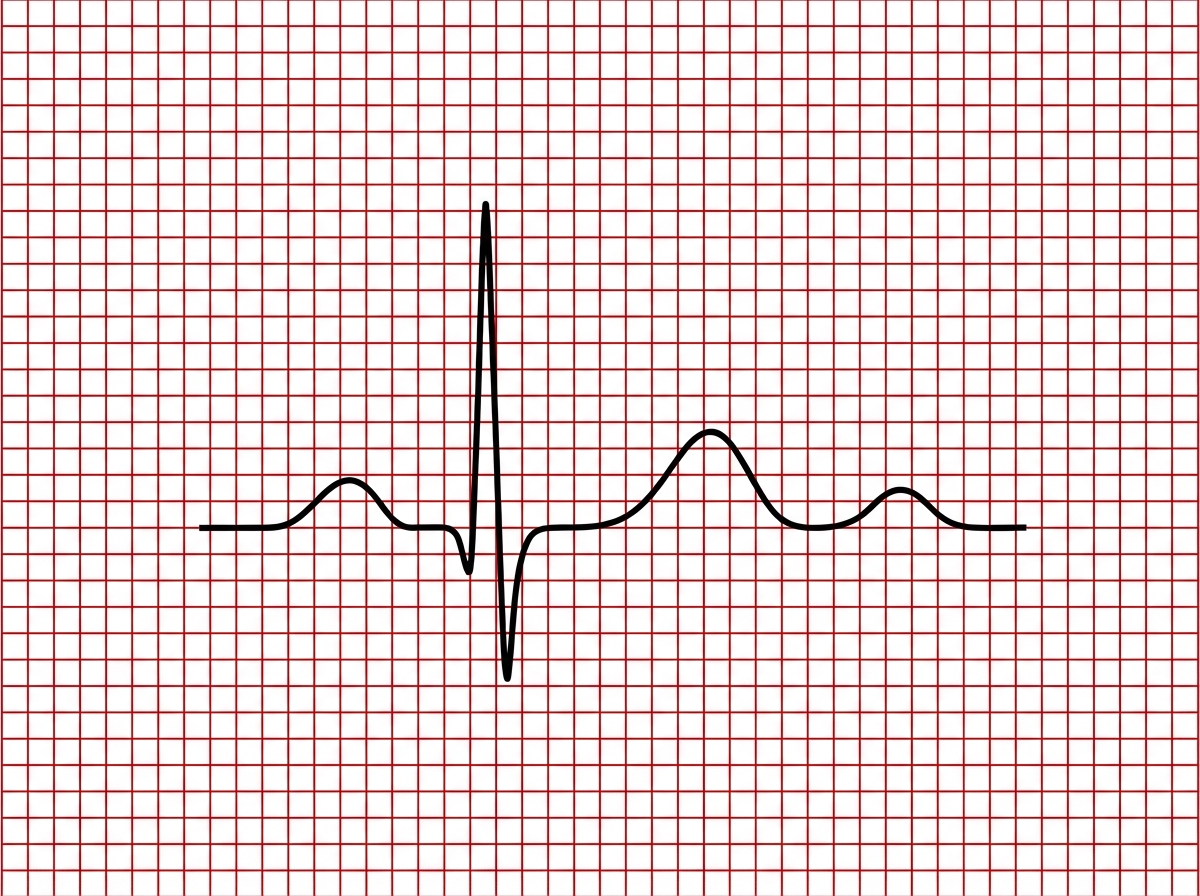
A 48-year-old woman is admitted to the hospital with sepsis and treated with gentamicin. One week after her admission, she develops oliguria and her urine shows muddy brown casts on light microscopy. Days later, her renal function begins to recover, but she complains of weakness and develops U waves on EKG as shown in Image A. Which laboratory abnormality would you most expect to see in this patient?
A 48-year-old man presents with DKA. Initial treatment is initiated with fluids and insulin infusion. Labs show glucose 460 mg/dL, pH 7.18, bicarbonate 10 mEq/L, potassium 4.5 mEq/L, and creatinine 2.8 mg/dL (baseline 1.0). After 4 hours, glucose decreases to 380 mg/dL but pH worsens to 7.12, bicarbonate drops to 8 mEq/L, and lactate is 5.2 mmol/L (initially 1.8). Blood pressure is 85/50 mmHg. Evaluate the clinical situation and necessary intervention.
A 25-year-old woman with type 1 diabetes presents with DKA. She admits to intentionally withholding insulin to lose weight. This is her fifth DKA admission in 8 months. Current pH is 7.14, glucose 520 mg/dL, bicarbonate 11 mEq/L. Medical costs exceed $150,000 for recurrent admissions. The team is frustrated. Evaluate the comprehensive management approach beyond acute DKA treatment.
A 55-year-old man with type 2 diabetes and end-stage renal disease on hemodialysis presents with DKA. Initial glucose is 580 mg/dL, pH 7.12, bicarbonate 10 mEq/L, and potassium 6.2 mEq/L. He is fluid overloaded with bilateral crackles and peripheral edema. His last dialysis was 3 days ago. Evaluate the optimal management strategy addressing both DKA and renal failure.
A 38-year-old pregnant woman at 28 weeks gestation with type 1 diabetes presents with nausea and vomiting. Labs show glucose 310 mg/dL, pH 7.27, bicarbonate 15 mEq/L, and positive urine ketones. Fetal monitoring shows reactive non-stress test. She has been taking her insulin but unable to eat for 24 hours due to hyperemesis. Analyze the optimal management approach considering maternal and fetal risks.
A 42-year-old man with type 1 diabetes on insulin pump presents with DKA after pump malfunction. He is admitted and started on IV insulin infusion. After 14 hours of treatment, his glucose is 210 mg/dL on D5-0.45% saline, pH 7.36, bicarbonate 19 mEq/L, and anion gap 12. He is alert, eating, and requesting to go home. Evaluate the appropriate transition strategy.
Want unlimited practice?
Get full access to all questions, explanations, and performance tracking.
Scan to download app