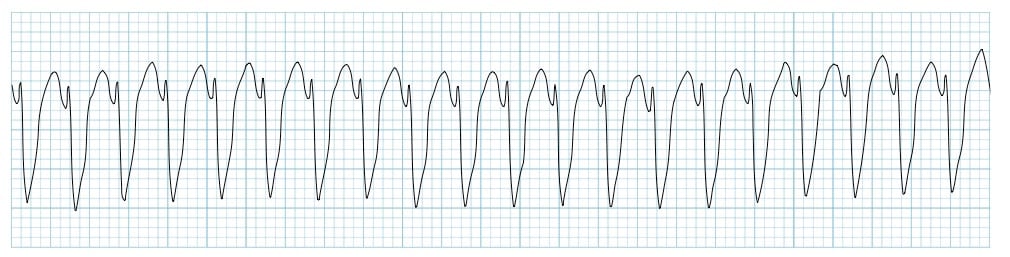
A 77-year-old man presents to his primary care physician with lightheadedness and a feeling that he is going to "pass out". He has a history of hypertension that is treated with captopril. In the office, his temperature is 38.3°C (100.9°F), the pulse is 65/min, and the respiratory rate is 19/min. His sitting blood pressure is 133/91 mm Hg. Additionally, his supine blood pressure is 134/92 mm Hg and standing blood pressure is 127/88 mm Hg. These are similar to his baseline blood pressure measured during previous visits. An ECG rhythm strip is obtained in the office. Of the following, what is the likely cause of his presyncope?
Q42
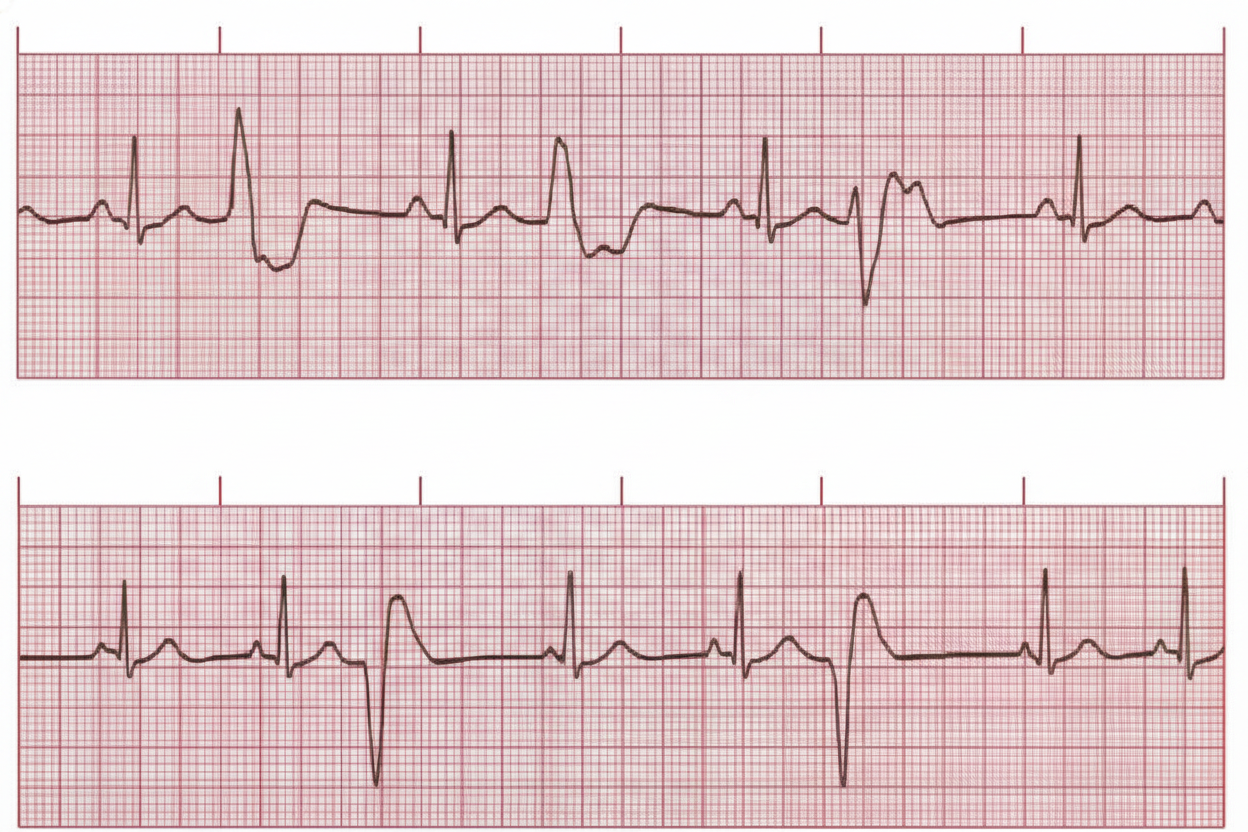
A 24-year-old woman comes to the physician for a routine health maintenance examination. She feels well. On questioning, she has had occasional morning dizziness and palpitations during the past year. She is a graduate student. She does not smoke and drinks 1–2 glasses of wine on the weekends. Her vital signs are within normal limits. Physical examination shows an irregular pulse. On auscultation of the chest, S1 and S2 are normal and there are no murmurs. An ECG is shown. Which of the following is the most appropriate next step in management?
Q43
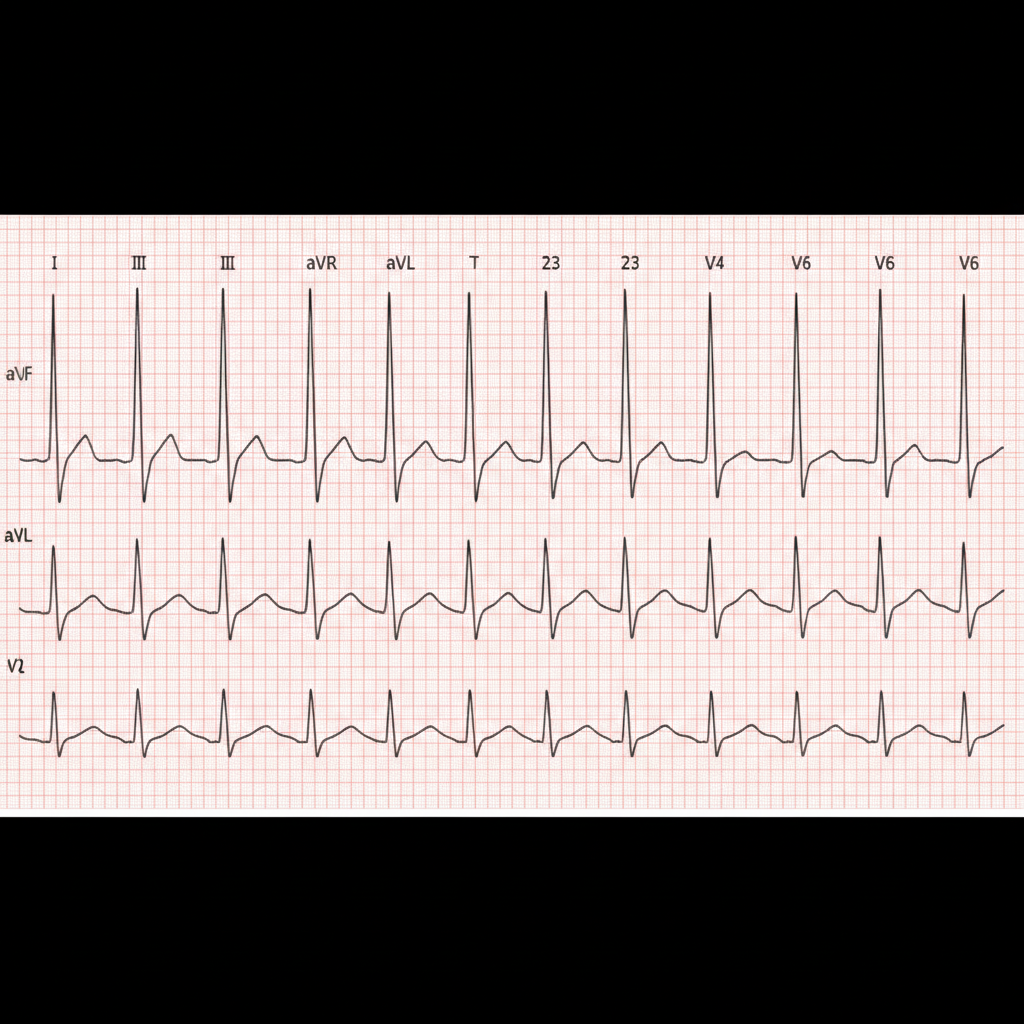
A 62-year-old woman presents to the emergency department complaining of fever, worsening fatigue, and muscle weakness for the previous 48 hours. The patient describes her muscle weakness as symmetric and worse in the upper limbs. Her past medical history is significant for long-standing diabetes type 2 complicated by stage 5 chronic kidney disease (CKD) on hemodialysis. She takes lisinopril, verapamil, metformin, and glargine. Today, the patient’s vital signs include: temperature 38.6°C (101.5°F), pulse 80/min, blood pressure 155/89 mm Hg, respirations 24/min, and 95% oxygen saturation on room air. The cardiac and pulmonary exams are unremarkable. The abdomen is soft and non-tender. Her strength is 3/5 in the upper extremities and 4/5 in the lower extremities and her sensation is intact. Deep tendon reflexes are absent in both the upper and lower limbs. A 12-lead electrocardiogram (ECG) is shown in the image below. Blood work is drawn and the patient is admitted and started on continuous cardiac monitoring. Based on the available information, what is the next best step in managing this patient?
Q44
A 64-year-old male presents to the emergency room complaining of chest pain. He reports a pressure-like sensation over his sternum that radiates into his jaw. The pain came on suddenly 2 hours ago and has been constant since then. His past medical history is notable for a stable abdominal aortic aneurysm, hypertension, diabetes, and hyperlipidemia. He takes aspirin, enalapril, spironolactone, atorvastatin, canagliflozin, and metformin. His temperature is 99.1°F (37.3°C), blood pressure is 155/85 mmHg, pulse is 115/min, and respirations are 22/min. On exam, he is diaphoretic and in moderate distress. He is admitted for further management and does well after initial stabilization. He is seen two days later by the admitting team. This patient is at increased risk for a complication that is characterized by which of the following?
Q45
A 26-year-old nursing home staff presents to the emergency room with complaints of palpitations and chest pain for the past 2 days. She was working at the nursing home for the last year but has been trying to get into modeling for the last 6 months and trying hard to lose weight. She is a non-smoker and occasionally drinks alcohol on weekends with friends. On examination, she appears well nourished and is in no distress. The blood pressure is 150/84 mm Hg and the pulse is 118/min. An ECG shows absent P waves. All other physical findings are normal. What is the probable diagnosis?
Q46
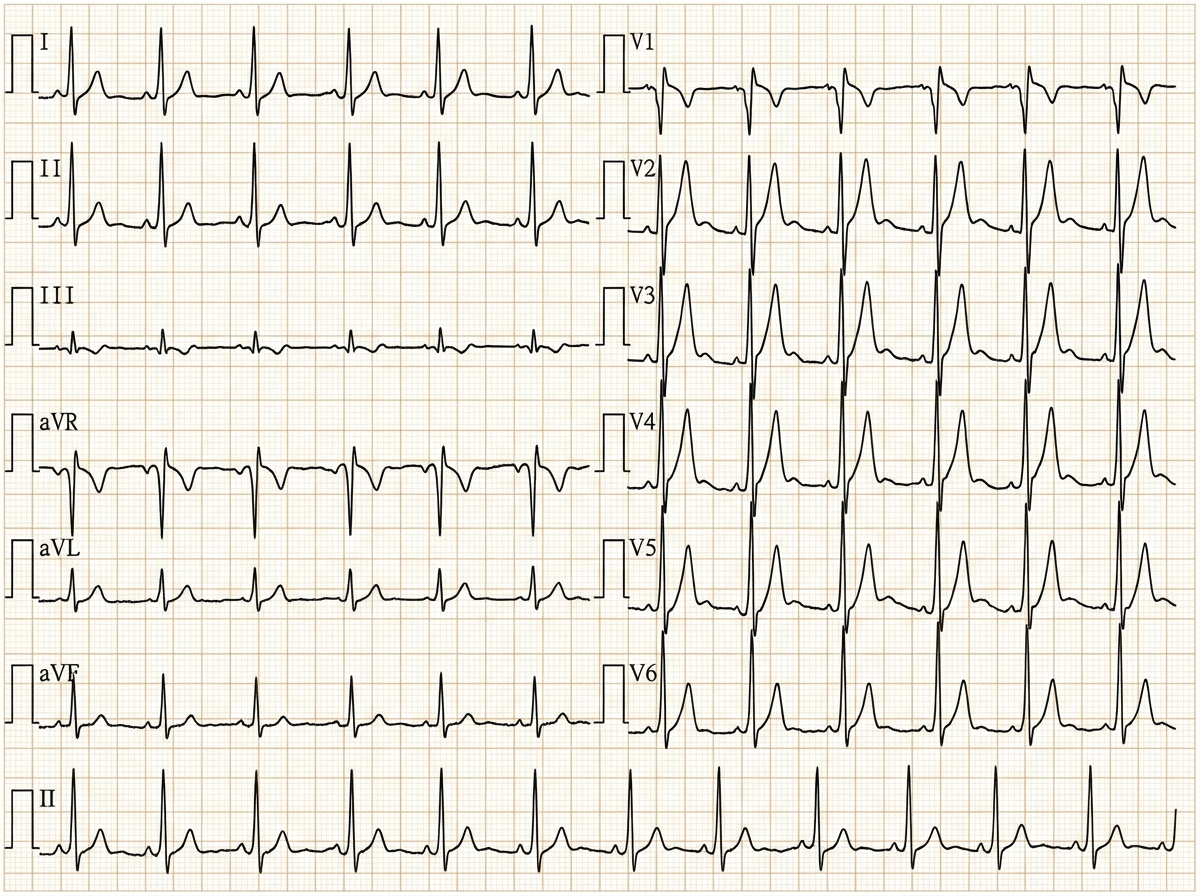
A 29-year-old woman with Wolff-Parkinson-White syndrome presents to her cardiologist’s office for a follow-up visit. She collapsed at her job and made a trip to the emergency department 1 week ago. At that time, she received a diagnosis of atrial fibrillation with rapid ventricular response and hemodynamic instability. While in the emergency department, she underwent direct-current cardioversion to return her heart to sinus rhythm. Her current medications include procainamide. At the cardiologist’s office, her heart rate is 61/min, respiratory rate is 16/min, the temperature is 36.5°C (97.7°F), and blood pressure is 118/60 mm Hg. Her cardiac examination reveals a regular rhythm and a I/VI systolic ejection murmur best heard at the right upper sternal border. An ECG obtained in the clinic is shown. Which of the following is the most appropriate treatment to prevent further episodes of tachyarrhythmia?
Q47
A 73-year-old man noted a rapid onset of severe dizziness and difficulty swallowing while watching TV at home. His wife reports that he had difficulty forming sentences and his gait was unsteady at this time. Symptoms were severe within 1 minute and began to improve spontaneously after 10 minutes. He has had type 2 diabetes mellitus for 25 years and has a 50 pack-year smoking history. On arrival to the emergency department 35 minutes after the initial development of symptoms, his manifestations have largely resolved with the exception of a subtle nystagmus and ataxia. His blood pressure is 132/86 mm Hg, the heart rate is 84/min, and the respiratory rate is 15/min. After 45 minutes, his symptoms are completely resolved, and neurological examination is unremarkable. Which of the following is the most likely cause of this patient’s condition?
Q48
A 22-year-old immigrant presents to his primary care physician for a general checkup. This is his first time visiting a physician, and he has no known past medical history. The patient’s caretaker states that the patient has experienced episodes of syncope and what seems to be seizures before but has not received treatment. His temperature is 98.1°F (36.7°C), blood pressure is 121/83 mmHg, pulse is 83/min, respirations are 14/min, and oxygen saturation is 98% on room air. Physical exam is notable for sensorineural deafness. Which of the following ECG changes is most likely to be seen in this patient?
Q49
A 68-year-old man presents to the emergency department with palpitations. He also feels that his exercise tolerance has reduced over the previous week. His past history is positive for ischemic heart disease and he has been on multiple medications for a long time. On physical examination, his temperature is 36.9°C (98.4°F), pulse rate is 152/min and is regular, blood pressure is 114/80 mm Hg, and respiratory rate is 18/min. Auscultation of the precordial region confirms tachycardia, but there is no murmur or extra heart sounds. His ECG is obtained, which suggests a diagnosis of atrial flutter. Which of the following findings is most likely to be present on his electrocardiogram?
Q50
A 56-year-old man with chronic kidney failure is brought to the emergency department by ambulance after he passed out during dinner. On presentation, he is alert and complains of shortness of breath as well as chest palpitations. An EKG is obtained demonstrating an irregular rhythm with QRS amplitudes that vary in height over time. Other findings include uncontrolled contractions of his muscles. Tapping of his cheek elicits twitching of the facial muscles. Over-repletion of the serum abnormality in this case may lead to which of the following?
Arrhythmias US Medical PG Practice Questions and MCQs
Question 41: A 77-year-old man presents to his primary care physician with lightheadedness and a feeling that he is going to "pass out". He has a history of hypertension that is treated with captopril. In the office, his temperature is 38.3°C (100.9°F), the pulse is 65/min, and the respiratory rate is 19/min. His sitting blood pressure is 133/91 mm Hg. Additionally, his supine blood pressure is 134/92 mm Hg and standing blood pressure is 127/88 mm Hg. These are similar to his baseline blood pressure measured during previous visits. An ECG rhythm strip is obtained in the office. Of the following, what is the likely cause of his presyncope?
A. Left bundle branch block
B. Hypertension
C. Captopril (Correct Answer)
D. Right bundle branch block
E. Orthostatic hypotension
Explanation: ***Captopril***
- While **ACE inhibitors** like captopril can cause **vasodilation** and **hypotension** leading to presyncope, this patient's blood pressure readings are **stable and normal** (133/91, 134/92, 127/88 mmHg).
- There is **no evidence of hypotension** that would explain the presyncope, making captopril an unlikely direct cause in this presentation.
- **Note**: The clinical scenario of fever (38.3°C) with relative bradycardia (pulse 65/min) and presyncope actually suggests a **cardiac arrhythmia** (such as high-degree AV block), especially given that an ECG was obtained. However, this is not among the answer choices.
*Left bundle branch block*
- LBBB is an electrical conduction abnormality that typically does not directly cause presyncope unless it progresses to **high-degree AV block** or causes significant hemodynamic compromise.
- In the context of fever and relative bradycardia, if LBBB were associated with a bradyarrhythmia causing hemodynamic instability, it could contribute to presyncope.
- However, without the ECG findings mentioned in the stem, this cannot be confirmed.
*Hypertension*
- The patient's blood pressure is well-controlled and stable (ranging from 127-134/88-92 mmHg).
- Hypertension itself does not cause presyncope; in fact, **hypotension** (not hypertension) causes presyncope due to reduced cerebral perfusion.
- This is not the cause of his symptoms.
*Right bundle branch block*
- RBBB is generally **asymptomatic** and does not cause hemodynamic instability or presyncope.
- It is an incidental finding in most cases and would not explain the patient's symptoms of lightheadedness and near-syncope.
*Orthostatic hypotension*
- Orthostatic hypotension requires a drop in systolic BP ≥20 mmHg or diastolic BP ≥10 mmHg within 3 minutes of standing.
- This patient's BP changes from supine to standing (134/92 → 127/88 mmHg) show only a **7/4 mmHg drop**, which does **not meet diagnostic criteria**.
- Orthostatic hypotension is ruled out by the blood pressure measurements provided.
Question 42: A 24-year-old woman comes to the physician for a routine health maintenance examination. She feels well. On questioning, she has had occasional morning dizziness and palpitations during the past year. She is a graduate student. She does not smoke and drinks 1–2 glasses of wine on the weekends. Her vital signs are within normal limits. Physical examination shows an irregular pulse. On auscultation of the chest, S1 and S2 are normal and there are no murmurs. An ECG is shown. Which of the following is the most appropriate next step in management?
A. Reassurance (Correct Answer)
B. Event recorder implantation
C. Administration of flecainide
D. Administration of metoprolol
E. Stress echocardiography
Explanation: ***Reassurance***
- This young, healthy patient has **occasional, mild symptoms** (morning dizziness and palpitations) with stable vital signs and a normal cardiac examination except for an irregular pulse.
- The ECG shown likely demonstrates **benign ectopy** such as premature atrial contractions (PACs) or premature ventricular contractions (PVCs), which are common in young adults and typically benign.
- In the absence of **red flags** (syncope, family history of sudden cardiac death, structural heart disease, hemodynamic instability), reassurance is appropriate for asymptomatic or minimally symptomatic patients with benign arrhythmias.
- No intervention is needed unless symptoms become more severe or frequent.
*Event recorder implantation*
- An event recorder would be considered if the patient had **significant symptoms** (syncope, presyncope) or if the routine ECG was **normal** and there was a need to capture intermittent arrhythmias.
- Since an ECG was obtained during the visit showing the irregular rhythm, further rhythm monitoring is not the next step unless the diagnosis remains unclear or symptoms worsen.
- This represents overinvestigation for likely benign ectopy in a young, healthy patient.
*Administration of flecainide*
- Flecainide is a **Class IC antiarrhythmic** used for specific arrhythmias like atrial fibrillation or supraventricular tachycardia.
- It should never be initiated without a clear diagnosis and is **contraindicated** in patients with structural heart disease due to proarrhythmic risk.
- Empiric antiarrhythmic therapy is not warranted for occasional, mild symptoms with likely benign ectopy.
*Administration of metoprolol*
- Metoprolol is a **beta-blocker** that can reduce the frequency of ectopic beats and control heart rate in certain arrhythmias.
- While it could be considered if symptoms were bothersome despite reassurance, it is not the first-line approach for a minimally symptomatic patient with benign ectopy.
- Medical therapy should be reserved for patients with significant symptoms affecting quality of life.
*Stress echocardiography*
- Stress echocardiography evaluates for **exercise-induced ischemia** or valvular abnormalities provoked by exertion.
- This patient has no symptoms of angina, dyspnea, or features suggesting structural heart disease on examination.
- There is no indication for stress testing in a young patient with isolated benign ectopy and no cardiovascular risk factors.
Question 43: A 62-year-old woman presents to the emergency department complaining of fever, worsening fatigue, and muscle weakness for the previous 48 hours. The patient describes her muscle weakness as symmetric and worse in the upper limbs. Her past medical history is significant for long-standing diabetes type 2 complicated by stage 5 chronic kidney disease (CKD) on hemodialysis. She takes lisinopril, verapamil, metformin, and glargine. Today, the patient’s vital signs include: temperature 38.6°C (101.5°F), pulse 80/min, blood pressure 155/89 mm Hg, respirations 24/min, and 95% oxygen saturation on room air. The cardiac and pulmonary exams are unremarkable. The abdomen is soft and non-tender. Her strength is 3/5 in the upper extremities and 4/5 in the lower extremities and her sensation is intact. Deep tendon reflexes are absent in both the upper and lower limbs. A 12-lead electrocardiogram (ECG) is shown in the image below. Blood work is drawn and the patient is admitted and started on continuous cardiac monitoring. Based on the available information, what is the next best step in managing this patient?
A. Order a stat serum potassium level
B. Administer IV calcium gluconate (Correct Answer)
C. Emergency dialysis
D. Administer IV sodium bicarbonate
E. Administer regular insulin and 50% dextrose in water
Explanation: ***Administer IV calcium gluconate***
- The patient's presentation with **symmetrical muscle weakness** (worse in upper limbs), **absent deep tendon reflexes**, and characteristic ECG changes (peaked T waves, prolonged PR interval, wide QRS) in the context of **end-stage renal disease** and hemodialysis strongly suggests **severe hyperkalemia**.
- **Intravenous calcium gluconate** is the first-line treatment for clinically significant hyperkalemia with ECG changes, as it directly antagonizes the cardiac membrane effects of potassium and helps to stabilize the myocardium.
*Order a stat serum potassium level*
- While it is crucial to confirm hyperkalemia with a **stat serum potassium level**, the clinical picture (CKD, hemodialysis, muscle weakness, absent reflexes, and ECG changes) is emergent and highly suggestive of severe hyperkalemia.
- Waiting for laboratory confirmation before administering calcium gluconate can delay life-saving treatment and is not the "next best step" when ECG changes are evident.
*Emergency dialysis*
- **Emergency dialysis** is an effective way to remove potassium from the body and is often needed in severe hyperkalemia, especially in ESRD patients.
- However, **calcium gluconate** should be administered *immediately* to stabilize the cardiac membrane and prevent life-threatening arrhythmias, even before preparing for dialysis.
*Administer IV sodium bicarbonate*
- **Sodium bicarbonate** can shift potassium intracellularly, particularly in the setting of metabolic acidosis, but its effect is slower and less reliable than calcium in stabilizing cardiac membranes.
- It is often used as an adjunct but not as the initial, most critical intervention for immediate cardiac stabilization in severe hyperkalemia.
*Administer regular insulin and 50% dextrose in water*
- **Insulin and dextrose** shift potassium into cells, thereby lowering serum potassium levels. This is an important step in managing hyperkalemia.
- However, similar to sodium bicarbonate, its effect on serum potassium is not immediate enough to counteract the acute cardiotoxic effects, making **calcium gluconate** the priority for cardiac stabilization.
Question 44: A 64-year-old male presents to the emergency room complaining of chest pain. He reports a pressure-like sensation over his sternum that radiates into his jaw. The pain came on suddenly 2 hours ago and has been constant since then. His past medical history is notable for a stable abdominal aortic aneurysm, hypertension, diabetes, and hyperlipidemia. He takes aspirin, enalapril, spironolactone, atorvastatin, canagliflozin, and metformin. His temperature is 99.1°F (37.3°C), blood pressure is 155/85 mmHg, pulse is 115/min, and respirations are 22/min. On exam, he is diaphoretic and in moderate distress. He is admitted for further management and does well after initial stabilization. He is seen two days later by the admitting team. This patient is at increased risk for a complication that is characterized by which of the following?
A. Cardiac tamponade
B. Intra-cardiac shunt
C. Mitral insufficiency (Correct Answer)
D. Ventricular fibrillation
E. Friction rub
Explanation: ***Mitral insufficiency***
- The patient's presentation with **pressure-like chest pain radiating to the jaw**, diaphoresis, and risk factors (hypertension, diabetes, hyperlipidemia) is highly suggestive of an **acute myocardial infarction (MI)**. A common mechanical complication of an MI is **papillary muscle rupture or dysfunction**, leading to acute mitral insufficiency.
- Papillary muscle rupture typically occurs **3-7 days post-MI** and is more common with **inferior wall MI** (affecting the posteromedial papillary muscle supplied by the posterior descending artery).
- Mitral insufficiency significantly increases the risk of **heart failure and cardiogenic shock** due to regurgitant flow into the left atrium during systole, presenting with a new **holosystolic murmur** at the apex.
*Cardiac tamponade*
- This typically occurs due to accumulation of fluid in the **pericardial sac** from a **free wall rupture**, which is a catastrophic mechanical complication of MI.
- Free wall rupture usually presents **acutely with profound cardiogenic shock and hemodynamic collapse** (Beck's triad: hypotension, muffled heart sounds, JVD).
- The patient "does well after initial stabilization," making this less likely as the primary answer.
*Intra-cardiac shunt*
- A **ventricular septal defect (VSD)** from septal rupture is another mechanical complication of MI, typically occurring **3-7 days post-MI**.
- VSD presents with a **new harsh holosystolic murmur** at the left sternal border, step-up in oxygen saturation from RA to RV, and signs of biventricular failure.
- While possible, **mitral regurgitation is more common than VSD** as a post-MI mechanical complication (incidence ratio approximately 10:1).
*Ventricular fibrillation*
- **Ventricular fibrillation** is an **electrical complication** of MI, usually occurring in the **first 24-48 hours** after MI onset and leading to sudden cardiac arrest.
- The patient "does well after initial stabilization" two days later, indicating he survived the acute period when ventricular fibrillation risk is highest.
- The question asks about a complication he is at **increased risk for after initial stabilization**, pointing towards a **subacute mechanical complication** rather than an acute electrical one.
*Friction rub*
- A **pericardial friction rub** is a physical examination finding characteristic of **pericarditis**, which can occur as **early post-MI pericarditis** (24-96 hours) or **Dressler's syndrome** (weeks to months later).
- A friction rub is a **sign** of pericarditis, not a complication itself. The question asks for a complication the patient is at risk for, not a physical examination finding.
- Post-MI pericarditis is generally **benign** and does not carry the same morbidity as mechanical complications like mitral regurgitation.
Question 45: A 26-year-old nursing home staff presents to the emergency room with complaints of palpitations and chest pain for the past 2 days. She was working at the nursing home for the last year but has been trying to get into modeling for the last 6 months and trying hard to lose weight. She is a non-smoker and occasionally drinks alcohol on weekends with friends. On examination, she appears well nourished and is in no distress. The blood pressure is 150/84 mm Hg and the pulse is 118/min. An ECG shows absent P waves. All other physical findings are normal. What is the probable diagnosis?
A. Anorexia nervosa
B. Graves' disease
C. Hashimoto thyroiditis
D. Toxic nodular goiter
E. Factitious thyrotoxicosis (Correct Answer)
Explanation: ***Factitious thyrotoxicosis***
- The patient's profession as a nursing home staff member provides access to medications, and her attempts to lose weight for modeling suggest a motive for **self-administration of thyroid hormones**.
- **Absent P waves** on ECG along with **palpitations and tachycardia** are consistent with atrial arrhythmias often seen in thyrotoxicosis, but the overall presentation with a desire for weight loss points towards an exogenous source.
*Anorexia nervosa*
- While patients with anorexia nervosa do try to lose weight, their presentation is typically associated with **bradycardia**, not the tachycardia and elevated blood pressure seen here.
- ECG findings in anorexia nervosa would more likely show **QT prolongation** or other conduction abnormalities due to electrolyte imbalances, not specifically absent P waves caused by arrhythmia.
*Graves' disease*
- Graves' disease is an autoimmune condition causing hyperthyroidism, presenting with similar symptoms like **tachycardia and palpitations**. However, it is typically associated with other systemic findings such as **ophthalmopathy (exophthalmos)**, **pretibial myxedema**, or a palpable goiter, none of which are mentioned.
- Laboratory findings would show **high T3/T4** with **low TSH**, and often **positive TSH receptor antibodies**, differentiating it from factitious causes.
*Hashimoto thyroiditis*
- Hashimoto thyroiditis is an **autoimmune cause of hypothyroidism**, characterized by fatigue, weight gain, and bradycardia, which are opposite to the patient's symptoms of palpitations, tachycardia, and weight loss efforts.
- While it can initially present with transient hyperthyroidism (hashitoxicosis), the chronic state is hypothyroidism, and the ECG would not typically show absent P waves.
*Toxic nodular goiter*
- A toxic nodular goiter causes hyperthyroidism due to **autonomous thyroid nodules**, leading to symptoms similar to Graves' disease (palpitations, weight loss).
- However, the physical examination would usually reveal a **palpable nodular goiter**, which is not mentioned in this case, making it a less likely diagnosis compared to factitious thyrotoxicosis given the context.
Question 46: A 29-year-old woman with Wolff-Parkinson-White syndrome presents to her cardiologist’s office for a follow-up visit. She collapsed at her job and made a trip to the emergency department 1 week ago. At that time, she received a diagnosis of atrial fibrillation with rapid ventricular response and hemodynamic instability. While in the emergency department, she underwent direct-current cardioversion to return her heart to sinus rhythm. Her current medications include procainamide. At the cardiologist’s office, her heart rate is 61/min, respiratory rate is 16/min, the temperature is 36.5°C (97.7°F), and blood pressure is 118/60 mm Hg. Her cardiac examination reveals a regular rhythm and a I/VI systolic ejection murmur best heard at the right upper sternal border. An ECG obtained in the clinic is shown. Which of the following is the most appropriate treatment to prevent further episodes of tachyarrhythmia?
A. Begin anticoagulation with dabigatran
B. Add verapamil to her medication regimen
C. Begin anticoagulation with warfarin
D. Refer her for electrophysiology (EP) study and ablation (Correct Answer)
E. Refer her for right heart catheterization
Explanation: ***Refer her for electrophysiology (EP) study and ablation***
- This patient has **Wolff-Parkinson-White (WPW) syndrome** and experienced a life-threatening episode of **atrial fibrillation with rapid ventricular response (AFib with RVR)** and **hemodynamic instability**, indicating a high-risk accessory pathway.
- **Catheter ablation** of the accessory pathway is the definitive treatment to eliminate the re-entrant circuit and prevent future tachyarrhythmia episodes and sudden cardiac death in symptomatic WPW patients.
*Begin anticoagulation with dabigatran*
- While anticoagulation is indicated for stroke prevention in AFib, this patient's primary risk is not stroke but rather recurrent, potentially fatal, **tachyarrhythmias due to WPW**.
- Current guidelines suggest that anticoagulation is not routinely needed for AFib in the setting of WPW unless other risk factors for stroke are present (e.g., high **CHA₂DS₂-VASc score** for non-valvular AFib), which are not mentioned here for a 29-year-old.
*Add verapamil to her medication regimen*
- **Calcium channel blockers** like verapamil are contraindicated in WPW syndrome with AFib.
- They can block the normal AV nodal conduction, shunting more impulses down the **accessory pathway** and potentially accelerating the ventricular rate, leading to **ventricular fibrillation**.
*Begin anticoagulation with warfarin*
- Similar to dabigatran, anticoagulation with warfarin is primarily for **stroke prevention in AFib**, not for preventing the tachyarrhythmia itself in WPW.
- The immediate and most critical concern for this patient is the risk of recurrent, life-threatening **re-entrant tachyarrhythmias** via the accessory pathway.
*Refer her for right heart catheterization*
- A **right heart catheterization** is used to measure pressures and oxygen saturations in the right side of the heart and pulmonary arteries, typically to evaluate for conditions like pulmonary hypertension or heart failure.
- It is not indicated for the diagnosis or treatment of **supraventricular tachycardias** or **accessory pathways** like in WPW syndrome.
Question 47: A 73-year-old man noted a rapid onset of severe dizziness and difficulty swallowing while watching TV at home. His wife reports that he had difficulty forming sentences and his gait was unsteady at this time. Symptoms were severe within 1 minute and began to improve spontaneously after 10 minutes. He has had type 2 diabetes mellitus for 25 years and has a 50 pack-year smoking history. On arrival to the emergency department 35 minutes after the initial development of symptoms, his manifestations have largely resolved with the exception of a subtle nystagmus and ataxia. His blood pressure is 132/86 mm Hg, the heart rate is 84/min, and the respiratory rate is 15/min. After 45 minutes, his symptoms are completely resolved, and neurological examination is unremarkable. Which of the following is the most likely cause of this patient’s condition?
A. Anterior cerebral artery occlusion
B. Middle cerebral artery occlusion
C. Posterior cerebral artery occlusion
D. Lenticulostriate artery occlusion
E. Vertebral artery occlusion (Correct Answer)
Explanation: ***Vertebral artery occlusion***
- The patient's symptoms of **severe dizziness**, **difficulty swallowing**, **dysarthria**, **unsteady gait**, **nystagmus**, and **ataxia** are classic manifestations of **posterior circulation ischemia**, which is supplied by the vertebral and basilar arteries.
- The rapid onset, transient nature, and complete resolution of symptoms suggest a **transient ischemic attack (TIA)** affecting the posterior cerebral circulation, often due to **vertebral artery stenosis** or a **vertebral artery embolus**.
*Anterior cerebral artery occlusion*
- Occlusion of the anterior cerebral artery typically causes **contralateral leg weakness**, sensory loss, and behavioral changes, which are not seen in this patient.
- Symptoms like dizziness and dysphagia are **not characteristic** of anterior cerebral artery involvement.
*Middle cerebral artery occlusion*
- Middle cerebral artery occlusion commonly presents with **contralateral arm and facial weakness**, aphasia (if the dominant hemisphere is affected), and visual field defects.
- The patient's symptoms are localized to the **brainstem/cerebellum**, not the MCA territory.
*Posterior cerebral artery occlusion*
- While the posterior cerebral artery is part of the posterior circulation, its occlusion primarily causes **contralateral homonymous hemianopia** and, if severe, memory deficits or alexia.
- It typically **does not cause severe dizziness**, dysphagia, or gait ataxia as prominent initial symptoms.
*Lenticulostriate artery occlusion*
- Lenticulostriate arteries supply deep structures like the **basal ganglia** and **internal capsule**. Occlusion typically leads to **pure motor** or **pure sensory lacunar strokes**.
- This patient's constellation of symptoms (dizziness, dysphagia, ataxia) is **too widespread for a typical lacunar infarct** in the lenticulostriate territory.
Question 48: A 22-year-old immigrant presents to his primary care physician for a general checkup. This is his first time visiting a physician, and he has no known past medical history. The patient’s caretaker states that the patient has experienced episodes of syncope and what seems to be seizures before but has not received treatment. His temperature is 98.1°F (36.7°C), blood pressure is 121/83 mmHg, pulse is 83/min, respirations are 14/min, and oxygen saturation is 98% on room air. Physical exam is notable for sensorineural deafness. Which of the following ECG changes is most likely to be seen in this patient?
A. Increased voltages
B. Prolonged QRS interval
C. QT shortening
D. Prolonged QT interval (Correct Answer)
E. Peaked T waves
Explanation: **Prolonged QT interval**
- The patient's history of **syncope** and **seizures** without treatment, coupled with **sensorineural deafness**, strongly suggests **Jervell and Lange-Nielsen syndrome (JLNS)**, a form of congenital long QT syndrome.
- JLNS is characterized by a **prolonged QT interval** on ECG, which predisposes to life-threatening ventricular arrhythmias such as **Torsades de Pointes**, leading to syncope and sudden death.
*Increased voltages*
- Increased voltages on ECG usually indicate **ventricular hypertrophy**, which is not directly described by the patient's symptoms or suggestive of JLNS.
- While some cardiac conditions can cause increased voltages, it's not the primary or most characteristic finding in the context of syncope, seizures, and deafness associated with long QT syndrome.
*Prolonged QRS interval*
- A prolonged QRS interval typically signifies a **conduction delay within the ventricles**, such as a bundle branch block or ventricular preexcitation.
- This is distinct from a prolonged QT interval, which relates to the duration of ventricular repolarization and is the hallmark of conditions like JLNS.
*QT shortening*
- **Short QT syndrome** is a rare inherited channelopathy characterized by a pathologically short QT interval, which can also cause syncope and sudden cardiac death.
- However, the combination of **sensorineural deafness** specifically points towards **Jervell and Lange-Nielsen syndrome**, a form of **long QT syndrome**.
*Peaked T waves*
- **Peaked T waves** are often associated with **hyperkalemia** or **myocardial ischemia**.
- These are not typical findings in congenital long QT syndromes like JLNS, where the primary abnormality is in the duration of the QT interval.
Question 49: A 68-year-old man presents to the emergency department with palpitations. He also feels that his exercise tolerance has reduced over the previous week. His past history is positive for ischemic heart disease and he has been on multiple medications for a long time. On physical examination, his temperature is 36.9°C (98.4°F), pulse rate is 152/min and is regular, blood pressure is 114/80 mm Hg, and respiratory rate is 18/min. Auscultation of the precordial region confirms tachycardia, but there is no murmur or extra heart sounds. His ECG is obtained, which suggests a diagnosis of atrial flutter. Which of the following findings is most likely to be present on his electrocardiogram?
A. Wenckebach phenomenon
B. Slurred upstroke of R wave
C. Atrial rate above 400 beats per minute
D. No discernible P waves
E. Atrioventricular block (Correct Answer)
Explanation: ***Atrioventricular block***
- In **atrial flutter**, the atria consistently beat at a very rapid rate (typically 250-350 bpm), while the **AV node** cannot conduct all of these impulses.
- This physiological limitation leads to a **varying degree of AV block** (e.g., 2:1, 3:1, 4:1 block), resulting in a slower, often regular, ventricular response.
*Wenckebach phenomenon*
- This is a type of **second-degree AV block** (Mobitz Type I) characterized by progressive lengthening of the PR interval until a QRS complex is dropped.
- While it is an **AV conduction abnormality**, it is not the primary manifestation seen in typical atrial flutter, where the AV block is usually fixed ratio or consistent block.
*Slurred upstroke of R wave*
- A **slurred upstroke of the R wave** (delta wave) is characteristic of **Wolff-Parkinson-White (WPW) syndrome**, which involves an accessory pathway.
- While atrial flutter can occur in patients with WPW, the **delta wave** itself is indicative of pre-excitation, not a defining feature of the atrial flutter rhythm itself.
*Atrial rate above 400 beats per minute*
- An atrial rate above 400 bpm is generally indicative of **atrial fibrillation**, where the atrial activity is chaotic and extremely rapid.
- In **atrial flutter**, the typical atrial rate is between **250-350 bpm**, characterized by organized, distinct "sawtooth" flutter waves.
*No discernible P waves*
- The absence of discernible P waves is a hallmark of **atrial fibrillation**, where the atrial activity is irregular and chaotic, leading to fibrillatory waves.
- In **atrial flutter**, distinct and organized **"sawtooth" flutter waves** are present, which represent rapid, regular atrial depolarization, not an absence of P waves.
Question 50: A 56-year-old man with chronic kidney failure is brought to the emergency department by ambulance after he passed out during dinner. On presentation, he is alert and complains of shortness of breath as well as chest palpitations. An EKG is obtained demonstrating an irregular rhythm with QRS amplitudes that vary in height over time. Other findings include uncontrolled contractions of his muscles. Tapping of his cheek elicits twitching of the facial muscles. Over-repletion of the serum abnormality in this case may lead to which of the following?
A. Peaked T-waves
B. Seizures
C. Diffuse calcifications
D. Kidney stones (Correct Answer)
E. Bradycardia
Explanation: ***Kidney stones***
- The patient exhibits symptoms of **hypocalcemia**, including neuromuscular irritability (**muscle contractions**) and cardiac arrhythmias (**QT amplitudes varying in height**), in the context of chronic kidney failure. Chronic kidney failure can lead to **hyperphosphatemia**, which drives calcium out of solution, causing hypocalcemia. **Treating hypocalcemia** can involve oral calcium supplements. Over-repletion of calcium can lead to **hypercalcemia** and subsequently increase the risk of **calcium oxalate kidney stones**.
- **Hypercalcemia** can result from aggressive or prolonged calcium supplementation in an attempt to correct hypocalcemia, especially in patients with impaired renal calcium excretion. Increased filtered calcium load in the kidneys increases the likelihood of stone formation.
*Peaked T-waves*
- **Peaked T-waves** are characteristic of **hyperkalemia**, not hypercalcemia. While chronic kidney failure can cause hyperkalemia, this question describes the consequences of over-repleting the serum abnormality (hypocalcemia) with calcium.
- While electrolyte imbalances can coexist in CKD, this option does not describe a direct consequence of overtreating hypocalcemia.
*Seizures*
- **Seizures** can be a symptom of severe **hypocalcemia**, but they are not typically caused by **hypercalcemia** (over-repletion of calcium).
- While alterations in calcium levels can affect neurological function, over-repletion leading to hypercalcemia is more commonly associated with lethargy, confusion, or coma, rather than an increased risk of seizures.
*Diffuse calcifications*
- **Diffuse calcifications**, such as **vascular calcification** or **calciphlaxis**, are severe complications often seen in advanced chronic kidney disease due to complex disturbances in calcium-phosphate metabolism, including hyperphosphatemia and secondary hyperparathyroidism. However, they are not primarily a direct result of simple over-repletion of calcium for hypocalcemia in the short-term clinical scenario described.
- While chronic hypercalcemia can contribute to calcifications, the prompt scenario of "over-repletion" leading to a new acute issue points more towards kidney stones.
*Bradycardia*
- Varying QT amplitudes indicate an excitable state, which is inconsistent with **bradycardia**. While severe hypercalcemia can cause some EKG changes, it is not typically associated with bradycardia but rather with a **shortened QT interval** and, in severe cases, potentially some heart block.
- Bradycardia is more commonly associated with conditions like **hyperkalemia** or certain cardiac diseases, rather than the effects of calcium over-repletion.