A 25-year-old man presents to the emergency department complaining of palpitations, lightheadedness, and sweating. He just started working at an investment firm and has been working long hours to make a good impression. Today, he had a dozen cups of espresso to keep himself awake and working. He has never had such an episode before. His past medical history is unremarkable. His pulse is 150/min, blood pressure is 134/88 mm Hg, respirations are 12/min, and temperature is 36.7°C (98.0°F). ECG shows supraventricular tachycardia. Which of the following is the next best step in the management of this patient?
Q32
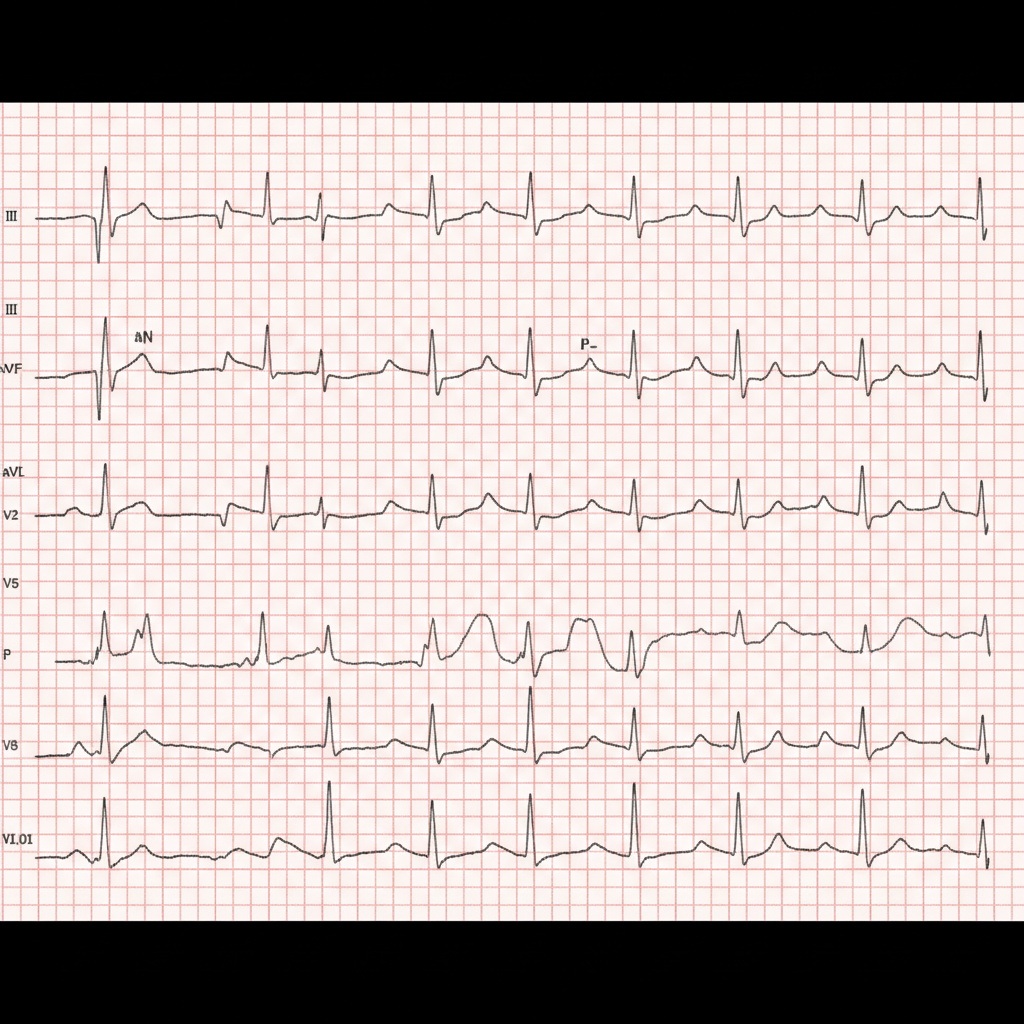
A 68-year-old man presents to the emergency department because of difficulty breathing and chest tightness for the last 3 days. He also has a productive cough with excessive amounts of green sputum. He has had chronic obstructive pulmonary disease for the past 10 years, but says that the cough and sputum are different compared to his baseline. He took 2 doses of nebulized albuterol and ipratropium at home, but that did not completely relieve his symptoms. He has a 50 pack-year smoking history and drinks alcohol occasionally. His vital signs include a blood pressure of 110/60 mm Hg, a temperature of 37.2 °C (98.9°F), a respiratory rate of 26/min, an irregular radial pulse at a rate of 110–120/min, and an oxygen saturation of 88%. On physical examination, the patient appears drowsy, crackles are heard on chest auscultation bilaterally, and the heart sounds are irregular. A chest X-ray shows hyperinflation of the lungs bilaterally, and the diaphragm is flattened. An ECG is ordered and shown in the accompanying image. Which of the following is the best initial treatment for this patient’s arrhythmia?
Q33
A 40-year-old woman comes to the physician for a 6-month history of recurrent episodes of chest pain, racing pulse, dizziness, and difficulty breathing. The episodes last up to several minutes. She also reports urinary urgency and two episodes of loss of consciousness followed by spontaneous recovery. There is no personal or family history of serious illness. She does not smoke or drink alcohol. Vitals signs are within normal limits. Cardiopulmonary examination shows no abnormalities. Holter monitoring is performed. ECG recordings during episodes of tachycardia show a QRS duration of 100 ms, regular RR-interval, and absent P waves. Which of the following is the most likely underlying cause of this patient's condition?
Q34
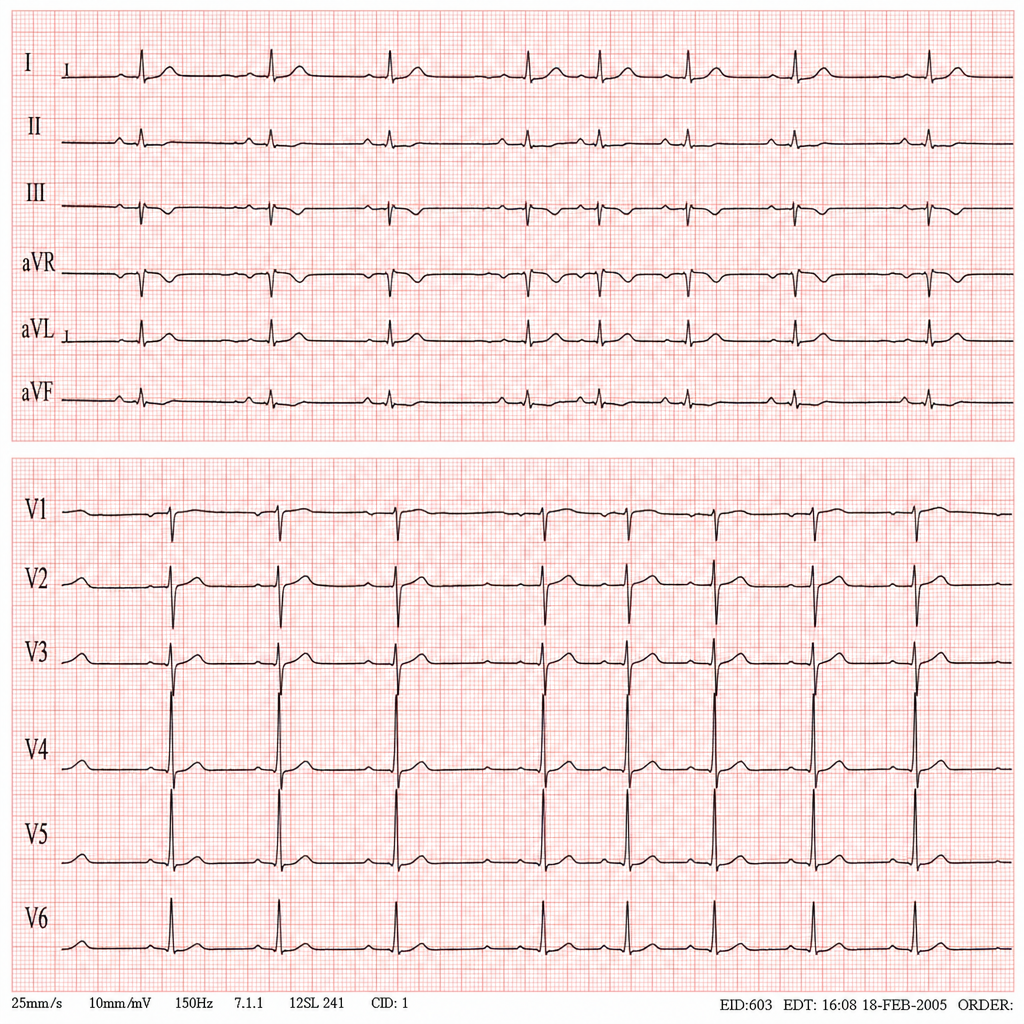
A 44-year-old man comes to the emergency department because of persistent palpitations for the past 2 hours. The day before, he was at a wedding, where he drank several glasses of wine and 9–10 vodka cocktails. He has never had similar symptoms before. He is a manager at a software company and has recently had a lot of work-related stress. He is otherwise healthy and takes no medications. His temperature is 36.5°C (97.7°F), pulse is 90/min and irregularly irregular, respirations are 13/min, and his blood pressure is 128/60 mm Hg. Physical examination shows no other abnormalities. An ECG is performed; no P-waves can be identified. Echocardiography shows no valvular abnormalities and normal ventricular function. One hour later, a repeat ECG shows normal P waves followed by narrow QRS complexes. He is still experiencing occasional palpitations. Which of the following is the most appropriate next step in management?
Q35
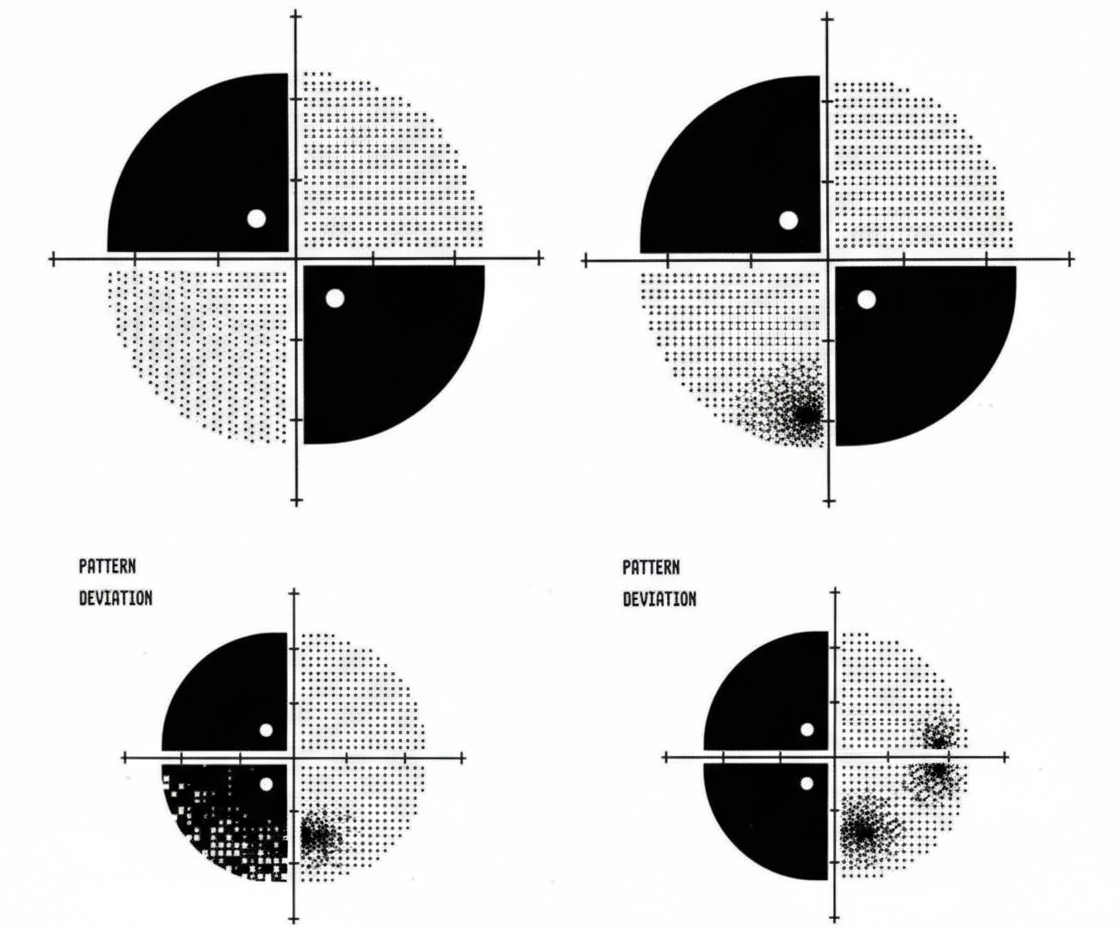
A 62-year-old woman comes to the physician for decreased vision and worsening headaches since this morning. She has hypertension and hypercholesterolemia. Pulse is 119/min and irregular. Current medications include ramipril and atorvastatin. Ocular and funduscopic examination shows no abnormalities. The findings of visual field testing are shown. Which of the following is the most likely cause of this patient's symptoms?
Q36
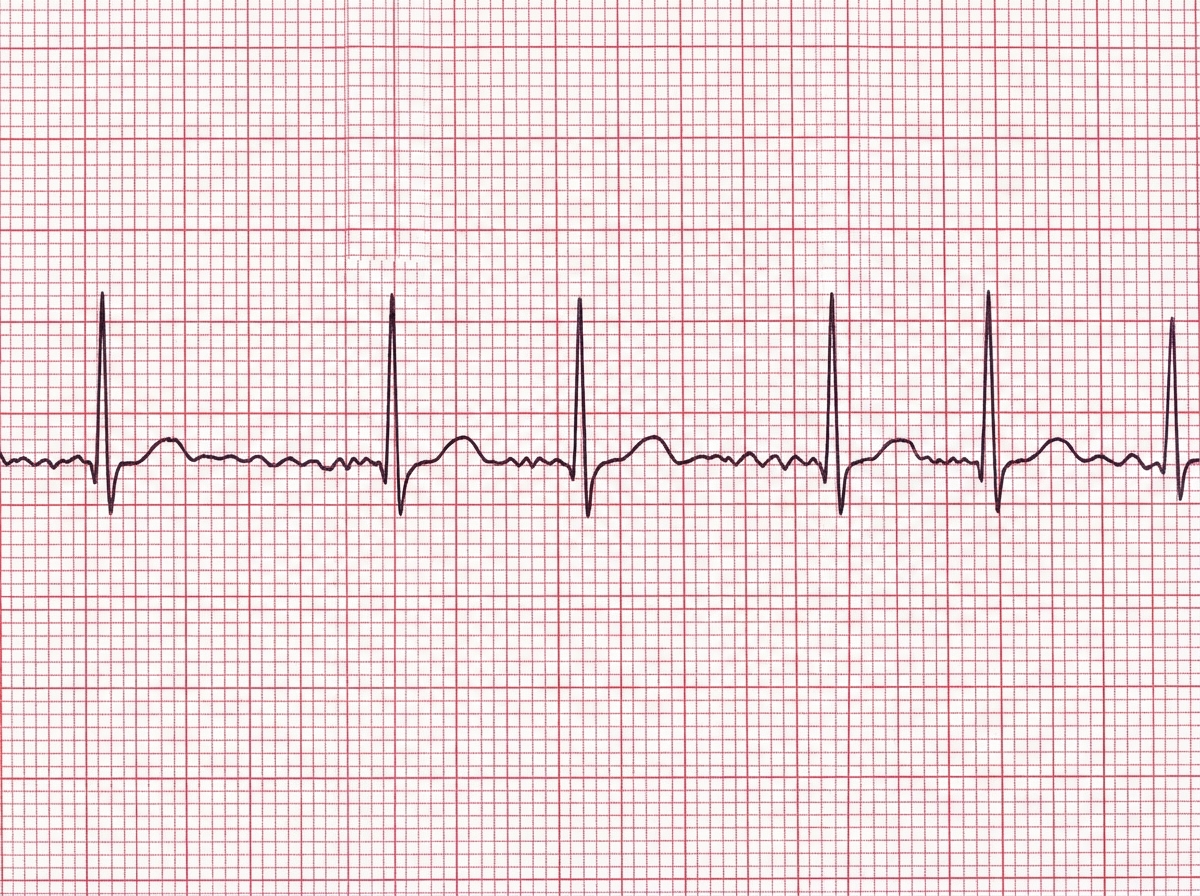
A 54-year-old patient is brought to the emergency department by ambulance with palpitations, lightheadedness, and generalized weakness. He was enjoying the long weekend with his friends at a prolonged destination bachelor’s party over the last several days. They all drank a great deal of alcohol. He can’t quite recall how much he had to drink but he did not blackout. Past medical history includes hypertension. He takes enalapril daily. His blood pressure is 110/75 mm Hg, pulse 140/min, respiratory rate 14/min, temperature 37.0°C (98.6°F). The patient appears ill and has an irregular pulse. An electrocardiogram is performed (see in the picture). The physician explains to the patient that he has an abnormal heartbeat and he needs to be started on anticoagulation therapy to avoid an ischemic stroke from a thrombus that may be forming in his heart. In which of the following locations is a thrombus most likely to be formed?
Q37
A 32-year-old woman presents to the emergency department with unilateral vision loss. She states it started suddenly this evening and this has never happened to her before. The patient is not followed by a primary care physician and is not currently taking any medications. She has had a few episodes of weakness or numbness in the past but states her symptoms usually resolve on their own. Her temperature is 97.6°F (36.4°C), blood pressure is 120/74 mmHg, pulse is 88/min, respirations are 12/min, and oxygen saturation is 98% on room air. Physical exam is notable for decreased sensation over the patient's dorsal aspect of her left foot. Visual exam reveals a loss of vision in the patient's left eye and she endorses pain in the eye on exam. Which of the following findings is also likely to be found in this patient?
Q38
Two days after admission for myocardial infarction and subsequent coronary angioplasty, a 65-year-old man becomes distressed and diaphoretic in the cardiac intensive care unit. Suddenly he is no longer responsive. Pulse oximetry does not show a tracing. He has a history of hypertension and depression. Prior to his admission, his medication included ramipril and aripiprazole. Examination shows no carotid pulse. An ECG is shown. After beginning chest compressions, which of the following is the most appropriate step in management of the patient?
Q39
A 15-year-old boy is brought to the emergency department after he passed out in the hallway. On presentation, he is alert but confused about why he is in the hospital. He says that he remembers seeing flashes of light to his right while walking out of class but cannot recall what happened next. His next memory is being woken up by emergency responders who wheeled him into an ambulance. A friend who was with him at the time says that he seemed to be swallowing repeatedly and staring out into space. He has never had an episode like this before, and his past medical history is unremarkable. Which of the following characteristics is most likely true of the cause of this patient's symptoms?
Q40
A 28-year-old man presents to the emergency department with lower extremity weakness. He was in his usual state of health until 10 days ago. He then began to notice his legs were “tiring out” during his workouts. This progressed to difficulty climbing the stairs to his apartment. He has asthma and uses albuterol as needed. He has no significant surgical or family history. He smokes marijuana daily but denies use of other recreational drugs. He is sexually active with his boyfriend of 2 years. He has never traveled outside of the country but was camping 3 weeks ago. He reports that he had diarrhea for several days after drinking unfiltered water from a nearby stream. On physical examination, he has 1/5 strength in his bilateral lower extremities. He uses his arms to get up from the chair. Achilles and patellar reflexes are absent. A lumbar puncture is performed, and results are as shown below:
Cerebral spinal fluid:
Color: Clear
Pressure: 15 cm H2O
Red blood cell count: 0 cells/µL
Leukocyte count: 3 cells/ µL with lymphocytic predominance
Glucose: 60 mg/dL
Protein: 75 mg/dL
A culture of the cerebral spinal fluid is pending. Which of the following is the part of the management for the patient’s most likely diagnosis?
Arrhythmias US Medical PG Practice Questions and MCQs
Question 31: A 25-year-old man presents to the emergency department complaining of palpitations, lightheadedness, and sweating. He just started working at an investment firm and has been working long hours to make a good impression. Today, he had a dozen cups of espresso to keep himself awake and working. He has never had such an episode before. His past medical history is unremarkable. His pulse is 150/min, blood pressure is 134/88 mm Hg, respirations are 12/min, and temperature is 36.7°C (98.0°F). ECG shows supraventricular tachycardia. Which of the following is the next best step in the management of this patient?
A. Drinking coffee
B. Synchronized cardioversion
C. Valsalva maneuver (Correct Answer)
D. Adenosine infusion
E. Dipping his face in cold water
Explanation: ***Valsalva maneuver***
- The Valsalva maneuver is a **first-line vagal maneuver** used to terminate **supraventricular tachycardia (SVT)** in a stable patient, as it increases vagal tone to slow heart rate.
- Given the patient's **hemodynamic stability** (BP 134/88 mmHg, no signs of shock), vagal maneuvers are the appropriate initial intervention.
*Drinking coffee*
- **Caffeine** is a stimulant that can *induce* or worsen tachycardia, making it an inappropriate and potentially harmful intervention in this situation.
- The patient's current symptoms are likely **caffeine-induced**, so more caffeine would exacerbate the problem.
*Synchronized cardioversion*
- **Synchronized cardioversion** is reserved for **unstable SVT** (e.g., hypotension, altered mental status, acute heart failure, ischemic chest pain), which is not present in this patient.
- It is an invasive procedure with risks and should only be used when less aggressive measures fail or the patient is in immediate danger.
*Adenosine infusion*
- **Adenosine** is an effective pharmacological agent for terminating SVT but is typically used if **vagal maneuvers fail** or are contraindicated.
- As this patient is stable, **vagal maneuvers** should be attempted first due to their non-invasive nature and rapid action.
*Dipping his face in cold water*
- While **diving reflex** (induced by cold water immersion) is a vagal maneuver that can terminate SVT, it is **less commonly used** and often less effective than the Valsalva maneuver.
- The Valsalva maneuver is generally the preferred and more practical initial vagal maneuver in an emergency setting.
Question 32: A 68-year-old man presents to the emergency department because of difficulty breathing and chest tightness for the last 3 days. He also has a productive cough with excessive amounts of green sputum. He has had chronic obstructive pulmonary disease for the past 10 years, but says that the cough and sputum are different compared to his baseline. He took 2 doses of nebulized albuterol and ipratropium at home, but that did not completely relieve his symptoms. He has a 50 pack-year smoking history and drinks alcohol occasionally. His vital signs include a blood pressure of 110/60 mm Hg, a temperature of 37.2 °C (98.9°F), a respiratory rate of 26/min, an irregular radial pulse at a rate of 110–120/min, and an oxygen saturation of 88%. On physical examination, the patient appears drowsy, crackles are heard on chest auscultation bilaterally, and the heart sounds are irregular. A chest X-ray shows hyperinflation of the lungs bilaterally, and the diaphragm is flattened. An ECG is ordered and shown in the accompanying image. Which of the following is the best initial treatment for this patient’s arrhythmia?
A. Synchronized cardioversion
B. Reversing bronchoconstriction and correction of electrolyte abnormalities (Correct Answer)
C. Metoprolol
D. Diltiazem
E. Catheter ablation of the cavotricuspid isthmus (CTI)
Explanation: ***Reversing bronchoconstriction and correction of electrolyte abnormalities***
- The ECG shows **multifocal atrial tachycardia (MAT)**, characterized by at least three different P-wave morphologies, an irregular heart rate, and an atrial rate usually between 100-150 bpm. This arrhythmia is commonly associated with severe pulmonary disease (like the patient's COPD exacerbation) and electrolyte imbalances (e.g., hypokalemia, hypomagnesemia).
- The **best initial treatment** involves addressing the underlying cause. For this patient, optimizing his COPD exacerbation by reversing bronchoconstriction (e.g., with inhaled bronchodilators) and correcting any electrolyte abnormalities (which can trigger and sustain MAT) are the most appropriate first steps before considering antiarrhythmic drugs.
*Synchronized cardioversion*
- Synchronized cardioversion is indicated for patients with **unstable tachyarrhythmias** (e.g., hypotension, altered mental status, signs of shock, acute heart failure, ischemic chest discomfort). While the patient is drowsy and has an irregular pulse, his blood pressure is stable, and there are no immediate signs of instability warranting urgent cardioversion.
- Cardioversion is generally **not effective** for MAT because the multiple ectopic atrial foci can immediately initiate new rhythms, making it unlikely to achieve sustained sinus rhythm.
*Metoprolol*
- **Beta-blockers** like metoprolol can be used to control the ventricular rate in MAT, but they should be used with extreme caution in patients with severe **COPD** or asthma due to the risk of exacerbating bronchospasm, even with cardioselective agents.
- Given the patient's acute COPD exacerbation, using a beta-blocker as an initial treatment approach could worsen his respiratory status, making it a less suitable choice.
*Diltiazem*
- **Non-dihydropyridine calcium channel blockers** like diltiazem can also be used for rate control in MAT. However, caution is advised in patients with compromised cardiac function or severe lung disease.
- While diltiazem may be considered if initial measures fail, addressing the underlying respiratory and electrolyte issues is the primary and safest initial approach before resorting to pharmacologic rate control agents that could have adverse effects.
*Catheter ablation of the cavotricuspid isthmus (CTI)*
- Catheter ablation of the CTI is the definitive treatment for **typical atrial flutter**, which is characterized by a "sawtooth" pattern on ECG (especially in leads II, III, aVF) due to a re-entrant circuit in the right atrium.
- The patient's ECG shows **multifocal atrial tachycardia (MAT)**, not atrial flutter. Therefore, CTI ablation is not indicated for this specific arrhythmia.
Question 33: A 40-year-old woman comes to the physician for a 6-month history of recurrent episodes of chest pain, racing pulse, dizziness, and difficulty breathing. The episodes last up to several minutes. She also reports urinary urgency and two episodes of loss of consciousness followed by spontaneous recovery. There is no personal or family history of serious illness. She does not smoke or drink alcohol. Vitals signs are within normal limits. Cardiopulmonary examination shows no abnormalities. Holter monitoring is performed. ECG recordings during episodes of tachycardia show a QRS duration of 100 ms, regular RR-interval, and absent P waves. Which of the following is the most likely underlying cause of this patient's condition?
A. AV node with slow and fast pathway (Correct Answer)
B. Pre-excitation of the ventricles
C. Mutations in genes that code for myocyte ion channels
D. Macroreentrant rhythm in the right atria through cavotricuspid isthmus
E. Fibrosis of the sinoatrial node and surrounding myocardium
Explanation: ***AV node with slow and fast pathway***
- This describes **AV nodal reentrant tachycardia (AVNRT)**, a common cause of **paroxysmal supraventricular tachycardia (PSVT)**. The ECG findings of **narrow QRS (100 ms)**, regular RR-interval, and **absent P waves** (often hidden within the QRS complex) are characteristic of AVNRT.
- The patient's symptoms of recurrent chest pain, racing pulse, dizziness, and spontaneous recovery from loss of consciousness fit the episodic nature of **AVNRT**. The presence of two pathways (slow and fast) within the AV node facilitates the reentrant circuit.
*Pre-excitation of the ventricles*
- **Pre-excitation syndromes** (e.g., Wolff-Parkinson-White syndrome) involve an accessory pathway that bypasses the AV node, leading to a **delta wave** and **short PR interval** on the baseline ECG.
- While they can cause SVT, the ECG during tachycardia would typically show a **wide QRS complex** if the accessory pathway is part of the reentrant circuit (antidromic), or a narrow QRS with a visible P wave if orthodromic and the accessory pathway is used for retrograde conduction, which doesn't fully align with the absent P waves and typically *normal* QRS during tachycardia as described.
*Mutations in genes that code for myocyte ion channels*
- This refers to **channelopathies** (e.g., long QT syndrome, Brugada syndrome), which predispose to **ventricular arrhythmias** like **polymorphic ventricular tachycardia** and **ventricular fibrillation**.
- These conditions typically cause **wide QRS tachycardias** and have distinct ECG patterns (e.g., prolonged QT interval, Brugada pattern) not described here. The narrow QRS and regular rhythm point away from primary ventricular channelopathies as the cause of this specific tachycardia.
*Macroreentrant rhythm in the right atria through cavotricuspid isthmus*
- This describes **atrial flutter**, which typically presents with characteristic **"sawtooth" F waves** on ECG, representing atrial activity.
- While atrial flutter can cause recurrent episodes of rapid heart rate, the ECG description of **absent P waves** and a **narrow QRS complex** without F waves makes atrial flutter less likely.
*Fibrosis of the sinoatrial node and surrounding myocardium*
- **Sinoatrial node dysfunction (sick sinus syndrome)** can lead to bradycardia, sinus pauses, or alternating bradycardia and tachycardia (tachy-brady syndrome).
- It does not primarily cause the described paroxysmal narrow-complex tachycardia with absent P waves. The patient's symptoms are more consistent with an abrupt-onset, regular supraventricular tachycardia.
Question 34: A 44-year-old man comes to the emergency department because of persistent palpitations for the past 2 hours. The day before, he was at a wedding, where he drank several glasses of wine and 9–10 vodka cocktails. He has never had similar symptoms before. He is a manager at a software company and has recently had a lot of work-related stress. He is otherwise healthy and takes no medications. His temperature is 36.5°C (97.7°F), pulse is 90/min and irregularly irregular, respirations are 13/min, and his blood pressure is 128/60 mm Hg. Physical examination shows no other abnormalities. An ECG is performed; no P-waves can be identified. Echocardiography shows no valvular abnormalities and normal ventricular function. One hour later, a repeat ECG shows normal P waves followed by narrow QRS complexes. He is still experiencing occasional palpitations. Which of the following is the most appropriate next step in management?
A. Electrical cardioversion
B. Defibrillation
C. Adenosine injection
D. Observation (Correct Answer)
E. Catheter ablation
Explanation: ***Observation***
- The patient experienced **paroxysmal atrial fibrillation (AF)** likely triggered by **binge alcohol consumption** (holiday heart syndrome), which has already spontaneously converted to normal sinus rhythm.
- Given his hemodynamic stability, normal ventricular function, and the transient nature of this isolated episode, **close observation** for recurrence is the most appropriate initial step.
*Electrical cardioversion*
- This is primarily used for **hemodynamically unstable AF** or for persistent AF that fails to convert spontaneously.
- The patient is currently **hemodynamically stable** and has already converted to normal sinus rhythm, making cardioversion unnecessary.
*Defibrillation*
- **Defibrillation** is used for life-threatening arrhythmias like **ventricular fibrillation** or **pulseless ventricular tachycardia**.
- It is not indicated for stable atrial fibrillation, and the patient has already converted to sinus rhythm.
*Adenosine injection*
- **Adenosine** is used to terminate **supraventricular tachycardias (SVTs)** by blocking the AV node.
- It is generally **ineffective for atrial fibrillation** and not indicated here as the patient is already in normal sinus rhythm.
*Catheter ablation*
- **Catheter ablation** is a definitive treatment for recurrent symptomatic AF or other arrhythmias that are refractory to medical management.
- This patient has experienced a **first-time episode** that spontaneously resolved, making ablation an overly aggressive and premature intervention.
Question 35: A 62-year-old woman comes to the physician for decreased vision and worsening headaches since this morning. She has hypertension and hypercholesterolemia. Pulse is 119/min and irregular. Current medications include ramipril and atorvastatin. Ocular and funduscopic examination shows no abnormalities. The findings of visual field testing are shown. Which of the following is the most likely cause of this patient's symptoms?
A. Occlusion of the posterior cerebral artery (Correct Answer)
B. Occlusion of anterior cerebral artery
C. Degeneration of the macula
D. Occlusion of the anterior inferior cerebellar artery
E. Impaired perfusion of the retina
Explanation: ***Occlusion of the posterior cerebral artery***
- The patient presents with **acute visual field defect** and **headache** in the context of an **irregular pulse** (atrial fibrillation).
- **Atrial fibrillation** is a major risk factor for **cardioembolic stroke**, particularly affecting the posterior circulation.
- The **posterior cerebral artery (PCA) supplies the occipital lobe**, which contains the primary visual cortex. PCA occlusion causes **contralateral homonymous hemianopia**, often with **macular sparing** due to collateral blood supply from the middle cerebral artery.
- The visual field defect pattern shown, combined with normal funduscopic examination (ruling out retinal pathology), is characteristic of **occipital cortex ischemia**.
- **Acute onset** with headache further supports an embolic stroke mechanism.
*Occlusion of anterior cerebral artery*
- Anterior cerebral artery (ACA) occlusion primarily affects the **frontal and medial parietal lobes**.
- Classic presentation includes **contralateral leg weakness** > arm weakness, sensory loss in the leg, and behavioral/personality changes.
- ACA strokes do **not cause visual field defects** or homonymous hemianopia.
*Degeneration of the macula*
- Macular degeneration causes **gradual central vision loss**, presenting with difficulty reading and central scotomas.
- This is a **chronic progressive condition**, not acute onset "since this morning."
- Would not cause **headache**, irregular pulse correlation, or the specific visual field pattern shown.
- Funduscopy would typically show **drusen** or retinal pigmentary changes.
*Occlusion of the anterior inferior cerebellar artery*
- AICA occlusion affects the **lateral pons and cerebellum**.
- Presents with **vertigo, nystagmus, ataxia, ipsilateral facial paralysis**, and hearing loss.
- Does **not affect the visual cortex** and would not cause homonymous visual field defects.
*Impaired perfusion of the retina*
- Central retinal artery occlusion causes **sudden monocular painless vision loss** (not bilateral field defects).
- Funduscopy would reveal **"cherry-red spot"** at the macula and retinal whitening.
- The question states funduscopic examination shows **no abnormalities**, excluding this diagnosis.
- Would not explain the bilateral homonymous field defect pattern.
Question 36: A 54-year-old patient is brought to the emergency department by ambulance with palpitations, lightheadedness, and generalized weakness. He was enjoying the long weekend with his friends at a prolonged destination bachelor’s party over the last several days. They all drank a great deal of alcohol. He can’t quite recall how much he had to drink but he did not blackout. Past medical history includes hypertension. He takes enalapril daily. His blood pressure is 110/75 mm Hg, pulse 140/min, respiratory rate 14/min, temperature 37.0°C (98.6°F). The patient appears ill and has an irregular pulse. An electrocardiogram is performed (see in the picture). The physician explains to the patient that he has an abnormal heartbeat and he needs to be started on anticoagulation therapy to avoid an ischemic stroke from a thrombus that may be forming in his heart. In which of the following locations is a thrombus most likely to be formed?
A. Posterior descending artery
B. Middle cerebral artery
C. Right coronary artery
D. Left main coronary artery
E. Left atrial appendage (Correct Answer)
Explanation: ***Left atrial appendage***
- In **atrial fibrillation**, the atria do not contract effectively, leading to **blood stasis** and increased risk of thrombus formation.
- The **left atrial appendage** is a small, blind-ended pouch in the left atrium, making it particularly prone to blood stasis and the most common site for thrombus formation in atrial fibrillation.
*Posterior descending artery*
- This artery supplies the **inferior wall of the left ventricle** and parts of the right ventricle; thrombus formation here typically leads to **myocardial infarction**, not systemic embolism from atrial fibrillation.
- Thrombi in the posterior descending artery are usually due to **atherosclerosis** and plaque rupture, distinct from the stasis-induced thrombi of atrial fibrillation.
*Middle cerebral artery*
- While a **middle cerebral artery stroke** can be a consequence of a thrombus embolizing from the heart (often from the left atrial appendage), this artery itself is the *destination* of the embolus, not the *source* of the thrombus.
- Thrombus formation *within* the middle cerebral artery is usually due to **atherosclerosis** of the cerebral vessels or small vessel disease.
*Right coronary artery*
- This artery supplies the **right ventricle**, right atrium, and often the SA and AV nodes; thrombus formation here also leads to **myocardial infarction**, not the source of an embolic stroke from atrial fibrillation.
- Similar to the posterior descending artery, thrombi in the right coronary artery are primarily due to **atherosclerotic disease**.
*Left main coronary artery*
- The **left main coronary artery** is a critical vessel that branches into the left anterior descending and circumflex arteries. **Thrombus formation** here causes extensive myocardial ischemia or infarction.
- Thrombi forming in the left main coronary artery are a result of **coronary artery disease** and do not typically embolize to cause systemic strokes in the context of atrial fibrillation.
Question 37: A 32-year-old woman presents to the emergency department with unilateral vision loss. She states it started suddenly this evening and this has never happened to her before. The patient is not followed by a primary care physician and is not currently taking any medications. She has had a few episodes of weakness or numbness in the past but states her symptoms usually resolve on their own. Her temperature is 97.6°F (36.4°C), blood pressure is 120/74 mmHg, pulse is 88/min, respirations are 12/min, and oxygen saturation is 98% on room air. Physical exam is notable for decreased sensation over the patient's dorsal aspect of her left foot. Visual exam reveals a loss of vision in the patient's left eye and she endorses pain in the eye on exam. Which of the following findings is also likely to be found in this patient?
A. Pruritus with exposure to heat
B. Symmetric lower extremity reflex loss
C. Ipsilateral loss of proprioception and vibration sensation
D. Electrical pain with neck flexion (Correct Answer)
E. Weakness with repeat exertion
Explanation: ***Electrical pain with neck flexion***
- The patient's presentation with **unilateral vision loss** (optic neuritis), sensory deficits, and a history of resolving neurological symptoms is highly suggestive of **multiple sclerosis (MS)**.
- **Lhermitte's sign**, characterized by an "electrical" sensation down the spine and into the limbs with neck flexion, is a classic symptom of MS due to **demyelination in the cervical spinal cord**.
*Pruritus with exposure to heat*
- While patients with MS can exhibit **Uhthoff's phenomenon** (worsening of neurological symptoms with heat due to decreased nerve conduction), pruritus (itching) is not a typical manifestation.
- Uhthoff's phenomenon usually involves a temporary worsening of existing neurological deficits, not new onset pruritus.
*Symmetric lower extremity reflex loss*
- MS typically causes **upper motor neuron lesions**, leading to **hyperreflexia** and spasticity, rather than reflex loss.
- **Symmetric reflex loss** would be more indicative of a peripheral neuropathy or a lower motor neuron disorder.
*Ipsilateral loss of proprioception and vibration sensation*
- While MS can affect sensory pathways and cause proprioception and vibration deficits, these are generally not **ipsilateral** to a specific motor or sensory deficit in a predictable manner like in a spinal cord hemisection (Brown-Séquard syndrome).
- The pattern of neurological deficits in MS is often disseminated in space and time, affecting various parts of the central nervous system.
*Weakness with repeat exertion*
- **Weakness with repeat exertion** specifically describes **myasthenia gravis**, a neuromuscular junction disorder.
- Myasthenia gravis is characterized by **fatigable weakness** that improves with rest and is caused by antibodies against acetylcholine receptors or muscle-specific kinase (MuSK).
Question 38: Two days after admission for myocardial infarction and subsequent coronary angioplasty, a 65-year-old man becomes distressed and diaphoretic in the cardiac intensive care unit. Suddenly he is no longer responsive. Pulse oximetry does not show a tracing. He has a history of hypertension and depression. Prior to his admission, his medication included ramipril and aripiprazole. Examination shows no carotid pulse. An ECG is shown. After beginning chest compressions, which of the following is the most appropriate step in management of the patient?
A. Intravenous procainamide
B. Cardiac catheterization
C. Intravenous amiodarone
D. Intravenous magnesium sulfate
E. Defibrillation (Correct Answer)
Explanation: ***Defibrillation***
- The ECG shows a **wide complex tachycardia** consistent with either **ventricular fibrillation (VF)** or **pulseless ventricular tachycardia (VT)**.
- In a patient who is **unresponsive and pulseless**, both VF and pulseless VT are treated identically with **immediate unsynchronized defibrillation** after initiating CPR, according to **ACLS guidelines**.
- **Defibrillation** is the definitive treatment to restore a perfusing rhythm and is the priority intervention after chest compressions have begun.
*Intravenous procainamide*
- **Procainamide** is an antiarrhythmic drug used for certain types of **stable ventricular tachycardia** or wide-complex tachycardia of uncertain type when the patient has a pulse.
- It is **contraindicated** in pulseless arrhythmias like VF or pulseless VT, where electrical therapy (defibrillation) is paramount.
- Administration would cause dangerous delay in definitive treatment.
*Cardiac catheterization*
- **Cardiac catheterization** is an invasive diagnostic and interventional procedure typically performed to evaluate and treat coronary artery disease.
- It is **not an immediate life-saving intervention** for a patient in **cardiac arrest**, which requires immediate electrical therapy.
- Catheterization may be considered after return of spontaneous circulation (ROSC) to address underlying ischemia.
*Intravenous amiodarone*
- **Amiodarone** is an antiarrhythmic agent used in **VF/pulseless VT that is refractory to initial defibrillation attempts** and after epinephrine administration.
- It is administered **after initial defibrillation attempts have failed**, not as the primary or first-line treatment.
- The ACLS algorithm recommends amiodarone after the third shock if VF/pulseless VT persists.
*Intravenous magnesium sulfate*
- **Magnesium sulfate** is the treatment of choice for **Torsades de Pointes**, a polymorphic ventricular tachycardia often associated with **prolonged QT interval**.
- The clinical presentation and ECG do not suggest Torsades de Pointes, and magnesium is not indicated as the initial treatment for VF or monomorphic VT.
- Magnesium may also be considered for refractory VF/VT with suspected hypomagnesemia.
Question 39: A 15-year-old boy is brought to the emergency department after he passed out in the hallway. On presentation, he is alert but confused about why he is in the hospital. He says that he remembers seeing flashes of light to his right while walking out of class but cannot recall what happened next. His next memory is being woken up by emergency responders who wheeled him into an ambulance. A friend who was with him at the time says that he seemed to be swallowing repeatedly and staring out into space. He has never had an episode like this before, and his past medical history is unremarkable. Which of the following characteristics is most likely true of the cause of this patient's symptoms?
A. Begins with 10-15 seconds of muscle contraction
B. Isolated to the left occipital lobe
C. Episodes with 3-4 hertz spike and wave discharges
D. Starts in the left occipital lobe and then generalizes (Correct Answer)
E. Demonstrates quick and repetitive jerks of extremities
Explanation: ***Starts in the left occipital lobe and then generalizes***
- The patient experienced **visual aura** (seeing flashes of light to his right), indicating seizure onset in the **left occipital lobe**, as visual pathways decussate.
- The subsequent **altered consciousness**, automatisms (**swallowing repeatedly**, staring into space), and postictal confusion suggest the seizure generalized.
*Begins with 10-15 seconds of muscle contraction*
- This description is characteristic of the **tonic phase** of a **tonic-clonic seizure**, which involves widespread muscle rigidity.
- The patient's description of a visual aura and automatisms is more consistent with a **focal seizure with impaired awareness** that may have secondary generalization, rather than a primary generalized tonic-clonic seizure.
*Isolated to the left occipital lobe*
- While the seizure likely *started* in the left occipital lobe due to the visual aura, the subsequent loss of awareness, automatisms, and postictal confusion indicate that the seizure activity did not remain *isolated* to this region but spread to other brain areas.
- An isolated occipital lobe seizure without spread would typically present as only visual symptoms without altered consciousness or automatisms.
*Episodes with 3-4 hertz spike and wave discharges*
- This **EEG pattern** is pathognomic for **absence seizures** (also known as petit mal seizures), which typically manifest as brief, sudden lapses of consciousness without a clear aura or the complex automatisms described.
- The patient's presentation with a visual aura, postictal confusion, and repeated swallowing is inconsistent with absence seizures.
*Demonstrates quick and repetitive jerks of extremities*
- This describes the **clonic phase** of a **tonic-clonic seizure** or **myoclonic seizures**.
- The patient's friend described staring into space and repeated swallowing (automatisms), not quick, repetitive jerking of extremities.
Question 40: A 28-year-old man presents to the emergency department with lower extremity weakness. He was in his usual state of health until 10 days ago. He then began to notice his legs were “tiring out” during his workouts. This progressed to difficulty climbing the stairs to his apartment. He has asthma and uses albuterol as needed. He has no significant surgical or family history. He smokes marijuana daily but denies use of other recreational drugs. He is sexually active with his boyfriend of 2 years. He has never traveled outside of the country but was camping 3 weeks ago. He reports that he had diarrhea for several days after drinking unfiltered water from a nearby stream. On physical examination, he has 1/5 strength in his bilateral lower extremities. He uses his arms to get up from the chair. Achilles and patellar reflexes are absent. A lumbar puncture is performed, and results are as shown below:
Cerebral spinal fluid:
Color: Clear
Pressure: 15 cm H2O
Red blood cell count: 0 cells/µL
Leukocyte count: 3 cells/ µL with lymphocytic predominance
Glucose: 60 mg/dL
Protein: 75 mg/dL
A culture of the cerebral spinal fluid is pending. Which of the following is the part of the management for the patient’s most likely diagnosis?
A. Aspirin
B. Intravenous methylprednisolone
C. Plasmapheresis (Correct Answer)
D. Doxycycline
E. Azithromycin
Explanation: ***Plasmapheresis***
- The patient exhibits classic signs of **Guillain-Barré Syndrome (GBS)**: **ascending paralysis** starting in the lower extremities, progression over days to weeks, and **areflexia**.
- The **CSF findings** of **elevated protein** with normal cell count (**albuminocytologic dissociation**) are characteristic of GBS. Plasmapheresis is a first-line treatment, as it removes pathogenic autoantibodies from the plasma.
*Aspirin*
- **Aspirin** is an antiplatelet agent used for cardiovascular disease prevention or acute ischemic events.
- It has no role in the treatment of GBS, which is an autoimmune demyelinating polyneuropathy.
*Intravenous methylprednisolone*
- While corticosteroids like **methylprednisolone** are used for some autoimmune conditions, they have been shown to be **ineffective** and potentially harmful in GBS.
- The primary treatments for GBS are **intravenous immunoglobulin (IVIG)** and **plasmapheresis**.
*Doxycycline*
- **Doxycycline** is a broad-spectrum antibiotic commonly used for bacterial infections like Lyme disease, rickettsial infections, and some STIs.
- It is not indicated for the autoimmune pathophysiology of GBS.
*Azithromycin*
- **Azithromycin** is a macrolide antibiotic frequently used for respiratory tract infections and certain sexually transmitted infections.
- It has no therapeutic benefit in the management of GBS.