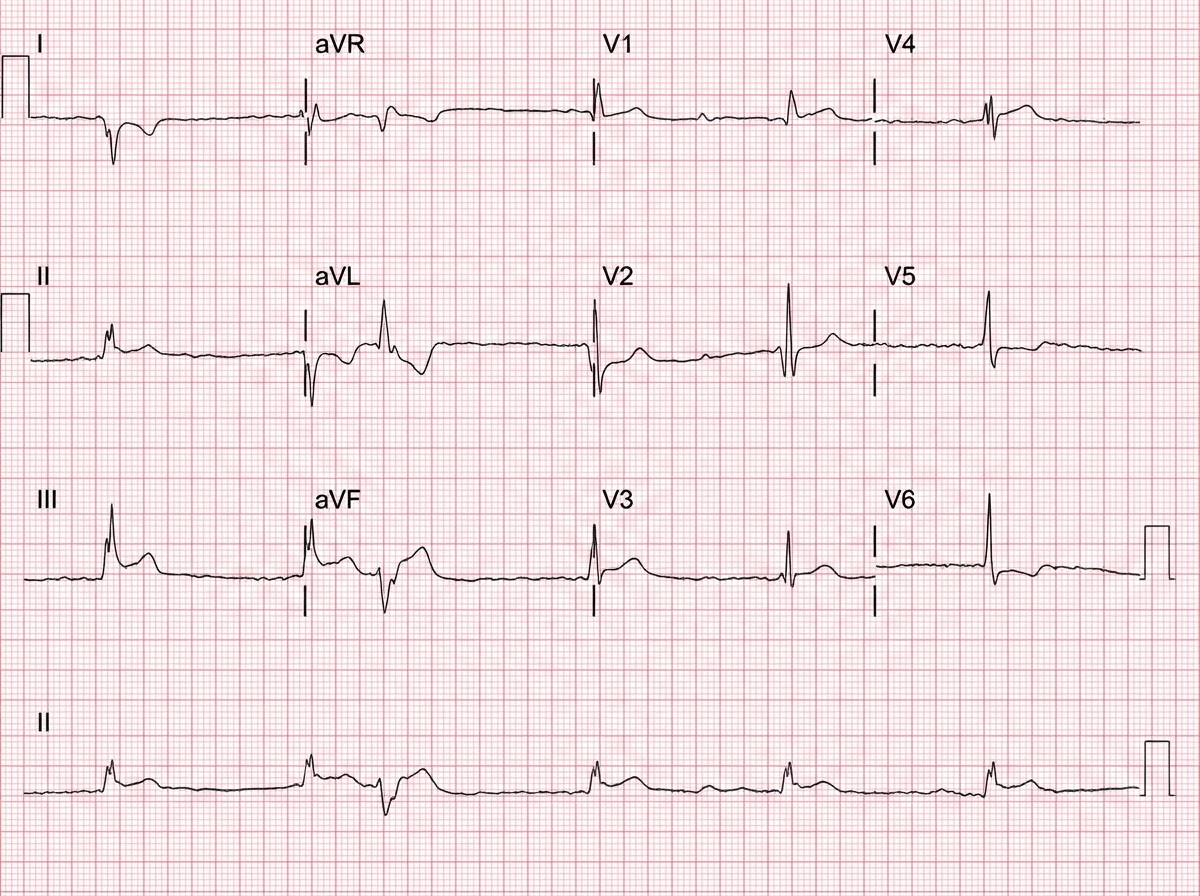
A 67-year-old man is brought to the emergency department because of the sudden onset of severe substernal chest pain at rest. He has a history of hypertension, type 2 diabetes mellitus, and alcohol use disorder. He is diaphoretic and appears anxious. The lungs are clear to auscultation. An ECG shows ST-segment elevations in leads I, aVL, V5, and V6. One hour later, he develops dyspnea and a productive cough with frothy sputum. Which of the following best describes the most likely underlying pathophysiology of this patient's dyspnea?
Q22
A 61-year-old man is brought to the emergency department by ambulance because of severe retrosternal chest pain and shortness of breath for 30 minutes. Paramedics report that an ECG recorded en route to the hospital showed ST-segment elevation in I, aVL, and the precordial leads. On arrival, the patient is unresponsive to painful stimuli. Examination shows neither respiration nor pulse. Despite appropriate lifesaving measures, he dies 10 minutes later. Which of the following is the most likely cause of death in this patient?
Q23
A 74-year-old woman is brought by ambulance to the emergency department and presents with a complaint of excruciating chest pain that started about 45 minutes ago. The patient was sitting in the garden when she 1st noticed the pain in the upper abdomen. The pain has persisted and now localizes underneath of the sternum and the left shoulder. Milk of magnesia and aspirin were tried with no relief. The patient had previous episodes of chest pain that were of lesser intensity and rarely lasted more than 10 minutes. She is diabetic and has been managed for hypertension and rheumatoid arthritis in the past. On examination, the patient is breathless and sweating profusely. The vital signs include blood pressure 140/90 mm Hg and heart rate 118/min. The electrocardiogram (ECG) shows Q waves in leads V2 and V3 and raised ST segments in leads V2, V3, V4, and V5. Laboratory studies (including cardiac enzymes at 6 hours after admission show:
Hematocrit 45%
Troponin T 1.5 ng/mL
Troponin I 0.28 ng/mL
Creatine kinase (CK)-MB 0.25 ng/mL
The patient is admitted and started on analgesia and reperfusion therapy. She shows initial signs of recovery until the 6th day of hospitalization when she starts vomiting and complaining of dizziness. Physical examination findings at this time included heart rate 110/min, temperature 37.7°C (99.9°F), blood pressure 90/60 mm Hg. Jugular venous pressure is 8 cm. A harsh pansystolic murmur is present at the left lower sternal border. ECG shows sinus tachycardia and ST-segment elevation with terminal negative T waves. Laboratory studies show:
Hematocrit 38%
Troponin T 1.15ng/mL
Troponin I 0.18 ng/mL
CK-MB 0.10 ng/mL
Which of the following best explains the patient's current clinical condition?
Q24
A 62-year-old man is brought to the emergency department because of right-sided weakness and subjective decreased sensation that started 30 minutes ago. The patient reports that his symptoms started to ease 5 minutes after onset and have now completely resolved. He has hypertension, hyperlipidemia, and type 2 diabetes mellitus. He has smoked one pack of cigarettes daily for 40 years. His current medications include lisinopril, metformin, and sitagliptin. He is 183 cm (6 ft 0 in) tall and weighs 105 kg (220 lb); BMI is 32 kg/m2. He appears well. His temperature is 36.5°C (97.7°F), pulse is 80/min, and blood pressure is 150/88 mm Hg. Neurological examination shows no abnormalities. Cardiac examination shows regular rate and rhythm and a left-sided carotid bruit. Complete blood count, serum glucose, and electrolytes are within the reference ranges. An ECG shows sinus rhythm and left axis deviation. A CT scan of the head without contrast shows no abnormalities. Carotid doppler ultrasound shows 45% stenosis in the left carotid artery and 15% stenosis in the right. Which of the following is the most appropriate next step in management?
Q25
A 53-year-old man with a past medical history significant for hyperlipidemia, hypertension, and hyperhomocysteinemia presents to the emergency department complaining of 10/10 crushing, left-sided chest pain radiating down his left arm and up his neck into the left side of his jaw. His ECG shows ST-segment elevation in leads V2-V4. He is taken to the cardiac catheterization laboratory for successful balloon angioplasty and stenting of a complete blockage in his left anterior descending coronary artery. Echocardiogram the following day shows decreased left ventricular function and regional wall motion abnormalities. A follow-up echocardiogram 14 days later shows a normal ejection fraction and no regional wall motion abnormalities. This post-infarct course illustrates which of the following concepts?
Q26
A 49-year-old man was brought to the emergency department by ambulance with complaints of sudden-onset chest pain that radiates into his neck and down his left arm. This substernal pain started 2 hours ago while he was having dinner. His past medical history is remarkable for hypercholesterolemia that is responsive to therapy with statins and coronary artery disease. His temperature is 37.0°C (98.6°F), blood pressure is 155/90 mm Hg, pulse is 112/min, and respiratory rate is 25/min. Troponin I levels are elevated. A 12-lead ECG was performed (see image). What is the most likely etiology of this patient’s presentation?
Q27
A 71-year-old man develops worsening chest pressure while shoveling snow in the morning. He tells his wife that he has a squeezing pain that is radiating to his jaw and left arm. His wife calls for an ambulance. On the way, he received chewable aspirin and 3 doses of sublingual nitroglycerin with little relief of pain. He has borderline diabetes and essential hypertension. He has smoked 15–20 cigarettes daily for the past 37 years. His blood pressure is 172/91 mm Hg, the heart rate is 111/min and the temperature is 36.7°C (98.0°F). On physical examination in the emergency department, he looks pale, very anxious and diaphoretic. His ECG is shown in the image. Troponin levels are elevated. Which of the following is the best next step in the management of this patient condition?
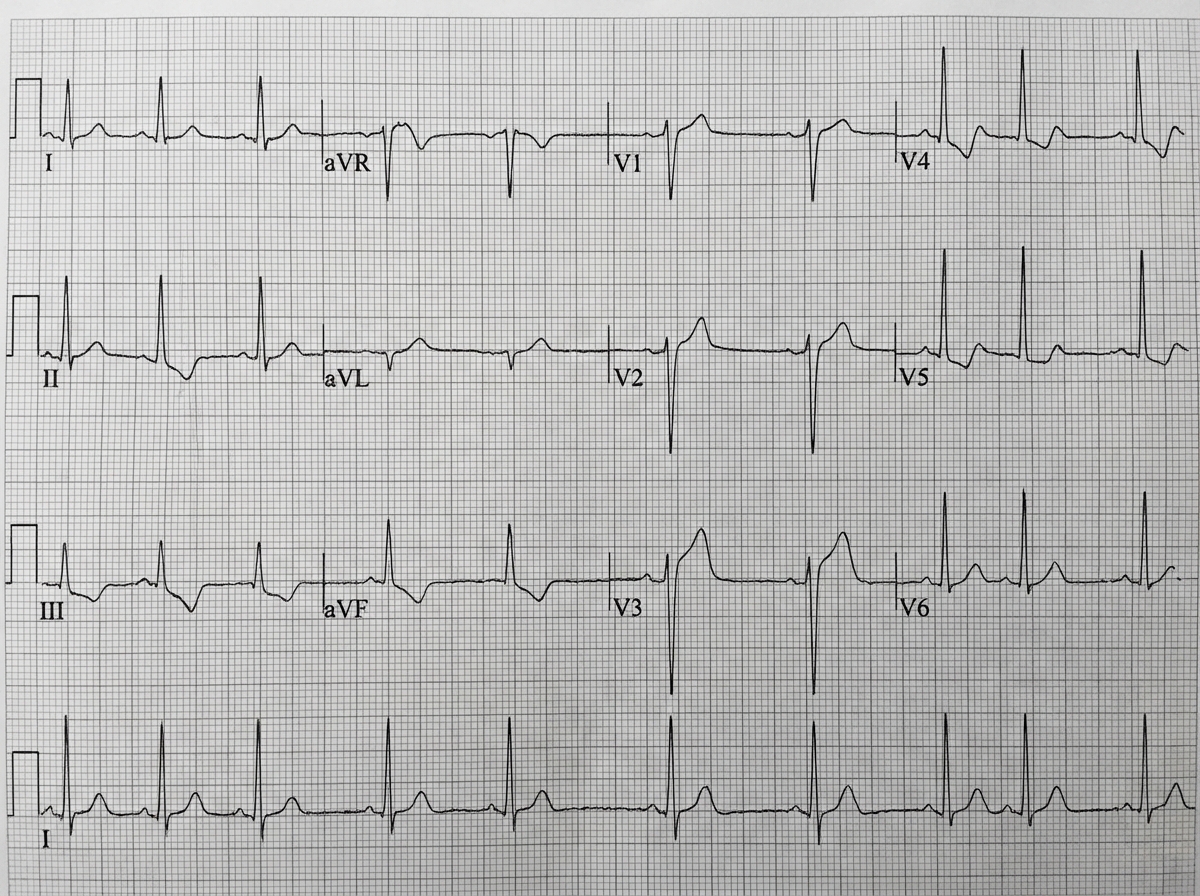
Q28
A 73-year-old man presents to the emergency department with acute substernal chest pain that began a few hours ago. The pain is described as a "pressure" that radiates to his left arm. His past medical history is significant for hypertension and hyperlipidemia. He is on chlorthalidone for his hypertension and simvastatin for hyperlipidemia. He has a 30 pack-year history of smoking and drinks 1-2 beers on weekends. His EKG shows ST depressions in the anterior precordial leads and he is given the proper medications and sent for emergency revascularization. Seven days later, he develops dyspnea that worsens in the supine position. Bibasilar crackles are heard on pulmonary auscultation. Cardiac exam reveals a new 3/6 holosystolic murmur best heard at the apex with radiation to the axilla. What is the most likely etiology of this patient's new symptoms?
Q29
A 62-year-old man with a past medical history of previous myocardial infarction, angina, hypertension, hyperlipidemia, diabetes mellitus, peripheral vascular disease, and below knee amputation has developed new chest pain. His medication includes insulin, hydrochlorothiazide, lisinopril, metoprolol, daily aspirin, atorvastatin, and nitroglycerin as needed. His vitals include: blood pressure 135/87 mm Hg, pulse 52/min, and respirations 17/min. Coronary arteriography shows a reduced ejection fraction, a 65% stenosis of the left anterior descending artery, and a 75% stenosis of the left circumflex artery. Which of the following is the recommended treatment for the patient?
Q30
A 50-year-old man presents the emergency department for intense chest pain, profuse sweating, and shortness of breath. The onset of these symptoms was 3 hours ago. The chest pain began after a heated discussion with a colleague at the community college where he is employed. Upon arrival, he is found conscious and responsive; the vital signs include a blood pressure of 130/80 mm Hg, a heart rate at 90/min, a respiratory rate at 20/min, and a body temperature of 36.4°C (97.5°F). His medical history is significant for hypertension diagnosed 7 years ago, which is well-controlled with a calcium channel blocker. The initial electrocardiogram (ECG) shows ST-segment depression in multiple consecutive leads, an elevated cardiac troponin T level, and normal kidney function. Which of the following would you expect to find in this patient?
ACS US Medical PG Practice Questions and MCQs
Question 21: A 67-year-old man is brought to the emergency department because of the sudden onset of severe substernal chest pain at rest. He has a history of hypertension, type 2 diabetes mellitus, and alcohol use disorder. He is diaphoretic and appears anxious. The lungs are clear to auscultation. An ECG shows ST-segment elevations in leads I, aVL, V5, and V6. One hour later, he develops dyspnea and a productive cough with frothy sputum. Which of the following best describes the most likely underlying pathophysiology of this patient's dyspnea?
A. Increased permeability of pulmonary vascular endothelial cells
B. Acute obstruction of a pulmonary artery segment
C. Transudation of plasma into the alveoli (Correct Answer)
D. Bacterial infiltration into the pulmonary parenchyma
E. Localized constriction of the pulmonary vasculature
Explanation: ***Transudation of plasma into the alveoli***
- The patient's presentation with **ST-segment elevation myocardial infarction (STEMI)** followed by rapid onset of **dyspnea** and **frothy sputum** strongly indicates **acute left heart failure** leading to **pulmonary edema**.
- In pulmonary edema due to heart failure, increased **hydrostatic pressure** in pulmonary capillaries forces plasma to **transudate** into the interstitial space and then into the alveoli, impairing gas exchange.
*Increased permeability of pulmonary vascular endothelial cells*
- This mechanism is characteristic of **acute respiratory distress syndrome (ARDS)**, where inflammation causes increased permeability, leading to protein-rich fluid exudation into the alveoli.
- While pulmonary edema is present in ARDS, the rapid onset in this case after an MI points towards a **cardiogenic** rather than an inflammatory cause.
*Acute obstruction of a pulmonary artery segment*
- This describes a **pulmonary embolism**, which typically presents with sudden dyspnea, pleuritic chest pain, and sometimes hemoptysis, but is less likely to cause diffuse frothy sputum or precede ST-segment elevations.
- An ECG with ST-segment elevations in leads I, aVL, V5, and V6 indicates a **lateral MI**, not signs consistent with pulmonary artery obstruction.
*Bacterial infiltration into the pulmonary parenchyma*
- This is the underlying pathophysiology of **bacterial pneumonia**, which usually has a more gradual onset, often with fever, chills, and purulent sputum.
- The rapid development of symptoms and the clear association with an acute cardiac event make pneumonia less likely in this scenario.
*Localized constriction of the pulmonary vasculature*
- Localized pulmonary vasoconstriction can occur in conditions like **pulmonary hypertension** or in response to localized hypoxia, but it does not directly explain sudden onset of dyspnea and frothy sputum in the context of an acute MI leading to pulmonary edema.
- This mechanism does not account for the widespread fluid accumulation seen in cardiogenic pulmonary edema.
Question 22: A 61-year-old man is brought to the emergency department by ambulance because of severe retrosternal chest pain and shortness of breath for 30 minutes. Paramedics report that an ECG recorded en route to the hospital showed ST-segment elevation in I, aVL, and the precordial leads. On arrival, the patient is unresponsive to painful stimuli. Examination shows neither respiration nor pulse. Despite appropriate lifesaving measures, he dies 10 minutes later. Which of the following is the most likely cause of death in this patient?
A. Left ventricular failure
B. Cardiac free wall rupture
C. Ventricular fibrillation (Correct Answer)
D. Ventricular aneurysm
E. Hemorrhagic stroke
Explanation: ***Ventricular fibrillation***
- The rapid onset of symptoms, severe chest pain, ST-segment elevation myocardial infarction (STEMI) involving extensive leads (I, aVL, and precordial), and sudden cardiac arrest without pulse or respiration strongly indicate a **malignant arrhythmia**, specifically ventricular fibrillation.
- In a STEMI, **ischemia** can rapidly trigger electrical instability in the myocardium, leading to disorganized electrical activity and immediate hemodynamic collapse.
*Left ventricular failure*
- While a large anterior STEMI could lead to **left ventricular failure**, the patient's immediate collapse and absence of respiration and pulse suggest sudden electrical rather than mechanical failure.
- **Left ventricular failure** typically manifests with progressive symptoms like severe dyspnea, pulmonary edema, and cardiogenic shock, which often allows for some period of clinical deterioration before death.
*Cardiac free wall rupture*
- **Cardiac free wall rupture** is a mechanical complication of MI that usually occurs several days post-infarction, though it can rarely occur acutely.
- It typically presents with **sudden severe chest pain**, hypotension, and rapid death due to **cardiac tamponade**, but the immediate timeline and ECG findings of extensive STEMI followed by sudden arrest are more consistent with an electrical event.
*Ventricular aneurysm*
- A **ventricular aneurysm** is a late complication of an MI, developing weeks to months after the event.
- It presents with symptoms like **heart failure**, arrhythmias, or mural thrombus formation, not as an acute cause of death within minutes of symptom onset.
*Hemorrhagic stroke*
- A **hemorrhagic stroke** would present with sudden neurological deficits, such as severe headache, altered consciousness, and focal neurological signs.
- While it can cause sudden death, the prominent chest pain and the ECG findings of widespread ST-segment elevation are indicative of a primary cardiac event.
Question 23: A 74-year-old woman is brought by ambulance to the emergency department and presents with a complaint of excruciating chest pain that started about 45 minutes ago. The patient was sitting in the garden when she 1st noticed the pain in the upper abdomen. The pain has persisted and now localizes underneath of the sternum and the left shoulder. Milk of magnesia and aspirin were tried with no relief. The patient had previous episodes of chest pain that were of lesser intensity and rarely lasted more than 10 minutes. She is diabetic and has been managed for hypertension and rheumatoid arthritis in the past. On examination, the patient is breathless and sweating profusely. The vital signs include blood pressure 140/90 mm Hg and heart rate 118/min. The electrocardiogram (ECG) shows Q waves in leads V2 and V3 and raised ST segments in leads V2, V3, V4, and V5. Laboratory studies (including cardiac enzymes at 6 hours after admission show:
Hematocrit 45%
Troponin T 1.5 ng/mL
Troponin I 0.28 ng/mL
Creatine kinase (CK)-MB 0.25 ng/mL
The patient is admitted and started on analgesia and reperfusion therapy. She shows initial signs of recovery until the 6th day of hospitalization when she starts vomiting and complaining of dizziness. Physical examination findings at this time included heart rate 110/min, temperature 37.7°C (99.9°F), blood pressure 90/60 mm Hg. Jugular venous pressure is 8 cm. A harsh pansystolic murmur is present at the left lower sternal border. ECG shows sinus tachycardia and ST-segment elevation with terminal negative T waves. Laboratory studies show:
Hematocrit 38%
Troponin T 1.15ng/mL
Troponin I 0.18 ng/mL
CK-MB 0.10 ng/mL
Which of the following best explains the patient's current clinical condition?
A. Aortic dissection complicating myocardial infarction
B. A new myocardial infarction (re-infarction)
C. Acute ventricular septal rupture complicating myocardial infarction (Correct Answer)
D. Acute pericarditis complicating myocardial infarction
E. Cardiac tamponade complicating myocardial infarction
Explanation: ***Acute ventricular septal rupture complicating myocardial infarction***
- The development of a **harsh pansystolic murmur** at the **left lower sternal border** along with signs of **heart failure** (hypotension, tachycardia, increased JVP) approximately a week after a large anterior MI is highly suggestive of **ventricular septal rupture (VSR)**.
- The continued ECG changes (ST elevation with terminal negative T waves) and elevated, though improving, cardiac enzymes are consistent with the ongoing myocardial injury and the complications related to it.
*Aortic dissection complicating myocardial infarction*
- **Aortic dissection** typically presents with **sudden, severe, tearing chest pain** radiating to the back, which is distinct from the patient's initial presentation.
- While it can cause hemodynamic instability, it does not typically produce a **pansystolic murmur** at the left lower sternal border.
*A new myocardial infarction (re-infarction)*
- While the patient is still experiencing symptoms and some ECG changes, the **prominent new pansystolic murmur** and signs of acute heart failure are more indicative of a **mechanical complication** than simply a new MI.
- The cardiac enzyme levels, though still elevated, are trending downwards, which would be inconsistent with a large new infarction.
*Acute pericarditis complicating myocardial infarction*
- **Acute pericarditis** would typically present with **pleuritic chest pain** that improves when leaning forward and a characteristic **pericardial friction rub**.
- It would not explain the **pansystolic murmur** or the sudden hemodynamic deterioration to the same extent as VSR.
*Cardiac tamponade complicating myocardial infarction*
- **Cardiac tamponade** is characterized by **Beck's triad** (hypotension, JVD, muffled heart sounds) and pulsus paradoxus. While the patient has hypotension and JVD, the presence of a **harsh pansystolic murmur** points away from tamponade and towards a structural defect.
Question 24: A 62-year-old man is brought to the emergency department because of right-sided weakness and subjective decreased sensation that started 30 minutes ago. The patient reports that his symptoms started to ease 5 minutes after onset and have now completely resolved. He has hypertension, hyperlipidemia, and type 2 diabetes mellitus. He has smoked one pack of cigarettes daily for 40 years. His current medications include lisinopril, metformin, and sitagliptin. He is 183 cm (6 ft 0 in) tall and weighs 105 kg (220 lb); BMI is 32 kg/m2. He appears well. His temperature is 36.5°C (97.7°F), pulse is 80/min, and blood pressure is 150/88 mm Hg. Neurological examination shows no abnormalities. Cardiac examination shows regular rate and rhythm and a left-sided carotid bruit. Complete blood count, serum glucose, and electrolytes are within the reference ranges. An ECG shows sinus rhythm and left axis deviation. A CT scan of the head without contrast shows no abnormalities. Carotid doppler ultrasound shows 45% stenosis in the left carotid artery and 15% stenosis in the right. Which of the following is the most appropriate next step in management?
A. Antiplatelet therapy (Correct Answer)
B. Carotid endarterectomy
C. Transthoracic echocardiogram
D. Carotid artery stenting
E. Intravenous alteplase therapy
Explanation: **Antiplatelet therapy**
- This patient experienced a **transient ischemic attack (TIA)** due to the sudden onset and complete resolution of symptoms. Antiplatelet therapy with **aspirin** or **clopidogrel** is crucial for secondary prevention of stroke in patients with TIA, especially given his multiple vascular risk factors and carotid bruit.
- The combination of **hypertension, hyperlipidemia, type 2 diabetes, smoking history, and obesity** significantly increases his risk of recurrent cerebrovascular events, making antiplatelet therapy an immediate and appropriate intervention.
*Carotid endarterectomy*
- **Carotid endarterectomy** is typically indicated for symptomatic carotid stenosis of **70% or greater** in patients with a TIA or non-disabling stroke, or for asymptomatic stenosis of 60% or greater in selected patients.
- This patient's carotid doppler ultrasound showed only **45% stenosis** in the left carotid artery, which is below the threshold for surgical intervention.
*Transthoracic echocardiogram*
- A **transthoracic echocardiogram (TTE)** may be considered to evaluate for a cardiac source of emboli (e.g., atrial fibrillation, patent foramen ovale, left ventricular thrombus) if the cause of TIA is unclear after initial workup.
- Given the presence of a **carotid bruit** and known vascular risk factors, carotid artery disease is the more likely etiology, and antiplatelet therapy is a more urgent initial step.
*Carotid artery stenting*
- **Carotid artery stenting** is generally reserved for patients with symptomatic carotid stenosis who are at high surgical risk for endarterectomy or have anatomical features that make endarterectomy difficult.
- Similar to endarterectomy, the **45% stenosis** in this patient's carotid artery is not severe enough to warrant stenting at this time.
*Intravenous alteplase therapy*
- **Intravenous alteplase** is indicated for acute ischemic stroke within a specific time window (typically 3-4.5 hours from symptom onset) when there is persistent neurological deficit.
- This patient's symptoms have **completely resolved**, indicating a TIA, not an acute ischemic stroke, thus making alteplase therapy inappropriate and potentially harmful.
Question 25: A 53-year-old man with a past medical history significant for hyperlipidemia, hypertension, and hyperhomocysteinemia presents to the emergency department complaining of 10/10 crushing, left-sided chest pain radiating down his left arm and up his neck into the left side of his jaw. His ECG shows ST-segment elevation in leads V2-V4. He is taken to the cardiac catheterization laboratory for successful balloon angioplasty and stenting of a complete blockage in his left anterior descending coronary artery. Echocardiogram the following day shows decreased left ventricular function and regional wall motion abnormalities. A follow-up echocardiogram 14 days later shows a normal ejection fraction and no regional wall motion abnormalities. This post-infarct course illustrates which of the following concepts?
A. Coronary collateral circulation
B. Ventricular remodeling
C. Myocardial hibernation
D. Myocardial stunning (Correct Answer)
E. Reperfusion injury
Explanation: ***Myocardial stunning***
- This refers to a temporary **post-ischemic contractile dysfunction** that persists even after blood flow has been restored following an acute ischemic event.
- The return to normal left ventricular function and absence of regional wall motion abnormalities after successful reperfusion indicates that the initial dysfunction was transient and not due to permanent myocardial damage.
- Classic timeframe: recovery occurs over **days to weeks** after reperfusion, as seen in this patient (14 days).
*Coronary collateral circulation*
- This involves the development of alternative pathways for blood supply to the myocardium when the primary coronary arteries are occluded.
- While it can mitigate the extent of myocardial injury, it generally doesn't explain the reversal of severe regional wall motion abnormalities and low ejection fraction to normal in such a short period after a complete blockage.
*Ventricular remodeling*
- This refers to changes in the **size, shape, and function of the ventricles** in response to myocardial injury or chronic pressure/volume overload, often leading to progressive heart failure.
- It typically involves *persistent* and *often detrimental* changes, which is contrary to the improvement seen in this patient's echocardiogram.
*Myocardial hibernation*
- This is a state of **persistently impaired myocardial function at rest** due to **chronic inadequate blood flow** that can improve with revascularization.
- Hibernation requires **pre-existing chronic ischemia** with baseline dysfunction prior to intervention, not an acute complete occlusion presenting as STEMI.
- This patient had an **acute presentation** with complete blockage and no history suggesting chronic stable ischemia, making stunning (not hibernation) the correct answer.
*Reperfusion injury*
- This is damage to the myocardial tissue that occurs **after blood flow is restored** to an ischemic area, often involving oxidative stress and inflammation.
- While it can worsen myocardial function, it is a complication of reperfusion that causes *additional damage*, not a phenomenon that explains the *recovery* of cardiac function after reperfusion.
Question 26: A 49-year-old man was brought to the emergency department by ambulance with complaints of sudden-onset chest pain that radiates into his neck and down his left arm. This substernal pain started 2 hours ago while he was having dinner. His past medical history is remarkable for hypercholesterolemia that is responsive to therapy with statins and coronary artery disease. His temperature is 37.0°C (98.6°F), blood pressure is 155/90 mm Hg, pulse is 112/min, and respiratory rate is 25/min. Troponin I levels are elevated. A 12-lead ECG was performed (see image). What is the most likely etiology of this patient’s presentation?
A. Coronary vasospasm
B. Right coronary artery occlusion (Correct Answer)
C. Left circumflex artery occlusion
D. Left anterior descending artery occlusion
E. Left main coronary artery occlusion
Explanation: ***Right coronary artery occlusion***
- The ECG shows significant **ST elevation in inferior leads (II, III, aVF)** and **ST depression in anterior leads (V1-V4)**, which is characteristic of an **inferior wall myocardial infarction**.
- **Inferior wall MIs** are typically caused by occlusion of the **right coronary artery (RCA)**. The reciprocal changes (ST depression in anterior leads) support this, indicating involvement of the posterolateral wall often supplied by the RCA.
*Coronary vasospasm*
- While coronary vasospasm (e.g., in **Prinzmetal angina**) can cause ST elevation, it usually presents with more transient symptoms that resolve with vasodilators, and the ST segment elevations are typically regional but often more widespread or dynamic.
- The patient's history of **coronary artery disease (CAD)** and persistent symptoms with elevated troponin point towards a fixed obstruction rather than vasospasm.
*Left circumflex artery occlusion*
- **Left circumflex artery occlusion** typically causes changes in leads I, aVL, V5, and V6 (high lateral or lateral wall MI), and sometimes posterior leads.
- The predominant ST elevation in leads II, III, and aVF is not characteristic of a primary **left circumflex artery occlusion**.
*Left anterior descending artery occlusion*
- **Left anterior descending (LAD) artery occlusion** usually results in **anterior or anteroseptal MI**, characterized by ST elevation in leads V1-V4 and potentially I and aVL.
- The ECG shows ST depression in V1-V4, which are reciprocal changes rather than direct signs of an **LAD occlusion**.
*Left main coronary artery occlusion*
- **Left main coronary artery occlusion** is a catastrophic event, often presenting with widespread ST depression in multiple leads with ST elevation in aVR (and sometimes V1).
- While life-threatening, the ECG pattern here with prominent inferior ST elevation and reciprocal anterior depression is more indicative of an **RCA occlusion** than a left main occlusion.
Question 27: A 71-year-old man develops worsening chest pressure while shoveling snow in the morning. He tells his wife that he has a squeezing pain that is radiating to his jaw and left arm. His wife calls for an ambulance. On the way, he received chewable aspirin and 3 doses of sublingual nitroglycerin with little relief of pain. He has borderline diabetes and essential hypertension. He has smoked 15–20 cigarettes daily for the past 37 years. His blood pressure is 172/91 mm Hg, the heart rate is 111/min and the temperature is 36.7°C (98.0°F). On physical examination in the emergency department, he looks pale, very anxious and diaphoretic. His ECG is shown in the image. Troponin levels are elevated. Which of the following is the best next step in the management of this patient condition?
A. CT scan of the chest with contrast
B. Echocardiography
C. Fibrinolysis
D. Clopidogrel, atenolol, anticoagulation and monitoring (Correct Answer)
E. Oral nifedipine
Explanation: ***Clopidogrel, atenolol, anticoagulation and monitoring***
- The ECG shows **ST depression in multiple leads (II, III, aVF, V3-V6)** and **ST elevation in aVR and V1**, which is highly suggestive of **non-ST elevation myocardial infarction (NSTEMI)** or a **posterior MI/extensive anterior ischemia**. Given the elevated troponin, the patient has an NSTEMI.
- Initial management for NSTEMI includes **dual antiplatelet therapy (aspirin and clopidogrel)**, **anticoagulation (e.g., heparin)**, and **beta-blockers (atenolol)**, along with continuous monitoring.
*CT scan of the chest with contrast*
- A CT scan with contrast would be indicated if **aortic dissection** was suspected, but the classic ECG findings and elevated troponins point away from that diagnosis as the primary concern.
- While other causes of chest pain should be considered, the **ECG and troponin elevation** make **acute coronary syndrome (ACS)** the most immediate and critical diagnosis.
*Echocardiography*
- Echocardiography is useful for assessing **cardiac function, wall motion abnormalities, and valvular disease**, but it is generally not the immediate next step in an NSTEMI after the initial stabilization and medication.
- It could be performed later to evaluate for complications such as **ventricular dysfunction** or **valvular issues**.
*Fibrinolysis*
- **Fibrinolysis** is indicated for **ST-elevation myocardial infarction (STEMI)** when PCI is not readily available, or for other thrombotic events, but not for NSTEMI.
- In NSTEMI, the primary treatment strategy includes **antiplatelets, anticoagulants**, and often **early invasive procedures (PCI)**, if indicated by risk stratification.
*Oral nifedipine*
- **Nifedipine**, a dihydropyridine calcium channel blocker, can be used for hypertension or angina, but it is **not first-line** therapy for **acute coronary syndrome**.
- **Beta-blockers like atenolol** are preferred in ACS to reduce myocardial oxygen demand and improve outcomes, whereas nifedipine can sometimes acutely worsen ischemia due to reflex tachycardia.
Question 28: A 73-year-old man presents to the emergency department with acute substernal chest pain that began a few hours ago. The pain is described as a "pressure" that radiates to his left arm. His past medical history is significant for hypertension and hyperlipidemia. He is on chlorthalidone for his hypertension and simvastatin for hyperlipidemia. He has a 30 pack-year history of smoking and drinks 1-2 beers on weekends. His EKG shows ST depressions in the anterior precordial leads and he is given the proper medications and sent for emergency revascularization. Seven days later, he develops dyspnea that worsens in the supine position. Bibasilar crackles are heard on pulmonary auscultation. Cardiac exam reveals a new 3/6 holosystolic murmur best heard at the apex with radiation to the axilla. What is the most likely etiology of this patient's new symptoms?
A. Ventricular wall aneurysm
B. Restrictive pericarditis
C. Papillary muscle rupture (Correct Answer)
D. Aortic stenosis
E. Arrhythmia
Explanation: ***Papillary muscle rupture***
- The sudden onset of **dyspnea**, **bibasilar crackles**, and a **new holosystolic murmur** after an acute myocardial infarction (MI) strongly suggests **mitral regurgitation**, often caused by papillary muscle rupture.
- This complication typically occurs **3-7 days post-MI** and leads to acute left heart failure, as described by the patient's worsening symptoms in the supine position and pulmonary edema.
*Ventricular wall aneurysm*
- A ventricular aneurysm is a late complication of MI, typically developing **weeks to months** later, not within 7 days.
- While it can cause heart failure and arrhythmias, a **new holosystolic murmur** is not a characteristic finding.
*Restrictive pericarditis*
- This condition involves the stiffening of the pericardium, leading to impaired ventricular filling, but it is typically a more **chronic process** and is not an acute complication of MI.
- The classic physical finding of a new holosystolic murmur with acute dyspnea is not consistent with restrictive pericarditis.
*Aortic stenosis*
- Aortic stenosis is a chronic valvular disease, usually presenting with a **systolic ejection murmur** best heard at the right upper sternal border, not a holosystolic murmur post-MI.
- While it can cause dyspnea, the acute onset following an MI with a new murmur suggests a different etiology.
*Arrhythmia*
- An arrhythmia can cause dyspnea and heart failure symptoms, but it would not explain the presence of a **new holosystolic murmur**, which indicates a structural cardiac issue.
- While common post-MI, the specific constellation of symptoms points to a mechanical complication.
Question 29: A 62-year-old man with a past medical history of previous myocardial infarction, angina, hypertension, hyperlipidemia, diabetes mellitus, peripheral vascular disease, and below knee amputation has developed new chest pain. His medication includes insulin, hydrochlorothiazide, lisinopril, metoprolol, daily aspirin, atorvastatin, and nitroglycerin as needed. His vitals include: blood pressure 135/87 mm Hg, pulse 52/min, and respirations 17/min. Coronary arteriography shows a reduced ejection fraction, a 65% stenosis of the left anterior descending artery, and a 75% stenosis of the left circumflex artery. Which of the following is the recommended treatment for the patient?
A. Increased beta blocker dosage
B. Coronary artery bypass grafting (CABG) (Correct Answer)
C. Angioplasty with stent placement
D. Extended release nitrate therapy
E. Heparin
Explanation: ***Coronary artery bypass grafting (CABG)***
- This patient has complex **multivessel coronary artery disease** (LAD and circumflex stenosis) with a **reduced ejection fraction** and a history of multiple comorbidities, making CABG the preferred revascularization strategy for improved outcomes.
- CABG offers a more complete revascularization in patients with significant disease burden and reduced left ventricular function, leading to better long-term survival and symptom relief compared to PCI in this population.
*Increased beta blocker dosage*
- The patient's current heart rate is 52/min, which is already at the lower end of the target range for beta-blocker therapy in cardiac patients, and further increasing the dose could lead to **bradycardia** and worsening symptoms.
- While beta-blockers are crucial for managing angina and improving outcomes post-MI, increasing the dose wouldn't address the underlying anatomical severe multi-vessel coronary artery disease.
*Angioplasty with stent placement*
- Although PCI (angioplasty with stent placement) can be used for coronary stenosis, in patients with **multivessel disease**, **reduced ejection fraction**, and **diabetes mellitus**, CABG generally offers superior long-term results and survival benefits.
- The complexity of the lesions (65% LAD, 75% circumflex) in a patient with significant comorbidities and extensive atherosclerotic disease makes PCI a less optimal choice here.
*Extended release nitrate therapy*
- Nitrates primarily provide **symptomatic relief** by causing vasodilation, but they do not address the severe underlying coronary stenoses or improve long-term outcomes in patients with complex, multivessel disease.
- The patient is already on PRN nitroglycerin, and while extended-release nitrates could help with angina, they are not a definitive treatment for significant arterial blockages requiring revascularization.
*Heparin*
- Heparin is an **anticoagulant** that may be used as part of initial management of acute coronary syndromes, but it provides only temporary stabilization and does not address the **definitive need for revascularization**.
- While anticoagulation plays a role in acute management, this patient requires **definitive anatomical correction** of his multivessel disease with significant stenoses, which only surgical or percutaneous revascularization can provide, with CABG being superior given his clinical profile.
Question 30: A 50-year-old man presents the emergency department for intense chest pain, profuse sweating, and shortness of breath. The onset of these symptoms was 3 hours ago. The chest pain began after a heated discussion with a colleague at the community college where he is employed. Upon arrival, he is found conscious and responsive; the vital signs include a blood pressure of 130/80 mm Hg, a heart rate at 90/min, a respiratory rate at 20/min, and a body temperature of 36.4°C (97.5°F). His medical history is significant for hypertension diagnosed 7 years ago, which is well-controlled with a calcium channel blocker. The initial electrocardiogram (ECG) shows ST-segment depression in multiple consecutive leads, an elevated cardiac troponin T level, and normal kidney function. Which of the following would you expect to find in this patient?
A. Subendocardial necrosis (Correct Answer)
B. Transmural necrosis
C. Incomplete occlusion of a coronary artery
D. Coronary artery spasm
E. Ventricular pseudoaneurysm
Explanation: ***Subendocardial necrosis***
- This patient's presentation with **ST-segment depression** and **elevated troponin T** indicates a **Non-ST-segment Elevation Myocardial Infarction (NSTEMI)**, which typically results from subendocardial ischemia and necrosis.
- Subendocardial tissue is most vulnerable to ischemia due to its high oxygen demand and distal location from the coronary arteries, making it the first region to suffer damage when oxygen supply is compromised.
*Transmural necrosis*
- **Transmural necrosis** is characteristic of a **ST-segment Elevation Myocardial Infarction (STEMI)**, which presents with persistent **ST-segment elevation** on ECG.
- This patient's ECG shows **ST-segment depression**, ruling out transmural involvement at the time of presentation.
*Incomplete occlusion of a coronary artery*
- While an NSTEMI usually involves an **incomplete occlusion** or **critical stenosis** of a coronary artery, the question asks what would be *found* in the patient's heart tissue, not the mechanism.
- The direct tissue consequence of incomplete occlusion leading to NSTEMI is **subendocardial necrosis**, which is a more specific answer about the pathological finding.
*Coronary artery spasm*
- Although **coronary artery spasm (Prinzmetal angina)** can cause chest pain and ECG changes, it typically presents with **transient ST-segment elevation** (not depression) and often resolves spontaneously.
- The elevated troponin T indicates myocardial necrosis, which is not typically a feature of uncomplicated coronary artery spasm, and the duration of symptoms (3 hours) suggests a more sustained event than a transient spasm.
*Ventricular pseudoaneurysm*
- A **ventricular pseudoaneurysm** is a **late complication of myocardial infarction**, typically occurring weeks to months after the acute event, due to rupture of the ventricular free wall contained by pericardium.
- Given the 3-hour symptom onset, it is highly unlikely to be present in the acute phase of myocardial infarction.