A 60-year-old man with a history of hypertension, diabetes, and hyperlipidemia was successfully managed for acute myocardial infarction involving the left anterior descending artery. Eight months after his discharge home, an echocardiogram reveals the presence of a ventricular aneurysm. The patient subsequently dies after a stroke. Which of the following best explains the sequence of events leading to this outcome?
Q12
A 58-year-old man comes to the emergency department for complaints of crushing chest pain for 4 hours. He was shoveling snow outside when the pain started. It is rated 7/10 and radiates to his left arm. An electrocardiogram (ECG) demonstrates ST-segment elevation in leads V2-4. He subsequently undergoes percutaneous coronary intervention (PCI) and is discharged with aspirin, clopidogrel, carvedilol, atorvastatin, and lisinopril. Five days later, the patient is brought to the emergency department by his wife with complaints of dizziness. He reports lightheadedness and palpitations for the past 2 hours but otherwise feels fine. His temperature is 99.7°F (37.6°C), blood pressure is 95/55 mmHg, pulse is 105/min, and respirations are 17/min. A pulmonary artery catheter is performed and demonstrates an increase in oxygen concentration at the pulmonary artery. What finding would you expect in this patient?
Q13
A 42-year-old man is brought to the emergency department 20 minutes after the sudden onset of severe chest pain, diaphoresis, shortness of breath, and palpitations. His symptoms occurred while he was at a party with friends. He has smoked one pack of cigarettes daily for 24 years. He uses cocaine occasionally. The last use was three hours ago. He appears pale. His pulse is 110/min, blood pressure is 178/106 mm Hg, and respirations are 24/min. His pupils are dilated and react sluggishly to light. The lungs are clear to auscultation. An ECG shows tachycardia and ST segment elevation in leads II, III, and aVF. While recording the ECG, the patient loses consciousness. A photo of the ECG at that point is shown. Which of the following is the most appropriate next step in management?
Q14
A 67-year-old man presents to the emergency department for squeezing and substernal chest pain. He states that he was at home eating dinner when his symptoms began. The patient has a past medical history of diabetes, hypertension, and dyslipidemia. He is currently taking atorvastatin, lisinopril, insulin, metformin, metoprolol, and aspirin. Six days ago he underwent percutaneous coronary intervention. His temperature is 99.5°F (37.5°C), blood pressure is 197/118 mmHg, pulse is 120/min, respirations are 17/min, and oxygen saturation is 98% on room air. Physical exam reveals an uncomfortable elderly man who is sweating. An ECG is ordered. Which of the following is the best next step in management for this patient?
Q15
A 64-year-old man presents to the emergency department with sudden onset of chest pain and an episode of vomiting. He also complains of ongoing nausea and heavy sweating (diaphoresis). He denies having experienced such symptoms before and is quite upset. Medical history is significant for hypertension and types 2 diabetes mellitus. He currently smokes and has smoked at least half a pack daily for the last 40 years. Vitals show a blood pressure of 80/50 mm Hg, pulse of 50/min, respirations of 20/min, temperature of 37.2°C (98.9°F), and oximetry is 99% before oxygen by facemask. Except for the patient being visibly distressed and diaphoretic, the examination is unremarkable. ECG findings are shown in the picture. Where is the most likely obstruction in this patient’s cardiac blood supply?
Q16
A 57-year-old man with a known angina pectoris starts to experience a severe burning retrosternal pain that radiates to his left hand. After 2 consecutive doses of sublingual nitroglycerin taken 5 minutes apart, there is no improvement in his symptoms, and the patient calls an ambulance. Emergency medical service arrives within 10 minutes and begins evaluation and prehospital management. The vital signs include: blood pressure 85/50 mm Hg, heart rate 96/min, respiratory rate 19/min, temperature 37.1℃ (98.9℉), and SpO2 89% on ambient air. Oxygen supply and intravenous access are established. An ECG shows the findings in the given image. Which of the following is a part of a proper further prehospital management strategy for this patient?
Q17
A 66-year-old man comes to the emergency department because of a 1-day history of chest pain, palpitations, and dyspnea on exertion. He had a similar episode 3 days ago and was diagnosed with an inferior wall myocardial infarction. He was admitted and a percutaneous transluminal coronary angioplasty was successfully done that day. A fractional flow reserve test during the procedure showed complete resolution of the stenosis. Laboratory tests including serum glucose, lipids, and blood count were within normal limits. He was discharged the day after the procedure on a drug regimen of aspirin, simvastatin, and isosorbide dinitrate. At the time of discharge, he had no chest pain or dyspnea. Presently, his vitals are normal and ECG at rest shows new T-wave inversion. Which of the following is the most reliable test for rapidly establishing the diagnosis in this patient?
Q18
A 65-year-old man presents to the emergency department for sudden weakness. He was doing mechanical work on his car where he acutely developed right-leg weakness and fell to the ground. He is accompanied by his wife, who said that this has never happened before. He was last seen neurologically normal approximately 2 hours prior to presentation. His past medical history is significant for hypertension and type II diabetes. His temperature is 98.8°F (37.1°C), blood pressure is 177/108 mmHg, pulse is 90/min, respirations are 15/min, and oxygen saturation is 99% on room air. Neurological exam reveals that he is having trouble speaking and has profound weakness of his right upper and lower extremity. Which of the following is the best next step in management?
Q19
A 67-year-old man comes to the emergency department because of retrosternal chest pressure and shortness of breath for 4 hours. The symptoms started while he was walking to work and have only minimally improved with rest. He has a history of type 2 diabetes mellitus. He has smoked one pack of cigarettes daily for 35 years. He appears uncomfortable. His pulse is 95/min. Serum studies show a normal troponin concentration. An ECG shows no abnormalities. Which of the following is the most likely underlying cause of this patient's symptoms?
Q20
A 67-year-old man presents to the emergency department with a 1-hour history of nausea and upper abdominal and substernal chest pain radiating to his lower jaw. He vomited several times before arriving at the hospital. His last visit to the primary care physician was 6 months ago during which he complained of fatigue, ‘slowing down’ on his morning walks, and abdominal pain that exacerbated by eating spicy food. His current medications include atorvastatin, metformin, insulin, omeprazole, aspirin, enalapril, nitroglycerin, and metoprolol. Today, his blood pressure is 95/72 mm Hg in his right arm and 94/73 in his left arm, heart rate is 110/min, temperature is 37.6°C (99.6°F), and respiratory rate is 30/min. On physical examination, he is diaphoretic and his skin is cool and clammy. His cardiac enzymes were elevated. He is treated appropriately and is admitted to the hospital. On day 5 of his hospital stay, he suddenly develops breathlessness. His blood pressure drops to 80/42 mm Hg. On examination, bibasilar crackles are heard. Cardiac auscultatory reveals a high pitched holosystolic murmur over the apex. Which of the following most likely lead to the deterioration of this patient’s condition?
ACS US Medical PG Practice Questions and MCQs
Question 11: A 60-year-old man with a history of hypertension, diabetes, and hyperlipidemia was successfully managed for acute myocardial infarction involving the left anterior descending artery. Eight months after his discharge home, an echocardiogram reveals the presence of a ventricular aneurysm. The patient subsequently dies after a stroke. Which of the following best explains the sequence of events leading to this outcome?
A. Stroke occurring because of a deep venous thrombosis
B. Stroke occurring as result of a mural thrombus (Correct Answer)
C. Ventricular free wall rupture leading to global hypotension
D. Stroke occurring because of a paradoxical embolus
E. Rupture of an aneurysm leading to hemorrhagic stroke
Explanation: ***Stroke occurring as result of a mural thrombus***
- A **ventricular aneurysm**, especially after a large anterior MI, creates a region of **stasis** and **dyskinetic wall motion**, predisposing to the formation of a **mural thrombus** inside the ventricle.
- Embolization of this **mural thrombus** to the cerebral circulation can lead to an **ischemic stroke**.
*Stroke occurring because of a deep venous thrombosis*
- **Deep venous thrombosis (DVT)** typically causes a **pulmonary embolism** when dislodged, not a systemic stroke, unless a **patent foramen ovale** or other shunt is present, which is not mentioned here.
- While prolonged immobility after an MI can increase DVT risk, it is less likely to directly cause a stroke in this context compared to a mural thrombus.
*Ventricular free wall rupture leading to global hypotension*
- **Ventricular free wall rupture** is an acute, catastrophic event usually occurring within days to weeks post-MI, causing **cardiac tamponade** and sudden death due to profound hypotension.
- The patient's presentation with an aneurysm diagnosed 8 months post-MI and subsequent stroke does not fit the timeline or typical outcome of free wall rupture.
*Stroke occurring because of a paradoxical embolus*
- A **paradoxical embolus** occurs when a venous thrombus (e.g., from a DVT) crosses from the right side to the left side of the circulation through an intracardiac shunt like a **patent foramen ovale (PFO)**.
- While possible, it's a less direct explanation in the presence of a ventricular aneurysm, which is a significant source of systemic thromboembolism.
*Rupture of an aneurysm leading to hemorrhagic stroke*
- A **ventricular aneurysm** is a weakened, bulging wall of the left ventricle and typically does not rupture to cause a hemorrhagic stroke. Its primary complication is **thrombosis** and subsequent embolism.
- A **hemorrhagic stroke** results from bleeding within the brain, usually from ruptured cerebral blood vessels (e.g., due to hypertension or cerebral aneurysm), not from a cardiac ventricular aneurysm.
Question 12: A 58-year-old man comes to the emergency department for complaints of crushing chest pain for 4 hours. He was shoveling snow outside when the pain started. It is rated 7/10 and radiates to his left arm. An electrocardiogram (ECG) demonstrates ST-segment elevation in leads V2-4. He subsequently undergoes percutaneous coronary intervention (PCI) and is discharged with aspirin, clopidogrel, carvedilol, atorvastatin, and lisinopril. Five days later, the patient is brought to the emergency department by his wife with complaints of dizziness. He reports lightheadedness and palpitations for the past 2 hours but otherwise feels fine. His temperature is 99.7°F (37.6°C), blood pressure is 95/55 mmHg, pulse is 105/min, and respirations are 17/min. A pulmonary artery catheter is performed and demonstrates an increase in oxygen concentration at the pulmonary artery. What finding would you expect in this patient?
A. Widespread ST-segment elevations
B. Harsh, loud, holosystolic murmur at the lower left sternal border (Correct Answer)
C. Pulseless electrical activity
D. Drop of systolic blood pressure by 20 mmHg during inspiration
E. Normal findings
Explanation: ***Harsh, loud, holosystolic murmur at the lower left sternal border***
- This patient's presentation, including recent **anterior STEMI**, dizziness, lightheadedness, palpitations, hypotension, tachycardia, and **increased oxygen saturation in the pulmonary artery** (oxygen "step-up" indicating a left-to-right shunt), is highly suggestive of **ventricular septal rupture (VSR)**.
- VSR is a **mechanical complication** of MI that typically occurs **3-7 days post-infarction** when the necrotic myocardium is weakest.
- A **VSR** causes a **harsh, loud, holosystolic murmur** best heard at the **lower left sternal border** due to turbulent blood flow through the septal defect from the left ventricle to the right ventricle.
- The left-to-right shunt results in oxygenated blood from the left ventricle mixing with deoxygenated blood in the right ventricle, causing the characteristic oxygen saturation step-up detected by pulmonary artery catheterization.
*Widespread ST-segment elevations*
- Widespread ST-segment elevations are characteristic of **acute pericarditis**, which typically presents with **pleuritic chest pain** that improves when leaning forward and a **friction rub**, not the hemodynamic compromise described here.
- While **Dressler syndrome** (post-MI pericarditis) can occur weeks after MI, the acute hemodynamic instability, left-to-right shunt evidence, and 5-day timeframe point to VSR rather than pericarditis.
*Pulseless electrical activity*
- **Pulseless electrical activity (PEA)** indicates cardiac arrest with organized electrical activity but no mechanical cardiac output, resulting in an **unpalpable pulse**.
- The patient has a documented pulse of **105/min**, which directly contradicts PEA.
- A patient in PEA would be unconscious and unable to report symptoms for 2 hours.
*Drop of systolic blood pressure by 20 mmHg during inspiration*
- A drop in systolic blood pressure >10 mmHg during inspiration (**pulsus paradoxus**) is characteristic of **cardiac tamponade** or severe obstructive airway disease.
- While **free wall rupture** leading to tamponade is another mechanical complication post-MI, the **oxygen saturation step-up** in the pulmonary artery is pathognomonic for an **intracardiac shunt** (VSR), not tamponade.
- Tamponade would show equalization of diastolic pressures across all chambers, not increased PA oxygen saturation.
*Normal findings*
- The patient presents with clear evidence of hemodynamic compromise: **hypotension (95/55 mmHg)**, **tachycardia (105/min)**, dizziness, and lightheadedness.
- The **oxygen saturation step-up** in the pulmonary artery is an objective abnormal finding indicating an intracardiac left-to-right shunt.
- Therefore, normal findings are incompatible with this clinical presentation.
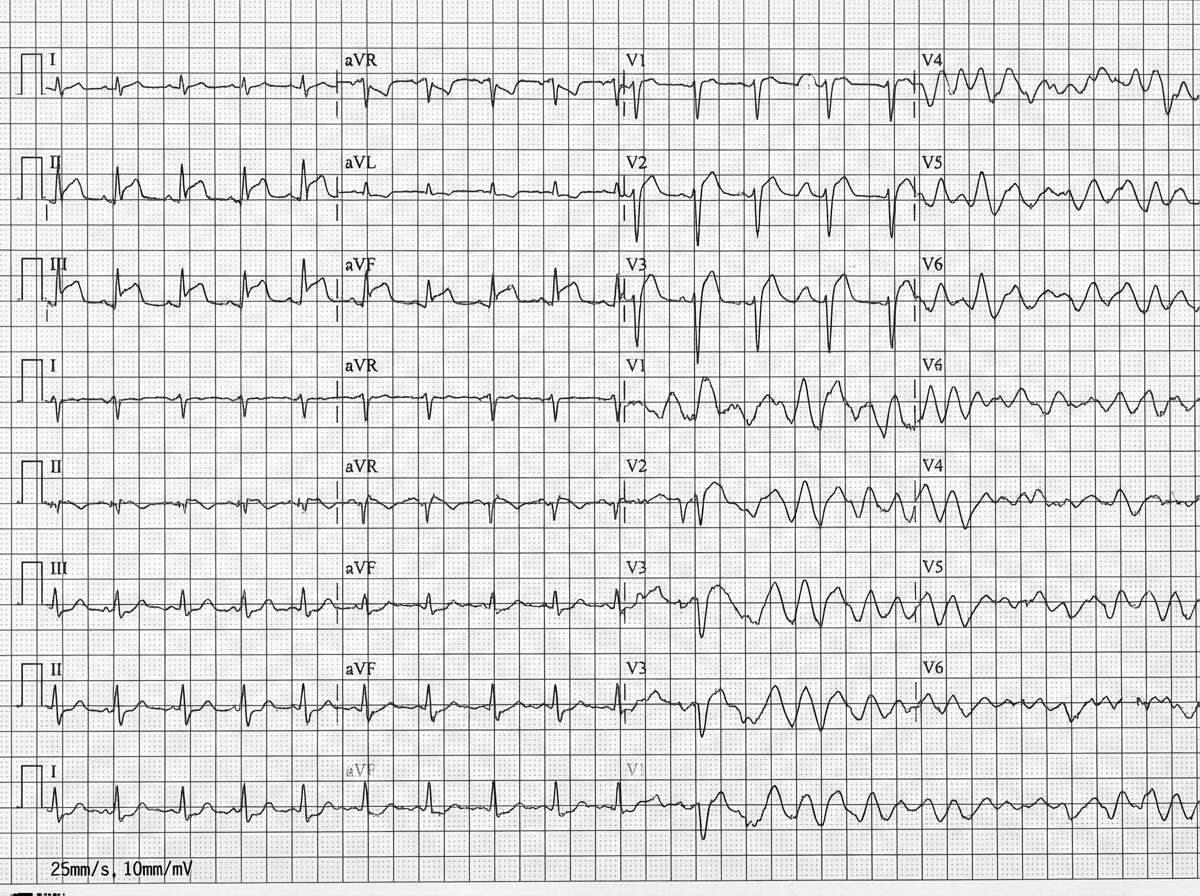
Question 13: A 42-year-old man is brought to the emergency department 20 minutes after the sudden onset of severe chest pain, diaphoresis, shortness of breath, and palpitations. His symptoms occurred while he was at a party with friends. He has smoked one pack of cigarettes daily for 24 years. He uses cocaine occasionally. The last use was three hours ago. He appears pale. His pulse is 110/min, blood pressure is 178/106 mm Hg, and respirations are 24/min. His pupils are dilated and react sluggishly to light. The lungs are clear to auscultation. An ECG shows tachycardia and ST segment elevation in leads II, III, and aVF. While recording the ECG, the patient loses consciousness. A photo of the ECG at that point is shown. Which of the following is the most appropriate next step in management?
A. Administer lidocaine
B. Unsynchronized cardioversion (Correct Answer)
C. Administer epinephrine
D. Coronary angiography
E. Synchronized cardioversion
Explanation: ***Unsynchronized cardioversion***
- The ECG shows **ventricular fibrillation (VF)**, characterized by chaotic, irregular electrical activity without distinct QRS complexes, indicating a life-threatening arrhythmia.
- In a patient who has lost consciousness due to VF, immediate **defibrillation (unsynchronized cardioversion)** is crucial to restore normal sinus rhythm and prevent sudden cardiac death.
- Note: Unsynchronized cardioversion and defibrillation are **synonymous terms** for delivering an unsynchronized shock, with "defibrillation" being the preferred ACLS terminology for VF/pulseless VT.
*Administer lidocaine*
- While lidocaine is an **antiarrhythmic** used in some ventricular arrhythmias, it is typically administered after initial defibrillation attempts have failed or as an adjunct therapy.
- It is not the primary treatment for **unstable ventricular fibrillation**, which requires immediate electrical therapy.
*Administer epinephrine*
- Epinephrine is a **vasopressor** used during cardiac arrest to improve coronary and cerebral perfusion.
- It is administered during **cardiopulmonary resuscitation (CPR)** intervals, usually after initial defibrillation attempts, but not as the first line treatment for VF.
*Coronary angiography*
- Coronary angiography is an **invasive diagnostic procedure** to visualize coronary arteries and identify blockages, suggested by the patient's symptoms and ST elevation in the initial ECG leads.
- However, in the context of **cardiac arrest due to VF**, immediate life-saving interventions take precedence over diagnostic procedures.
*Synchronized cardioversion*
- **Synchronized cardioversion** delivers an electrical shock timed to the R-wave of the QRS complex to treat **tachyarrhythmias with a pulse** (e.g., ventricular tachycardia, atrial fibrillation with rapid ventricular response).
- It is **contraindicated in ventricular fibrillation** because there are no organized QRS complexes to synchronize with, and attempting synchronization can delay life-saving defibrillation.
Question 14: A 67-year-old man presents to the emergency department for squeezing and substernal chest pain. He states that he was at home eating dinner when his symptoms began. The patient has a past medical history of diabetes, hypertension, and dyslipidemia. He is currently taking atorvastatin, lisinopril, insulin, metformin, metoprolol, and aspirin. Six days ago he underwent percutaneous coronary intervention. His temperature is 99.5°F (37.5°C), blood pressure is 197/118 mmHg, pulse is 120/min, respirations are 17/min, and oxygen saturation is 98% on room air. Physical exam reveals an uncomfortable elderly man who is sweating. An ECG is ordered. Which of the following is the best next step in management for this patient?
A. Stress testing
B. Angiography (Correct Answer)
C. Cardiac troponins
D. Creatine kinase-MB
E. Myoglobin
Explanation: ***Correct: Angiography***
- This patient presenting with **acute chest pain 6 days post-PCI** is at high risk for **stent thrombosis or acute in-stent restenosis**, which represents a life-threatening emergency.
- Given the **clinical instability** (severe hypertension 197/118, tachycardia 120/min, diaphoresis) and classic ACS symptoms in the immediate post-PCI period, **urgent coronary angiography** is the best next step in management.
- While ECG and troponins are important diagnostic tools, this patient requires **immediate intervention** to evaluate the recent PCI site and potentially perform emergent revascularization.
- In the setting of suspected **acute stent thrombosis**, time to reperfusion is critical, and angiography allows both diagnosis and treatment.
*Incorrect: Cardiac troponins*
- While troponins are essential biomarkers for myocardial injury and should be obtained, they are a **diagnostic test** rather than definitive management.
- Waiting for troponin results would delay definitive management in a patient with clear clinical evidence of ACS.
- In this high-risk post-PCI patient with active symptoms, management should not wait for biomarker confirmation.
*Incorrect: Stress testing*
- Stress testing is **absolutely contraindicated** in patients with active chest pain and suspected acute MI.
- It could precipitate further myocardial ischemia, arrhythmias, or cardiac arrest.
- Stress testing is reserved for risk stratification in stable patients or after ACS has been ruled out.
*Incorrect: Creatine kinase-MB*
- CK-MB is less sensitive and specific than troponins for myocardial injury, as it can be elevated in skeletal muscle conditions.
- It has a shorter elevation window and has largely been replaced by troponins in modern practice.
- Like troponins, it would not change the immediate management need in this clinically unstable patient.
*Incorrect: Myoglobin*
- Myoglobin lacks cardiac specificity (present in both cardiac and skeletal muscle) and has poor diagnostic accuracy for MI.
- Its rapid rise and fall make it unreliable, and it generates many false positives.
- It has no role in guiding management decisions in suspected ACS.
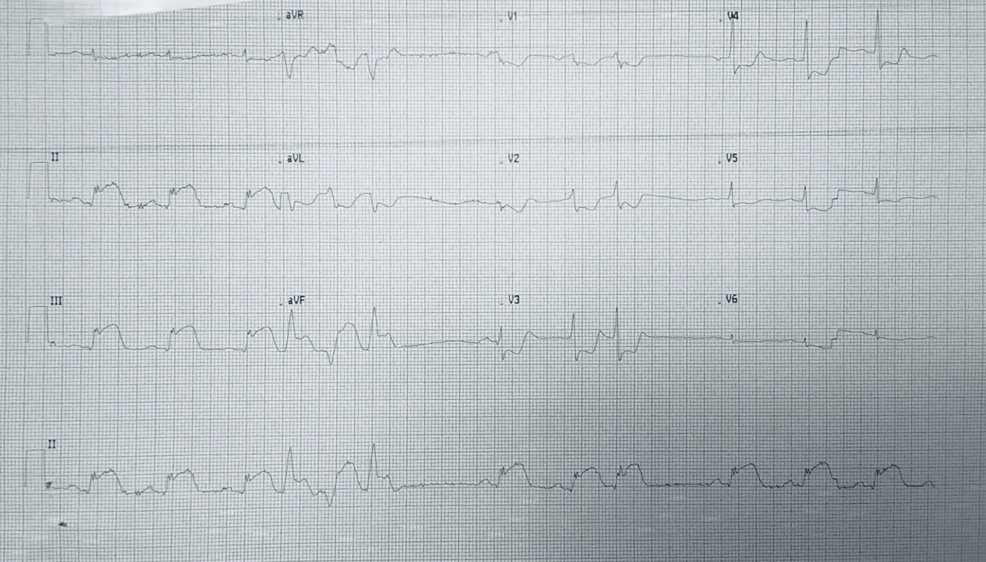
Question 15: A 64-year-old man presents to the emergency department with sudden onset of chest pain and an episode of vomiting. He also complains of ongoing nausea and heavy sweating (diaphoresis). He denies having experienced such symptoms before and is quite upset. Medical history is significant for hypertension and types 2 diabetes mellitus. He currently smokes and has smoked at least half a pack daily for the last 40 years. Vitals show a blood pressure of 80/50 mm Hg, pulse of 50/min, respirations of 20/min, temperature of 37.2°C (98.9°F), and oximetry is 99% before oxygen by facemask. Except for the patient being visibly distressed and diaphoretic, the examination is unremarkable. ECG findings are shown in the picture. Where is the most likely obstruction in this patient’s cardiac blood supply?
A. Left anterior descending artery
B. There is no obstruction
C. Left circumflex artery
D. Left main coronary artery
E. Right coronary artery (Correct Answer)
Explanation: ***Right coronary artery***
- The ECG shows significant **ST elevation in leads II, III, and aVF**, indicating an **inferior wall myocardial infarction**. This region of the heart is typically supplied by the **right coronary artery (RCA)**.
- The patient's presentation with **bradycardia (pulse 50/min)**, **hypotension (BP 80/50 mmHg)**, and **nausea/vomiting** is classic for an inferior MI, often due to RCA occlusion compromising blood supply to the **SA and AV nodes** (which are frequently supplied by the RCA).
*Left anterior descending artery*
- Obstruction of the **LAD** typically causes **ST elevation in anterior leads (V1-V4)**, which is not seen here.
- An LAD occlusion would present as an **anterior MI**, usually without the severe bradycardia and hypotension often seen with inferior MIs caused by RCA occlusion.
*There is no obstruction*
- The patient's symptoms of **sudden onset chest pain, nausea, diaphoresis**, and particularly the **ECG findings of ST elevation** are highly indicative of an **acute myocardial infarction**, which is caused by coronary artery obstruction.
- The severe hemodynamic instability (hypotension, bradycardia) further points towards a significant cardiac event due to occlusion.
*Left circumflex artery*
- **LCx occlusion** usually leads to **lateral wall MI**, characterized by ST elevation in leads **I, aVL, V5, and V6**, which is not the primary pattern observed in this ECG.
- While LCx can sometimes supply the inferior wall, the classic inferior pattern seen here is more commonly associated with RCA occlusion.
*Left main coronary artery*
- **Left main coronary artery** occlusion is a catastrophic event leading to extensive myocardial ischemia and typically presents with widespread ST depressions or elevation in aVR, reflecting global ischemia and often causing **cardiogenic shock** or **sudden cardiac death**.
- The ECG pattern here is localized to the inferior leads, making a left main occlusion an unlikely primary cause.
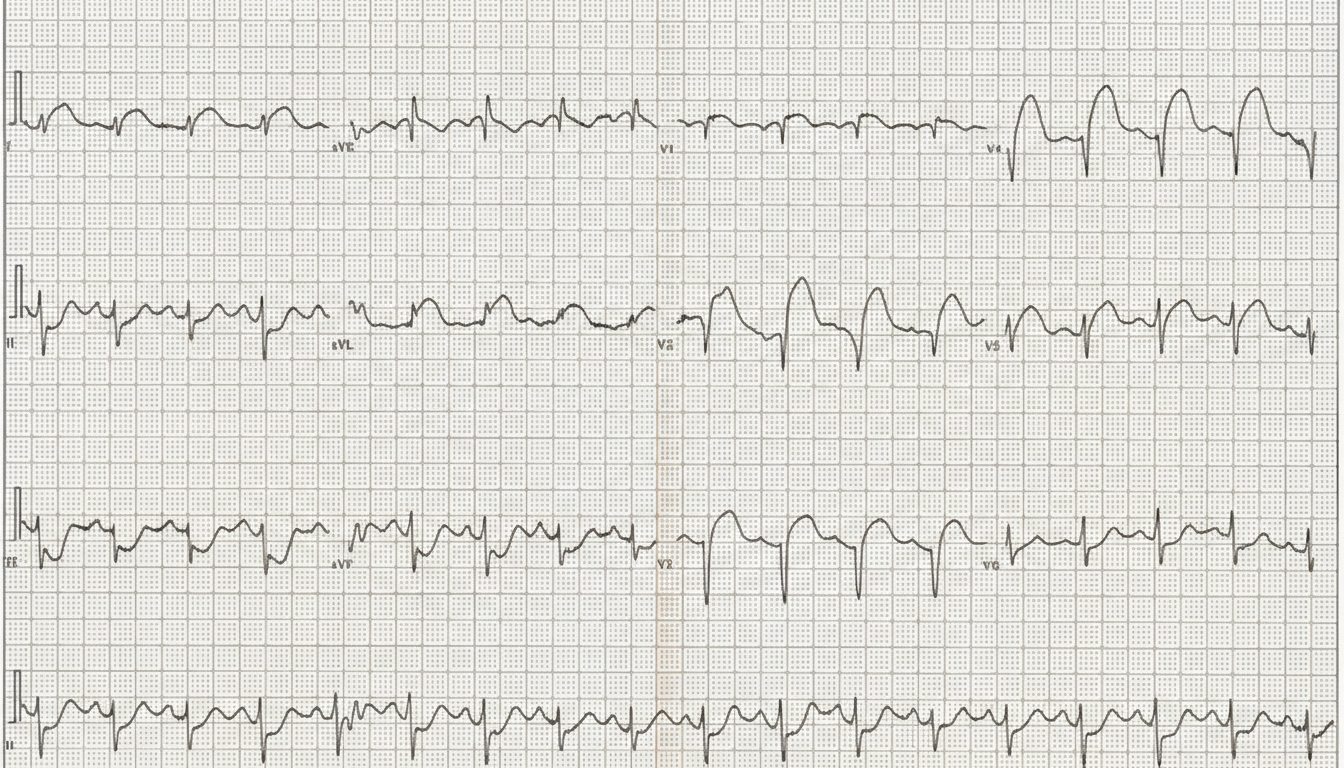
Question 16: A 57-year-old man with a known angina pectoris starts to experience a severe burning retrosternal pain that radiates to his left hand. After 2 consecutive doses of sublingual nitroglycerin taken 5 minutes apart, there is no improvement in his symptoms, and the patient calls an ambulance. Emergency medical service arrives within 10 minutes and begins evaluation and prehospital management. The vital signs include: blood pressure 85/50 mm Hg, heart rate 96/min, respiratory rate 19/min, temperature 37.1℃ (98.9℉), and SpO2 89% on ambient air. Oxygen supply and intravenous access are established. An ECG shows the findings in the given image. Which of the following is a part of a proper further prehospital management strategy for this patient?
A. Administer nitroglycerin and transport to percutaneous coronary intervention center
B. Perform pre-hospital thrombolysis and transport to a percutaneous coronary intervention center
C. Administer aspirin 325 mg and transport to percutaneous coronary intervention center (Correct Answer)
D. Administer aspirin 81 mg and transport to a percutaneous coronary intervention center
E. Perform pre-hospital thrombolysis and transport to emergency department irrespective of percutaneous coronary intervention center presence
Explanation: ***Administer aspirin 325 mg and transport to percutaneous coronary intervention center***
- This patient presents with symptoms highly suggestive of an acute myocardial infarction (AMI), namely **retrosternal chest pain radiating to the left hand**, unrelieved by nitroglycerin. The ECG would likely confirm **ST-segment elevation myocardial infarction (STEMI)**, necessitating urgent reperfusion.
- **Aspirin 325 mg** is the recommended initial dose for suspected AMI due to its **antiplatelet effects**, which help prevent further thrombus formation, and the patient should be transported to a **percutaneous coronary intervention (PCI) center**, as this is the preferred reperfusion strategy for STEMI.
*Administer nitroglycerin and transport to percutaneous coronary intervention center*
- The patient has already received two doses of sublingual nitroglycerin without improvement, and his **blood pressure is 85/50 mm Hg**, indicating **hypotension**.
- Administering further nitroglycerin would be **contraindicated due to hypotension** and unlikely to be effective.
*Perform pre-hospital thrombolysis and transport to a percutaneous coronary intervention center*
- While pre-hospital thrombolysis can be an option in certain settings, **PCI is the preferred reperfusion strategy for STEMI** if it can be performed within recommended timeframes. Given the option of a PCI center, thrombolysis is secondary.
- Additionally, thrombolysis carries **risks of bleeding** and is typically reserved for situations where PCI is not readily available.
*Administer aspirin 81 mg and transport to a percutaneous coronary intervention center*
- While aspirin is crucial, the initial loading dose for acute coronary syndrome (**ACS**) is typically **325 mg** (or 162 mg chewable) to achieve rapid antiplatelet effect, not 81 mg.
- The 81 mg dose is commonly used for **maintenance therapy** or chronic prevention, not for initial acute management.
*Perform pre-hospital thrombolysis and transport to emergency department irrespective of percutaneous coronary intervention center presence*
- Thrombolysis is generally performed only if a PCI center is not accessible within a specific timeframe; transporting directly to an ED irrespective of PCI capabilities is suboptimal if a PCI center is available.
- The goal is **rapid reperfusion**, and direct transport to a PCI center is preferred over thrombolysis if the time to PCI is short.
Question 17: A 66-year-old man comes to the emergency department because of a 1-day history of chest pain, palpitations, and dyspnea on exertion. He had a similar episode 3 days ago and was diagnosed with an inferior wall myocardial infarction. He was admitted and a percutaneous transluminal coronary angioplasty was successfully done that day. A fractional flow reserve test during the procedure showed complete resolution of the stenosis. Laboratory tests including serum glucose, lipids, and blood count were within normal limits. He was discharged the day after the procedure on a drug regimen of aspirin, simvastatin, and isosorbide dinitrate. At the time of discharge, he had no chest pain or dyspnea. Presently, his vitals are normal and ECG at rest shows new T-wave inversion. Which of the following is the most reliable test for rapidly establishing the diagnosis in this patient?
A. Creatine kinase MB
B. Lactate dehydrogenase
C. Copeptin
D. Aspartate aminotransferase
E. Cardiac troponin T (Correct Answer)
Explanation: ***Cardiac troponin T***
- **Cardiac troponin T** is a highly sensitive and specific biomarker for **myocardial injury**, making it the most reliable test for rapidly diagnosing acute coronary syndrome or re-infarction.
- Its elevation indicates ongoing **myocardial necrosis**, even after a recent MI, and is crucial for guiding immediate management.
*Creatine kinase MB*
- While CK-MB is used for diagnosing myocardial infarction, its levels can also be elevated in cases of **skeletal muscle injury** or **after cardiac procedures**, reducing its specificity in this context.
- CK-MB also has a **shorter window of elevation** compared to troponins, potentially missing later presentations of myocardial injury.
*Lactate dehydrogenase*
- **LDH** is a relatively **nonspecific marker** that can elevate due to various conditions affecting different organs (e.g., liver disease, hemolysis, renal injury).
- Its elevation onset is **slower** and its diagnostic window is longer, making it less suitable for rapid diagnosis of acute myocardial injury.
*Copeptin*
- **Copeptin** is a marker of **endogenous stress** and is often used in conjunction with troponins to rule out NSTEMI, especially at early presentation.
- However, it is not a direct marker of myocardial necrosis itself and is **not as specific** as troponin for diagnosing a re-infarction.
*Aspartate aminotransferase*
- **AST** is a **nonspecific enzyme** found in various tissues, including the liver, skeletal muscle, and heart.
- Elevated AST levels are frequently seen in **liver damage** and are not a primary biomarker for diagnosing acute myocardial infarction or re-infarction.
Question 18: A 65-year-old man presents to the emergency department for sudden weakness. He was doing mechanical work on his car where he acutely developed right-leg weakness and fell to the ground. He is accompanied by his wife, who said that this has never happened before. He was last seen neurologically normal approximately 2 hours prior to presentation. His past medical history is significant for hypertension and type II diabetes. His temperature is 98.8°F (37.1°C), blood pressure is 177/108 mmHg, pulse is 90/min, respirations are 15/min, and oxygen saturation is 99% on room air. Neurological exam reveals that he is having trouble speaking and has profound weakness of his right upper and lower extremity. Which of the following is the best next step in management?
A. Thrombolytics
B. Noncontrast head CT (Correct Answer)
C. CT angiogram
D. MRI of the head
E. Aspirin
Explanation: ***Noncontrast head CT***
- A **noncontrast head CT** is the most crucial initial step in managing acute stroke symptoms because it can rapidly rule out an **intracranial hemorrhage**.
- Distinguishing between ischemic stroke and hemorrhagic stroke is critical, as the management strategies are vastly different and administering thrombolytics in the presence of hemorrhage can be fatal.
*Thrombolytics*
- **Thrombolytics** can only be administered after an **intracranial hemorrhage** has been excluded via noncontrast head CT.
- Administering thrombolytics without imaging could worsen a hemorrhagic stroke, causing significant harm or death.
*CT angiogram*
- A **CT angiogram** is used to identify large vessel occlusions in ischemic stroke and is typically performed after a noncontrast CT rules out hemorrhage.
- This imaging is crucial for determining eligibility for **endovascular thrombectomy** but is not the very first diagnostic step.
*MRI of the head*
- An **MRI of the head** is more sensitive for detecting acute ischemic changes but takes longer to perform and is often not readily available in the acute emergency setting.
- It is not the initial imaging of choice for ruling out hemorrhage due to its longer acquisition time compared to CT.
*Aspirin*
- **Aspirin** is indicated for acute ischemic stroke but should only be given after an **intracranial hemorrhage** has been ruled out.
- Like thrombolytics, aspirin could exacerbate a hemorrhagic stroke and is thus deferred until initial imaging is complete.
Question 19: A 67-year-old man comes to the emergency department because of retrosternal chest pressure and shortness of breath for 4 hours. The symptoms started while he was walking to work and have only minimally improved with rest. He has a history of type 2 diabetes mellitus. He has smoked one pack of cigarettes daily for 35 years. He appears uncomfortable. His pulse is 95/min. Serum studies show a normal troponin concentration. An ECG shows no abnormalities. Which of the following is the most likely underlying cause of this patient's symptoms?
A. Atherosclerotic plaque thrombus with complete coronary artery occlusion
B. Stable atherosclerotic plaque with 85% coronary artery occlusion
C. Aortic valve thickening and calcification
D. Disruption of an atherosclerotic plaque with a non-occlusive coronary artery thrombus (Correct Answer)
E. Coronary artery occlusion due to transient increase in vascular tone
Explanation: **Disruption of an atherosclerotic plaque with a non-occlusive coronary artery thrombus**
- This scenario describes **unstable angina (UA)**, characterized by chest pain at rest or with minimal exertion, increased frequency/intensity of angina, or new-onset severe angina.
- While troponin is normal and ECG shows no abnormalities, the persistent symptoms and minimal improvement with rest, along with risk factors like **diabetes** and **smoking**, strongly suggest an **unstable coronary lesion** that is not yet fully occlusive.
*Atherosclerotic plaque thrombus with complete coronary artery occlusion*
- **Complete coronary artery occlusion** typically leads to myocardial infarction (MI), which would manifest with **elevated troponin levels** and often **ECG changes** (e.g., ST elevation or depression).
- The patient's normal troponin and ECG rule out an acute MI at this stage.
*Stable atherosclerotic plaque with 85% coronary artery occlusion*
- **Stable angina** symptoms usually improve promptly with rest and are predictable, occurring only during significant exertion.
- The described symptoms, including minimal improvement with rest and 4 hours duration, are not typical of stable angina.
*Aortic valve thickening and calcification*
- While **aortic stenosis** can cause chest pain and shortness of breath, these symptoms are typically exertional and not usually described as "retrosternal pressure" that minimally improves with rest in this acute context without other signs of flow obstruction.
- This condition is unlikely to be the sole cause of these acute, persistent symptoms without findings on initial workup.
*Coronary artery occlusion due to transient increase in vascular tone*
- **Coronary vasospasm** (Prinzmetal angina) can cause chest pain at rest and transient ECG changes, but it's typically **recurrent** and responds well to **vasodilators**.
- This patient's symptoms, combined with risk factors for atherosclerosis and the prolonged nature of the pain, are less indicative of vasospasm as the primary underlying cause.
Question 20: A 67-year-old man presents to the emergency department with a 1-hour history of nausea and upper abdominal and substernal chest pain radiating to his lower jaw. He vomited several times before arriving at the hospital. His last visit to the primary care physician was 6 months ago during which he complained of fatigue, ‘slowing down’ on his morning walks, and abdominal pain that exacerbated by eating spicy food. His current medications include atorvastatin, metformin, insulin, omeprazole, aspirin, enalapril, nitroglycerin, and metoprolol. Today, his blood pressure is 95/72 mm Hg in his right arm and 94/73 in his left arm, heart rate is 110/min, temperature is 37.6°C (99.6°F), and respiratory rate is 30/min. On physical examination, he is diaphoretic and his skin is cool and clammy. His cardiac enzymes were elevated. He is treated appropriately and is admitted to the hospital. On day 5 of his hospital stay, he suddenly develops breathlessness. His blood pressure drops to 80/42 mm Hg. On examination, bibasilar crackles are heard. Cardiac auscultatory reveals a high pitched holosystolic murmur over the apex. Which of the following most likely lead to the deterioration of this patient’s condition?
A. Scarring of mitral valve as a complication of childhood illness
B. Ballooning of mitral valve into the left atrium
C. Age-related fibrosis and calcification of the aortic valve
D. Papillary muscle rupture leading to reflux of blood into left atrium (Correct Answer)
E. Aortic root dilation
Explanation: **Papillary muscle rupture leading to reflux of blood into left atrium**
- The patient's initial presentation with chest pain, nausea, and elevated cardiac enzymes is consistent with an acute **myocardial infarction (MI)**. The sudden breathlessness, drop in blood pressure, bibasilar crackles (indicating **pulmonary edema**), and a **new holosystolic murmur over the apex** suggest acute **mitral regurgitation**, a common mechanical complication of MI.
- **Papillary muscle rupture**, particularly of the posterior medial papillary muscle due to its single blood supply from the posterior descending artery (often involved in inferior MIs), can lead to severe acute mitral regurgitation, causing rapid hemodynamic deterioration and **cardiogenic shock**.
*Scarring of mitral valve as a complication of childhood illness*
- **Rheumatic heart disease**, typically resulting from childhood illnesses like **streptococcal pharyngitis**, can cause mitral valve scarring (often **mitral stenosis** or chronic regurgitation). However, this would be a pre-existing condition and less likely to cause a sudden, acute decompensation solely on day 5 post-MI.
- While it can lead to cardiac issues, the sudden onset of symptoms and their direct association with a recent MI point away from a chronic, pre-existing valvular condition as the primary cause of acute decompensation.
*Ballooning of mitral valve into the left atrium*
- This describes **mitral valve prolapse (MVP)**, which is usually a chronic, benign condition, though it can cause mitral regurgitation.
- Acute, severe mitral regurgitation leading to cardiogenic shock post-MI is more characteristic of structural damage like papillary muscle rupture rather than the typical progression of MVP.
*Age-related fibrosis and calcification of the aortic valve*
- This describes **aortic stenosis**, a chronic condition characterized by obstruction of blood flow from the left ventricle.
- Aortic stenosis typically presents with a **systolic ejection murmur** best heard at the right upper sternal border, radiating to the carotids, and symptoms like angina, syncope, and dyspnea, which are different from the patient's acute presentation of a **holosystolic murmur at the apex** and pulmonary edema.
*Aortic root dilation*
- **Aortic root dilation** can lead to **aortic regurgitation**, characterized by a **diastolic decrescendo murmur**.
- While causes of aortic root dilation can include hypertension, Marfan syndrome, or syphilis, it does not explain a **holosystolic murmur at the apex** or acute mitral regurgitation secondary to an MI.