
Probability ranking in differentials — MCQs

A group of gastroenterologists is concerned about low colonoscopy screening rates. They decide to implement a free patient navigation program to assist local residents and encourage them to obtain colonoscopies in accordance with U.S. Preventive Services Task Force (USPSTF) guidelines. Local residents were recruited at community centers. Participants attended monthly meetings with patient navigators and were regularly reminded that their adherence to screening guidelines was being evaluated. Colonoscopy screening rates were assessed via chart review, which showed that 90% of participants adhered to screening guidelines. Data collected via chart review for local residents recruited at community centers who did not participate in the free patient navigation system found that 34% of that population adhered to USPSTF guidelines. Which of the following has most likely contributed to the observed disparity in colonoscopy screening rates?
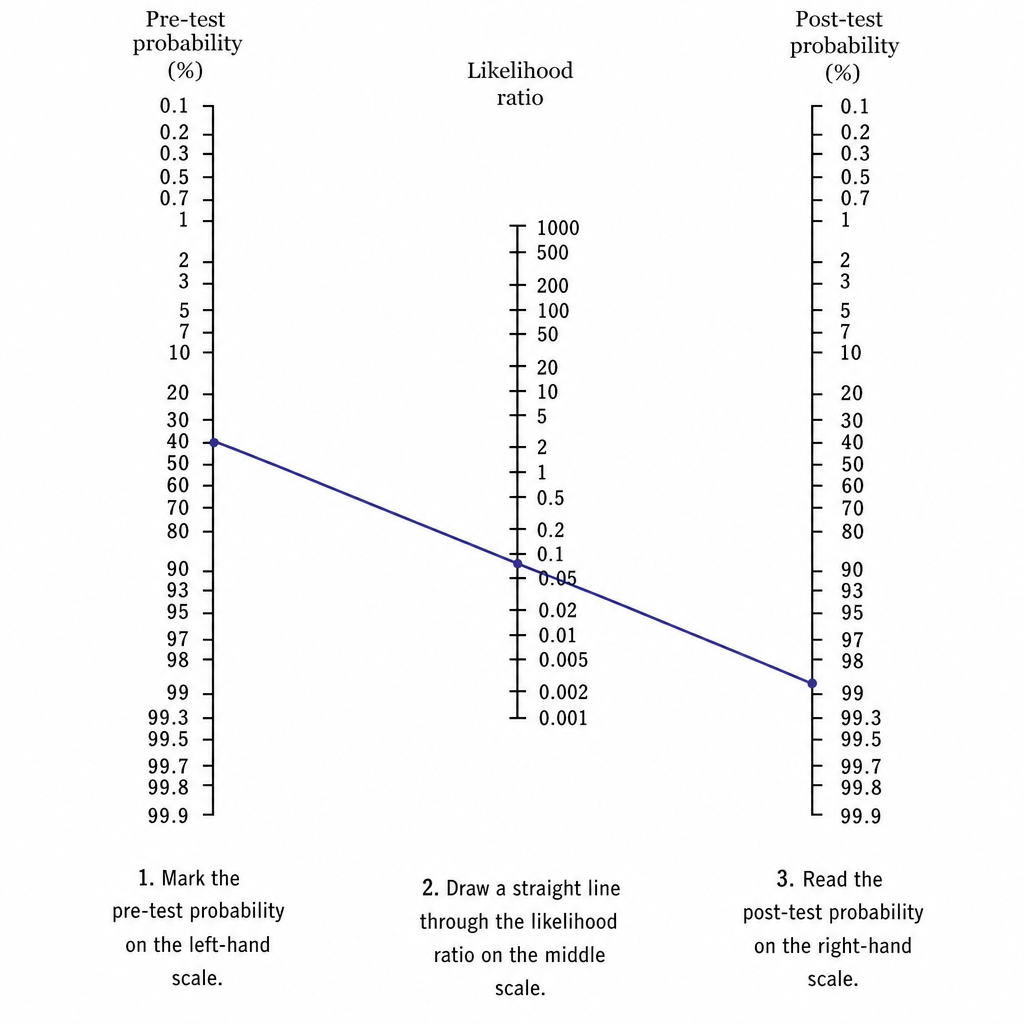
A 14-month-old Caucasian boy is admitted to the pediatric clinic with an 8-month history of diarrhea, abdominal tenderness and concomitant failure to thrive. One of the possibilities that may cause these symptoms is Crohn’s disease, and on the basis of the attending pediatrician’s experience, the pre-test probability of this diagnosis was estimated at 40%. According to Fagan’s diagram (picture), if the likelihood ratio of a negative test result (LR-) is 0.04, what is the chance that this is the right diagnosis?
A 17-year-old man is brought by his mother to his pediatrician in order to complete medical clearance forms prior to attending college. During the visit, his mother asks about what health risks he should be aware of in college. Specifically, she recently saw on the news that some college students were killed by a fatal car crash. She therefore asks about causes of death in this population. Which of the following is true about the causes of death in college age individuals?
A medical research study is beginning to evaluate the positive predictive value of a novel blood test for non-Hodgkin’s lymphoma. The diagnostic arm contains 700 patients with NHL, of which 400 tested positive for the novel blood test. In the control arm, 700 age-matched control patients are enrolled and 0 are found positive for the novel test. What is the PPV of this test?
A pharmaceutical corporation is developing a research study to evaluate a novel blood test to screen for breast cancer. They enrolled 800 patients in the study, half of which have breast cancer. The remaining enrolled patients are age-matched controls who do not have the disease. Of those in the diseased arm, 330 are found positive for the test. Of the patients in the control arm, only 30 are found positive. What is this test’s sensitivity?
A 57-year-old man presents to the emergency department for weight loss and abdominal pain. The patient states that he has felt steadily more fatigued over the past month and has lost 22 pounds without effort. Today, he fainted prompting his presentation. The patient has no significant past medical history. He does have a 33 pack-year smoking history and drinks 4 to 5 alcoholic drinks per day. His temperature is 99.5°F (37.5°C), blood pressure is 100/58 mmHg, pulse is 100/min, respirations are 17/min, and oxygen saturation is 98% on room air. On physical exam, you see a patient who is very thin and appears to be pale. Stool fecal occult blood testing is positive. A CT scan of the abdomen is performed demonstrating a mass in the colon with multiple metastatic lesions scattered throughout the abdomen. The patient is informed of his diagnosis of metastatic colon cancer. When the patient conveys the information to his family he focuses his efforts on discussing the current literature in the field and the novel therapies that have been invented. He demonstrates his likely mortality outcome which he calculated using the results of a large multi-center study. Which of the following is this patient most likely demonstrating?
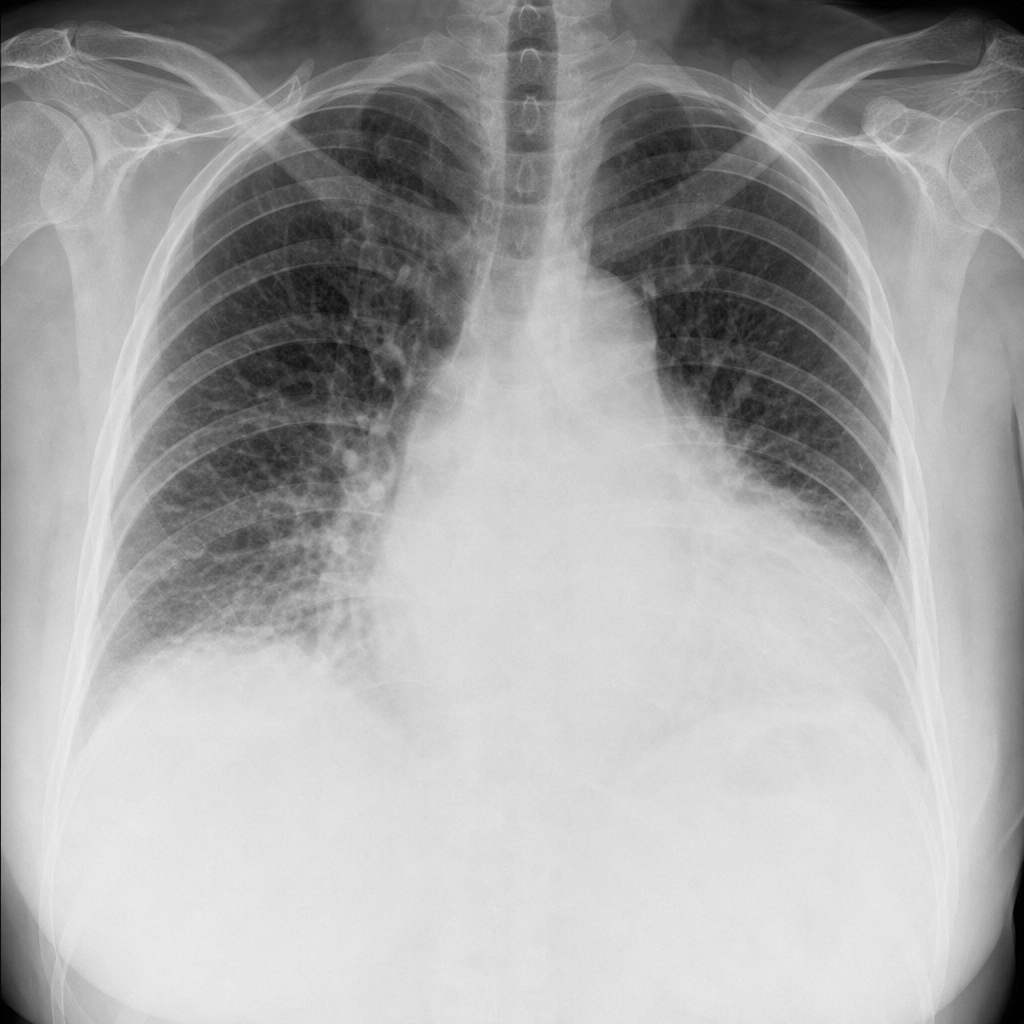
A 58-year-old woman presents with a 10-day history of progressively worsening exertional dyspnea and bilateral leg swelling. She has a history of hypertension treated with lisinopril for 6 years. She recently completed a 6-month course of doxorubicin-based chemotherapy for breast cancer, finishing 3 months ago. Temperature 37.0°C, blood pressure 148/92 mmHg, heart rate 102 bpm, oxygen saturation 91% on room air. JVP is elevated at 10 cm. Bibasilar crackles are present. An ECG shows sinus tachycardia with no ischemic changes. The chest radiograph image shown demonstrates the finding most critical to establishing the diagnosis. Which of the following is the most likely diagnosis?
A female presents with a 1 × 1 cm thyroid swelling. What is the next best step in management?
What is the most appropriate initial investigation for a solitary thyroid nodule (STN)?
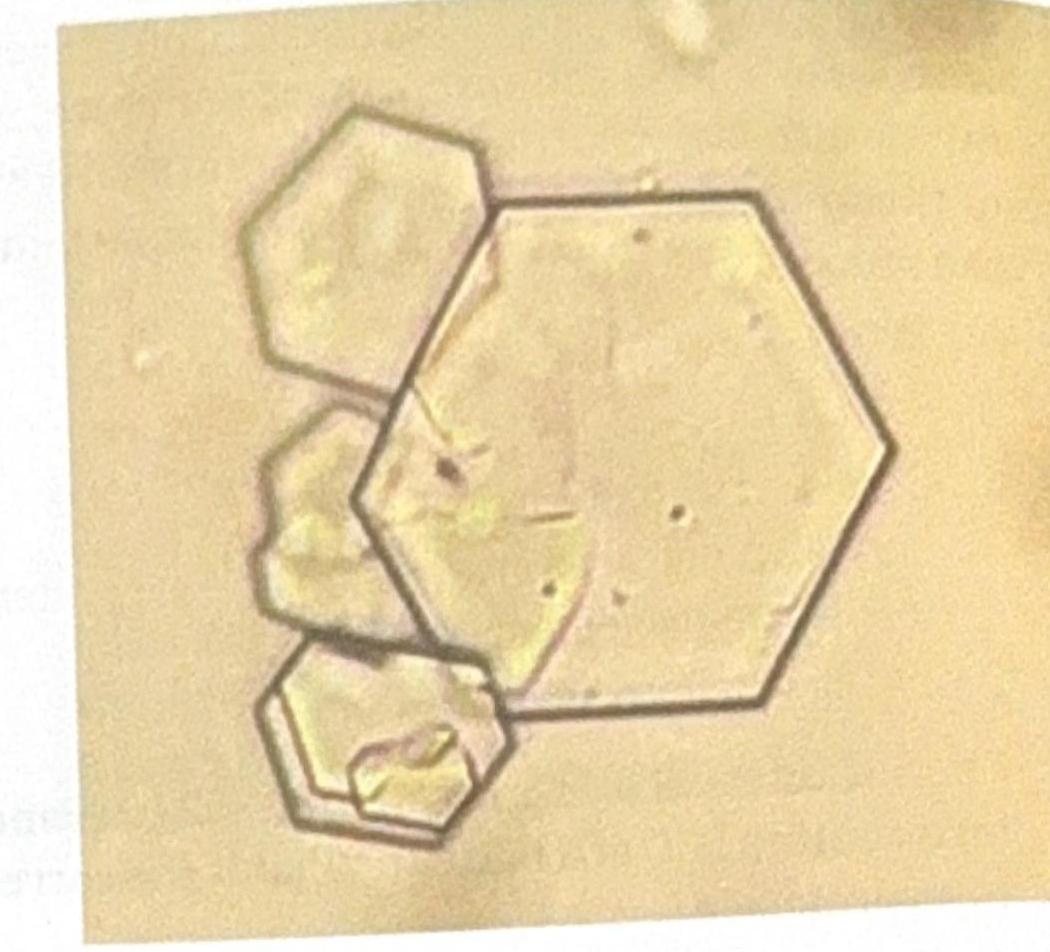
A young patient presents to the OPD with recurrent colicky abdominal pain. Urine examination shows the presence of red blood cells (RBCs) and the following crystal shape in the figure. What is the most likely diagnosis?
Want unlimited practice?
Get full access to all questions, explanations, and performance tracking.
Scan to download app