
Analytical vs non-analytical reasoning — MCQs

Two dizygotic twins present to the university clinic because they believe they are being poisoned through the school's cafeteria food. They have brought these concerns up in the past, but no other students or cafeteria staff support this belief. Both of them are average students with strong and weak subject areas as demonstrated by their course grade-books. They have no known medical conditions and are not known to abuse illicit substances. Which statement best describes the condition these patients have?
A geriatric investigator is evaluating the consistency of Alzheimer dementia diagnoses based on clinical symptoms. Patients with known chart diagnoses of Alzheimer dementia were evaluated by multiple physicians during a fixed time interval. Each evaluator was blinded to the others' assessments. The extent to which the diagnosis by one physician was replicated by another clinician examining the same patient is best described by which of the following terms?
A 52-year-old man comes to the physician because of a 3-week history of a cough and hoarseness. He reports that the cough is worse when he lies down after lunch. His temperature is 37.5°C (99.5°F); the remainder of his vital signs are within normal limits. Because the physician has recently been seeing several patients with the common cold, the diagnosis of a viral upper respiratory tract infection readily comes to mind. The physician fails to consider the diagnosis of gastroesophageal reflux disease, which the patient is later found to have. Which of the following most accurately describes the cognitive bias that the physician had?
Two studies are reviewed for submission to an oncology journal. In Study A, a novel MRI technology is evaluated as a screening tool for ovarian cancer. The authors find that the mean survival time is 4 years in the control group and 10 years in the MRI-screened group. In Study B, cognitive behavioral therapy (CBT) and a novel antidepressant are used to treat patients with comorbid pancreatic cancer and major depression. Patients receiving the new drug are told that they are expected to have quick resolution of their depression, while those who do not receive the drug are not told anything about their prognosis. Which of the following describes the likely type of bias in Study A and Study B?
An academic medical center in the United States is approached by a pharmaceutical company to run a small clinical trial to test the effectiveness of its new drug, compound X. The company wants to know if the measured hemoglobin a1c (Hba1c) of patients with type 2 diabetes receiving metformin and compound X would be lower than that of control subjects receiving only metformin. After a year of study and data analysis, researchers conclude that the control and treatment groups did not differ significantly in their Hba1c levels. However, parallel clinical trials in several other countries found that compound X led to a significant decrease in Hba1c. Interested in the discrepancy between these findings, the company funded a larger study in the United States, which confirmed that compound X decreased Hba1c levels. After compound X was approved by the FDA, and after several years of use in the general population, outcomes data confirmed that it effectively lowered Hba1c levels and increased overall survival. What term best describes the discrepant findings in the initial clinical trial run by institution A?
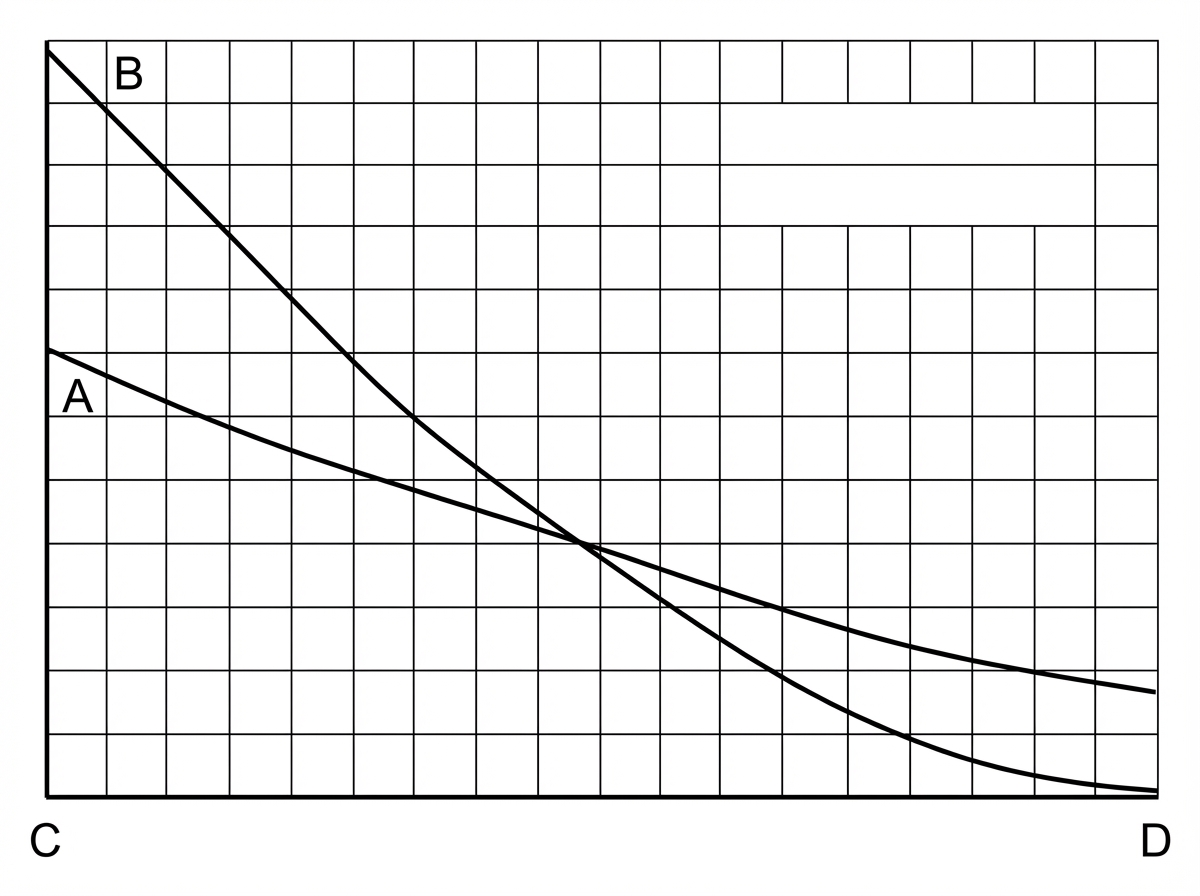
A young researcher is responsible for graphing laboratory data involving pulmonary blood flow and ventilation pattern obtained from a healthy volunteer who was standing in an upright position. After plotting the following graph, the researcher realizes he forgot to label the curves and the x-axis (which represents the position in the lung). Which of the following is the appropriate label for each point on the graph?
A 67-year-old man comes to the physician for a routine examination. He does not take any medications. He drinks 6 to 7 bottles of beer every night, and says he often has a shot of whiskey in the morning “for my headache.” He was recently fired from his job for arriving late. He says there is nothing wrong with his drinking but expresses frustration at his best friend no longer returning his calls. Which of the following is the most appropriate initial response by the physician?
A 65-year-old man is admitted to the hospital because of a 1-month history of fatigue, intermittent fever, and weakness. Results from a peripheral blood smear taken during his evaluation are indicative of possible acute myeloid leukemia. Bone marrow aspiration and subsequent cytogenetic studies confirm the diagnosis. The physician sets aside an appointed time-slot and arranges a meeting in a quiet office to inform him about the diagnosis and discuss his options. He has been encouraged to bring someone along to the appointment if he wanted. He comes to your office at the appointed time with his daughter. He appears relaxed, with a full range of affect. Which of the following is the most appropriate opening statement in this situation?
A 38-year-old woman is voted off the board of her garden club for tardiness and incomplete work on the spring fair. When she arrives home, her husband attempts to console her and she yells at him for constantly criticizing her. Which defense mechanism is the woman using?
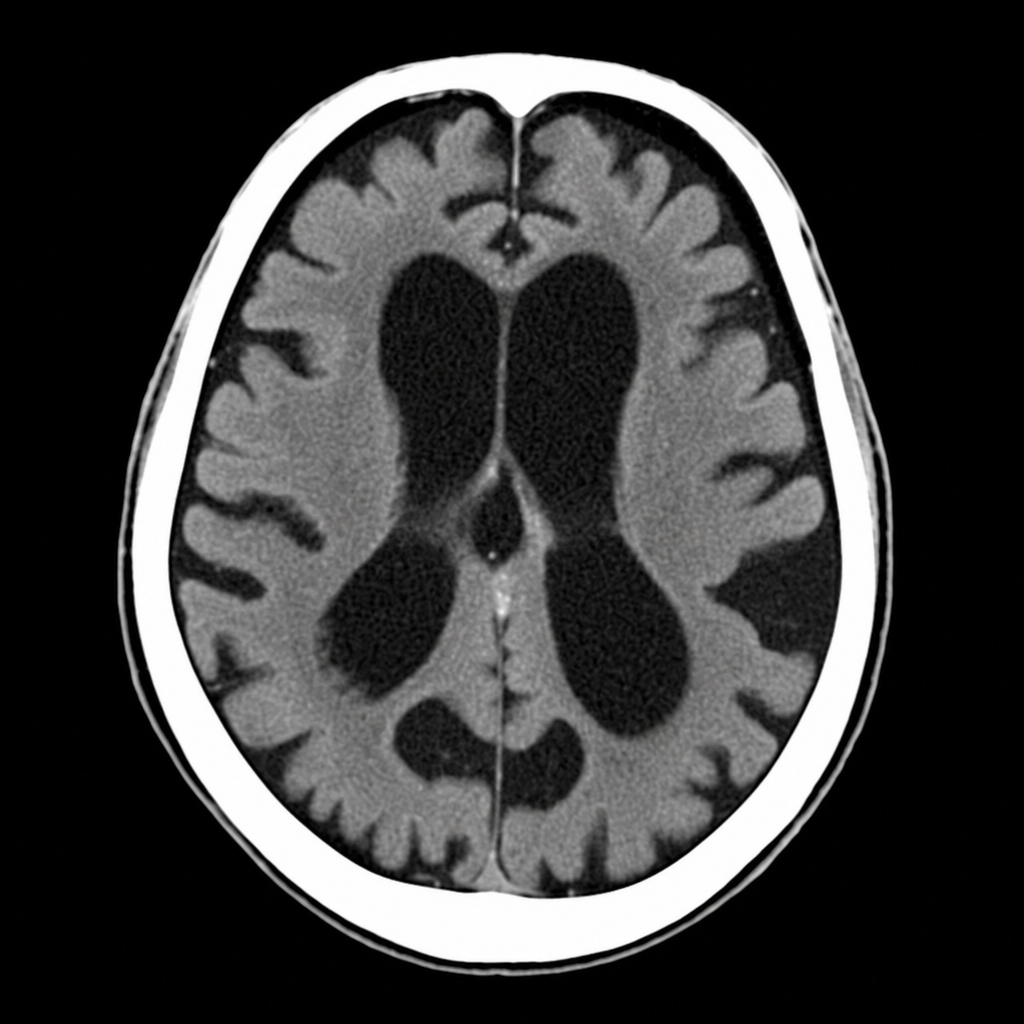
A 72-year-old woman is brought in by her daughter for progressive confusion over 4 weeks, 8 kg of unintentional weight loss over 3 months, and new-onset urinary incontinence. She has no history of psychiatric illness. Medications include amlodipine and aspirin. On examination, she is afebrile; she scores 19/30 on the MMSE. Gait is broad-based and magnetic in quality. Neurological exam shows no focal deficits and no papilledema. CBC, CMP, TSH, B12, and RPR are all within normal limits. The image shown is from her MRI brain. Which of the following diagnoses is most consistent with the clinical presentation and imaging finding?
Want unlimited practice?
Get full access to all questions, explanations, and performance tracking.
Scan to download app