
Simulation practice techniques — MCQs

A 40-year-old woman presents to her physician's home with a headache. She describes it as severe and states that her symptoms have not been improving despite her appointment yesterday at the office. Thus, she came to her physician's house on the weekend for help. The patient has been diagnosed with migraine headaches that have persisted for the past 6 months and states that her current symptoms feel like her previous headaches with a severity of 3/10. She has been prescribed multiple medications but is generally non-compliant with therapy. She is requesting an exam and urgent treatment for her symptoms. Which of the following is the best response from the physician?
A 24-year-old man presents to the emergency department after a motor vehicle collision. He was in the front seat and unrestrained driver in a head on collision. His temperature is 99.2°F (37.3°C), blood pressure is 90/65 mmHg, pulse is 152/min, respirations are 16/min, and oxygen saturation is 100% on room air. Physical exam is notable for a young man who opens his eyes spontaneously and is looking around. He answers questions with inappropriate responses but discernible words. He withdraws from pain but does not have purposeful movement. Which of the following is this patient's Glasgow coma scale?
A 45-year-old homeless man is brought to the emergency department by the police. He was found intoxicated and passed out in a library. The patient has a past medical history of IV drug abuse, diabetes, alcohol abuse, and malnutrition. The patient has been hospitalized previously for multiple episodes of pancreatitis and sepsis. Currently, the patient is minimally responsive and only withdraws his extremities in response to painful stimuli. His temperature is 99.5°F (37.5°C), blood pressure is 90/48 mmHg, pulse is 150/min, respirations are 17/min, and oxygen saturation is 95% on room air. Physical exam is notable for tachycardia, a diastolic murmur at the left lower sternal border, and bilateral crackles on pulmonary exam. The patient is started on IV fluids, vancomycin, and piperacillin-tazobactam. Laboratory values are ordered as seen below. Hemoglobin: 9 g/dL Hematocrit: 30% Leukocyte count: 11,500/mm^3 with normal differential Platelet count: 297,000/mm^3 Serum: Na+: 139 mEq/L Cl-: 100 mEq/L K+: 4.0 mEq/L HCO3-: 28 mEq/L BUN: 33 mg/dL Glucose: 60 mg/dL Creatinine: 1.7 mg/dL Ca2+: 9.7 mg/dL PT: 20 seconds aPTT: 60 seconds AST: 1,010 U/L ALT: 950 U/L The patient is admitted to the medical floor. Five days later, the patient's neurological status has improved. His temperature is 99.5°F (37.5°C), blood pressure is 130/90 mmHg, pulse is 90/min, respirations are 11/min, and oxygen saturation is 99% on room air. Laboratory values are repeated as seen below. Hemoglobin: 10 g/dL Hematocrit: 32% Leukocyte count: 9,500/mm^3 with normal differential Platelet count: 199,000/mm^3 Serum: Na+: 140 mEq/L Cl-: 102 mEq/L K+: 4.3 mEq/L HCO3-: 24 mEq/L BUN: 31 mg/dL Glucose: 100 mg/dL Creatinine: 1.6 mg/dL Ca2+: 9.0 mg/dL PT: 40 seconds aPTT: 90 seconds AST: 150 U/L ALT: 90 U/L Which of the following is the best description of this patient’s current status?
You are the team physician for an NBA basketball team. On the morning of an important playoff game, an EKG of a star player, Mr. P, shows findings suspicious for hypertrophic cardiomyopathy (HCM). Mr. P is an otherwise healthy, fit, professional athlete. The playoff game that night is the most important of Mr. P's career. When you inform the coach that you are thinking of restricting Mr. P's participation, he threatens to fire you. Later that day you receive a phone call from the owner of the team threatening a lawsuit should you restrict Mr. P's ability to play. Mr. P states that he will be playing in the game "if it's the last thing I do." Which of the following is the most appropriate next step?
A research group wants to assess the safety and toxicity profile of a new drug. A clinical trial is conducted with 20 volunteers to estimate the maximum tolerated dose and monitor the apparent toxicity of the drug. The study design is best described as which of the following phases of a clinical trial?
A 27-year-old soldier is brought to the emergency department of a military hospital 20 minutes after being involved in a motor vehicle accident during a training exercise. He was an unrestrained passenger. On arrival, he has shortness of breath and chest pain. He appears pale and anxious. His temperature is 37°C (98.6°F), pulse is 110/min, respirations are 20/min, and blood pressure is 100/65 mm Hg. He is alert and oriented to person, place, and time. Examination shows pale conjunctivae and mucous membranes. There is bruising on the chest, extremities, and abdomen. The lungs are clear to auscultation. He has normal heart sounds and flat neck veins. The abdomen is flat, soft, and mildly tender. The remainder of the physical examination shows no abnormalities. High-flow oxygen is applied, and intravenous fluid resuscitation is begun. A chest x-ray is obtained. Which of the following is the most appropriate next step in management?
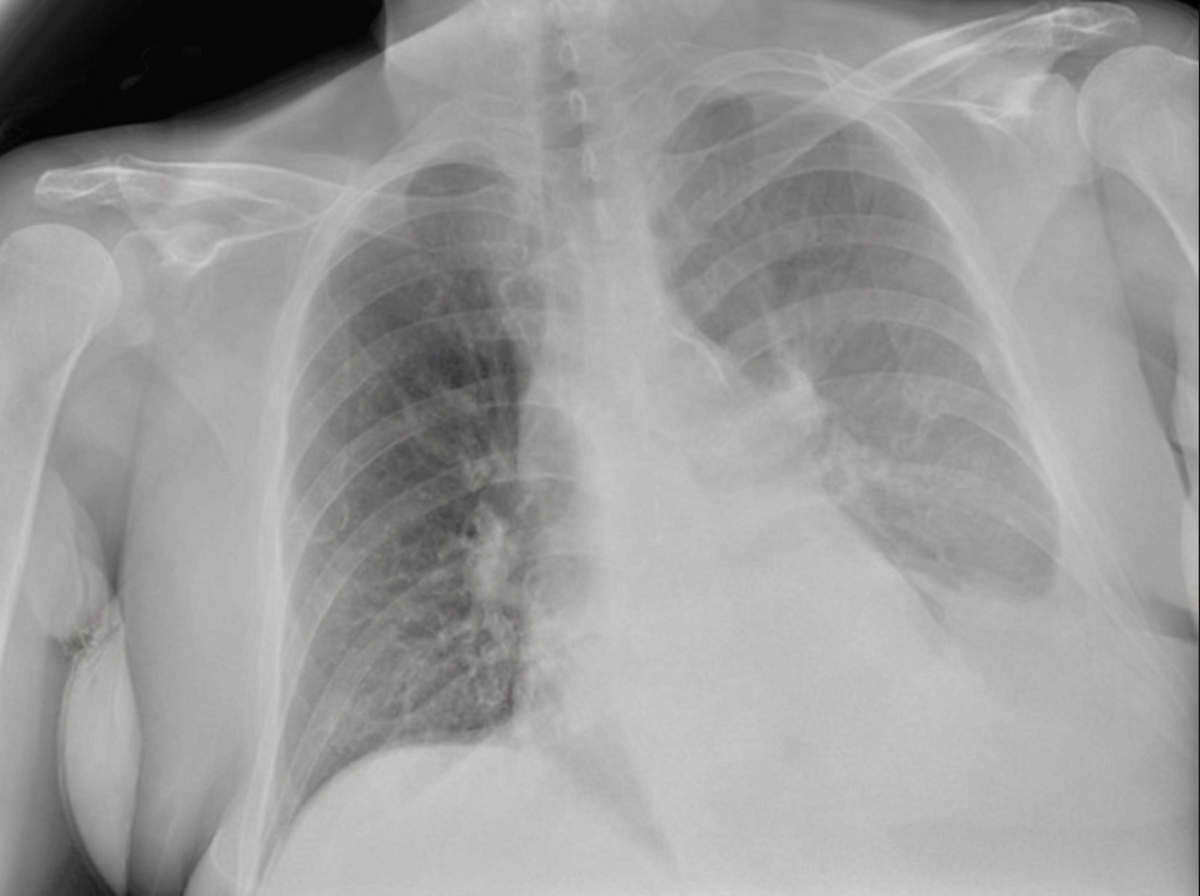
In a randomized controlled trial studying a new treatment, the primary endpoint (mortality) occurred in 14.4% of the treatment group and 16.7% of the control group. Which of the following represents the number of patients needed to treat to save one life, based on the primary endpoint?
A 28-year-old male presents to his primary care physician with complaints of intermittent abdominal pain and alternating bouts of constipation and diarrhea. His medical chart is not significant for any past medical problems or prior surgeries. He is not prescribed any current medications. Which of the following questions would be the most useful next question in eliciting further history from this patient?
Want unlimited practice?
Get full access to all questions, explanations, and performance tracking.
Scan to download app