
Managing multiple patient issues simultaneously — MCQs

A 40-year-old woman presents to her physician's home with a headache. She describes it as severe and states that her symptoms have not been improving despite her appointment yesterday at the office. Thus, she came to her physician's house on the weekend for help. The patient has been diagnosed with migraine headaches that have persisted for the past 6 months and states that her current symptoms feel like her previous headaches with a severity of 3/10. She has been prescribed multiple medications but is generally non-compliant with therapy. She is requesting an exam and urgent treatment for her symptoms. Which of the following is the best response from the physician?
A 42-year-old man comes to the physician because of a 2-month history of fatigue and increased urination. The patient reports that he has been drinking more than usual because he is constantly thirsty. He has avoided driving for the past 8 weeks because of intermittent episodes of blurred vision. He had elevated blood pressure at his previous visit but is otherwise healthy. Because of his busy work schedule, his diet consists primarily of fast food. He does not smoke or drink alcohol. He is 178 cm (5 ft 10 in) tall and weighs 109 kg (240 lb); BMI is 34 kg/m2. His pulse is 75/min and his blood pressure is 148/95 mm Hg. Cardiopulmonary examination shows no abnormalities. Laboratory studies show: Hemoglobin A1c 6.8% Serum Glucose 180 mg/dL Creatinine 1.0 mg/dL Total cholesterol 220 mg/dL HDL cholesterol 50 mg/dL Triglycerides 140 mg/dL Urine Blood negative Glucose 2+ Protein 1+ Ketones negative Which of the following is the most appropriate next step in management?
A 15-year-old boy is brought to the emergency department one hour after sustaining an injury during football practice. He collided head-on into another player while wearing a mouthguard and helmet. Immediately after the collision he was confused but able to use appropriate words. He opened his eyes spontaneously and followed commands. There was no loss of consciousness. He also had a headache with dizziness and nausea. He is no longer confused upon arrival. He feels well. Vital signs are within normal limits. He is fully alert and oriented. His speech is organized and he is able to perform tasks demonstrating full attention, memory, and balance. Neurological examination shows no abnormalities. There is mild tenderness to palpation over the crown of his head but no signs of skin break or fracture. Which of the following is the most appropriate next step?
You are the team physician for an NBA basketball team. On the morning of an important playoff game, an EKG of a star player, Mr. P, shows findings suspicious for hypertrophic cardiomyopathy (HCM). Mr. P is an otherwise healthy, fit, professional athlete. The playoff game that night is the most important of Mr. P's career. When you inform the coach that you are thinking of restricting Mr. P's participation, he threatens to fire you. Later that day you receive a phone call from the owner of the team threatening a lawsuit should you restrict Mr. P's ability to play. Mr. P states that he will be playing in the game "if it's the last thing I do." Which of the following is the most appropriate next step?
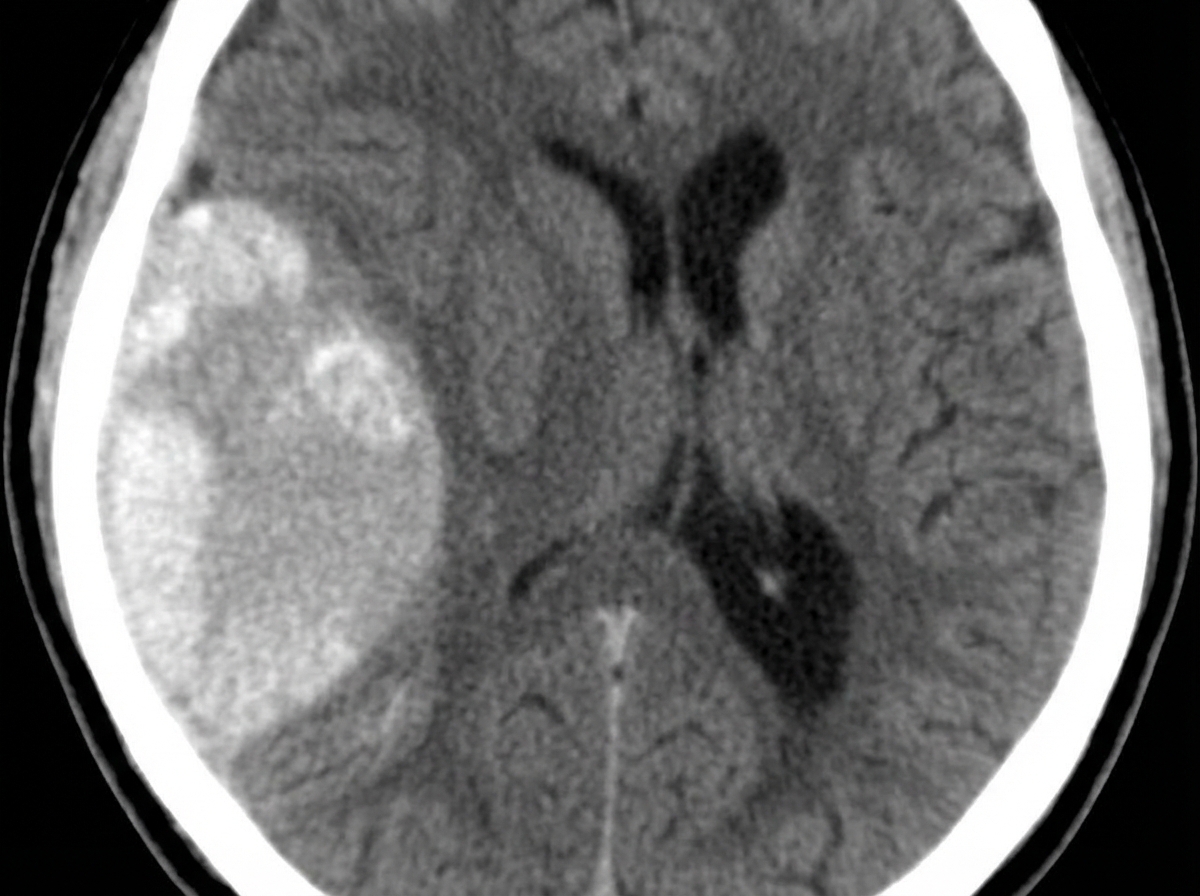
A 23-year-old man presents with a blunt force injury to the head from a baseball bat. He is currently unconscious, although his friends say he was awake and speaking with them en route to the hospital. He has no significant past medical history and takes no current medications. The vital signs include: temperature 37.0°C (98.6°F), blood pressure 165/85 mm Hg, pulse 50/min, and respiratory rate 19/min. On physical examination, there is a blunt force injury to the left temporoparietal region approximately 10.1–12.7 cm (4–5 in) in diameter. There is anisocoria of the left pupil, which is unresponsive to light. The patient is intubated and fluid resuscitation is initiated. A noncontrast computed tomography (CT) scan of the head is acquired and shown in the exhibit (see image). Which of the following is the most appropriate medical treatment for this patient?
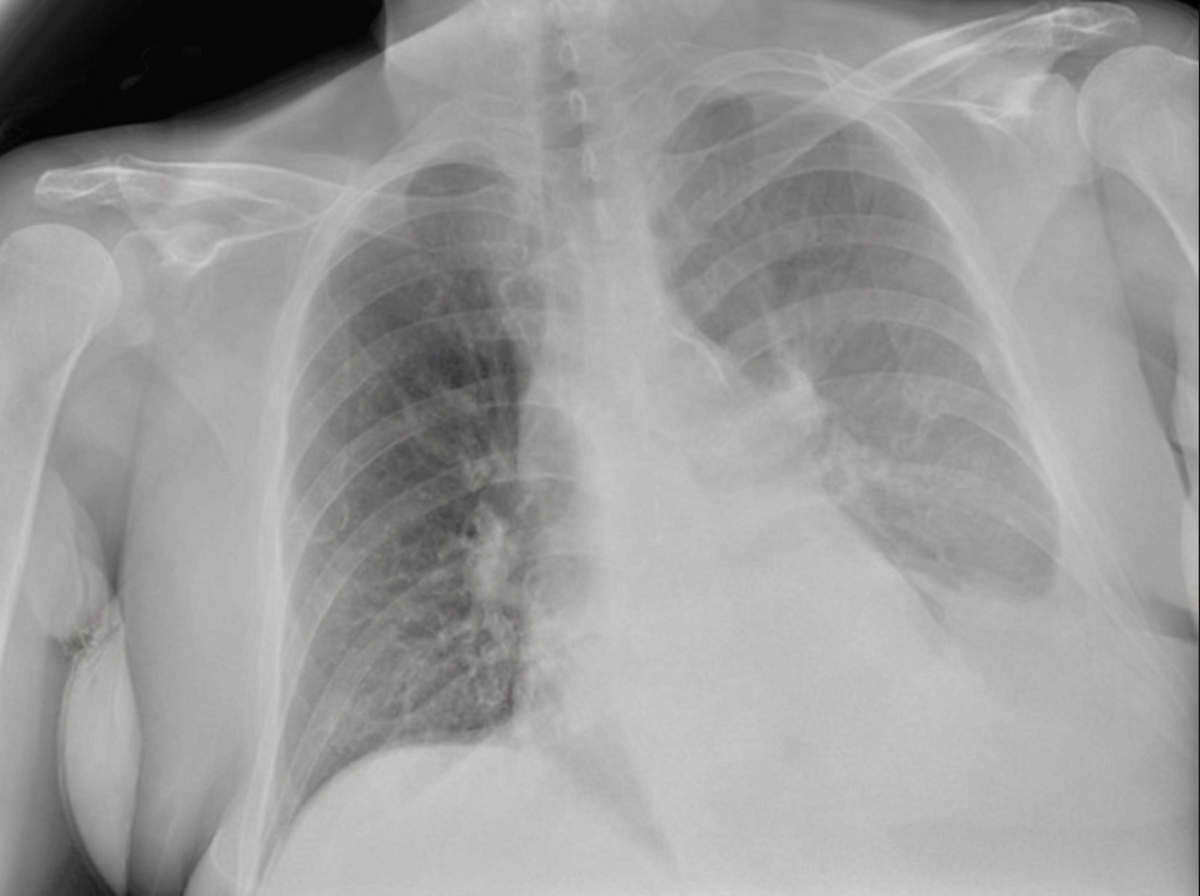
A 27-year-old soldier is brought to the emergency department of a military hospital 20 minutes after being involved in a motor vehicle accident during a training exercise. He was an unrestrained passenger. On arrival, he has shortness of breath and chest pain. He appears pale and anxious. His temperature is 37°C (98.6°F), pulse is 110/min, respirations are 20/min, and blood pressure is 100/65 mm Hg. He is alert and oriented to person, place, and time. Examination shows pale conjunctivae and mucous membranes. There is bruising on the chest, extremities, and abdomen. The lungs are clear to auscultation. He has normal heart sounds and flat neck veins. The abdomen is flat, soft, and mildly tender. The remainder of the physical examination shows no abnormalities. High-flow oxygen is applied, and intravenous fluid resuscitation is begun. A chest x-ray is obtained. Which of the following is the most appropriate next step in management?
A 67-year-old woman is brought by ambulance from home to the emergency department after she developed weakness of her left arm and left face droop. According to her husband, she has a history of COPD, hypertension, and hyperlipidemia. She takes hydrochlorothiazide, albuterol, and atorvastatin. She is not on oxygen at home. She is an active smoker and has smoked a pack a day for 20 years. Her mother died of a heart attack at age 60 and her father died of prostate cancer at age 55. By the time the ambulance arrived, she was having difficulty speaking. Once in the emergency department, she is no longer responsive. Her blood pressure is 125/85 mm Hg, the temperature is 37.2°C (99°F), the heart rate is 77/min, and her breathing is irregular, and she is taking progressively deeper inspirations interrupted with periods of apnea. Of the following, what is the next best step?
A 27-year-old man is brought to the emergency department by emergency medical services. The patient was an unrestrained passenger in a head-on collision that occurred 15 minutes ago and is currently unresponsive. His temperature is 99.5°F (37.5°C), blood pressure is 60/33 mmHg, pulse is 180/min, respirations are 17/min, and oxygen saturation is 95% on room air. A FAST exam demonstrates fluid in Morrison’s pouch. Laboratory values are drawn upon presentation to the ED and sent off. The patient is started on IV fluids and an initial trauma survey is started. Twenty minutes later, his blood pressure is 95/65 mmHg, and his pulse is 110/min. The patient is further stabilized and is scheduled for emergency surgery. Which of the following best represents this patient’s most likely initial laboratory values?
A female presents with a 1 × 1 cm thyroid swelling. What is the next best step in management?
Want unlimited practice?
Get full access to all questions, explanations, and performance tracking.
Scan to download app