
Avoiding unnecessary delays — MCQs

A 40-year-old woman presents to her physician's home with a headache. She describes it as severe and states that her symptoms have not been improving despite her appointment yesterday at the office. Thus, she came to her physician's house on the weekend for help. The patient has been diagnosed with migraine headaches that have persisted for the past 6 months and states that her current symptoms feel like her previous headaches with a severity of 3/10. She has been prescribed multiple medications but is generally non-compliant with therapy. She is requesting an exam and urgent treatment for her symptoms. Which of the following is the best response from the physician?
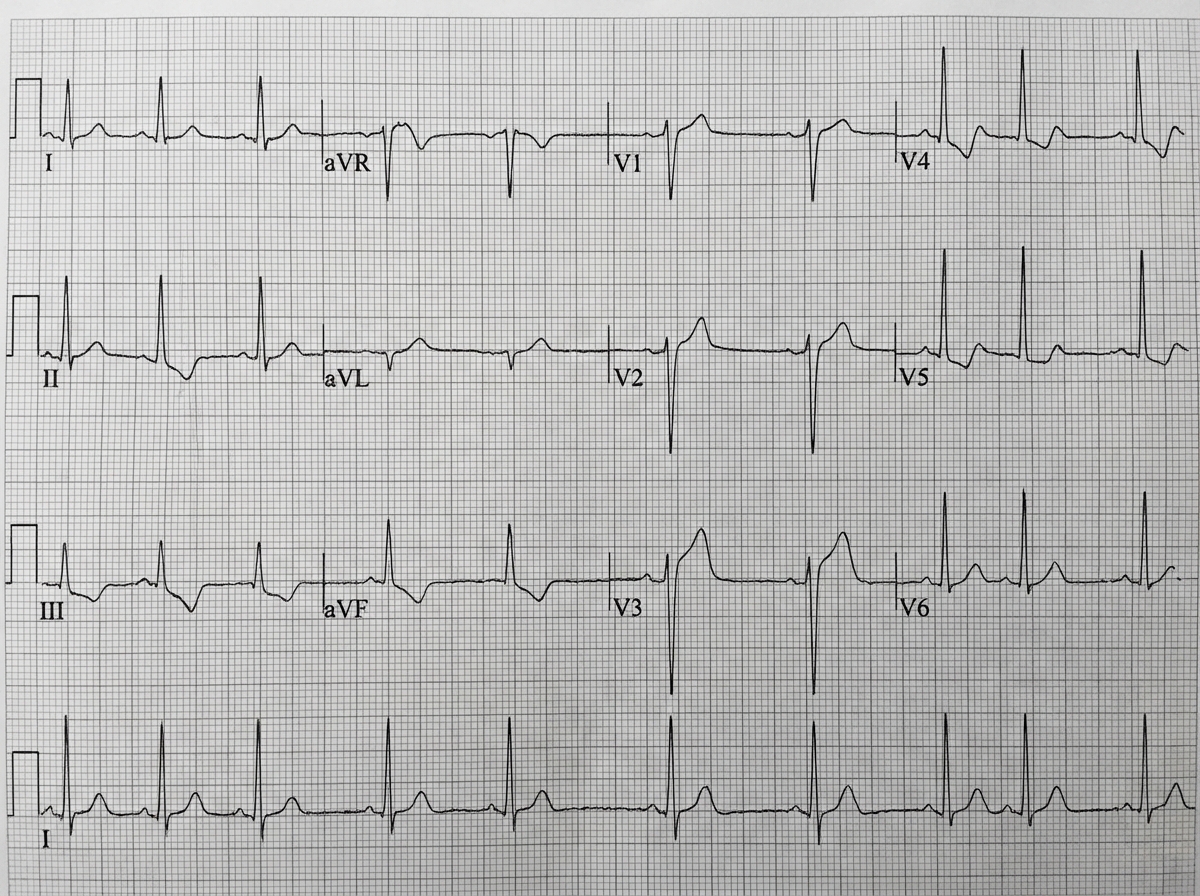
A 71-year-old man develops worsening chest pressure while shoveling snow in the morning. He tells his wife that he has a squeezing pain that is radiating to his jaw and left arm. His wife calls for an ambulance. On the way, he received chewable aspirin and 3 doses of sublingual nitroglycerin with little relief of pain. He has borderline diabetes and essential hypertension. He has smoked 15–20 cigarettes daily for the past 37 years. His blood pressure is 172/91 mm Hg, the heart rate is 111/min and the temperature is 36.7°C (98.0°F). On physical examination in the emergency department, he looks pale, very anxious and diaphoretic. His ECG is shown in the image. Troponin levels are elevated. Which of the following is the best next step in the management of this patient condition?
A 42-year-old woman presents to the emergency department with abdominal pain. Her pain started last night during dinner and has persisted. This morning, the patient felt very ill and her husband called emergency medical services. The patient has a past medical history of obesity, diabetes, and depression. Her temperature is 104°F (40°C), blood pressure is 90/65 mmHg, pulse is 160/min, respirations are 14/min, and oxygen saturation is 98% on room air. Physical exam is notable for a very ill appearing woman. Her skin is mildly yellow, and she is in an antalgic position on the stretcher. Laboratory values are ordered as seen below. Hemoglobin: 13 g/dL Hematocrit: 38% Leukocyte count: 14,500 cells/mm^3 with normal differential Platelet count: 257,000/mm^3 Alkaline phosphatase: 227 U/L Bilirubin, total: 11.3 mg/dL Bilirubin, direct: 9.8 mg/dL AST: 42 U/L ALT: 31 U/L The patient is started on antibiotics and IV fluids. Which of the following is the best next step in management?
A 51-year-old man with a recent diagnosis of peptic ulcer disease currently treated with an oral proton pump inhibitor twice daily presents to the urgent care center complaining of acute abdominal pain which began suddenly less than 2 hours ago. On physical exam, you find his abdomen to be mildly distended, diffusely tender to palpation, and positive for rebound tenderness. Given the following options, what is the next best step in patient management?
A 67-year-old man presents to the emergency department for squeezing and substernal chest pain. He states that he was at home eating dinner when his symptoms began. The patient has a past medical history of diabetes, hypertension, and dyslipidemia. He is currently taking atorvastatin, lisinopril, insulin, metformin, metoprolol, and aspirin. Six days ago he underwent percutaneous coronary intervention. His temperature is 99.5°F (37.5°C), blood pressure is 197/118 mmHg, pulse is 120/min, respirations are 17/min, and oxygen saturation is 98% on room air. Physical exam reveals an uncomfortable elderly man who is sweating. An ECG is ordered. Which of the following is the best next step in management for this patient?
An orthopaedic surgeon at a local community hospital has noticed that turnover times in the operating room have been unnecessarily long. She believes that the long wait times may be due to inefficient communication between the surgical nursing staff, the staff in the pre-operative area, and the staff in the post-operative receiving area. She believes a secure communication mobile phone app would help to streamline communication between providers and improve efficiency in turnover times. Which of the following methods is most appropriate to evaluate the impact of this intervention in the clinical setting?
A 65-year-old man is admitted to the hospital because of a 1-month history of fatigue, intermittent fever, and weakness. Results from a peripheral blood smear taken during his evaluation are indicative of possible acute myeloid leukemia. Bone marrow aspiration and subsequent cytogenetic studies confirm the diagnosis. The physician sets aside an appointed time-slot and arranges a meeting in a quiet office to inform him about the diagnosis and discuss his options. He has been encouraged to bring someone along to the appointment if he wanted. He comes to your office at the appointed time with his daughter. He appears relaxed, with a full range of affect. Which of the following is the most appropriate opening statement in this situation?
Want unlimited practice?
Get full access to all questions, explanations, and performance tracking.
Scan to download app