
Acuity-based time allocation — MCQs

A 22-year-old man is brought to the emergency department by his friends 30 minutes after falling down a flight of stairs. His friends report that they were at a college party, where he drank large amounts of alcohol. He is aggressive and restless. Examination shows tenderness to palpation and swelling of his right lower leg. An x-ray of the right leg shows a lower tibial shaft fracture. The physician recommends overnight observation and surgery the following morning. The patient refuses the suggested treatment and requests immediate discharge. Otherwise, he says, he will call his lawyer and sue the entire medical staff involved in his care. Which of the following is the most appropriate response by the physician?
After the administration of an erroneous dose of intravenous phenytoin for recurrent seizures, a 9-year-old girl develops bradycardia and asystole. Cardiopulmonary resuscitation was initiated immediately. After 15 minutes, the blood pressure is 120/75 mm Hg, the pulse is 105/min, and the respirations are 14/min and spontaneous. She is taken to the critical care unit for monitoring and mechanical ventilation. She follows commands but requires sedation due to severe anxiety. Which of the following terms most accurately describes the unexpected occurrence in this patient?
A 42-year-old woman presents to the emergency department with abdominal pain. Her pain started last night during dinner and has persisted. This morning, the patient felt very ill and her husband called emergency medical services. The patient has a past medical history of obesity, diabetes, and depression. Her temperature is 104°F (40°C), blood pressure is 90/65 mmHg, pulse is 160/min, respirations are 14/min, and oxygen saturation is 98% on room air. Physical exam is notable for a very ill appearing woman. Her skin is mildly yellow, and she is in an antalgic position on the stretcher. Laboratory values are ordered as seen below. Hemoglobin: 13 g/dL Hematocrit: 38% Leukocyte count: 14,500 cells/mm^3 with normal differential Platelet count: 257,000/mm^3 Alkaline phosphatase: 227 U/L Bilirubin, total: 11.3 mg/dL Bilirubin, direct: 9.8 mg/dL AST: 42 U/L ALT: 31 U/L The patient is started on antibiotics and IV fluids. Which of the following is the best next step in management?
A 35-year-old male is brought into the emergency department for a trauma emergency. The emergency medical services states that the patient was wounded with a knife on his upper left thigh near the inguinal ligament. Upon examination in the trauma bay, the patient is awake and alert. His physical exam and FAST exam is normal other than the knife wound. Large bore intravenous lines are inserted into the patient for access and fluids are being administered. Pressure on the knife wound is being held by one of the physicians with adequate control of the bleeding, but the physician notices the blood was previously extravasating in a pulsatile manner. His vitals are BP 100/50, HR 110, T 97.8, RR 22. What is the next best step for this patient?
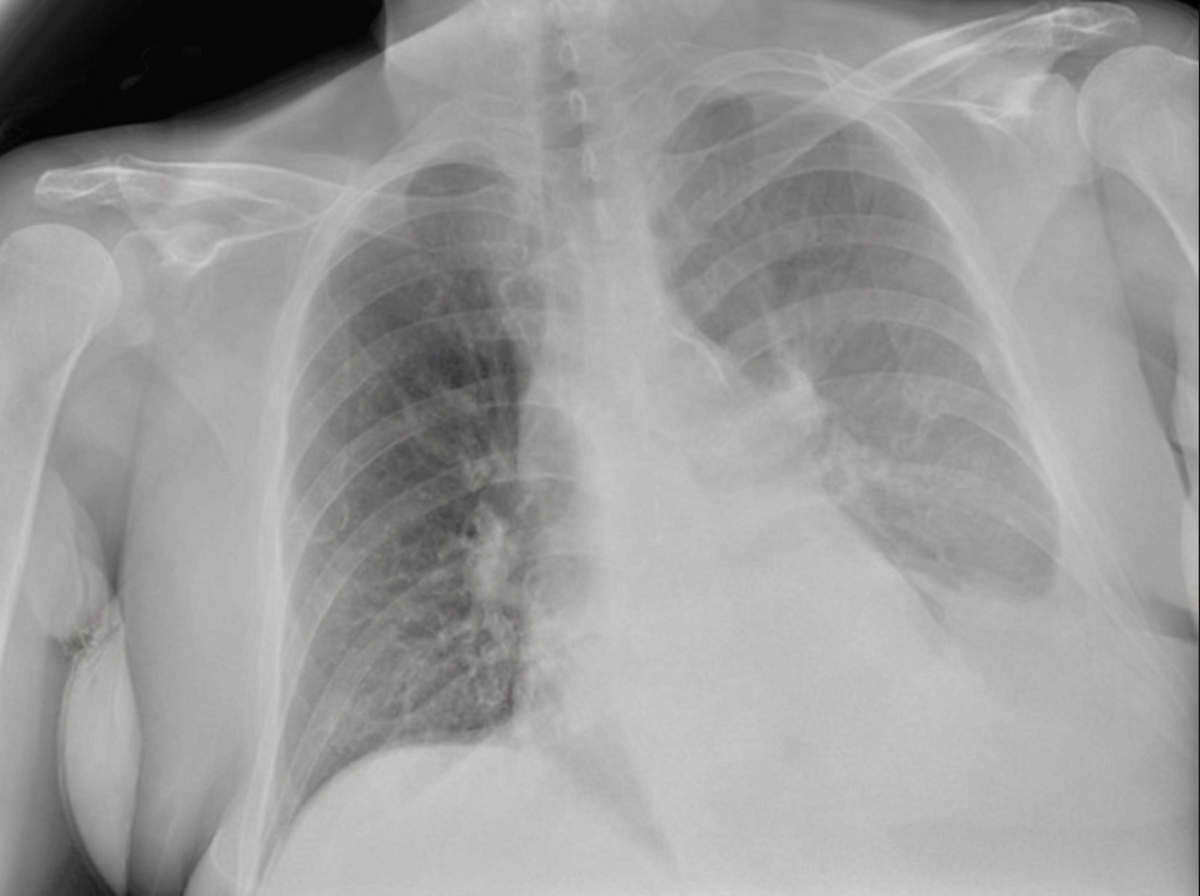
A 27-year-old soldier is brought to the emergency department of a military hospital 20 minutes after being involved in a motor vehicle accident during a training exercise. He was an unrestrained passenger. On arrival, he has shortness of breath and chest pain. He appears pale and anxious. His temperature is 37°C (98.6°F), pulse is 110/min, respirations are 20/min, and blood pressure is 100/65 mm Hg. He is alert and oriented to person, place, and time. Examination shows pale conjunctivae and mucous membranes. There is bruising on the chest, extremities, and abdomen. The lungs are clear to auscultation. He has normal heart sounds and flat neck veins. The abdomen is flat, soft, and mildly tender. The remainder of the physical examination shows no abnormalities. High-flow oxygen is applied, and intravenous fluid resuscitation is begun. A chest x-ray is obtained. Which of the following is the most appropriate next step in management?
A regional academic medical center has 10 cases of adenovirus in the span of a week among its ICU patients. A committee is formed to investigate this outbreak. They are tasked with identifying the patients and interviewing the care providers to understand how adenovirus could have been spread from patient to patient. This committee will review charts, talk to the care provider teams, and investigate current patient safety and sanitation measures in the ICU. The goal of the committee is to identify weaknesses in the current system and to put in place a plan to help prevent this sort of outbreak from reoccurring in the future. The committee is most likely using what type of analysis?
The patient declines the use of oxytocin or any other further testing and decides to await a spontaneous delivery. Five weeks later, she comes to the emergency department complaining of vaginal bleeding for 1 hour. Her pulse is 110/min, respirations are 18/min, and blood pressure is 112/76 mm Hg. Pulse oximetry on room air shows an oxygen saturation of 97%. Pelvic examination shows active vaginal bleeding. Laboratory studies show: Hemoglobin 12.8 g/dL Leukocyte count 10,300/mm3 Platelet count 105,000/mm3 Prothrombin time 26 seconds (INR=1.8) Serum Na+ 139 mEq/L K+ 4.1 mEq/L Cl- 101 mEq/L Urea nitrogen 42 mg/dL Creatinine 2.8 mg/dL Which of the following is the most likely underlying mechanism of this patient's symptoms?
A 59-year-old woman comes to the physician because of left leg swelling that started after a transcontinental flight. A duplex ultrasound of the left leg shows a noncompressible popliteal vein. A drug is prescribed that inhibits the coagulation cascade. Two weeks later, laboratory studies show: Platelet count 210,000/mm3 Partial thromboplastin time 28 seconds (normal: 25-35) Prothrombin time 12 seconds (normal: 11-13) Thrombin time 15 seconds (control: 15 seconds) Which of the following drugs was most likely prescribed?
Want unlimited practice?
Get full access to all questions, explanations, and performance tracking.
Scan to download app