
Initial diagnostic workup approach — MCQs

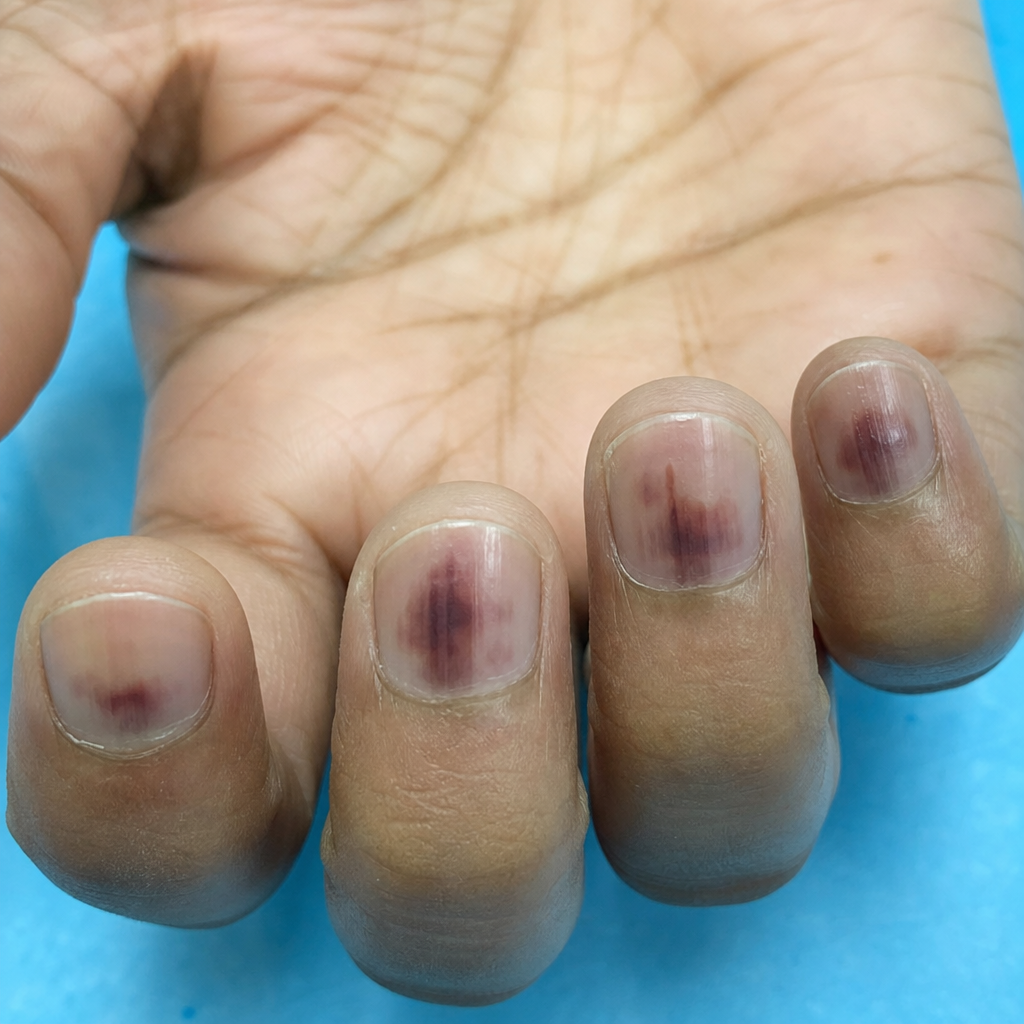
A 35-year-old woman with a medical history significant for asthma, hypertension, and occasional IV drug use comes to the emergency department with fever. On physical exam, there are findings depicted in figure A, for which the patient cannot account. What test will be most helpful to establish the diagnosis?
A 65-year-old man is brought to the emergency department from his home. He is unresponsive. His son requested a wellness check because he had not heard from his father in 2 weeks. He reports that his father was sounding depressed during a telephone call. The paramedics found a suicide note and a half-empty bottle of antifreeze near the patient. The medical history includes hypertension and hyperlipidemia. The vital signs include: blood pressure 120/80 mm Hg, respiratory rate 25/min, heart rate 95/min, and temperature 37.0°C (98.5°F). He is admitted to the hospital. What do you expect the blood gas analysis to show?
A 36-year-old male is taken to the emergency room after jumping from a building. Bilateral fractures to the femur were stabilized at the scene by emergency medical technicians. The patient is lucid upon questioning and his vitals are stable. Pain only at his hips was elicited. Cervical exam was not performed. What is the best imaging study for this patient?
A 58-year-old man presents to the emergency department with a chief complaint of ringing in his ears that started several hours previously that has progressed to confusion. The patient denies any history of medical problems except for bilateral knee arthritis. He was recently seen by an orthopedic surgeon to evaluate his bilateral knee arthritis but has opted to not undergo knee replacement and prefers medical management. His wife noted that prior to them going on a hike today, he seemed confused and not himself. They decided to stay home, and roughly 14 hours later, he was no longer making any sense. Physical exam is notable for a confused man. The patient's vitals are being performed and his labs are being drawn. Which of the following is most likely to be seen on blood gas analysis?
A mother presents to the family physician with her 16-year-old son. She explains, "There's something wrong with him doc. His grades are getting worse, he's cutting class, he's gaining weight, and his eyes are often bloodshot." Upon interviewing the patient apart from his mother, he seems withdrawn and angry at times when probed about his social history. The patient denies abuse and sexual history. What initial test should be sent to rule out the most likely culprit of this patient's behavior?
An investigator is studying muscle tissue in high-performance athletes. He obtains blood samples from athletes before and after a workout session consisting of short, fast sprints. Which of the following findings is most likely upon evaluation of blood obtained after the workout session?
A 24-year-old woman presents to the emergency department for evaluation of lower abdominal pain. She endorses 6 hours of progressively worsening pain. She denies any significant past medical history and her physical examination is positive for non-specific, diffuse pelvic discomfort. She denies the possibility of pregnancy given her consistent use of condoms with her partner. The vital signs are: blood pressure, 111/68 mm Hg; pulse, 71/min; and respiratory rate, 15/min. She is afebrile. Which of the following is the next best step in her management?
A 27-year-old soldier is brought to the emergency department of a military hospital 20 minutes after being involved in a motor vehicle accident during a training exercise. He was an unrestrained passenger. On arrival, he has shortness of breath and chest pain. He appears pale and anxious. His temperature is 37°C (98.6°F), pulse is 110/min, respirations are 20/min, and blood pressure is 100/65 mm Hg. He is alert and oriented to person, place, and time. Examination shows pale conjunctivae and mucous membranes. There is bruising on the chest, extremities, and abdomen. The lungs are clear to auscultation. He has normal heart sounds and flat neck veins. The abdomen is flat, soft, and mildly tender. The remainder of the physical examination shows no abnormalities. High-flow oxygen is applied, and intravenous fluid resuscitation is begun. A chest x-ray is obtained. Which of the following is the most appropriate next step in management?
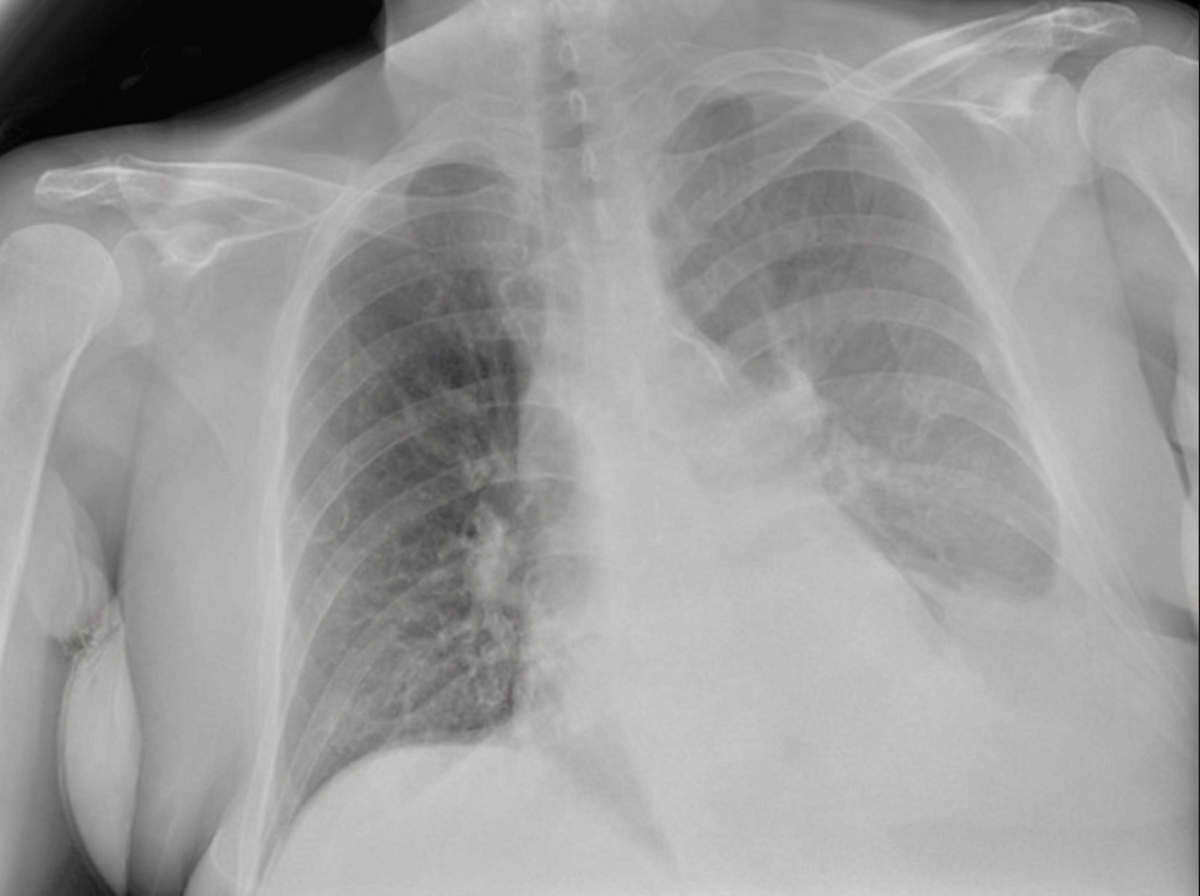
A trauma 'huddle' is called. Morphine is administered for pain. Low-flow oxygen is begun. A traumatic diaphragmatic rupture is suspected. Infusion of 0.9% saline is begun. Which of the following is the most appropriate next step in management?
Want unlimited practice?
Get full access to all questions, explanations, and performance tracking.
Scan to download app