
Diagnostic algorithms by presentation — MCQs

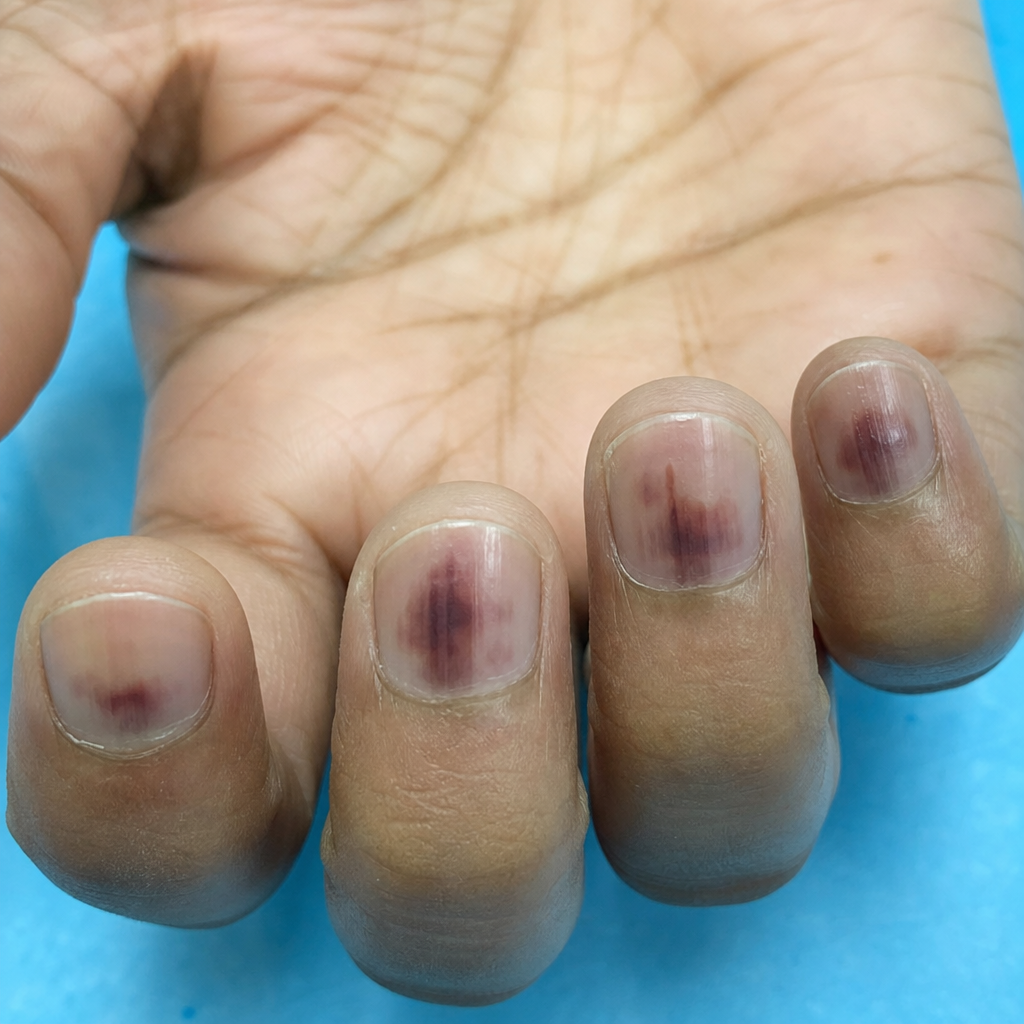
A 35-year-old woman with a medical history significant for asthma, hypertension, and occasional IV drug use comes to the emergency department with fever. On physical exam, there are findings depicted in figure A, for which the patient cannot account. What test will be most helpful to establish the diagnosis?
A 50-year-old male presents to the emergency with abdominal pain. He reports he has had abdominal pain associated with meals for several months and has been taking over the counter antacids as needed, but experienced significant worsening pain one hour ago in the epigastric region. The patient reports the pain radiating to his shoulders. Vital signs are T 38, HR 120, BP 100/60, RR 18, SpO2 98%. Physical exam reveals diffuse abdominal rigidity with rebound tenderness. Auscultation reveals hypoactive bowel sounds. Which of the following is the next best step in management?
A 15-year-old boy is brought to the emergency department one hour after sustaining an injury during football practice. He collided head-on into another player while wearing a mouthguard and helmet. Immediately after the collision he was confused but able to use appropriate words. He opened his eyes spontaneously and followed commands. There was no loss of consciousness. He also had a headache with dizziness and nausea. He is no longer confused upon arrival. He feels well. Vital signs are within normal limits. He is fully alert and oriented. His speech is organized and he is able to perform tasks demonstrating full attention, memory, and balance. Neurological examination shows no abnormalities. There is mild tenderness to palpation over the crown of his head but no signs of skin break or fracture. Which of the following is the most appropriate next step?
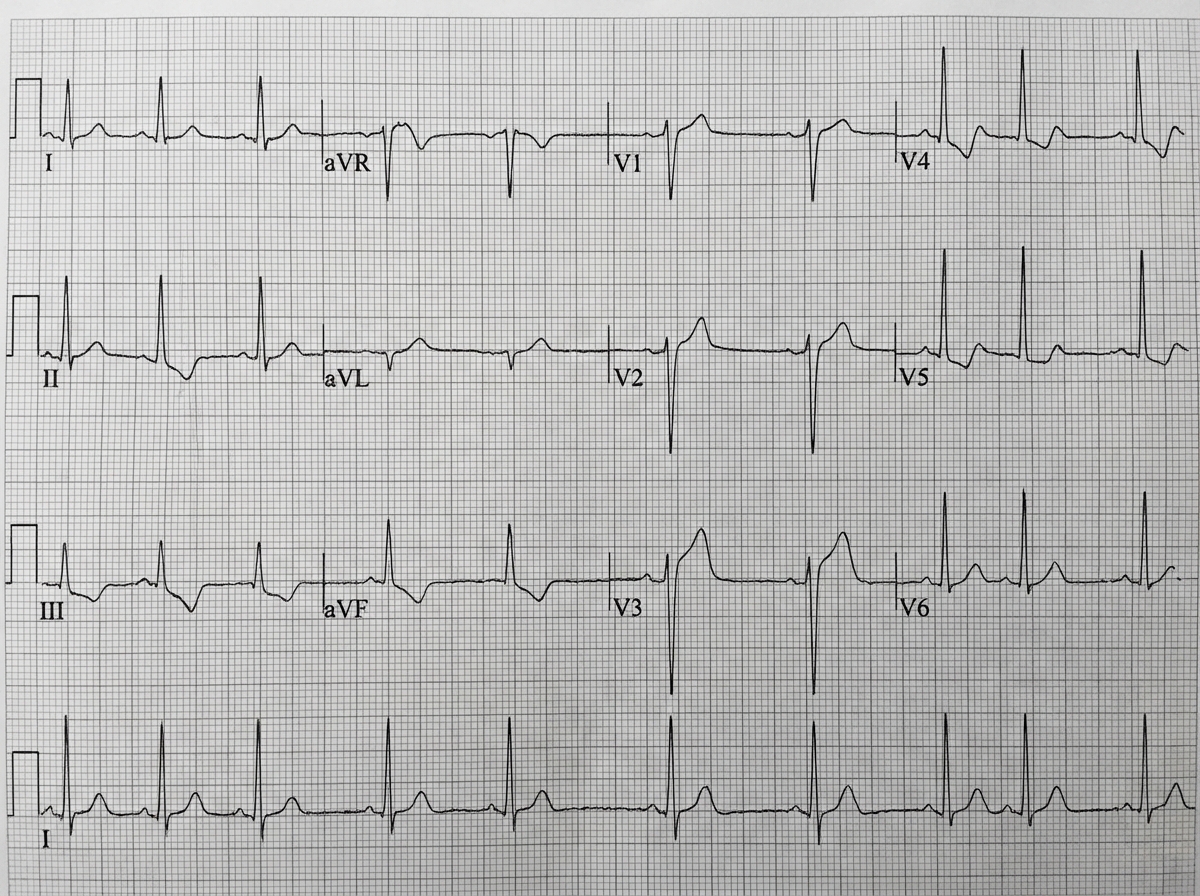
A 71-year-old man develops worsening chest pressure while shoveling snow in the morning. He tells his wife that he has a squeezing pain that is radiating to his jaw and left arm. His wife calls for an ambulance. On the way, he received chewable aspirin and 3 doses of sublingual nitroglycerin with little relief of pain. He has borderline diabetes and essential hypertension. He has smoked 15–20 cigarettes daily for the past 37 years. His blood pressure is 172/91 mm Hg, the heart rate is 111/min and the temperature is 36.7°C (98.0°F). On physical examination in the emergency department, he looks pale, very anxious and diaphoretic. His ECG is shown in the image. Troponin levels are elevated. Which of the following is the best next step in the management of this patient condition?
A 25-year-old woman presents with slightly yellow discoloration of her skin and eyes. She says she has had multiple episodes with similar symptoms before. She denies any recent history of nausea, fatigue, fever, or change in bowel/bladder habits. No significant past medical history. The patient is afebrile and vital signs are within normal limits. On physical examination, she is jaundiced, and her sclera is icteric. Laboratory findings are significant only for a mild unconjugated hyperbilirubinemia. The remainder of laboratory results is unremarkable. Which of the following is the most likely diagnosis in this patient?
A 70-year-old man is brought to the emergency department with complaints of chest pain for the last 2 hours. He had been discharged from the hospital 10 days ago when he was admitted for acute myocardial infarction. It was successfully treated with percutaneous coronary intervention. During the physical exam, the patient prefers to hunch forwards as this decreases his chest pain. He says the pain is in the middle of the chest and radiates to his back. Despite feeling unwell, the patient denies any palpitations or shortness of breath. Vitals signs include: pulse 90/min, respiratory rate 20/min, blood pressure 134/82 mm Hg, and temperature 36.8°C (98.2°F). The patient is visibly distressed and is taking shallow breaths because deeper breaths worsen his chest pain. An ECG shows diffuse ST elevations. Which of the following should be administered to this patient?
A 31-year-old man presents with jaundice, scleral icterus, dark urine, and pruritus. He also says that he has been experiencing abdominal pain shortly after eating. He says that symptoms started a week ago and have not improved. The patient denies any associated fever or recent weight-loss. He is afebrile and vital signs are within normal limits. On physical examination, the patient’s skin appears yellowish. Scleral icterus is present. Remainder of physical examination is unremarkable. Laboratory findings are significant for: Conjugated bilirubin 5.1 mg/dL Total bilirubin 6.0 mg/dL AST 24 U/L ALT 22 U/L Alkaline phosphatase 662 U/L A contrast CT of the abdomen is unremarkable. An ultrasound of the right upper quadrant reveals a normal gallbladder, but the common bile duct is not visible. Which of the following is the next best step in the management of this patient?
Want unlimited practice?
Get full access to all questions, explanations, and performance tracking.
Scan to download app