
Vitamin cofactor functions in metabolism — MCQs

A 68-year-old man with type 2 diabetes mellitus comes to the physician because of a 5-month history of episodic palpitations, dizziness, and fatigue. His pulse is 134/min and irregularly irregular, and his blood pressure is 165/92 mm Hg. An ECG shows a narrow complex tachycardia with absent P waves. He is prescribed a drug that decreases the long-term risk of thromboembolic complications by inhibiting the extrinsic pathway of the coagulation cascade. The expected beneficial effect of this drug is most likely due to which of the following actions?
An investigator is studying nutritional deficiencies in humans. A group of healthy volunteers are started on a diet deficient in pantothenic acid. After 4 weeks, several of the volunteers develop irritability, abdominal cramps, and burning paresthesias of their feet. These symptoms are fully reversed after reintroduction of pantothenic acid to their diet. The function of which of the following enzymes was most likely impaired in the volunteers during the study?
A 43-year-old woman visits her primary care provider complaining of fatigue. Although she has had it for several months, her fatigue has been worsening over the past few weeks. She has no other symptoms. Past medical history is significant for hypertension. She takes chlorthalidone, an oral contraceptive pill, and a multivitamin every day. Family history is noncontributory. She drinks about 1 bottle of wine every day and started taking a shot or two of whisky or vodka every morning before work to “clear out the cobwebs”. She was recently fired from her job. Today, her heart rate is 90/min, respiratory rate is 17/min, blood pressure is 110/65 mm Hg, and temperature is 36.7°C (98.1°F). On physical exam, she appears malnourished and anxious. Her conjunctiva are pale, and glossitis is noted on oral exam. Her heart has a regular rate and rhythm and her lungs are clear to auscultation bilaterally. She has no gait or balance abnormalities. Lab results show a hemoglobin of 10 g/dL, with a mean corpuscular volume (MCV) of 108 fl. Elevated level of which of the following will most likely to be found in this patient?
A 51-year-old gentleman presents with new onset bilateral paresthesias of his feet. He also admits that he has not been able to exercise as much as previously and his friends have commented that he looks pale. Upon physical exam you find that he has conjunctival pallor and mildly decreased sensation and proprioception on his feet bilaterally. Based on your suspicions you decide to obtain a blood smear where you see megaloblasts as well as hypersegmented neutrophils. Given these findings you decide to investigate the cause of his disorder by injecting an intramuscular vitamin, then feeding him a radiolabeled version of the same vitamin orally. After waiting 24 hours you see that no radiolabeled vitamin appears in the urine so you repeat the test with intrinsic factor added to the oral mixture, at which point 20% of the radiolabeled vitamin appears in the urine. Which of the following is the most likely etiology of this gentleman's symptoms?
A 2-week-old boy is brought to the emergency department after he was found to have blood in his stool. The mother says the baby was born by home birth at 38 weeks without complications. The mother denies fever, vomiting, or rash but says the baby has been fussier recently. The mother denies a family history of any similar problems. On exam, the patient is well-developed and meets all developmental markers. His heart rate is tachycardic but with regular rhythms. There is oozing blood from the umbilical site which has not fully healed. A guaiac stool test is positive. What is the underlying cause of this presentation?
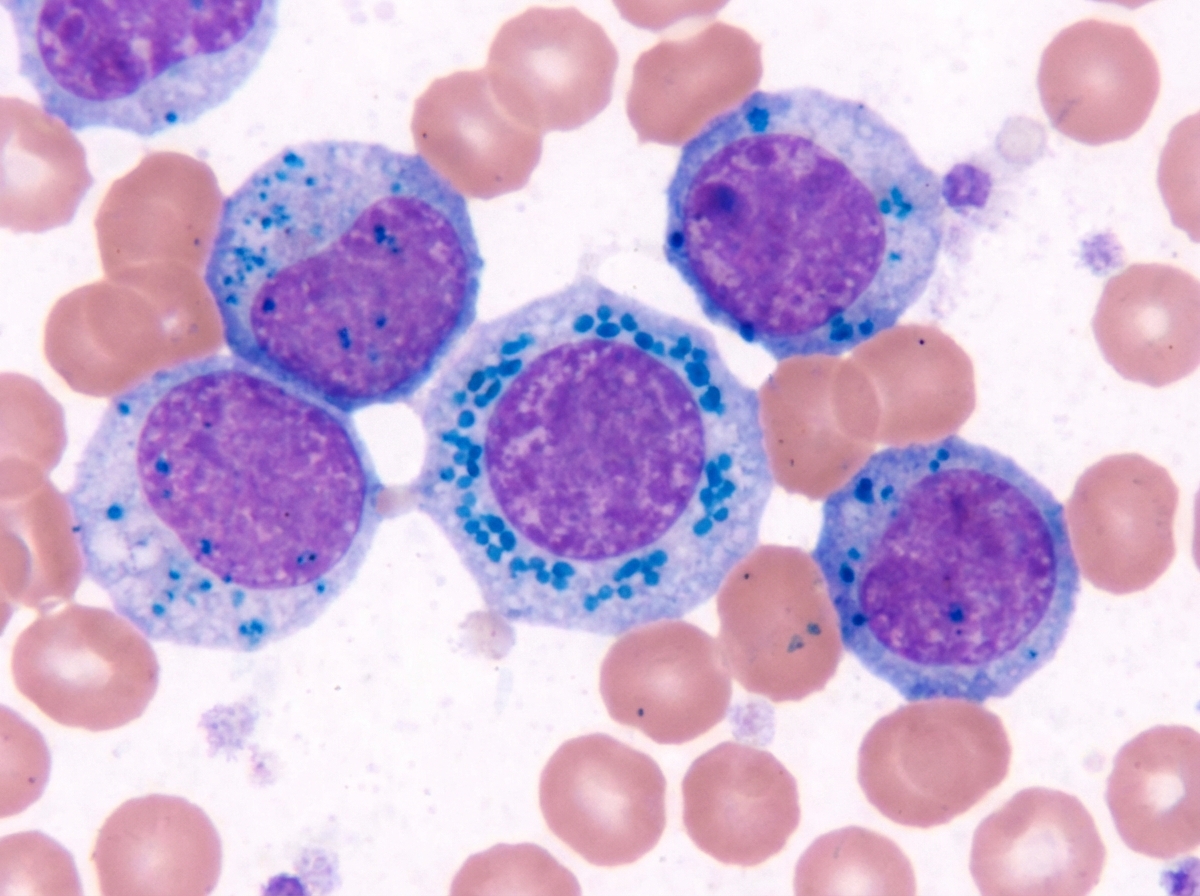
A 29-year-old Mediterranean man presents to the clinic for fatigue and lightheadedness for the past week. He reports an inability to exercise as his heart would beat extremely fast. He was recently diagnosed with active tuberculosis and started on treatment 2 weeks ago. He denies fever, weight loss, vision changes, chest pain, dyspnea, or bloody/dark stools. A physical examination is unremarkable. A peripheral blood smear is shown in figure A. What is the most likely explanation for this patient’s symptoms?
A homeless woman presents with shortness of breath on exertion and pedal edema. Cardiac workup performed shows evidence of dilated cardiomyopathy and increased cardiac output. She also has decreased sensation over both extremities bilaterally. Which vitamin deficiency most likely caused these symptoms?
A 58-year-old man presents to the Emergency Department after 3 hours of intense suprapubic pain associated with inability to urinate for the past day or two. His medical history is relevant for benign prostatic hyperplasia (BPH) that has been under treatment with prazosin and tadalafil. Upon admission, he is found to have a blood pressure of 180/100 mm Hg, a pulse of 80/min, a respiratory rate of 23/min, and a temperature of 36.5°C (97.7°F). He weighs 84 kg (185.1 lb) and is 175 cm (5 ft 7 in) tall. Physical exam, he has suprapubic tenderness. A bladder scan reveals 700 ml of urine. A Foley catheter is inserted and the urine is drained. Initial laboratory tests and their follow up 8 hours after admission are shown below. Admission 8 hours after admission Serum potassium 4.2 mmol/L Serum potassium 4.0 mmol/L Serum sodium 140 mmol/L Serum sodium 142 mmol/L Serum chloride 102 mmol/L Serum chloride 110 mmol/L Serum creatinine 1.4 mg/dL Serum creatinine 1.6 mg/dL Serum blood urea nitrogen 64 mg/dL Serum blood urea nitrogen 62 mg/dL Urine output 250 mL Urine output 260 mL A senior attending suggests a consultation with Nephrology. Which of the following best justifies this suggestion?
A previously healthy 18-year-old woman comes to the physician because of a 2-day history of swelling and itchiness of her mouth and lips. It decreases when she eats cold foods such as frozen fruit. Four days ago, she underwent orthodontic wire-placement on her upper and lower teeth. Since then, she has been taking ibuprofen twice daily for the pain. For the past 6 months, she has been on a strict vegan diet. She is sexually active with one partner and uses condoms consistently. She had chickenpox that resolved spontaneously when she was 6 years old. Her vitals are within normal limits. Examination shows diffuse erythema and edema of the buccal mucosa with multiple serous vesicles and shallow ulcers. Stroking the skin with pressure does not cause blistering of the skin. The remainder of the examination shows no abnormalities. Which of the following is the most likely cause of these symptoms?
An 8-year-old boy presents with recurrent infections including multiple episodes of pneumonia and diarrhea. He reports difficulty seeing in the dark. Physical examination reveals white patches on the sclera and conjunctival dryness. What is the most likely cause of these findings?
Want unlimited practice?
Get full access to all questions, explanations, and performance tracking.
Scan to download app