
Mineral deficiency disorders — MCQs

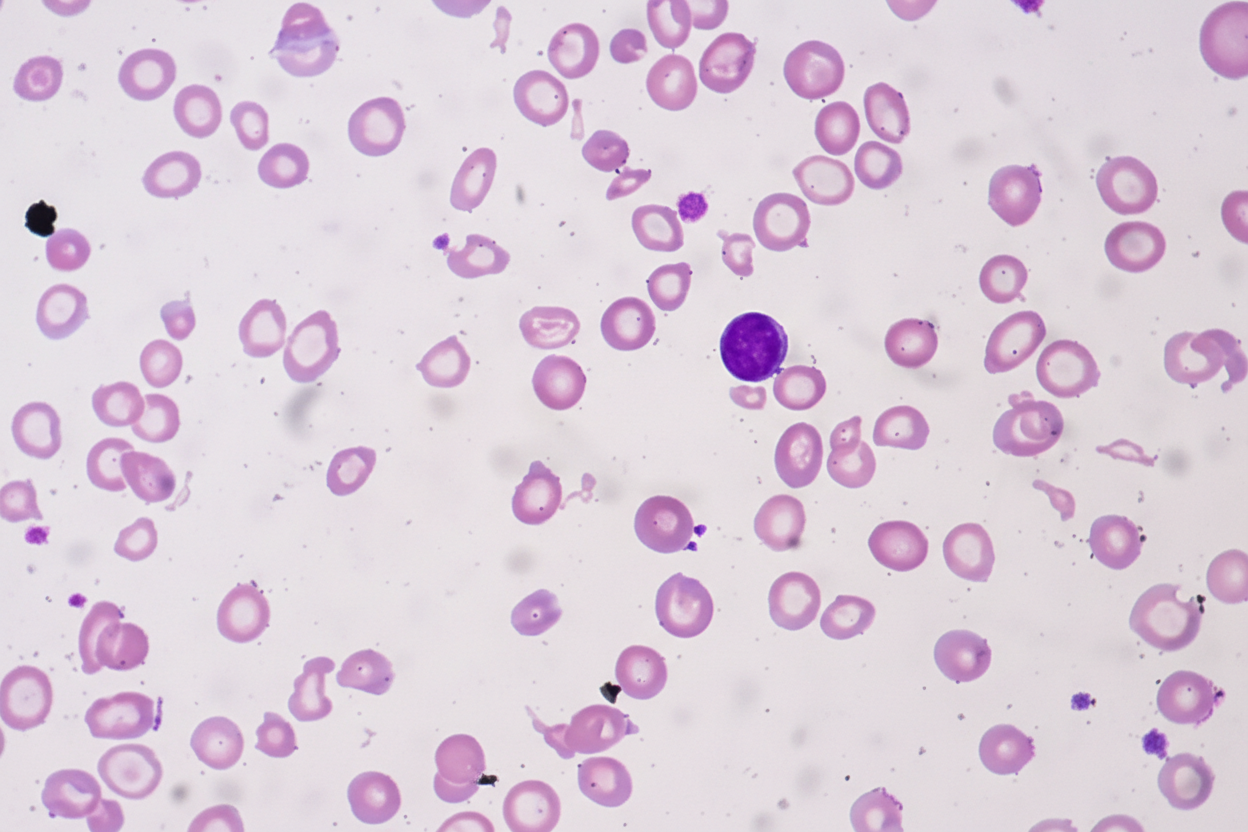
A 25-year-old African-American woman visits the doctor’s office complaining of fatigue for a couple of months. She says that she feels exhausted by the end of the day. She works as a dental assistant and is on her feet most of the time. However, she eats well and also tries to walk for 30 minutes every morning. She also says that she sometimes feels breathless and has to gasp for air, especially when she is walking or jogging. Her past medical history is insignificant, except for occasional bouts of cold during the winters. Her physical exam findings are within normal limits except for moderate conjunctival pallor. Complete blood count results and iron profile are as follows: Hemoglobin 9 g/dL Hematocrit 28.5% RBC count 5.85 x 10⁶/mm3 WBC count 5,500/mm3 Platelet count 212,000/mm3 MCV 56.1 fl MCH 20.9 pg/cell MCHC 25.6 g/dL RDW 11.7% Hb/cell Serum iron 170 mcg/dL Total iron-binding capacity (TIBC) 458 mcg/dL Transferrin saturation 60% A peripheral blood smear is given. When questioned about her family history of anemia, she says that all she remembers is her dad was never allowed to donate blood as he was anemic. Which of the following most likely explains her cell counts and blood smear results?
A 37-year-old man is brought to the emergency department because he was found down on a city sidewalk. Upon presentation he is found to be disheveled with multiple poorly healed wounds on his hands and feet. He has had dozens of previous presentations for alcohol intoxication and is currently known to be homeless. Physical examination reveals multiple minor wounds, alopecia, and decreased axillary hair. Upon being aroused, the patient reveals that he has had difficulty with taste and smell and has also had severe diarrhea over the last week. The deficient substance most likely responsible for this patient's symptoms is associated with which of the following proteins?
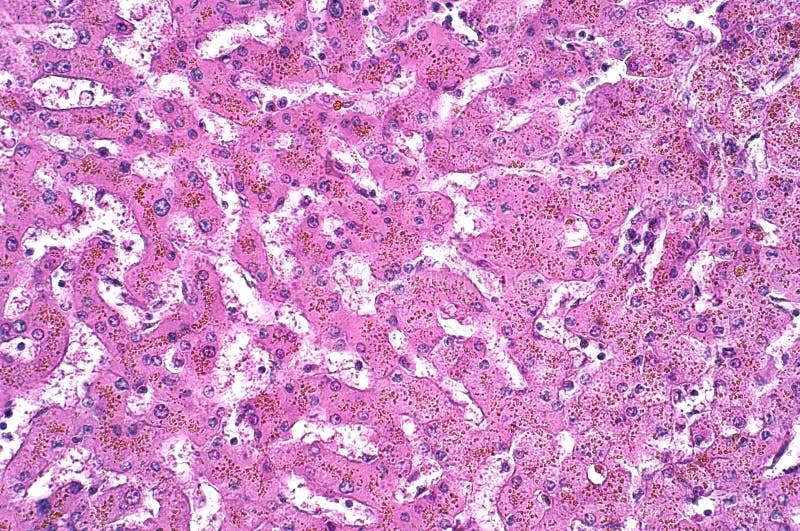
A previously healthy 44-year-old man comes to his physician because of frequent urination and increased thirst for several weeks. Physical examination shows darkened skin and a firm mass in the right upper quadrant. His blood glucose is 220 mg/dL. A photomicrograph of a specimen obtained on liver biopsy is shown. Which of the following best describes the pathogenesis of the disease process in this patient?
An investigator is studying a drug that acts on the thyroid hormone pathway. Levels of serum free T3 and T4 in healthy participants are measured before and after administration of the drug. After administration, there is a decrease in the average serum free T3 level, while the average serum free T4 level is increased compared to initial serum studies. Inhibition of which of the following is the most likely mechanism of action of this drug?
A 57-year-old woman comes to the physician because of a 3-month history of easy fatigability and dyspnea on exertion. Menopause occurred 5 years ago. Her pulse is 105/min and blood pressure is 100/70 mm Hg. Physical examination shows pallor of the nail beds and conjunctivae. A peripheral blood smear shows small, pale red blood cells. Further evaluation is most likely to show which of the following findings?
A 52-year-old male presents to clinic with complaints of anxiety and fatigue for 4 months. He has also been experiencing palpitations, muscle weakness, increased sweating, and an increase in the frequency of defecation. Past medical history is insignificant. He neither consumes alcohol nor smokes cigarettes. His pulse is 104/min and irregular, blood pressure is 140/80 mm Hg. On examination, you notice that he has bilateral exophthalmos. There are fine tremors in both hands. Which of the following results would you expect to see on a thyroid panel?
A homeless woman presents with shortness of breath on exertion and pedal edema. Cardiac workup performed shows evidence of dilated cardiomyopathy and increased cardiac output. She also has decreased sensation over both extremities bilaterally. Which vitamin deficiency most likely caused these symptoms?
A 6-month-old boy presents with decreased growth, pigmented retinopathy, hemolytic anemia, and peripheral neuropathy. You suspect that these signs are the result of a vitamin deficiency leading to increased oxidative damage to lipids. Which of the following is most likely responsible for this patient's symptoms?
A 23-year-old woman presents to her primary care physician due to amenorrhea. The patient states that historically she has her period once every three months but recently has not had it at all. Otherwise, she has no other complaints. The patient recently started college and is a varsity athlete for the track team. She works part time in a coffee shop and is doing well in school. The patient is not sexually active and does not drink alcohol, use illicit drugs, or smoke. She has no significant past medical history and occasionally takes ibuprofen for headaches. Her temperature is 99.5°F (37.5°C), blood pressure is 100/55 mmHg, pulse is 50/min, respirations are 10/min, and oxygen saturation is 98% on room air. On physical exam, you note a young, lean, muscular woman in no acute distress. Which of the following is the most likely long-term outcome in this patient?
The parents of a newly adopted 5-year-old child brought him to the pediatrician after he started to have bouts of diarrhea and bloating. His symptoms are worse after consuming dairy products and ice cream. The immunization history is up to date. His height and weight are in the 60th and 70th percentiles, respectively. His physical examination is normal. The pediatrician orders some lab tests because she believes there is a biochemical disorder. What is the first-line therapy for the most likely condition?
Want unlimited practice?
Get full access to all questions, explanations, and performance tracking.
Scan to download app