
Pharmacological targeting of signaling pathways — MCQs

Which receptor type mediates the slow phase of synaptic transmission in autonomic ganglia?
A 23-year-old woman presents to the emergency department with acute onset of shortness of breath, wheezing, and chest tightness. This is her 4th visit for these symptoms in the last 5 years. She tells you she recently ran out of her normal "controller" medication. Concerned for an asthma exacerbation, you begin therapy with a short-acting beta2-agonist. What is the expected cellular response to your therapy?
An investigator is studying a drug that acts on a G protein-coupled receptor in the pituitary gland. Binding of the drug to this receptor leads to increased production of inositol triphosphate (IP3) in the basophilic cells of the anterior pituitary. Administration of this drug every 90 minutes is most likely to be beneficial in the treatment of which of the following conditions?
An investigator is developing a drug for muscle spasms. The drug inactivates muscular contraction by blocking the site where calcium ions bind to regulate actin-myosin interaction. Which of the following is the most likely site of action of this drug?
A 60-year-old man presents to the office for a scheduled follow-up visit. He has had hypertension for the past 30 years and his current anti-hypertensive medications include lisinopril (40 mg/day) and hydrochlorothiazide (50 mg/day). He follows most of the lifestyle modifications recommended by his physician, but is concerned about his occasional occipital headaches in the morning. His blood pressure is 160/98 mm Hg. The physician adds another drug to his regimen that acts centrally as an α2-adrenergic agonist. Which of the following second messengers is involved in the mechanism of action of this new drug?
A 46-year-old premenopausal woman undergoes lumpectomy after a diagnosis of invasive ductal carcinoma of the breast is made. Pathologic examination of the surgical specimen shows that the breast cancer cells stain positive for estrogen receptor and progesterone receptor, and negative for human epidermal growth factor receptor 2. Which of the following characteristics applies to the most appropriate pharmacotherapy for this patient's condition?
A 25-year-old man is brought to the emergency department by paramedics with a seizure lasting over 30 minutes. The patient's neighbors found him outside his apartment with all four limbs flailing and not responding to his name. No significant past medical history. On physical examination, the patient continues to be unresponsive and slightly cyanotic with irregular breathing. His teeth are clenched tightly. Intravenous glucose and an anticonvulsant medication are administered. Which of the following is the mechanism of action of the drug that was most likely administered to stop this patient’s seizure?
A 59-year-old man comes to the physician because of a 1-year history of increased urinary frequency, weak urinary stream, and occasional straining to void urine. Rectal examination shows a large, nontender prostate without asymmetry or nodularity. His serum creatinine, prostate-specific antigen, and urinalysis are all within the reference range. A diagnosis of benign prostatic hyperplasia is made, and treatment with tamsulosin is begun. Which of the following changes in intracellular messaging is most likely to occur in response to this drug?
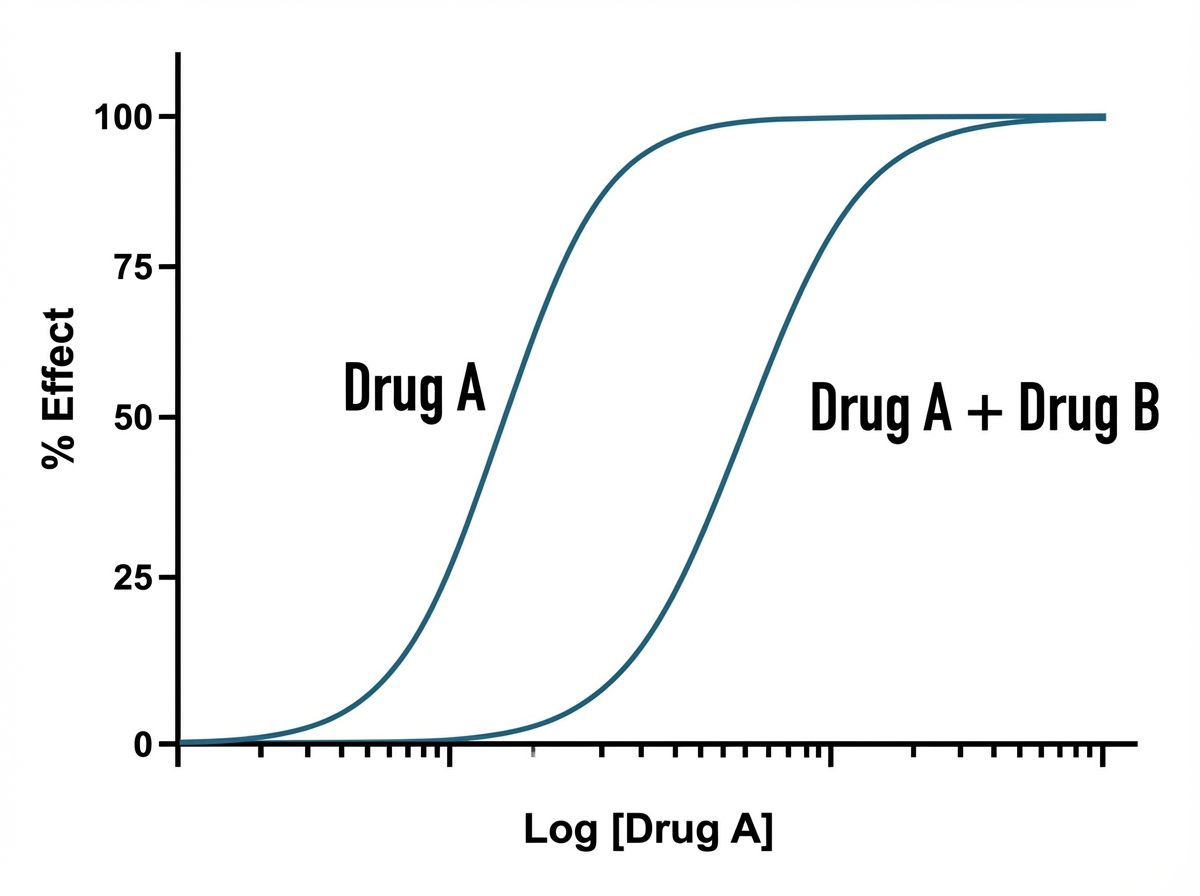
An investigator is studying the interaction between a new drug B and an existing drug A. The results are recorded and plotted on the graph shown. Which of the following properties of drug B best explain the observed effect on the dose-response curve of drug A?
A 78-year-old man receives chemotherapy for advanced hepatocellular carcinoma. Despite appropriate therapy, he dies 4 months later. Histopathological examination of the cancer cells shows the presence of a transmembrane efflux pump protein that is known to cause decreased intracellular concentrations of chemotherapeutic drugs. Which of the following best describes this membrane protein?
Want unlimited practice?
Get full access to all questions, explanations, and performance tracking.
Scan to download app