
Hedgehog signaling pathway — MCQs

A 33-year-old woman comes to the physician 1 week after noticing a lump in her right breast. Fifteen years ago, she was diagnosed with osteosarcoma of her left distal femur. Her father died of an adrenocortical carcinoma at the age of 41 years. Examination shows a 2-cm, firm, immobile mass in the lower outer quadrant of the right breast. A core needle biopsy of the mass shows adenocarcinoma. Genetic analysis in this patient is most likely to show a defect in which of the following genes?
During the third week of development, the blastocyst undergoes a variety of differentiation processes responsible for the formation of the gastrula and, eventually, the embryo. This differentiation creates cell lineages that eventually become a variety of body systems. What cell lineage, present at this date, is responsible for the formation of the liver?
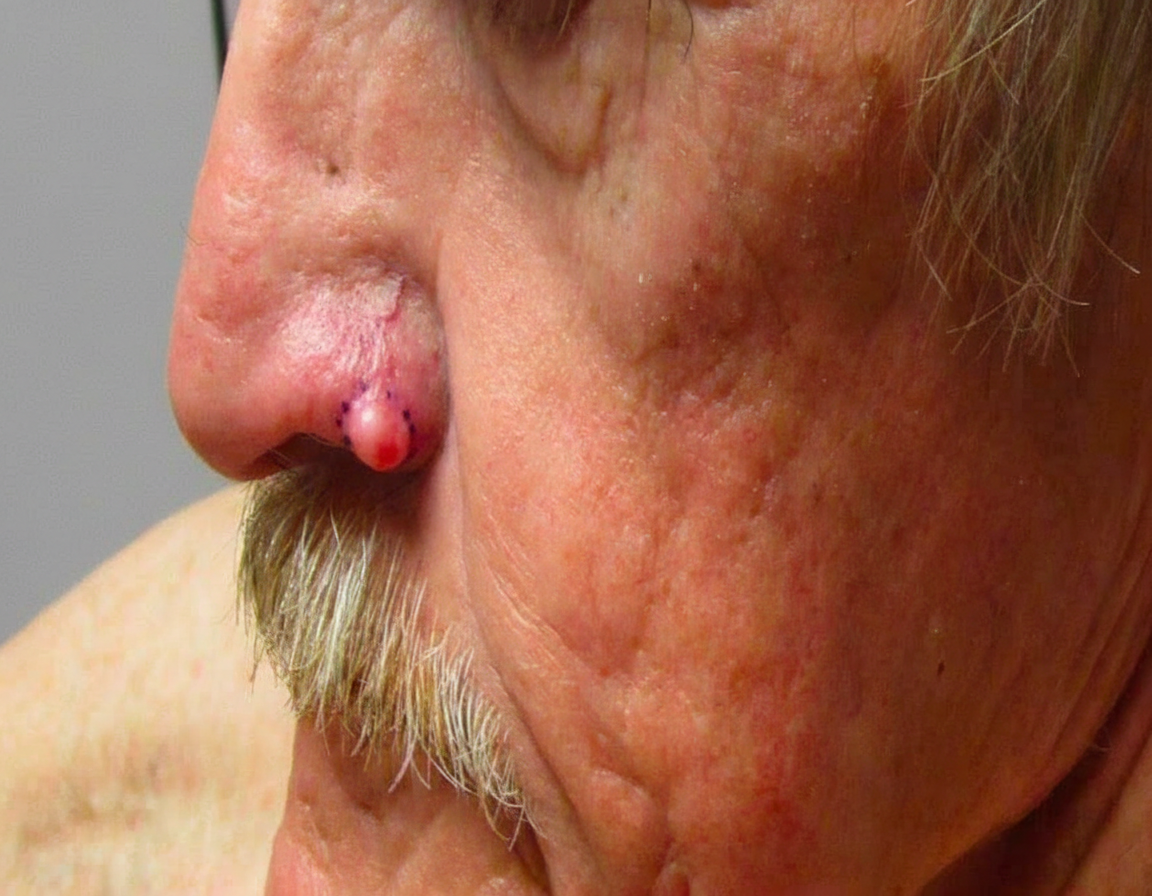
A 67-year-old man is referred to a dermatologist after a reddish mole appears on his nose. The mole’s size has changed over the last 2 years, and occasional bleeding is noted. The man’s medical history is unremarkable, and he does not take any medications. He retired from his construction job 15 years ago. Physical examination of his nose reveals a 2-cm pink papule with a pearly appearance and overlying telangiectasia on the ala of the nose (see image). Which of the following would be the best treatment modality if surgery is not an option?
A laboratory physician investigates the chromosomes of a fetus with a suspected chromosomal anomaly. She processes a cell culture obtained by amniocentesis. Prior to staining and microscopic examination of the fetal chromosomes, a drug that blocks cell division is added to the cell culture. In order to arrest chromosomes in metaphase, the physician most likely added a drug that is also used for the treatment of which of the following conditions?
A 13-year-old girl presents to an orthopedic surgeon for evaluation of a spinal curvature that was discovered during a school screening. She has otherwise been healthy and does not take any medications. On presentation, she is found to have significant asymmetry of her back and is sent for a spine radiograph. The radiograph reveals a unilateral rib attached to the left transverse process of the C7 vertebrae. Abnormal expression of which of the following genes is most likely responsible for this finding?
A 62-year-old woman presents to her oncologist to discuss the chemotherapy options for her newly diagnosed breast cancer. During the meeting, they discuss a drug that inhibits the breakdown of mitotic spindles in cells. Her oncologist explains that this will be more toxic to cancer cells because those cells are dividing more rapidly. Which of the following side effects is closely associated with the use of this chemotherapeutic agent?
An investigator is studying the mechanism regulating pigment production in the skin. She has isolated a hormone produced by the anterior and intermediate lobe of the pituitary gland that stimulates neural crest-derived cells to produce pigments through the oxidation and polymerization of the amino acid tyrosine. This hormone is most likely cosecreted with a substance that acts on which of the following receptors?
A 55-year-old man with a history of sun exposure presents with a slowly growing, pearly nodule with telangiectasias on his nose. The lesion occasionally bleeds when traumatized. Biopsy shows basaloid cells arranged in palisading patterns. Which of the following mutations is most likely involved in the pathogenesis?
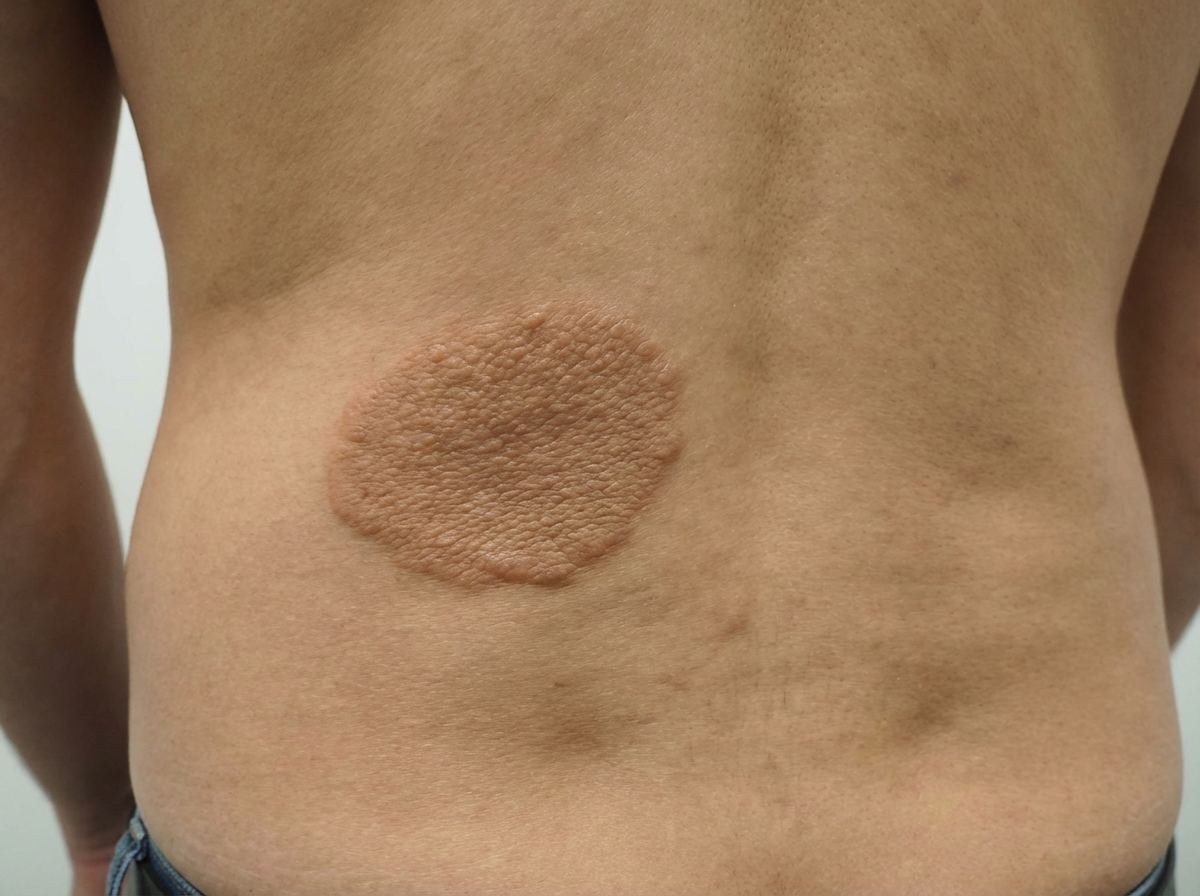
An 8-year-old boy presents with a skin lesion on his back as shown in the picture. On physical examination, there are synchronous spasmodic movements of the neck, trunk, and extremities. The physician explains that this is likely due to a genetic condition, and further testing would be necessary to confirm the diagnosis. Which of the following genes is involved in the development of this patient’s condition?
A 55-year-old woman has a total thyroidectomy for papillary thyroid carcinoma. She complains of tingling around the mouth 11 hours after the operation. Her condition rapidly deteriorates with difficulty breathing and chest tightness. Which of the following best represent the signaling pathway of the deficient hormone responsible for this patient’s symptoms?
Want unlimited practice?
Get full access to all questions, explanations, and performance tracking.
Scan to download app